










U.S. federal investigators are intensifying their pursuit of the notorious ShinyHunters hacking group, a digital extortion syndicate that has recently escalated its operations to include the theft of highly sensitive data from the Federal Bureau of Investigation. As the investigation deepens, authorities have uncovered a disturbing nexus between the hackers and the very professionals hired to mitigate such crises. Sources close to the investigation have revealed to KrebsOnSecurity that executives at two prominent ransomware negotiation firms maintained unusually close, potentially illegal, relationships with the extortionists.
According to those familiar with the probe, one U.S.-based executive is alleged to have gone beyond mere negotiation, actively assisting ShinyHunters in the operation of a dedicated website designed to pressure victims into paying ransoms. This revelation marks a significant turning point in the understanding of how the ransomware ecosystem has evolved, blurring the lines between legitimate security consulting and the facilitation of cybercrime.
The Evolution of a Digital Extortion Machine
Since its emergence in 2019, ShinyHunters has claimed responsibility for a staggering number of high-profile data breaches. Initially operated by cybercriminals based in France, the group’s leadership structure shifted as original members faced arrest and incarceration. Control of the brand eventually fell to an individual known as "Rey," identified last year as a teenage hacker residing in Amman, Jordan. The FBI estimates that under Rey’s direction, the group has successfully extorted more than $70 million from victims within the current year alone.
The group’s activities reached a brazen new level in late September 2026, when they successfully breached the FBI’s recruitment portal, fbijobs.gov. The hackers taunted the agency by threatening to expose deeply sensitive information, including medical and psychological records, Social Security numbers, home addresses, and detailed personnel information regarding employee specializations and unit assignments.

This specific intrusion served as a catalyst for the FBI, which responded with uncharacteristic speed. Authorities launched an aggressive campaign to track, detain, and interrogate anyone with documented communication links to Rey or his associates. On October 3, Reuters reported that Jordanian authorities had detained Rey, who is reportedly cooperating with U.S. federal investigators.
The Collapse of the ShinyHunters Inner Circle
The capture of Rey was preceded by the dismantling of the group’s senior technical tier. On September 15, 2026, Dutch law enforcement conducted a high-stakes operation in the Netherlands to apprehend Pepijn van der Stap, a convicted hacker and key suspect in the ShinyHunters investigation. The raid was notable for its intensity; Dutch police reportedly utilized flash-bang grenades to neutralize Van der Stap while he was actively logged into various online accounts.
According to investigative sources, the timing of the arrest was fortuitous. Van der Stap was in the middle of a session on his Signal instant messaging account, providing authorities with immediate access to a treasure trove of communication logs. These logs included frequent exchanges with ransomware negotiators operating out of Canada and the United States.
Perhaps most significantly, these messages provided the thread that unraveled a planned murder-for-hire plot. Reports from the Dutch news outlet RTL indicate that Van der Stap had allegedly ordered two contract killings to be carried out abroad. While there is no current evidence that these orders were executed, the mere existence of the plot highlights the violent potential underlying the group’s digital operations.

The Role of Negotiators in the Extortion Pipeline
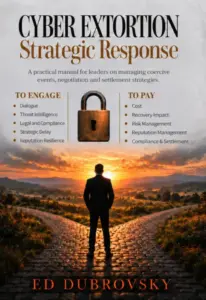
The investigation took a major leap forward on October 9, when the FBI arrested Edward Dubrovsky, a 54-year-old Canadian cybersecurity executive. Dubrovsky, who had recently authored a book on cyber extortion that advocated for a policy of always engaging with hackers, now faces charges of threatening to disclose stolen data and interfering with interstate commerce through extortion. Prosecutors have requested that he remain in custody pending trial, and court records currently remain under seal.
Internal investigative findings suggest that the relationship between Van der Stap and figures like Dubrovsky was far from professional. Digital evidence indicates that these negotiators were often privy to details about new victims before the victims themselves were even aware they had been compromised. Even more damaging, investigators have uncovered evidence suggesting that Dubrovsky was aware of the breach into FBI servers well before the incident became public, yet he failed to notify the bureau.
The "Shinywire" Extortion Infrastructure
A central focus of the federal probe is the now-defunct website "shinywire[.]com." Investigators believe that at least one executive at a major U.S.-based consulting firm played an active role in maintaining this site, which served as a central hub for the group’s extortion efforts. While the firm has not been publicly named due to the ongoing nature of the investigation, it is described as a prestigious entity with a workforce exceeding 1,000 associates.
Shinywire was active from early May 2026 until mid-October, cataloging nearly 100 organizations targeted by the group. The site functioned as an automated pressure mechanism, providing victim organizations with samples of their own stolen data and explicit threats that failure to engage in payment negotiations would result in the public release of all exfiltrated files. A victim of this tactic was the American medical technology company Intuitive Surgical, which was breached in March 2026 following a targeted phishing attack.

Conflicting Interests and the Ransomware Industry
The involvement of high-level consultants in the ransomware ecosystem brings to light a profound conflict of interest within the cybersecurity industry. While paying a ransom to recover data is not inherently illegal in the United States—unless the group is under government sanctions—the practice has created a lucrative market for "incident response" firms.
Industry experts note that some firms operate on a flat retainer, while others charge a percentage of the final ransom payment. This structure incentivizes negotiators to push for higher payouts and discourages them from adopting a firm stance against the extortionists. Mark Camillo, CEO of the industry group CyberAcuView, has publicly called for greater transparency, noting that the profit motive inherent in ransom percentages is fundamentally misaligned with the goal of protecting victims.
The case of the education technology company PowerSchool serves as a sobering example. After reportedly paying a $2.85 million ransom with the assistance of an outside firm, the company still saw the stolen data of millions of students and teachers resurface in subsequent, secondary extortion attempts. This reinforces the warnings issued by leading firms like Coveware and Unit 221B, who have long cautioned against paying, noting that there is no technical mechanism to ensure that hackers will delete stolen data or refrain from reselling it.
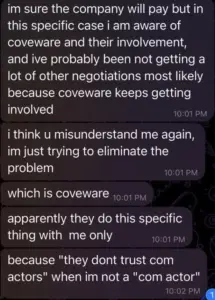
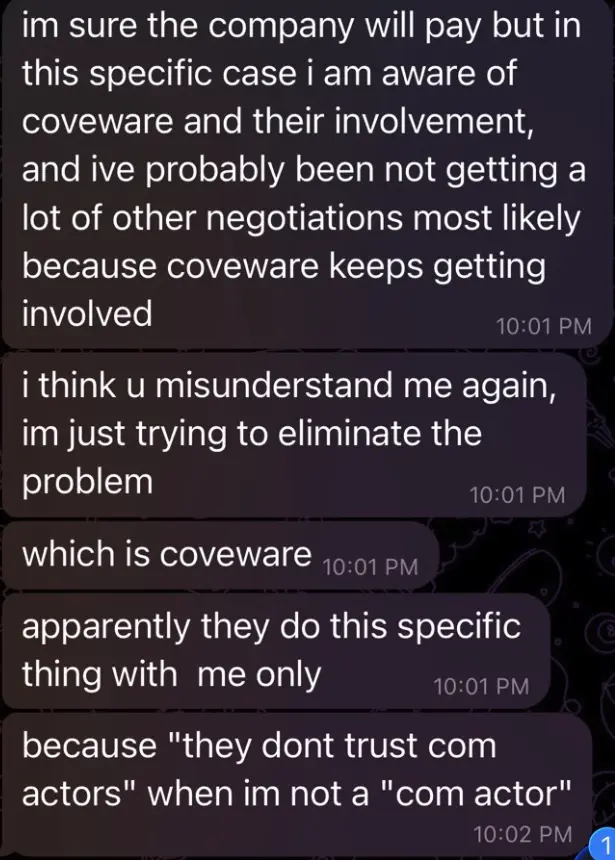
ShinyHunters’ own communications reveal the extent to which these ethical negotiators hindered their business. Private Telegram chats between the group’s leaders and co-conspirators show clear frustration with firms like Coveware, with the hackers lamenting that they were losing payments because of the "misinformation" provided to victims. One message even explicitly mentioned plans to "eliminate the problem," referring directly to the influence of ethical incident response companies.

As the Department of Justice continues to crack down on these practices, the recent prosecutions of individuals like Zohar Pinhasi of MonsterCloud and ransomware negotiator Angelo Martino underscore a federal commitment to cleaning up the industry. These cases serve as a warning: the line between assisting a client in a crisis and conspiring with a criminal organization is thin, and for those who choose to cross it, the consequences are increasingly severe.