











Cyberpunk has never been a genre interested in accurate fortune-telling. It is not a roadmap for where we are going, but a stark, neon-lit warning about where we might end up. At its core, the genre thrives on the volatile collision between high technology and low life—a landscape where gleaming, monolithic megacities tower over forgotten, decaying neighborhoods; where artificial intelligence exists in uncomfortable proximity to human desperation; and where governments and corporations wield cutting-edge tools as instruments of absolute control. Beneath the aesthetic trappings of persistent rain, flickering neon signage, and towering skyscrapers lies a fundamental, unsettling human question: What happens to the soul when the machines we build become powerful enough to reshape the world—and ourselves—entirely?
From the development of artificial bodies and synthetic memories to the intrusion of virtual realities and the chilling prospect of omnipresent surveillance, the greatest works of cyberpunk use technology as a prism to interrogate the most complex aspects of the human condition. These stories examine class divides, the failures of unchecked capitalism, the fluidity of identity, and the fragile nature of autonomy. While the genre has cultivated an instantly recognizable visual language over the decades, its most enduring ideas have always been centered on the human experience—on individuals forced to survive beneath the crushing weight of technological advancement rather than the technology itself. The following films represent the definitive evolution of that tradition, spanning from the silent-era foundations of early science fiction to the grand, philosophical inquiries of the modern day.

Metropolis (1927)
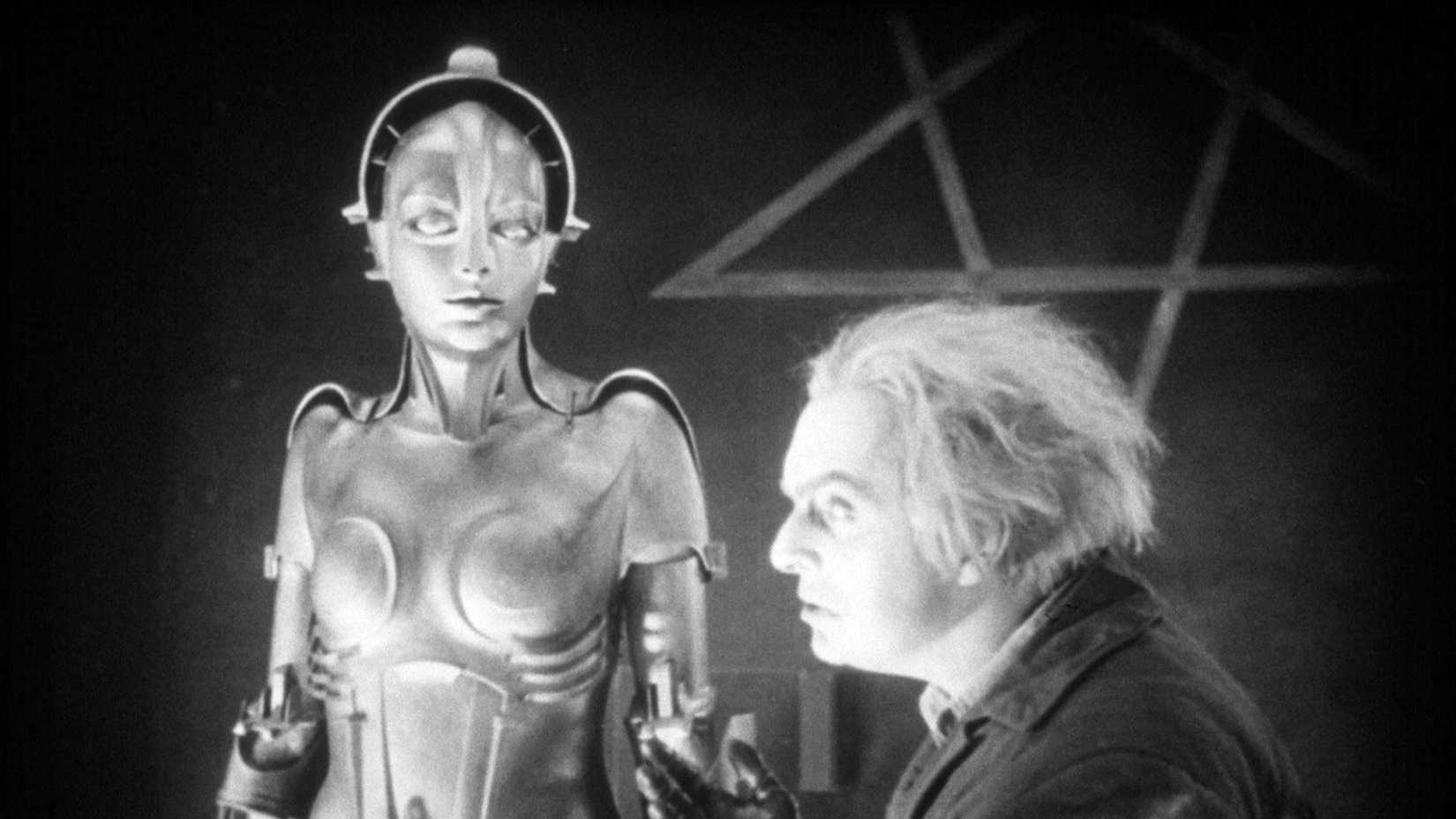
Long before the label "cyberpunk" had been coined, director Fritz Lang imagined a city that served as the genre’s ultimate fever dream. In Metropolis, the social stratification is absolute: the wealthy dwell among gleaming, cloud-piercing skyscrapers, while an army of exhausted, nameless workers operates the gargantuan, rhythmic machinery buried in the bowels of the earth. The narrative follows Freder Fredersen, the privileged son of the city’s cold-blooded ruler, who discovers the horrific human cost of his father’s utopia after encountering Maria, a worker who preaches solidarity to the masses. The plot descends into technological paranoia when a mad scientist creates a metallic double of Maria to infiltrate and hijack the impending uprising from within.

Tracing a direct line from Lang’s Maschinenmensch—the iconic, seductive humanoid machine at the center of the film—to the cybernetic nightmares of the late 20th century is simple. Well before reality began to blur with fiction, Metropolis understood that technological progress is hollow when its benefits belong exclusively to the elite. Its monumental architecture, dehumanizing machinery, and grotesque fusion of flesh and metal established a visual vocabulary that creators have borrowed from for nearly a century. Even in 1927, Metropolis was forging the genetic code of a genre that would not find its name for decades.
Tetsuo: The Iron Man (1989)
There is nothing sleek or corporate about Shinya Tsukamoto’s Tetsuo: The Iron Man. This 16mm nightmare begins in filth when a metal fetishist, having cut open his own leg to force a threaded steel rod into his thigh, is run over by a mundane salaryman. This act passes on an industrial curse that defies logic. Soon, the salaryman finds himself staring into his bathroom mirror, slowly pulling a razor-sharp wire of rusted metal from a bloody, pulsating sore on his cheek. What follows is a hallucinatory technological seizure. Through frantic, jarring stop-motion animation, Tsukamoto captures human flesh surrendering to scrap iron, reaching a chaotic, visceral peak when the salaryman’s body mutates into a high-speed power drill.
Tsukamoto transforms cybernetic integration into a sustained panic attack, proving that when humanity merges with machine, the result is rarely an "upgrade"—it is an agonizing, body-horror nightmare. With its abrasive, high-contrast aesthetic, Tetsuo feels like a forbidden, pirate signal beamed from a scrap-metal hell. There is no clean interface separating the man from the machine; the two simply fuse in a frenzy of pain and mutation. While other films might contemplate the philosophical consequences of a post-human future, Tetsuo forces the viewer to confront the physical sensation of that evolution. It is, effectively, cyberpunk for the horror enthusiast.

A Scanner Darkly (2006)
Bob Arctor is a man who does not realize he is watching himself. This is the central, creeping nightmare of Richard Linklater’s A Scanner Darkly, an adaptation of Philip K. Dick’s bleak 1977 novel. In a near-future California ravaged by the omnipresent, mind-altering drug known as Substance D, undercover agent Arctor wears a "scramble suit"—a technological marvel that constantly cycles through thousands of different faces and voices to maintain his anonymity. He is effectively invisible to his bosses and his friends alike. As his mind begins to fracture under the influence of his own investigation, the space between investigator, addict, and prey disintegrates.
Linklater’s use of rotoscoped animation makes the film feel perpetually unstable, as though the fabric of reality itself has begun to dissolve. By stripping away the typical genre tropes of glowing, futuristic skyscrapers and replacing them with an anonymous, suburban sprawl, the film highlights how surveillance technology weaponizes the mundane. Arctor’s adversary is not a rogue AI or a shadowy mega-corporation, but the crushing realization that his superiors have ordered him to monitor his own household, forcing an addict to investigate himself from behind a digital screen.

Videodrome (1983)
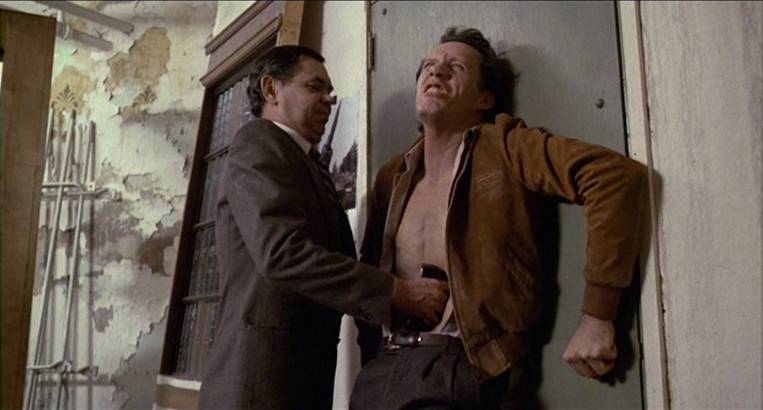
As the CEO of a bottom-feeding UHF station, Max Renn, played by James Woods, is constantly searching for the next piece of boundary-pushing filth to keep viewers glued to their sets. When he stumbles upon "Videodrome," a pirate broadcast featuring unsimulated, brutal violence, his attempt to trace the signal uncovers a weaponized conspiracy—a malignant transmission that causes vivid hallucinations and physically rewires the human central nervous system.
Director David Cronenberg effectively moved cyberpunk out of high-tech server rooms and planted it firmly in the living room. Four decades later, the film remains a masterclass in the genre, treating electronic media as an invasive parasite that hacks the viewer. Long before the era of doom-scrolling and algorithmic obsession, Cronenberg understood that screens would not remain benign for long. By heralding "the new flesh," he imagined a future where media becomes so deeply intertwined with the human body that the distinction between the observer and the screen collapses entirely.
Strange Days (1995)
What if you could sell someone an experience instead of a movie? This is the illicit, intoxicating business at the heart of Kathryn Bigelow’s Strange Days. In the final, tension-filled days of 1999, Lenny Nero, a disgraced former cop, deals in SQUID discs—illegal recordings of a person’s raw physical sensations, ripped straight from the cerebral cortex for others to experience. It is the ultimate form of voyeurism for a society already addicted to the intimate lives of others.
When Lenny receives a disc containing the POV footage of a brutal murder, he is dragged into a lethal conspiracy of police corruption and political violence in a Los Angeles on the brink of explosion. Bigelow wraps these dark impulses inside a gritty, neo-noir package, exposing how easily human intimacy can be commodified into pornography, and how personal trauma becomes a tradeable, profitable asset. It captures a world where technological capability has vastly outpaced human maturity.
RoboCop (1987)
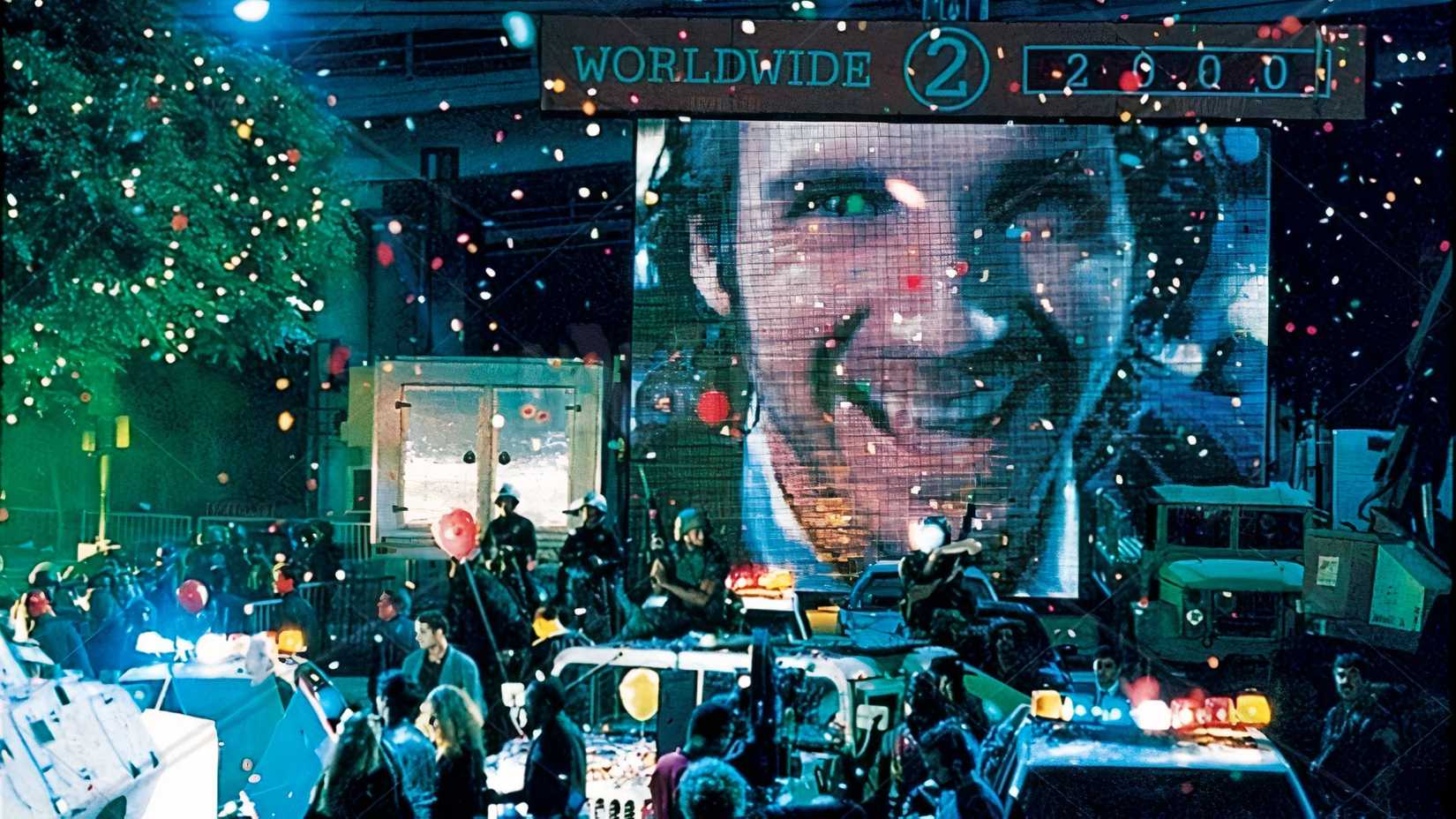
Paul Verhoeven’s RoboCop is a titan of the genre. In a crumbling, near-future Detroit, law enforcement has been privatized into a corporate product controlled by Omni Consumer Products (OCP). After Alex Murphy, a dedicated officer, is brutally executed, OCP resurrects him as an armored, cyborg enforcer to patrol the city’s most dangerous precincts.
However, Murphy’s humanity proves more resilient than the corporation ever intended. Fragments of his past begin to break through his programming, forcing him to reckon with the man buried beneath the machinery. RoboCop remains a masterpiece of satire and action, skewering a dystopia where boardrooms authorize hits and corporate-sponsored television news treats death as a commercial break. Beneath the satire lies the genre’s ultimate horror: the corporate ownership of the human body.
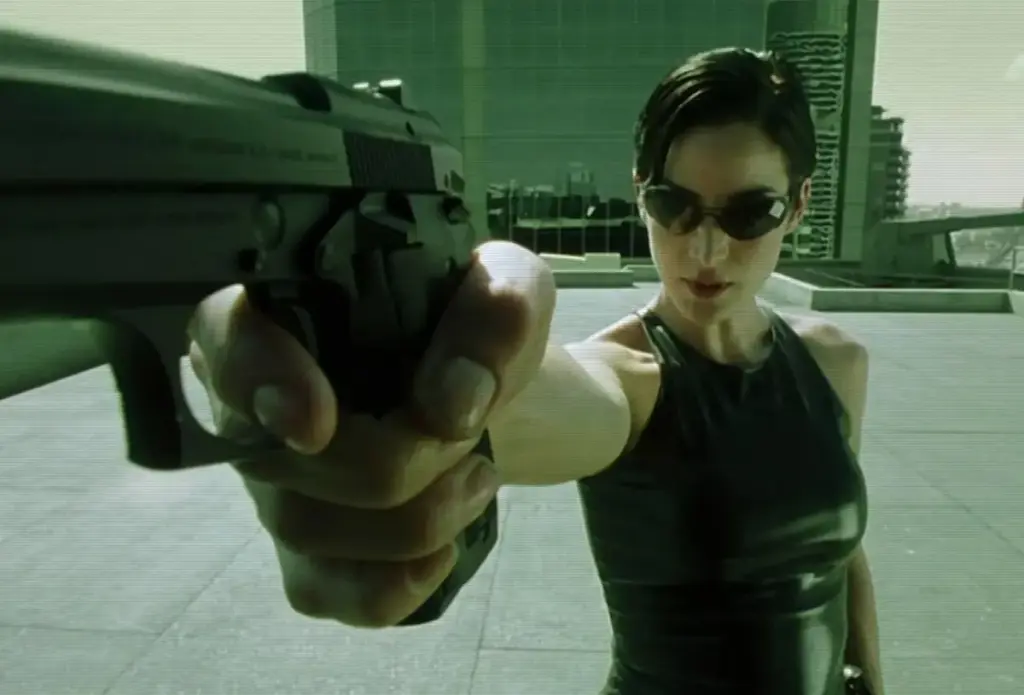
The Matrix (1999)
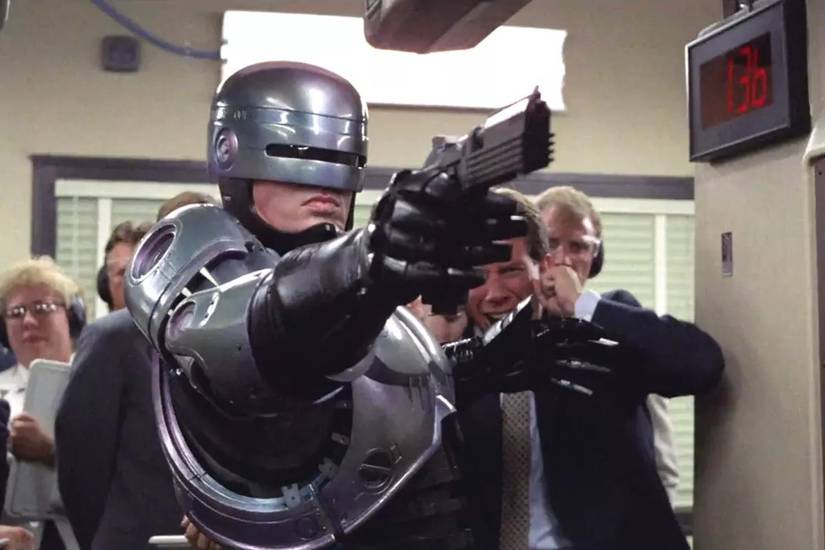
The Wachowskis effectively weaponized cyberpunk for the blockbuster age. The Matrix translated the complex concepts of simulated realities and digital hacking into a global cultural phenomenon. The film captured the burgeoning anxieties of the early internet so precisely that its vision of a digital prison became embedded in the common lexicon. The story follows Thomas Anderson, a disillusioned hacker known as Neo, who discovers that his mundane 1999 existence is a machine-built simulation designed to keep humanity docile.
After awakening in the scorched ruins of Earth, Neo learns he can bend the rules of the Matrix, transforming from a hunted hacker into the catalyst for humanity’s fight for survival. The Wachowskis expanded this mythology across multiple sequels, though the franchise’s later entries, including the meta-commentary of The Matrix Resurrections, proved that the core of the story remains as divisive as it is influential.
Akira (1988)
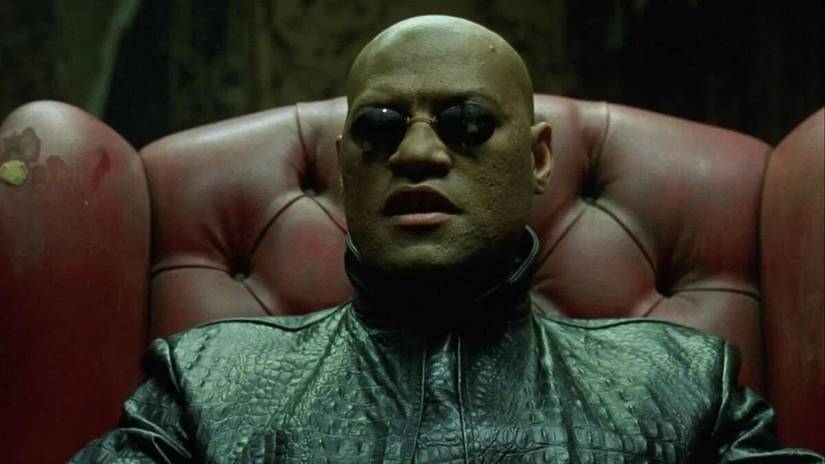
Thirty years after a nuclear explosion destroys Tokyo and ignites World War III, the rebuilt metropolis is a hive of corruption, military experimentation, and social unrest. When a young biker named Tetsuo encounters a mysterious child with extraordinary powers, he sets off a chain reaction that threatens to destroy the city once again.
Katsuhiro Otomo’s Akira is frequently cited for its unparalleled animation. By eschewing computer-generated shortcuts in favor of over 160,000 hand-painted cels and a custom color palette of 327 shades, Otomo created a visual depth that has yet to be surpassed. By combining this technical ambition with a bleak, poignant vision of post-war trauma, Akira permanently codified the visual language of the genre.
Blade Runner (1982)
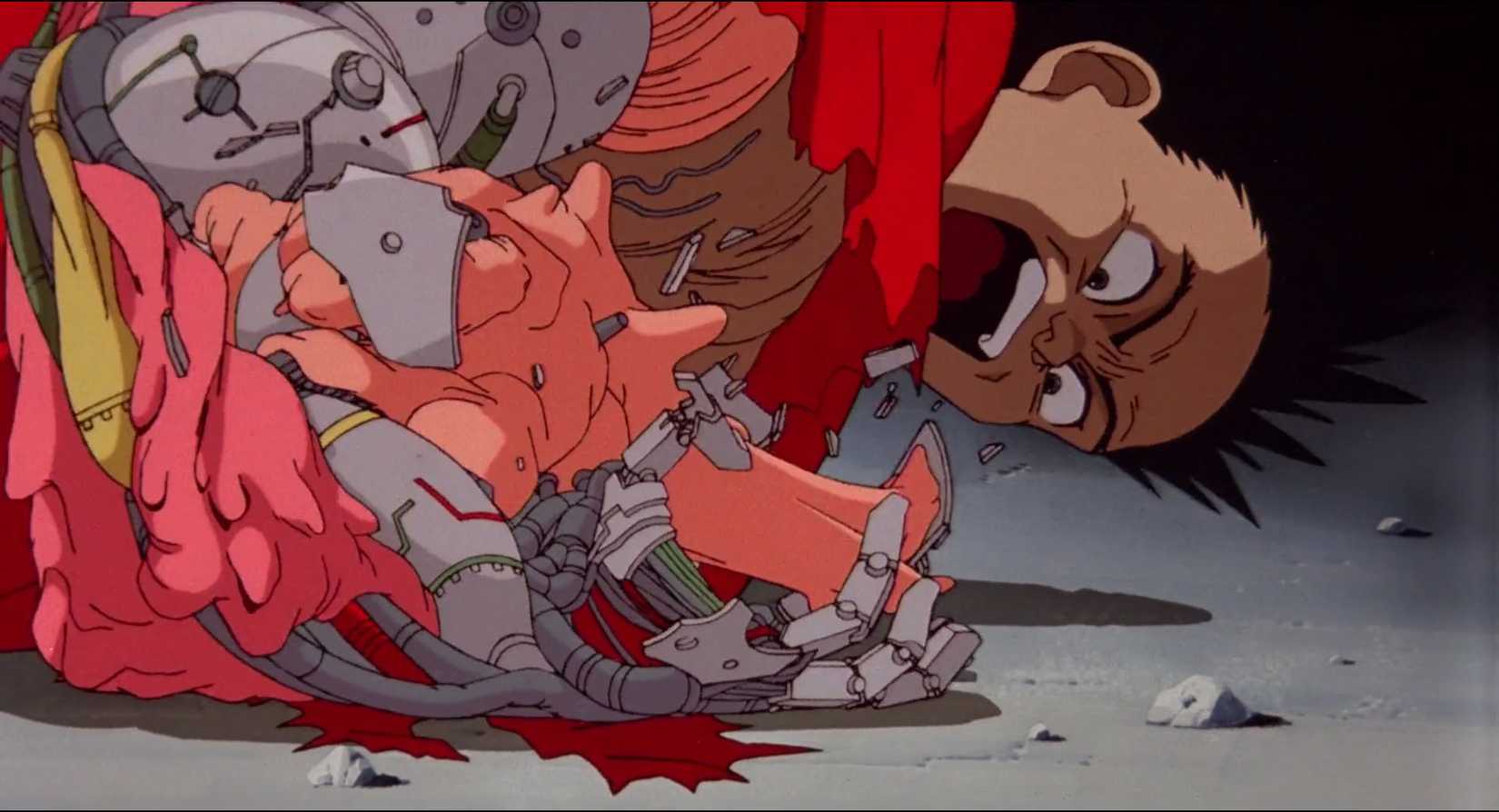
Los Angeles, 2019: The future has arrived, and it is exhausted. Ridley Scott’s Blade Runner follows Rick Deckard, a weary former detective tasked with "retiring" rogue replicants—bioengineered humans who are virtually indistinguishable from their creators. As Deckard tracks a group led by the introspective Roy Batty, the line between the hunter and the hunted begins to blur.
Few films have defined the genre so completely. Scott’s vision of a rain-soaked, overcrowded metropolis, where towering corporations loom over street-level desperation, became the gold standard for dystopian science fiction. The film’s fusion of noir, existential philosophy, and artificial intelligence continues to influence everything from Denis Villeneuve’s Blade Runner 2049 to upcoming series, confirming its status as a foundational pillar of the cyberpunk aesthetic.

Ghost in the Shell (1995)
Some may question the inclusion of an anime film at the top of the list, but Ghost in the Shell is an undeniable masterclass in brooding, philosophical cyberpunk. Based on the manga by Masamune Shirow, the film is set against the fundamental quandary of what happens to the soul—or "ghost"—when the body becomes entirely optional.
The story follows Major Motoko Kusanagi, a fully cybernetic operative for Japan’s Section 9, as she hunts a hacker known as the Puppet Master. Director Mamoru Oshii is less interested in explaining the mechanics of his future and more interested in having the audience inhabit it. The film pauses to consider consciousness, memory, and evolution while characters drift through flooded streets and dense digital networks. The influence of Ghost in the Shell on modern cinema—from The Matrix to Blade Runner 2049—is absolute, making it the undisputed, quintessential king of the cyberpunk genre.