







The Twilight Zone is, by any objective metric, a product of the late 1950s and early 1960s. Its black-and-white cinematography, mid-century fashion, and reliance on analog special effects serve as a permanent time capsule of the era in which it was produced. While the show remains a cornerstone of science fiction and horror history, and continues to influence modern genre storytelling, it is undeniably dated in its technical execution. The creature effects that once terrified audiences in 1959 may elicit a knowing smile from modern viewers, and the production design reflects the aesthetic sensibilities of a bygone decade. Yet, despite these superficial markers of age, the series continues to command a massive, dedicated audience.
The reason for this endurance lies not in the spectacle of its monsters or the novelty of its high-concept premises, but in the unflinching way the series interrogated the core of the human condition. Rod Serling, the show’s creator and primary writer, understood that the most frightening elements in any story are not the otherworldly entities, but the neighbors, friends, and family members we think we know. A quintessential example of this philosophy is the Season 3 episode "The Shelter," which first premiered in the autumn of 1961. Sixty-five years later, the episode serves as a chilling, timeless mirror for modern society, proving that while the settings of our anxieties may change, the underlying fractures in human empathy remain exactly the same.
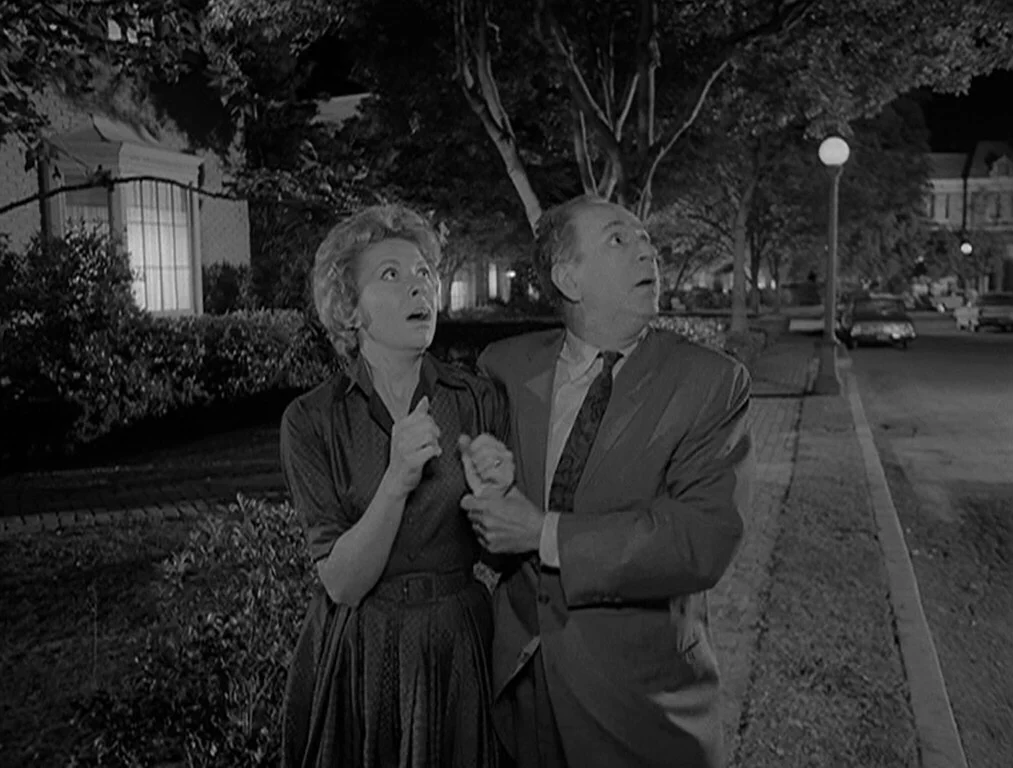
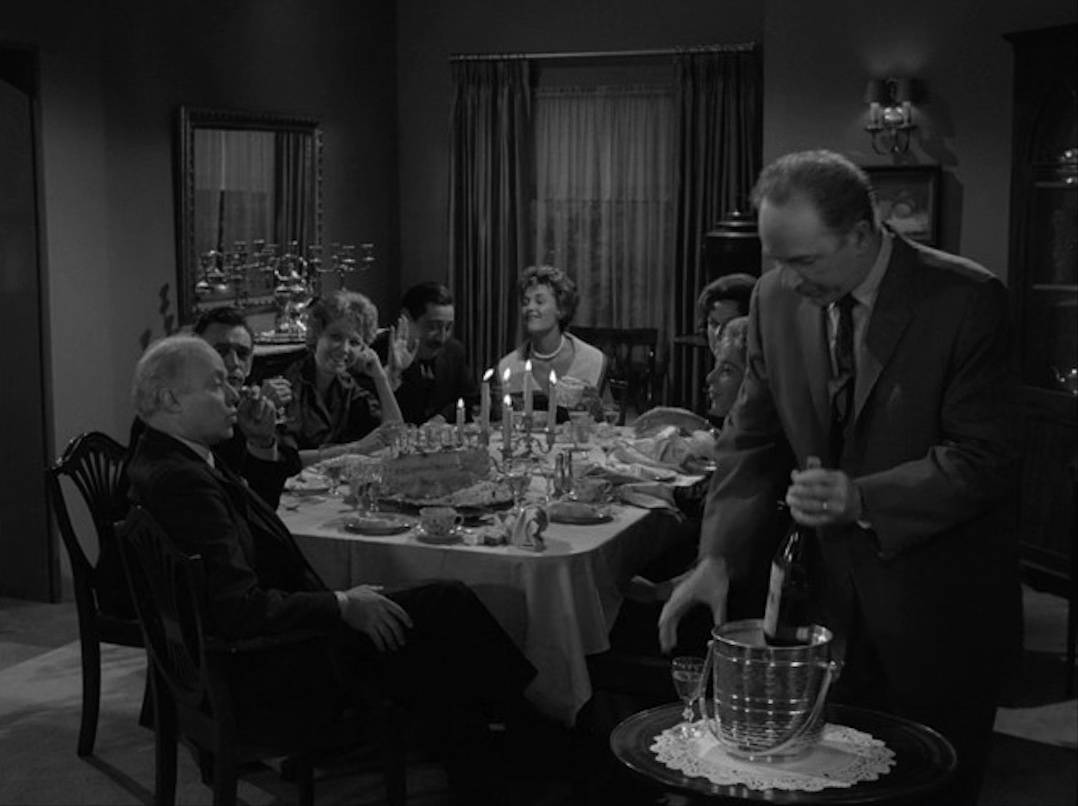
"The Shelter" begins with a deceptive sense of normalcy. A group of neighbors gathers for a celebratory birthday dinner for Dr. Bill Stockton, played by Larry Gates. The atmosphere is warm, domestic, and familiar; the characters are well-integrated into their suburban landscape, sharing laughter and the easy camaraderie of a tight-knit community. However, the tone shifts abruptly when a radio announcement interrupts the gathering. The broadcast warns of unidentified objects in the sky—a terrifying prospect during the height of the Cold War—suggesting that a nuclear attack on the United States is imminent. The citizens are urged to seek immediate shelter, and the suburban facade begins to crumble.
As the panic sets in, the reality of the situation becomes clear: Dr. Stockton is the only person in the group who has invested in a personal bomb shelter. This decision, which had been a point of mockery among his neighbors during the dinner, suddenly transforms from a social eccentricity into a life-or-death asset. Stockton, a pragmatic man who prioritized the safety of his wife and child, finds himself in an impossible position. He has built a shelter designed for his immediate family, with no room, resources, or supplies for the extended group of friends who now stand on his doorstep.
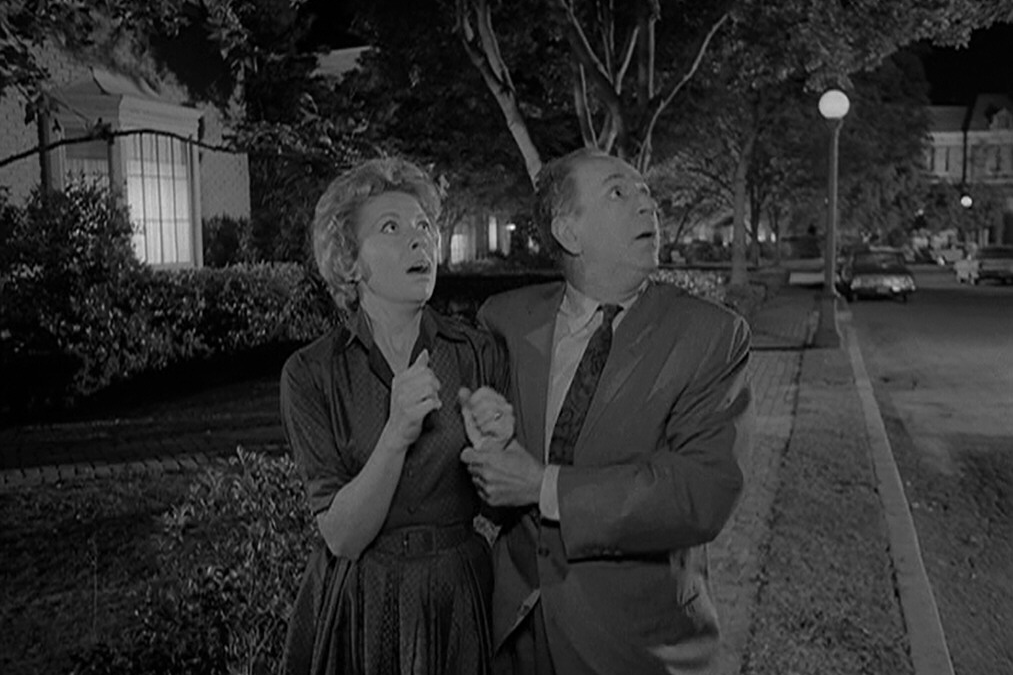
What follows is not an invasion by external forces, but a psychological collapse from within. As the neighbors realize that Stockton will not—or cannot—open the door to accommodate them, the veneer of friendship vanishes. The frantic pleas for help quickly devolve into demands, then threats, and finally, displays of naked bigotry. The episode highlights how rapidly the "civilized" mask of society can slip when resources are perceived as finite and fear becomes the primary motivator.
The Decay of Civility Under Pressure
The brilliance of "The Shelter" lies in how quickly it exposes the prejudices lurking beneath the surface of polite, suburban life. As the neighbors cluster around the door of the shelter, the dialogue shifts from requests to accusations. In a harrowing sequence, one neighbor begins to target another based on their heritage, explicitly suggesting that because a man is foreign-born, he is less entitled to safety than his American-born counterparts. It is a sharp, brutal indictment of how quickly tribalism takes hold when fear is introduced into a community.
The hysteria reaches a fever pitch when the neighbors, driven by a collective, irrational rage, decide that if they cannot have the shelter, then the Stocktons should not have it either. They retrieve a heavy flagpole from the lawn, intending to use it as a battering ram to break through the reinforced door. It is a moment of pure, unadulterated selfishness; they would rather see everyone perish in the fallout than allow one family to survive in a space they are not invited to share.
This transformation of friends into a lynch mob is what makes the episode so profoundly uncomfortable to watch. We are forced to witness the total erasure of the moral boundaries that usually govern social interactions. Dr. Stockton, who was the neighborhood physician and a trusted pillar of the community just hours prior, is suddenly treated as an enemy combatant. The episode forces the audience to confront a difficult question: How much of our kindness is genuine, and how much is merely a byproduct of living in a world where we aren’t being forced to compete for survival?

Why the Message Remains Timeless
While The Twilight Zone is frequently categorized as a supernatural or science fiction anthology, "The Shelter" contains absolutely no elements of the fantastic. There are no aliens, no time-traveling paradoxes, and no killer dolls. Even the signature "twist" of the episode—that the nuclear threat was a false alarm—is a grounded, human reality rather than a cosmic intervention.
When the episode aired in 1961, the terror it depicted was not speculative; it was a daily reality for American families. School children were routinely instructed on how to "duck and cover" under their desks, and the construction of fallout shelters was a common, if grim, domestic endeavor. For the original 1961 audience, the fear of a nuclear strike was not a question of if, but when. With the benefit of hindsight, we know that the Cold War never resulted in the catastrophic exchange that people feared, but that doesn’t diminish the impact of the story.
More than 60 years later, the specific fear of a nuclear apocalypse may feel distant, even in an era of global volatility. Yet, the themes explored in the episode are more resonant than ever. We live in a world where the news cycle is saturated with reports of rising social divisions, xenophobia, and the breakdown of public discourse. The "Red Scare" of the 1960s has been replaced by different, but equally potent, anxieties. The true focus of the episode is not the bomb, but the bigotry.
Dr. Stockton’s neighbors do not fail because they are victims of a nuclear threat; they fail because they are victims of their own base instincts. They turn on each other, they abandon their values, and they descend into hatred the moment their own personal comfort is challenged. This is the enduring legacy of Rod Serling’s writing: he recognized that the most dangerous, unstable, and unpredictable force in the universe is human nature itself.
The episode serves as a perennial warning that our social contracts are fragile things. When we look at the characters in "The Shelter," we are not looking at historical curiosities; we are looking at human beings under pressure, reacting in ways that remain eerily recognizable. It is this focus on the internal, psychological reality of the characters that ensures The Twilight Zone remains relevant long after the political climate of the 1960s has faded into history. The show persists because it asks us to look in the mirror and decide whether we would be the one protecting our family, or the one grabbing the flagpole. The Twilight Zone is currently available to stream on Pluto TV.