








The global space industry is currently experiencing a historic paradox. Last year, aerospace companies and government agencies launched more rockets into orbit than ever before, shattering previous productivity records and driving an unprecedented era of human activity in space. Yet, despite this massive surge in raw launch activity, satellite operators are confronting a surprising and frustrating bottleneck: there still aren’t enough available rides to go around.
Increasingly, industry insiders note that this worsening shortage is not simply about the sheer number of rockets lifting off from pads around the world. Instead, the crisis has evolved into a complex challenge of operational flexibility, orbital destinations, and vehicle diversity.
Satellite companies today want launches to a wider variety of orbital destinations, with greater regularity, and aboard a broader range of specialized vehicles. However, much of the commercial space industry has instead grown dependent on a relatively small number of frequently launched rockets that overwhelmingly travel to similar, standardized orbits. That heavy concentration has left numerous satellite companies and their delicate spacecraft waiting months—or in some cases, years—for a suitable, mission-compatible ride to space.
"Demand is crazy," said Robert Sproles, chief executive of Exolaunch, a Berlin-based broker of global launch services that has successfully integrated and placed 912 satellites into orbit across 51 separate launch events. "The demand curve is so much steeper than the supply curve."
This market squeeze is happening despite a historic expansion in overall launch activity. Recent data released by the Federal Aviation Administration (FAA) illustrates the dramatic growth of the sector, showing that the agency licensed 187 launches in fiscal year 2026 alone. That figure represents a steep climb from less than 100 launches a decade earlier. Furthermore, government ambitions point toward even higher volumes; the Trump administration has previously called for U.S. spaceports to support more than 1,000 launches and reentries annually by 2030 to maintain American leadership in the aerospace domain.
Yet, raw launch statistics frequently obscure a critical problem that is becoming increasingly important as the modern space economy scales up. A rocket heading to the wrong orbit at the wrong time is not necessarily useful to a commercial satellite operator.
All of these operational realities are rapidly turning choice, rather than just basic capacity, into one of the global launch industry’s most restrictive constraints.
In order to truly close the expanding gap between supply and demand, Sproles emphasized that space transportation companies must also actively increase the diversity of available launches.

"Yes, we need to meet demand. But we also need to make sure we’re putting that demand in the right places," he said, highlighting the precise alignment required between modern payloads and their target environments. "We need to recognize what types of launches are best for what types of missions, and we need to make sure those types of launches are available when the launch customer needs them."
Destination: Diversity
The broader economic backdrop underscores just how much capital and commercial interest is riding on these orbital logistics. According to market research firm Novaspace, the global space economy reached a massive valuation of $626 billion in 2025. Citing industry trends centered on consolidation, integration, and closer institutional alignment around security, resilience, and operational performance, Novaspace forecasts steady annual growth of 5.5% through 2034. By that point, the firm predicts the global space economy will comfortably surpass a valuation of $1 trillion.
Markets of that immense scale are inherently non-monolithic, Sproles explained. This means the industry requires multiple launch providers operating with high regularity across entirely different orbital regimes.
"If you rewind to, say, 2016, there was more launch diversity in the market at that time than there is today. There was not more capacity, but there was a wider variety of vehicles that you could reliably gain access to," Sproles noted. The underlying reasons for this historical decline in launch diversity include rapid shifts in technology, evolving geopolitical tensions, and fragile global supply chains transformed by the disruptions of the COVID-19 pandemic. Together, these pressures have funneled the vast majority of commercial launch capacity into the hands of a small number of highly active, dominant launch providers.
Nevertheless, that market variety remains critically necessary, Sproles argues, because modern launch customers require the ability to optimize their business models based on when they can launch, where their specific missions need to go, and how much the entire transportation process will cost.
To understand this dynamic, one only has to look at the two most prolific launch providers operating today. On one hand stands SpaceX, whose heavy-lift Falcon 9 vehicle is meticulously optimized for large commercial constellations, human spaceflight missions, and massive commercial rideshares. On the other hand is Rocket Lab, whose lighter Electron vehicle is ideally suited for small satellites and CubeSats that require highly customized orbital planes.
"You could not come up with two more different vehicles both in terms of performance and commercial offerings, which just goes to show you that the industry is as hungry for choice as it is for capacity," Sproles said.
Beyond Rideshare
In today’s bustling launch market, traditional rideshare services serve as the foundational bedrock of the commercial space industry.

"Rideshare is appropriate when your schedule is flexible enough to align with when a planned rideshare is launching, and when you have enough orbital wiggle room to go where the masses want to go," Sproles explained. "Basically, it makes sense when you have less rigid mission constraints."
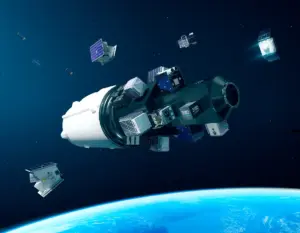
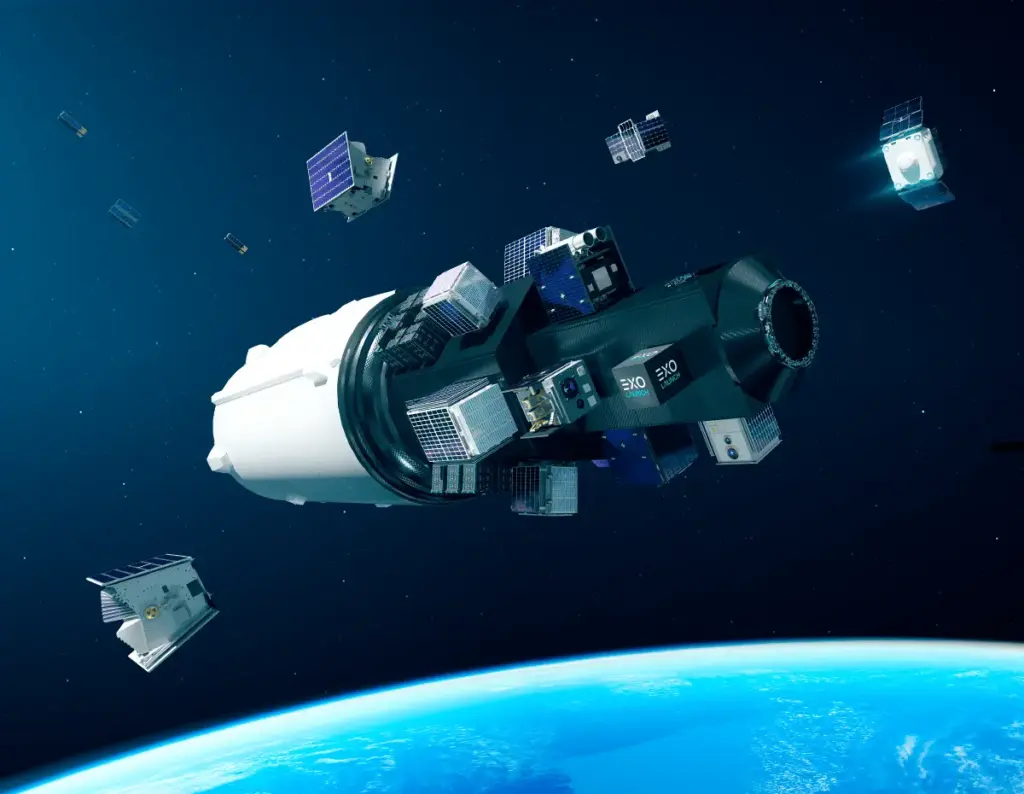
However, as commercial and institutional space missions become increasingly complex and bespoke, the old philosophy of one-size-fits-all no longer applies. A wider array of rideshare alternatives is desperately needed. These include carefully planned shared launches—where missions are conceived from the outset with multiple distinct customers in mind, rather than a single customer’s payload piggybacking haphazardly onto another primary mission. It also includes dedicated launches, in which an individual customer procures an entire rocket that is fully customized to their unique operational schedule, destination requirements, and payload specifications, Sproles noted.
Exolaunch points to its own operational cadence to underscore the tangible benefits of pursuing launch diversity. The first eight launches handled by Exolaunch in 2026 took place across four completely different launch vehicles originating from three separate continents. By actively securing launch capacity across a diverse portfolio of vehicles, varying inclinations, and multiple global spaceports, Sproles said that service brokers can provide launch customers with much more than just predictable access to orbit. They also deliver vital flexibility regarding overall project costs, tight launch schedules, and precise orbital destinations.
‘We Need Launchers to Launch’
Looking toward the horizon, Sproles ultimately envisions a mature commercial future where customers can launch their hardware at any given time and into any desired orbit without ever having to worry about the availability of specific launch vehicles or rigid schedules. In this ideal future, space logistics would mirror traditional terrestrial freight industries, where manufacturers can ship their products anywhere in the world knowing there is always a container ship, freight train, or long-haul truck available to transport them safely.
"The ideal situation is that customers don’t have to think about what the vehicle is or when it’s going because there’s always an option to get to the desired orbit at the time when their satellite is manufactured," Sproles said.
Ultimately, realizing that streamlined future rests squarely in the hands of the world’s commercial launch companies.
"We have multiple launch providers who have shown they can launch rockets," Sproles concluded. "Now, we need those launchers to launch. We need them operating reliably at cadence, and we need them going to multiple orbits. They can do it. We just need them to execute."