







For platform engineering teams, the promise of containerization has always been about agility and rapid deployment. However, as organizations scale their container footprints on Amazon Elastic Container Service (Amazon ECS), the operational overhead associated with managing ingress networking has increasingly become a significant bottleneck. Traditionally, every time a new service is deployed, teams are forced to engage in a repetitive and manual configuration process. This involves provisioning Application Load Balancers (ALBs), managing AWS Certificate Manager (ACM) certificates, configuring AWS WAF web ACLs, and meticulously defining security groups. Keeping these resources in sync as services scale, update, or evolve creates a high risk of configuration drift, potentially undermining the stability and security of the entire architecture.
Recognizing these challenges, AWS has officially announced the launch of Amazon ECS Gateway, a new account-level resource designed to fundamentally simplify ingress networking for containerized workloads. By dynamically provisioning and managing the underlying infrastructure on behalf of the user—while ensuring that all resources remain directly within the customer’s account—ECS Gateway effectively removes the friction that has historically slowed down deployment velocity for platform teams.
Redefining the Infrastructure Workflow
The introduction of ECS Gateway marks a shift in the operational paradigm for AWS users, creating a clear separation of responsibilities between platform teams and application developers. In a standard setup, platform teams are often bogged down by the minutiae of networking configurations. With ECS Gateway, these teams can define a gateway once and delegate the connectivity to application teams, who can then consume the infrastructure without needing deep expertise in the underlying load balancing or security components.

One of the most compelling aspects of this new feature is its approach to infrastructure efficiency. ECS Gateway leverages host-based routing using Application Load Balancers, allowing up to 25 individual services to share a single ALB. This consolidation provides an immediate benefit in terms of infrastructure cost optimization. Rather than requiring a dedicated load balancer for every single service, organizations can achieve higher density. Amazon ECS takes over the responsibility of managing the full lifecycle of this infrastructure. It handles the initial provisioning of an ALB when the first service connects, intelligently adds more ALBs as capacity thresholds are reached, and proactively removes them when they are no longer required. Furthermore, every service connected through the gateway is assigned a unique DNS hostname, ensuring that developers have a ready-to-use, production-grade endpoint as soon as the provisioning process completes.
Implementation and Operational Control
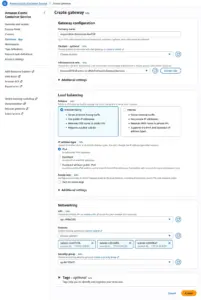
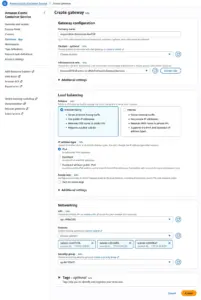
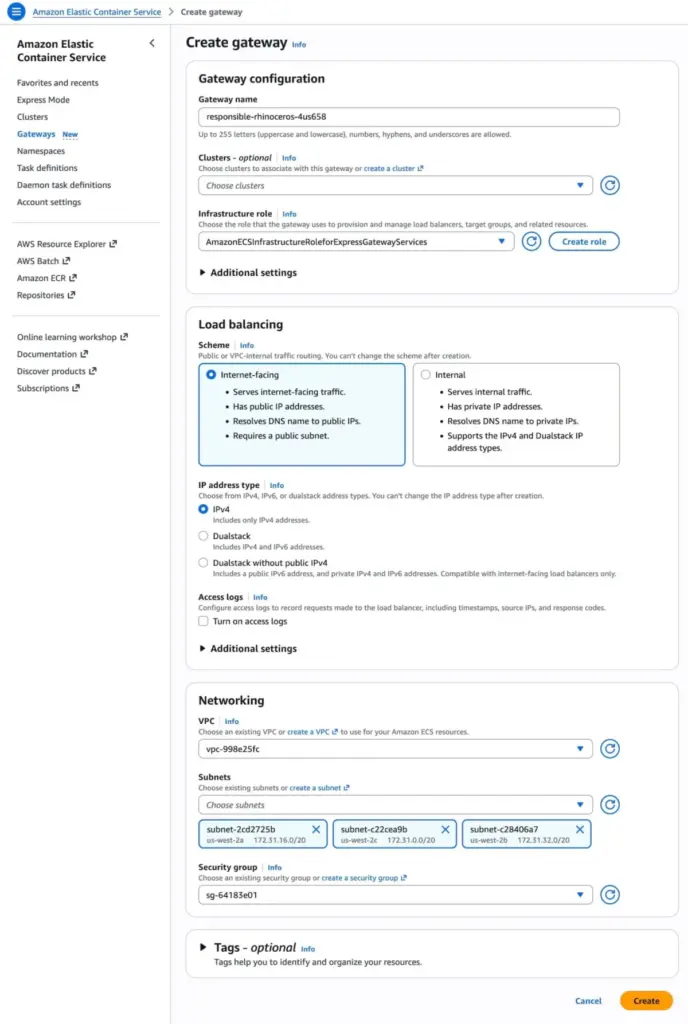
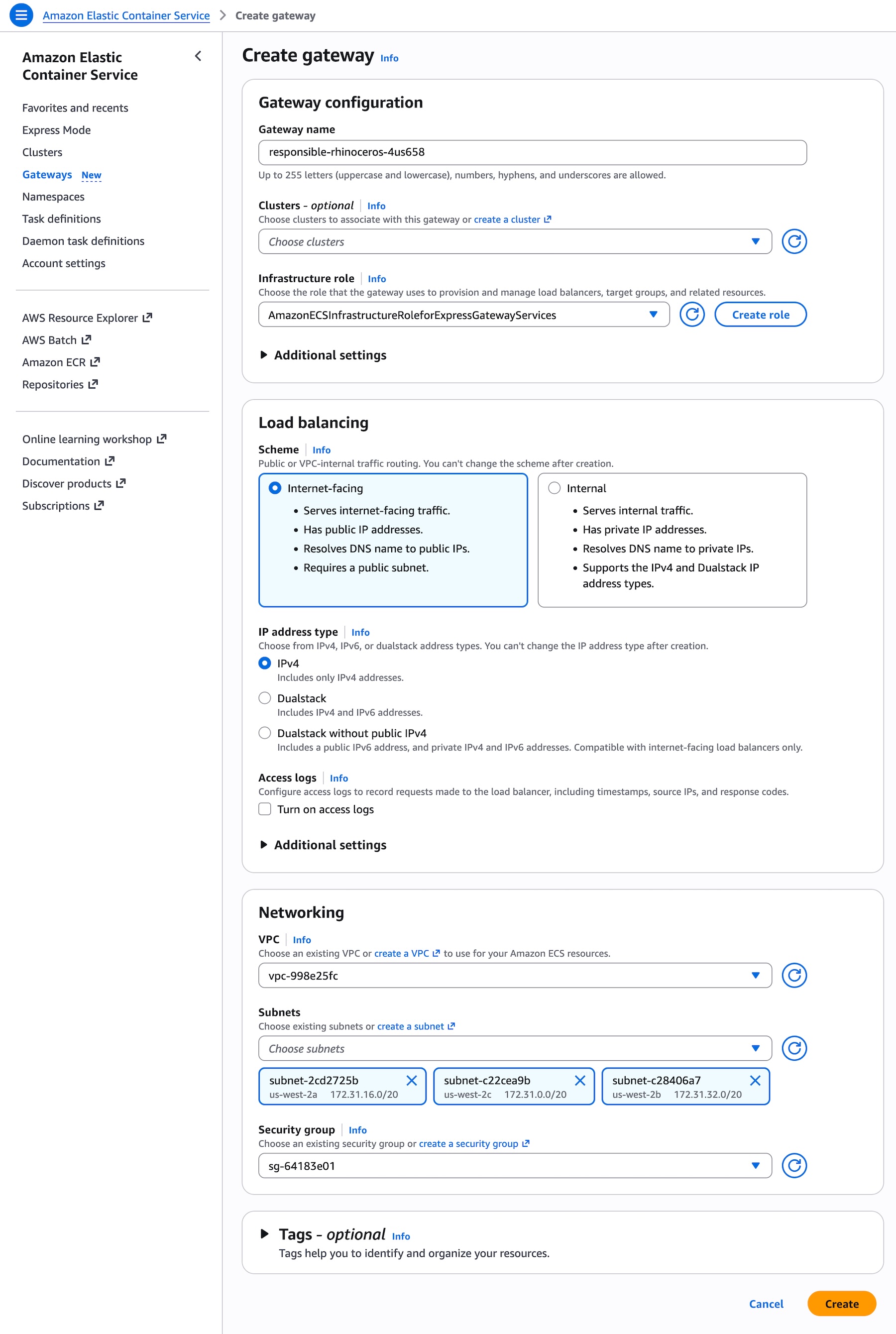
For platform teams looking to implement this new architecture, the process begins in the Amazon ECS console. Here, administrators can create a gateway and establish its foundational configuration. A critical component of this setup is the infrastructure role—an IAM role that grants ECS the necessary permissions to provision and manage networking resources such as ALBs, security groups, and certificates within the user’s account. When creating a gateway, administrators define a unique name and select this infrastructure role, with the option to associate the gateway with specific ECS clusters either during the initial setup or at a later date.
Configuration choices are flexible yet robust. Users can select a load balancing scheme, choosing between public or VPC-internal traffic routing. Within the additional settings, teams can configure listeners, specify ports, set the maximum number of load balancers the gateway is permitted to scale to, and integrate web ACLs to provide an added layer of protection for web applications. While some parameters—such as the name, network scheme, VPC, subnets, IP address type, and listener protocol—are fixed upon creation to ensure stability, the overall experience is designed to reduce the manual intervention typically required for ingress management.

The process is equally streamlined for those who prefer working via the AWS Command Line Interface (AWS CLI). By invoking the CreateGateway command, users can define the gateway’s characteristics through a configuration object. Importantly, no physical infrastructure is provisioned at this stage; the system remains dormant until a service explicitly connects via a gateway connector, ensuring that costs are only incurred when resources are actually in use. Once created, the gateway serves as a central hub that can be associated with multiple clusters, facilitating a many-to-many relationship that offers significant architectural flexibility. This allows teams to share a single gateway across various environments or, conversely, assign multiple gateways—such as distinct public and private entry points—to a single cluster.
A Scalable Architecture for Modern Applications
Behind the scenes, the mechanics of ECS Gateway are built to handle the complexities of modern, distributed architectures. A single gateway can be associated with up to 10,000 clusters, while an individual cluster can support up to five distinct gateway associations. This granular control allows platform teams to enforce access policies by carefully selecting which gateways are associated with which clusters. When combined with standard IAM policies, organizations can effectively restrict who is authorized to deploy services to specific environments, adding a layer of governance that is often difficult to maintain in large-scale deployments.
For application teams, the integration is straightforward. The gateway connector is added directly to the service definition during the CreateService or UpdateService process. For organizations currently operating with traditional load balancer setups, ECS Gateway supports an incremental adoption path. Developers can add a gateway connector to an existing service, allowing both the legacy ingress path and the new gateway path to coexist. This "side-by-side" deployment strategy enables teams to validate their new connections in a live environment before decommissioning the old load balancer configuration, thereby minimizing the risk of downtime or service disruption.
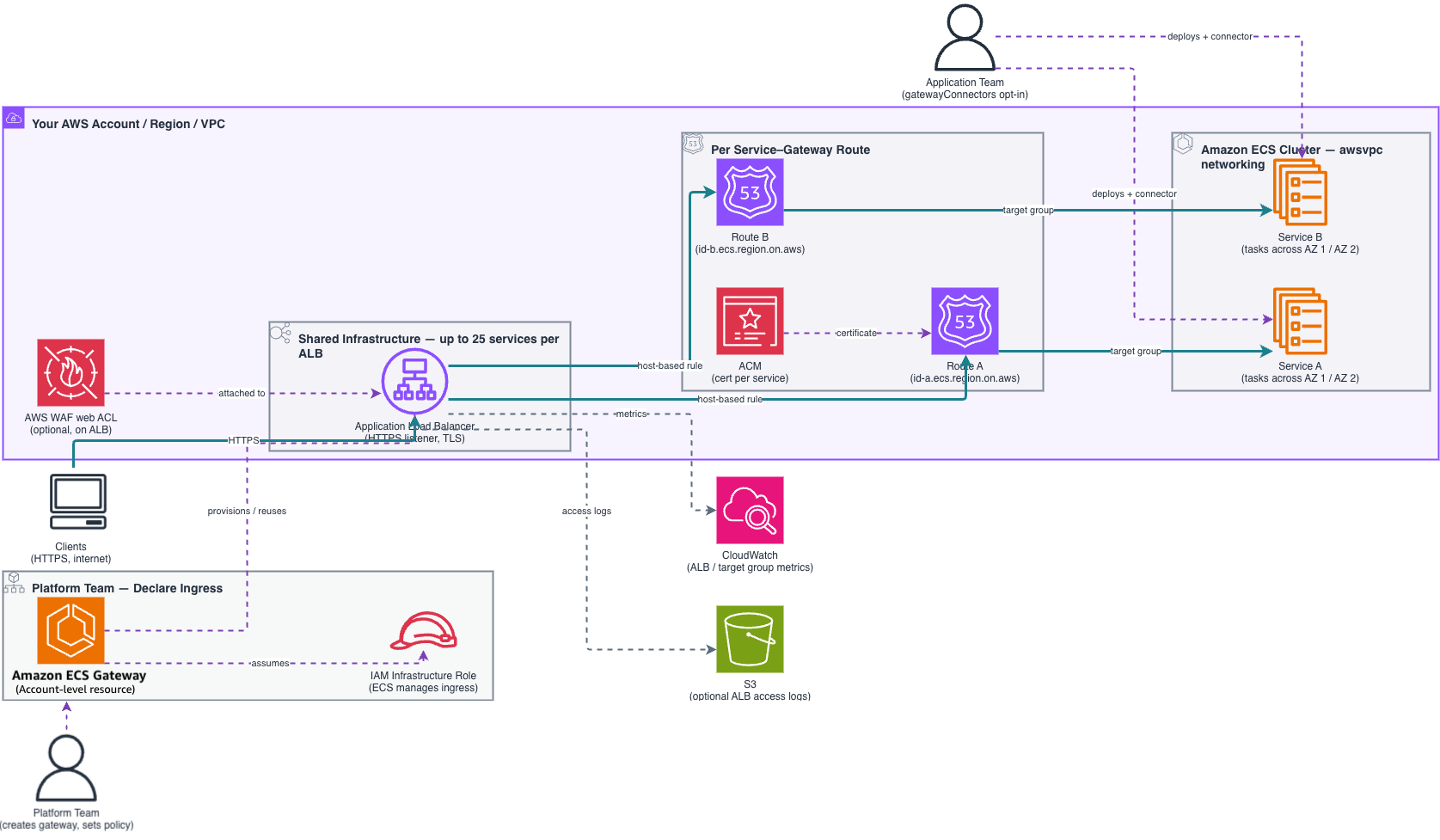
When a deployment is initiated, Amazon ECS performs a compatibility check, evaluating the gateways associated with the cluster to find the right match for the service. A gateway is deemed compatible if its access type aligns with the service’s connector filter, if it resides within the same VPC, and if it spans all the Availability Zones utilized by the service’s subnets. Once a match is confirmed, ECS handles the heavy lifting: it assigns the service to an ALB with sufficient capacity and automatically provisions the necessary supporting resources, including ACM certificates, unique DNS hostnames, listener rules, and service-specific security groups that restrict inbound traffic exclusively to the ALB.
Operational Resilience and Availability
Beyond simple provisioning, ECS Gateway is designed to automate common operational scenarios. It manages the health of the connections, monitors the lifecycle of the certificates, and ensures that security group rules remain consistent as services scale. If an existing ALB reaches its capacity limit, ECS automatically provisions a new one, up to the defined maximum count, ensuring that traffic growth does not lead to infrastructure bottlenecks.
This new capability is now available in all commercial AWS Regions where Amazon ECS is supported. There is no additional service fee for using ECS Gateway; customers continue to pay only for the underlying infrastructure resources that are provisioned in their accounts. This includes standard charges for Application Load Balancers, CloudWatch logs and metrics, ACM certificates, and any applicable data transfer costs.
By abstracting the complexities of ingress networking, Amazon ECS Gateway allows organizations to focus their engineering talent on building and shipping applications rather than managing the plumbing of the underlying cloud infrastructure. As containerized workloads continue to evolve in complexity, tools like this provide the necessary abstraction to maintain speed without sacrificing the security or reliability that enterprise-grade applications demand. For those ready to move toward a more automated, policy-driven networking model, the path to implementation is open, with full documentation and support available through the standard AWS channels and the Amazon ECS console.