









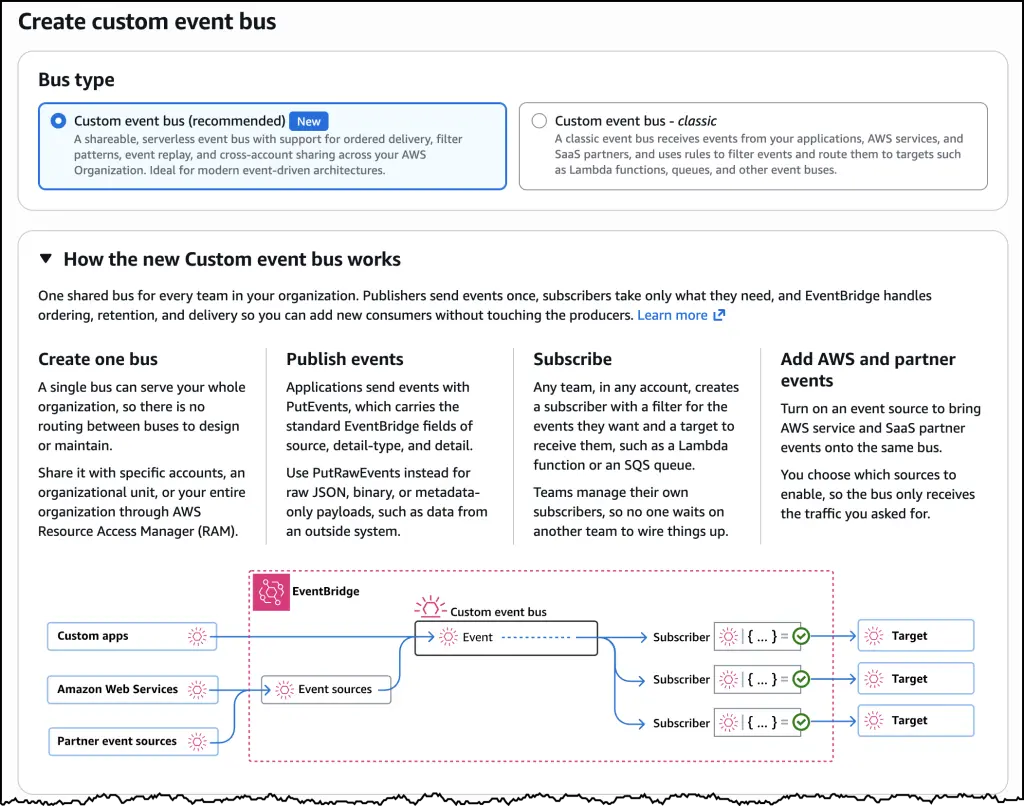
In the rapidly evolving landscape of serverless computing, organizations have increasingly turned to event-driven architectures to build decoupled, responsive, and highly scalable applications. Amazon EventBridge has long served as the cornerstone of this shift, allowing developers to build sophisticated systems that react to changes in state across AWS services and custom applications. However, as organizations move beyond initial prototypes and scale these architectures across multiple accounts and teams, the complexity of managing event routing has historically introduced new operational hurdles. Today, Amazon Web Services (AWS) is addressing these challenges head-on with the introduction of an enhanced custom event bus for Amazon EventBridge, designed specifically to streamline enterprise-scale event management.
The Evolution of Event-Driven Scaling
For many organizations, the journey begins with a single custom event bus housed within a solitary AWS account. In the early stages of adoption, this centralized model is both efficient and intuitive, providing a single point of truth for event traffic. However, as an organization matures, security and governance best practices typically dictate a multi-account structure, where individual teams operate within their own isolated AWS environments.
Under the previous model, connecting these disparate environments required teams to establish multiple event buses linked through complex cross-account rules or intricate bus-to-bus configurations. While functional, this workaround frequently reintroduces the very operational overhead that serverless architectures were intended to eliminate. Platform teams often find themselves struggling to maintain visibility into who is subscribing to specific events, while the financial costs associated with cross-account routing can compound rapidly as traffic volumes grow. Furthermore, teams requiring advanced features such as strict event ordering were often forced to implement complex, custom-built workarounds or pivot to entirely different, often more resource-intensive, technologies to meet their requirements.
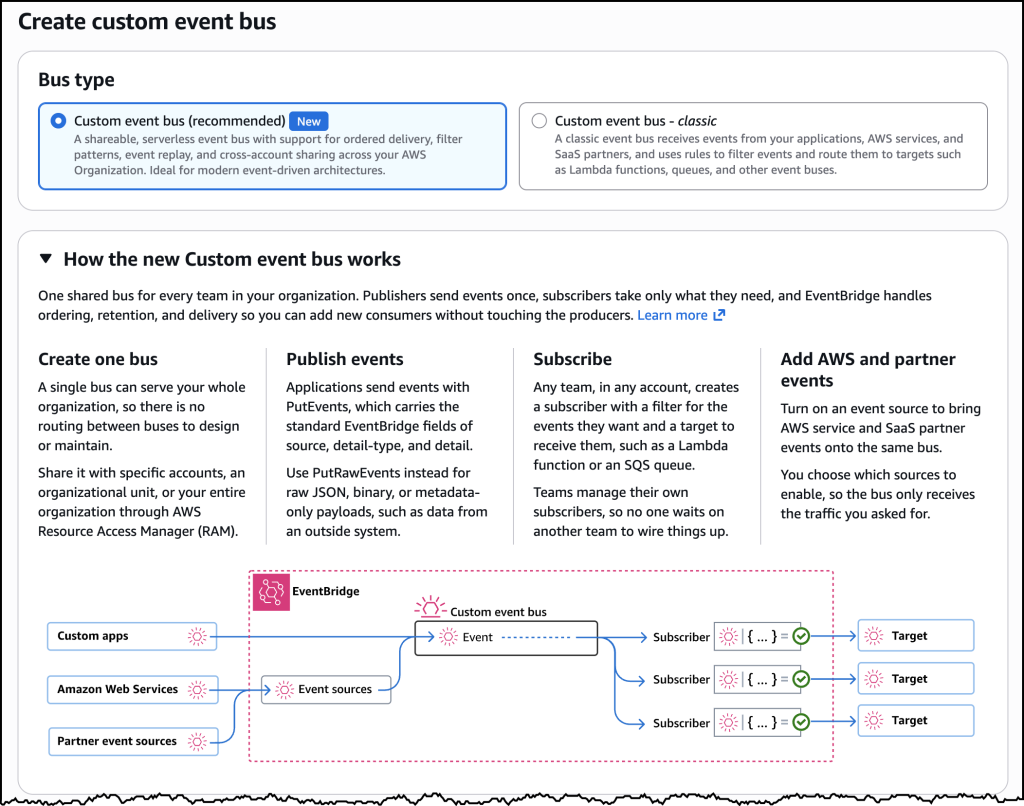
The new enhanced custom event bus announced today represents a fundamental reimagining of this architecture. By deploying a single, centralized event bus that can be shared across all AWS accounts within an organization, AWS is providing a streamlined backbone for event-driven systems. This new offering introduces native ordering guarantees, a simplified "Subscriber" resource model, and a redesigned pricing structure that promises improved economic efficiency and more transparent cost allocation for both publishers and subscribers.

Streamlined Management and Resource Sharing
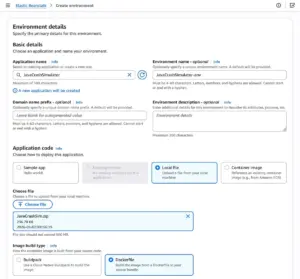
The process for adopting this new architecture is designed to be seamless for existing users. Within the AWS Management Console, developers can now select between the traditional "classic" custom event bus—which continues to support existing workloads without interruption—and the new enhanced custom event bus. Once the enhanced bus is selected, the platform handles the heavy lifting, serving as a unified backbone for the entire organization. Publishers can transmit events without needing deep, specific knowledge of the downstream consumers, while individual teams retain the autonomy to create their own subscriptions independently.
A major highlight of this update is the integration with AWS Resource Access Manager (AWS RAM). By enabling event bus sharing through RAM, platform teams can designate specific AWS accounts, organizational units, or even individual IAM roles and users as authorized participants. This eliminates the need for manual configuration of cross-account permissions or complex bus-to-bus routing logic. By consolidating the infrastructure into a single, shared bus, organizations can drastically reduce the fragmentation that occurs when subscriber limits force the creation of multiple, siloed buses. The enhanced custom event bus ships with a default quota of 10,000 subscribers per bus, with the option to request higher limits as needs dictate.
Tackling Event Ordering and Reliability
One of the most frequent requests from developers working in complex domains, such as logistics or financial services, is the ability to enforce strict event ordering. In traditional asynchronous systems, the sequence of events is often non-deterministic; however, in scenarios like tracking a vehicle’s location or processing a series of account updates, out-of-sequence data can lead to stale information and incorrect algorithmic decisions.
The enhanced custom event bus addresses this by supporting both asynchronous and ordered delivery patterns on the same bus. Publishers can now include an EventGroupId in their event metadata. For subscribers that require ordered processing, EventBridge ensures that events sharing the same EventGroupId are delivered in the precise sequence they were received. Other subscribers on the same bus can continue to consume these events in a standard, asynchronous manner, providing the flexibility to balance strict ordering requirements with overall system performance.

To further bolster reliability, the new architecture supports synchronous invocation for targets such as AWS Lambda. In this mode, the system confirms successful processing before acknowledging the event, which effectively removes the need for intermediary services like Amazon Simple Queue Service (SQS) that were previously used as buffers to ensure delivery reliability. This shift significantly simplifies the architectural footprint for teams building mission-critical services.
Advanced Filtering and Data Processing
Managing a large volume of events requires sophisticated tools for filtering and transformation. The introduction of the "Subscriber" resource is a significant step toward reducing management overhead. Previously, developers were required to coordinate separate rules, target configurations, and retry policies across multiple disparate resources. The new Subscriber resource aggregates these components into a single, cohesive unit. This allows teams to define exactly which events they want to receive, where those events should be delivered, and the specific retry policies or dead-letter destination logic to be applied in the event of a failure.
Additionally, the system introduces powerful data manipulation capabilities. Publishers can now enable content-based deduplication, which allows EventBridge to detect and discard duplicate events based on the payload itself. This is particularly useful for sources that cannot reliably generate unique idempotency tokens, as it provides exactly-once delivery semantics for retries that occur within a five-minute window.
For subscribers, the integration of JSONata expressions allows for the dynamic reshaping of event data before it reaches its destination. Whether it is renaming fields, extracting nested values, or computing new metrics, this feature enables seamless integration with downstream APIs that may require different data schemas. Furthermore, for organizations working with binary formats like Apache Avro or Protocol Buffers, EventBridge can now deserialize these payloads into JSON, allowing for fine-grained filtering and routing without requiring the subscriber to manage the deserialization logic locally.
A New Economic Model for Scaling
Alongside the technical enhancements, AWS has introduced a new pricing model specifically tailored for this scale. By shifting to an ingress and egress throughput-based model, publishers are charged based on events ingested, and subscribers are charged based on events delivered. This model replaces the previous per-event fee structure, which often resulted in unpredictable and compounding costs when routing events across multiple buses and accounts. This change not only simplifies cost allocation but also provides a more predictable financial outlook as organizations scale their event-driven footprints.
The transition to this new system is entirely voluntary. Existing custom event buses will remain available under the "Classic" designation, ensuring that current production workloads are not impacted. The enhanced custom event bus is available immediately in major AWS Regions across North America, Europe, and Asia Pacific. As enterprises continue to shift toward highly distributed architectures, this unified approach to event management offers a path forward that emphasizes simplicity, reliability, and cost-efficiency, enabling teams to focus on building features rather than managing the plumbing of their event-driven ecosystems.