










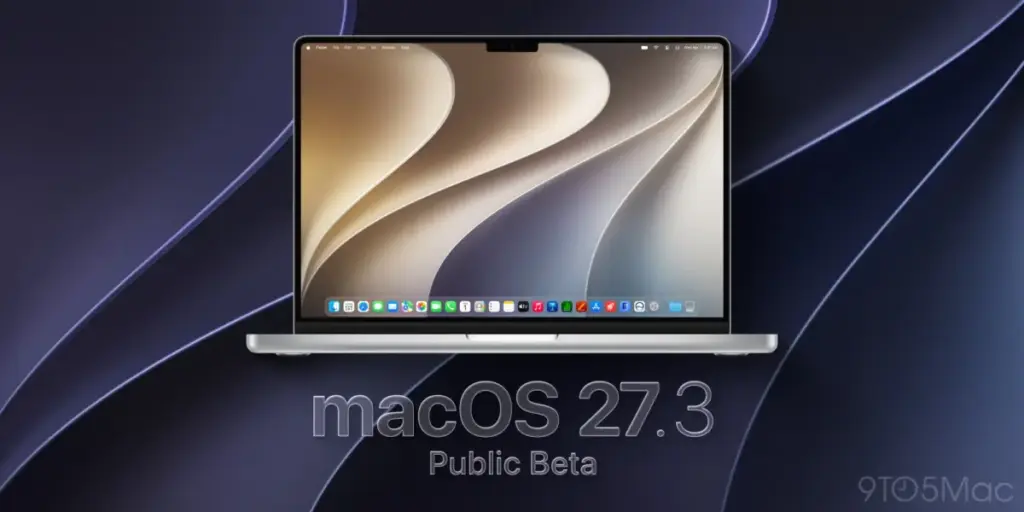
Apple has officially pushed the second public beta of macOS 27.3 into the hands of its testing community, marking a significant milestone in the development cycle of the operating system. Following the rollout of the second developer beta earlier this week, this public release allows enthusiasts and early adopters to get a firsthand look at the sophisticated new privacy tools, expanded artificial intelligence capabilities, and interface refinements slated for the final version expected next month.
The build, identified as 26C5047e, mirrors the current developer build, signaling that Apple is moving toward a final stable release. This update is being positioned by industry analysts as the most substantial refinement of the macOS 27 ecosystem since its initial launch, offering a marked departure from the relatively modest adjustments seen in the version 27.2 update.
New Privacy and Intelligence Features Take Center Stage
At the heart of the macOS 27.3 update is a focus on user autonomy and security. Among the most notable additions are refined privacy controls specifically targeting Full Disk Access and system automation. These changes empower users with granular oversight regarding which applications can interact with sensitive system files and automated workflows, addressing long-standing requests from power users and security-conscious professionals.

Simultaneously, Apple has made a strategic move to broaden the reach of its proprietary Apple Intelligence features. With this latest beta, the company has officially expanded testing for these AI-driven tools to include users in China on both Mac and iPad platforms. This expansion is part of a broader push to bring Apple’s generative AI features to a global audience, ensuring that as the technology matures, it can operate effectively within diverse regulatory and linguistic environments.

Enhancing the Safari Experience and System Utility
Beyond the under-the-hood security improvements, macOS 27.3 introduces several quality-of-life enhancements that alter how users interact with the desktop environment. Perhaps most visible is the evolution of Safari. With the latest beta, the browser now supports vertical tabs and an adaptive dark mode, providing a cleaner, more focused browsing experience. Vertical tabs, in particular, are expected to be a boon for users who manage dozens of open websites simultaneously, as they allow for better visibility of page titles and easier navigation through complex research tasks.
The integration of native Live Activities support into macOS 27.3 is another major technical shift. By bringing this feature—which originated on mobile devices—to the desktop, Apple is fostering a more unified experience across its product lines. Users can now keep an eye on real-time information, such as sports scores, food delivery status, or flight updates, directly from the desktop or the notification center without needing to open specific applications.
Furthermore, Apple has focused on document productivity by adding native Markdown rendering to the Quick Look feature. This allows users to preview Markdown-formatted documents instantly with full visual formatting, rather than seeing raw code. Complementing these productivity tools are new security measures designed to safeguard user data; the operating system will now proactively check iCloud public links for potentially harmful content, reinforcing Apple’s ongoing commitment to platform safety.
Siri AI: Expanding Capabilities and Developer Tools
A significant portion of the macOS 27.3 update is dedicated to the evolution of Siri AI. Apple is pushing the assistant beyond its traditional boundaries, integrating it more deeply into the core operating system. In the current beta, Siri is capable of performing increasingly complex, multi-step actions across primary apps such as Messages, Music, Calendar, Photos, and Reminders.

The update also streamlines file and folder management, allowing users to leverage natural language to organize their digital workspace. For instance, a user might instruct the assistant to move specific files into a folder created during a particular project timeframe, significantly reducing the manual labor required for routine file maintenance.
Recognizing that the ecosystem is only as strong as its third-party applications, Apple has also introduced a suite of new development tools. These tools empower programmers to build sophisticated "App Skills" for Siri AI using Markdown-based instructions. This move allows developers to define how their applications respond to user intent with greater precision, creating a more cohesive and responsive interface between the user, the operating system, and third-party software.
Language Support and Global Accessibility
As part of its push to make AI more accessible on a global scale, Apple is also expanding Siri AI support to include Traditional Chinese, Norwegian, Turkish, and Vietnamese. This rollout is critical for maintaining the relevance of Apple’s intelligent features in international markets. By training its models to understand these specific linguistic nuances, Apple ensures that the utility of its AI-enhanced features remains consistent regardless of the user’s native language.
A Significant Leap Forward for macOS 27
While previous updates like macOS 27.2 functioned primarily as maintenance releases focused on stability and minor bug fixes, macOS 27.3 is clearly being treated as a major functional update. The sheer volume of new features—from UI tweaks in Safari to deep-level integration of generative AI and privacy controls—suggests that Apple is aggressively iterating on its desktop experience.

For those currently participating in the public beta program, this build represents a crucial testing phase. The consistency between the developer build and the public build indicates that the software is nearing its "Golden Gate" status, which typically serves as the final candidate before a public launch. As the company prepares for the official release next month, the feedback gathered from this public testing cohort will be vital for smoothing out any remaining rough edges.
For users interested in participating, Apple’s public beta program remains open and free to all who wish to contribute to the refinement process. By visiting the official Apple beta portal, users can enroll their compatible Mac hardware to receive the latest updates as they are finalized. As Apple continues to bridge the gap between desktop utility and mobile-style intelligence, the developments in macOS 27.3 provide a clear roadmap for the future of the Mac experience, prioritizing a balance between powerful automation and user-centric privacy.