












GitHub has released its latest monthly transparency report, detailing the operational hurdles and reliability initiatives undertaken throughout October. As the platform continues its ambitious, large-scale migration to Microsoft Azure, the engineering team faced a complex landscape of eight distinct service degradation incidents. These events, ranging from regional network disruptions to database connection saturation, have provided critical insights into the platform’s evolving architecture and the necessity of balancing rapid capacity growth with rigorous safety protocols.
The overarching philosophy guiding GitHub’s engineering efforts remains unchanged: "availability, then capacity, then features." This hierarchy is critical as the platform navigates the transition of its core services from legacy datacenters to Azure’s cloud infrastructure. By the end of the first week of November, GitHub had achieved significant milestones, with 140 of 151 production services and 32 of 50 MySQL primaries successfully operating in the Azure Central US region.
This migration is not merely a change in hosting; it is a fundamental shift in how GitHub handles scale. Currently, Azure manages 63% of migrated-service reads, 66% of monolith reads, and 52% of Git reads. To support this, GitHub completed a major compute expansion across all nine Central US Kubernetes clusters, effectively doubling its available capacity. This additional headroom is vital, as traffic for migrated services has surged by 82% since March. The Central US region is now absorbing growth that would have otherwise pushed the original, legacy environment beyond its operational limits.


Reliability Improvements Amidst Capacity Expansion
While capacity growth is the primary driver of the current infrastructure push, GitHub has simultaneously implemented targeted reliability improvements designed to isolate failures and prevent minor issues from cascading into platform-wide outages.
Recent changes to GitHub Actions have bolstered the capacity for critical Azure control-plane requests, ensuring that workflow execution remains resilient under load. Furthermore, a strategic implementation of NAT-gateway mitigation resulted in an 85% reduction in usage, with only four production jobs failing during the rollout—a stark contrast to the 800 failures that engineers had anticipated without such safeguards. Additionally, the introduction of stricter connection limits and client-side refinements is intended to minimize the risk of "reconnect storms," where a localized dependency failure leads to a surge of traffic that overwhelms other parts of the system.
Database health has also been a focal point. Engineers successfully moved a high-traffic GitHub Actions endpoint, which handles over 250 million requests daily, to a more efficient service path. This move reduced peak database reads by 85%. Similarly, a minor but effective change—requiring a minimum of three characters for repository topic searches—led to a 98% reduction in slow or terminated queries, demonstrating how small optimizations can significantly alleviate stress on the backend.
Incident Review: Addressing October’s Disruptions
Despite these advancements, October saw several incidents that highlighted the fragility of certain interactions within the platform’s orchestration and routing layers.
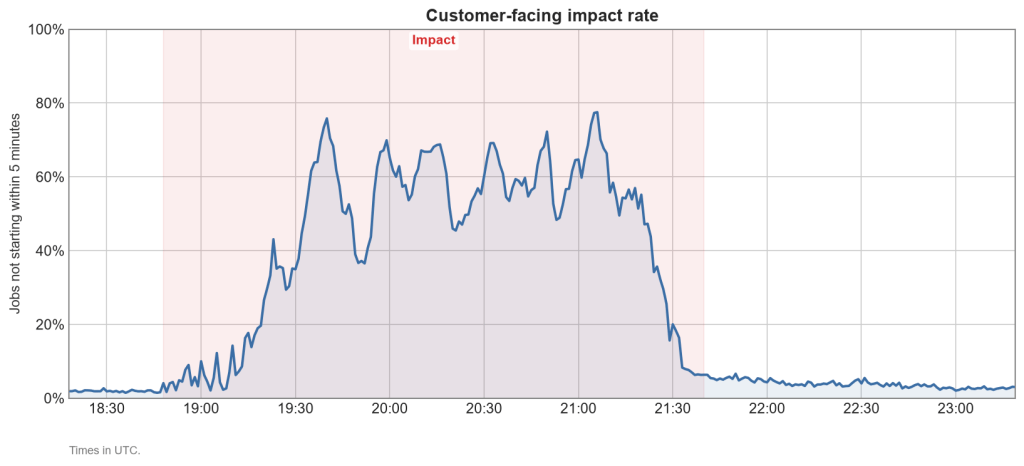
On October 5, a three-hour-and-38-minute incident disrupted GitHub Actions, leaving many GitHub-hosted runners queued or unable to initiate workflow runs. The root cause was identified as a partial networking failure within the cloud provider’s infrastructure, which severed connections between a datacenter region and essential cloud-hosted databases. Rather than failing gracefully, the service entered a state of prolonged waiting, eventually exhausting memory and triggering a restart. As traffic shifted to a healthy region, that region became overloaded, demonstrating the risks of failover scenarios in a high-demand environment.
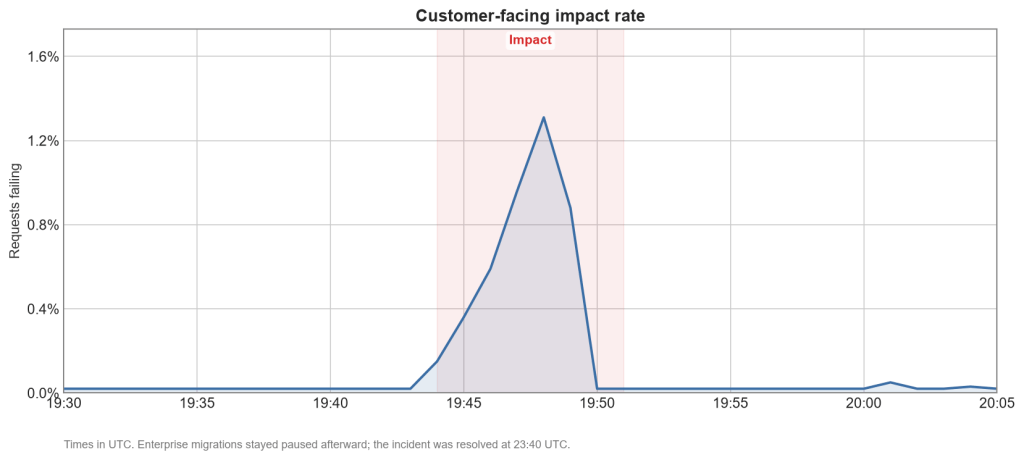
The following day, October 6, saw a brief but impactful six-minute surge in failed requests, followed by a three-hour pause on enterprise migrations. A sudden burst of large queries from the GitHub Enterprise Importer exhausted available database connections, causing a ripple effect that degraded other services sharing the same database. GitHub responded by pausing migrations and implementing a fix to batch these queries more efficiently.
Write outages on October 7, lasting a combined total of 19 minutes, underscored the dangers of complex database routing. During routine maintenance, a new machine was elected as a leader while possessing outdated records that erroneously routed writes to retired servers. Because the incorrect routing settings passed validation checks, they were propagated immediately. This incident was exacerbated by an automated task that triggered a second, similar election shortly after the first, requiring manual intervention to stabilize the database environment.
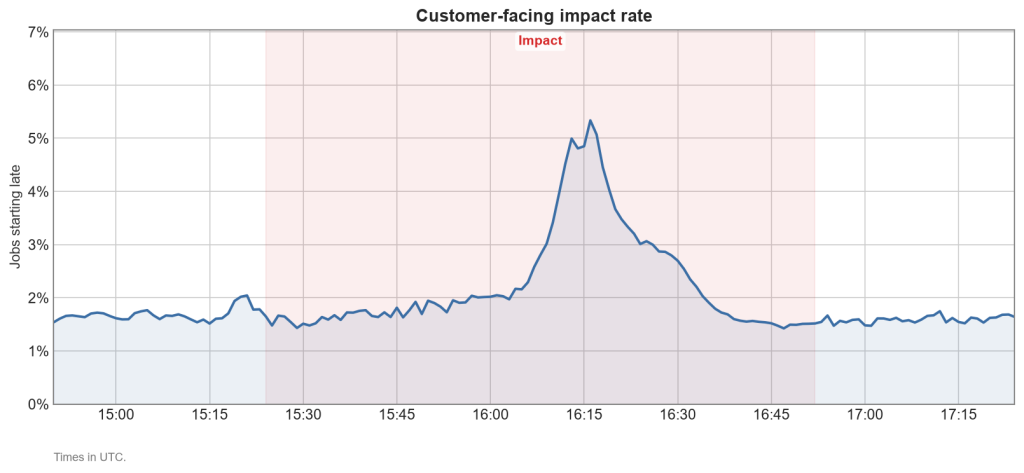
On October 19, a one-hour-and-seven-minute service degradation occurred when an internal logging service lost connection to its cache servers. The resulting flood of retries saturated the network links between the datacenter and the cloud region, disrupting other services sharing that pathway. Later in the month, on October 21, a memory-related issue within the event streaming platform caused a six-hour-and-46-minute disruption, primarily affecting audit log visibility and pull request updates. The system’s inability to gracefully handle the memory overhead associated with client connections caused a cascading failure across multiple brokers.
The final days of October brought two additional challenges. On October 28, a credential-related failure with an upstream provider caused intermittent errors for users of Copilot’s GPT-family models. On October 30, a 31-minute incident saw a database connection pool reach its capacity, primarily due to update requests holding connections open for extended periods while performing secondary lookups. This caused a spike in failed requests for Git operations and pull request merges.
Looking Ahead: The Path to East US 3
The lessons learned from these October incidents are being integrated into the ongoing buildout of the East US 3 region. Although the project is currently running about one week behind the original schedule, the team is preparing for the first validated traffic ramp-up in early December.
This phase is not just about bringing more servers online; it is about "hardening"—a process of improving migration safety, strengthening dependency isolation, and ensuring that regional recovery procedures are robust enough to withstand real-world conditions. For GitHub’s engineering team, the goal is clear: as they continue to expand, they must ensure that the platform remains not only larger and more capable but also more resilient. The commitment to maintaining transparency through these monthly reports remains a cornerstone of their operational strategy, providing the community with a clear window into the engineering work required to keep the world’s leading software development platform online and performant.