








If the age of digital media began with the iconic proclamation that "video killed the radio star," the current era is defined by a more cynical reality: the death of the photograph. As generative AI continues to blur the lines between objective truth and synthetic fabrication, the validity of visual evidence is under unprecedented assault. Josh Cowell, the founder of the camera startup CAIM1—short for Counter Artificial Intelligence Machine 1—is positioning his company at the forefront of a movement to reclaim digital integrity. By embedding cryptographic proof of authenticity directly into the image at the point of capture, CAIM1 hopes to serve as a vital tool in the fight against a mounting tide of AI-generated misinformation.
"The traditional photograph is dead, and designing a secure camera to replace it is an exercise in healthy paranoia," Cowell noted in a recent technical blog post published by Tropic Square, the company providing the specialized silicon chips for the project. For Cowell, the stakes are not merely academic; they are foundational to the way we interact with reality.
The Scale of the Digital Deception
The urgency behind CAIM1’s mission is underscored by a rapidly deteriorating landscape of online information. Damaging, nonconsensual, and deceptive deepfakes have proliferated across the digital sphere, turning social media into a minefield of misinformation. According to a recent report by the European Parliament, the number of deepfakes circulating on social media platforms has doubled every six months since 2023. By 2025, that figure reached an estimated 8 million instances.
The projections for the immediate future are even more alarming. Europol has estimated that if current trajectories remain unchecked, as much as 90 percent of all online content could be AI-generated by the end of 2025. This explosion of synthetic media has forced a reckoning among the world’s largest technology firms. Companies such as xAI, Google, Meta, and Apple have faced intense legal and public pressure for failing to implement adequate safeguards. The consequences of these lapses are profound; researchers have highlighted that a staggering 98 percent of deepfakes are pornographic in nature, used to harass, intimidate, or discredit individuals through nonconsensual sexual imagery.
CAIM1, still in its prototype phase, aims to provide a hardware-based solution to this systemic vulnerability. The startup is currently working toward a flagship camera release slated for the first quarter of 2027. According to Cowell, the camera is only the beginning. "CAIM1 is ultimately just the foundation of a comprehensive, verifiable infrastructure we are developing designed to aid digital truth," he explains.
How CAIM1 Combats Deepfakes
The core of CAIM1’s defensive strategy lies in its internal silicon chip, the Tropic01. Described by Tropic Square as the world’s first "auditable secure element," the chip serves as the bedrock of the camera’s verification process. When a user presses the shutter button, light photons pass through what the company calls a "digital vault" before reaching the sensor. During this split-second transition, the chip creates a hardware-level verification signature that is permanently embedded into the image data.
Crucially, the verification process relies on physical irregularities inherent in the silicon manufacturing process. Because no two chips are identical at the microscopic level, each CAIM1 unit generates a unique digital fingerprint. This ensures that every image can be traced back to a specific, authenticated camera device. Once an image is captured, this verification is linked to an anonymous, decentralized blockchain signature, creating an immutable audit trail that researchers, journalists, and the general public can use to verify the provenance of a photograph.
To ensure this sensitive data remains secure, CAIM1 employs a multi-layered defense strategy. The system utilizes advanced physical noise generation and sophisticated internal encryption methods to safeguard the data. By deploying digital "tripwires" and robust encryption protocols, the system is designed to prevent unauthorized access, even in the event of attempts to extract encryption keys or conduct brute-force attacks.
The camera’s commitment to verification extends even into the physical realm. Alongside every digital file, the system is capable of producing a physical receipt. This printout contains a permanent QR code for instant access to the photograph, a blockchain reference number, and metadata—including the precise date, time, and GPS coordinates—associated with the capture.
CAIM1 is not alone in the quest for hardware-led verification. Tech giants are increasingly recognizing the necessity of provenance in a post-truth world. Apple, for instance, has introduced hardware attestation for its iPhone 18 Pro and 18 Pro Max, utilizing a "Reference Image" system to verify content captured on the device. Simultaneously, a coalition of legacy camera manufacturers, including Sony, Canon, and Nikon, announced a joint initiative in 2024 to embed similar digital signatures into their hardware.
However, CAIM1 argues that its approach offers a distinct advantage: transparency. Cowell emphasizes that because the Tropic01 chip is built on an open architecture, researchers can audit the internal design of the security hardware. This stands in stark contrast to the closed ecosystems favored by major corporations. "Competitors require users to place blind faith in a single corporate entity’s closed ecosystem," Cowell noted, arguing that for digital truth to be meaningful, the verification infrastructure itself must be observable and verifiable by the public.
Innovations Beyond Authentication
While the primary mandate of CAIM1 is to restore trust in visual media, the developers were faced with the significant engineering challenge of maintaining high-performance hardware within a compact, secure housing. Advanced processors generate substantial heat, which can degrade image quality and noise performance. Traditional cooling solutions, such as internal heatsinks, proved insufficient for the thermal demands of the chip, while conventional fans were deemed too loud and prone to causing micro-vibrations—a death knell for image sharpness.
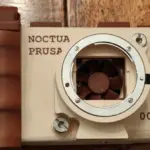
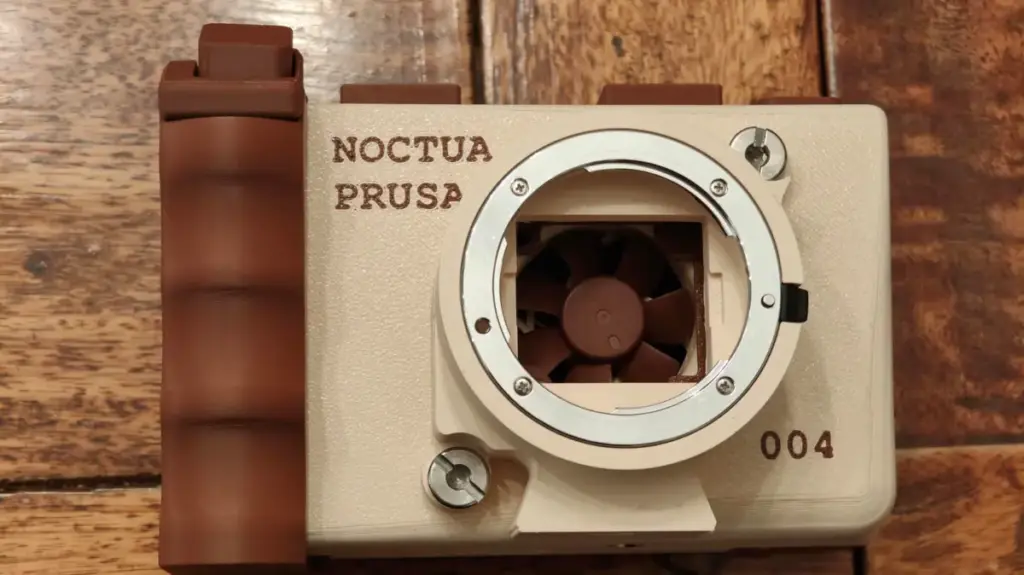
To resolve these technical hurdles, CAIM1 entered a partnership with the renowned PC cooling manufacturer Noctua. The resulting solution is the NF-A4x10, a custom active-cooling airflow system. This design utilizes a single-airstream path that draws cool air across the camera’s two primary heat sources—the CPU and the image sensor—before expelling the excess heat. To maintain image stability, the system incorporates specialized anti-vibration mounts, ensuring that the cooling mechanism does not introduce motion blur or impact the integrity of the captured footage.
Beyond its security features, CAIM1 is designed as a high-performance tool for professional videographers. The camera is capable of capturing high-resolution 4K video, intended for use in the most demanding environments, such as action sports and high-speed cinematography. The startup has explicitly stated that it is not interested in building a niche gimmick or a "toy." Instead, the focus remains on creating a rugged, reliable device that can withstand the rigors of professional fieldwork.
Details regarding the full technical specifications remain limited as the company continues its development cycle. However, the camera is designed with a "Bring-Your-Own-Lens" philosophy, allowing users to pair the secure digital back with both vintage and modern glass. This flexibility was recently put to the test in a real-world scenario at Germany’s Nürburgring racetrack, where the prototype was equipped with premium lenses from Kowa Optronics’ JC10M series. The success of these trials suggests that CAIM1 intends to balance its role as an arbiter of digital truth with the practical, high-performance needs of working photographers.
As the 2027 release date approaches, the industry will be watching to see if a combination of open-source hardware, cryptographic verification, and robust engineering can truly serve as a bulwark against the rising tide of artificial deception. For now, CAIM1 continues its push to prove that, even in a world of deepfakes, there is still a place for objective reality.