








As the global space economy accelerates and commercial ambitions reach further into orbit, the demands placed on spacecraft infrastructure are evolving at an unprecedented pace. Modern satellites require significantly more onboard power to support heavy data processing, high-throughput communications, and advanced payloads than their predecessors. Meeting this skyrocketing energy demand requires a fundamental shift in how engineers design and deploy spacecraft hardware, particularly when it comes to power generation.
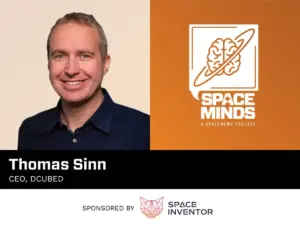
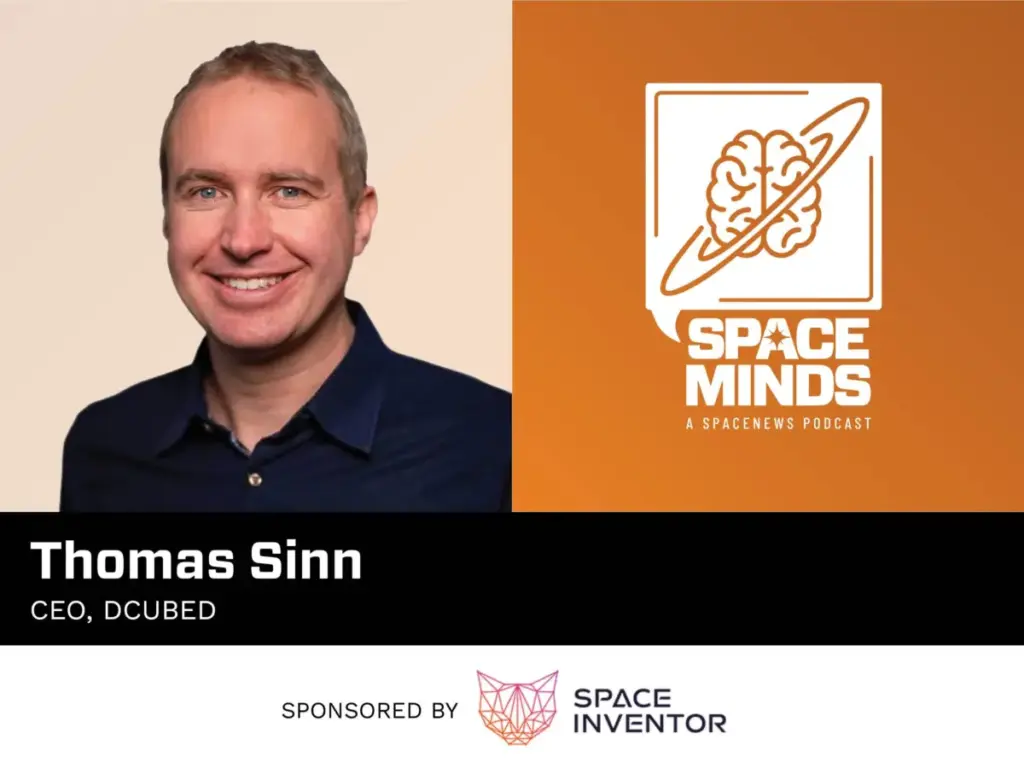
In the latest episode of SpaceMinds, SpaceNews Executive Editor Mike Gruss sat down with Thomas Sinn, the Chief Executive Officer of Dcubed, during the Space Tech Expo Europe conference. The comprehensive discussion delved into Dcubed’s recent milestone—a substantial $30 million funding round—and explored how the company is revolutionizing orbital power systems by applying the ancient Japanese art of paper folding, or origami, to next-generation solar arrays.
The Rising Power Paradox in Modern Spacecraft
The conversation on SpaceMinds began by addressing one of the most pressing challenges facing the contemporary space industry: the exponentially increasing power demands required for modern missions. Over the past decade, the democratization of low Earth orbit and the proliferation of mega-constellations have transformed the commercial space sector. However, this growth has brought technical hurdles, chief among them being the hunger for electrical power.
Satellites are no longer simple relays reflecting signals back to Earth or capturing basic meteorological data. Today’s commercial and institutional spacecraft operate as sophisticated data centers in the void of space. They utilize advanced synthetic aperture radar, high-resolution optical imaging systems, and onboard artificial intelligence accelerators to process information locally before transmitting it to ground stations. These data-intensive payloads demand massive amounts of electricity to function continuously.
Traditionally, meeting these heightened energy requirements meant building larger, heavier rigid solar panels or relying on cumbersome mechanical deployment mechanisms that add significant mass and complexity to a launch. In the aerospace industry, every single gram counts, and traditional deployment systems often introduce points of potential failure. Dcubed has stepped into this technological bottleneck with a novel philosophy: instead of fighting against the physical constraints of rocket payload fairings, engineers should embrace geometry to pack more capability into tighter spaces.
Origami in Orbit: Reimagining Solar Arrays
During the interview at Space Tech Expo Europe, Sinn detailed Dcubed’s innovative approach to solving the spacecraft power deficit. By utilizing principles derived from origami, the company develops deployable structures that can fold down into exceptionally compact volumes during launch and then smoothly expand into large, functional arrays once the spacecraft reaches its orbital destination.
This geometric approach allows solar arrays to achieve unprecedented scaling ratios. When folded, the arrays occupy a fraction of the space required by traditional deployment architectures, freeing up valuable payload room inside the rocket fairing. Once deployed, their expansive surface area maximizes exposure to sunlight, capturing solar energy with high efficiency.

Sinn explained to Gruss that thinking about solar arrays like origami is not merely a design aesthetic, but a structural necessity for the future of orbital infrastructure. As satellites grow in physical size and operational capacity, the mechanisms responsible for unfolding critical systems must become more reliable, lighter, and more adaptable. Dcubed’s technology bridges the gap between compact stowage and massive deployment scale, offering a glimpse into how future space stations, lunar habitats, and large commercial satellites will harvest energy from the sun.
Fueling Growth with a $30 Million Funding Round
The discussion also highlighted Dcubed’s recent financial milestone, a $30 million funding round that marks a significant turning point for the company. Securing this level of investment in the current economic climate underscores confidence from the investor community in Dcubed’s technology roadmap and its alignment with the trajectory of the commercial space market.
Sinn discussed how the fresh capital will be deployed to accelerate product development, expand manufacturing capabilities, and scale operations to meet growing customer demand. As aerospace prime contractors and commercial constellation operators look for ways to optimize their spacecraft designs, companies that provide critical enabling technologies like deployable solar structures are finding themselves in high demand.
The infusion of capital allows Dcubed to transition from a pioneering technology developer to a mature, high-volume supplier capable of supporting major international space missions. This financial runway will enable the company to conduct further in-orbit demonstrations, refine its manufacturing processes, and strengthen its position as a key player in the European and global space technology ecosystem.
About Space Minds
The interview is part of SpaceMinds, a weekly audio and video podcast produced by SpaceNews. The series is designed to spotlight the inspiring leaders, cutting-edge technologies, and emerging commercial opportunities shaping the future of space exploration and industry.
Each episode features in-depth conversations with the scientists, founders, engineers, and market experts who are driving innovation across the aerospace sector. From breakthrough propulsion concepts and orbital manufacturing to policy shifts and market trends, the podcast explores the developments that capture the imagination of space enthusiasts and professionals alike.
Hosted by Mike Gruss alongside members of the SpaceNews editorial team, SpaceMinds releases new episodes every Thursday. Listeners and viewers can catch the weekly discussions on SpaceNews.com, as well as across major podcast and video platforms including YouTube, Spotify, and Apple Podcasts, providing a direct window into the minds of the people building humanity’s future in space.