










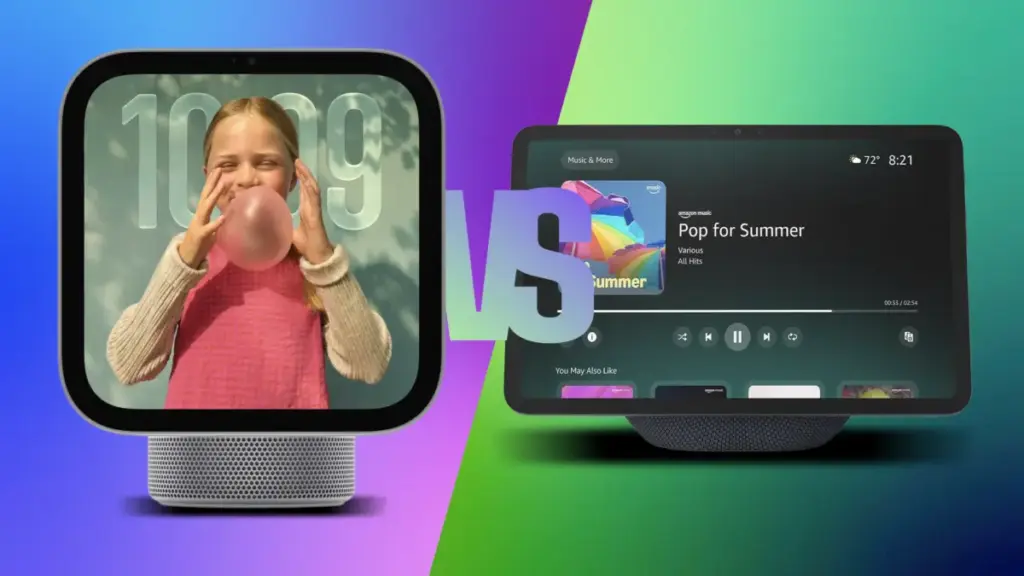
Apple has officially made its long-awaited debut in the smart home display category with the announcement of the HomeView. Set to hit shelves on Nov. 13, the new device introduces a fresh way for consumers to interact with Siri AI and manage connected household devices from a central screen. However, stepping into this arena means Apple faces an uphill battle. Competitors like Amazon and Google have been refining their smart display ecosystems for nearly a decade, leaving Apple with significant ground to cover.
Industry veterans who have tested smart displays since their inception note that Amazon launched its initial Echo Show in 2017, followed closely by Google entering the market with the original Google Home Hub in 2018. Over the intervening years, both companies have iterated through numerous hardware generations, introducing new features, discontinuing underperforming models, and occasionally retiring entire product families, such as the now-defunct Facebook Portal.
This rich history provides Apple with a unique opportunity to learn from the missteps of its predecessors and carve out a distinct identity for the HomeView. Yet, as potential buyers weigh the new Apple offering against established alternatives like the Echo Show 11 and the 10-inch Google Nest Hub Max, early hands-on impressions reveal a complex picture of hardware design, software capability, and ecosystem integration.

Nuts and bolts: Apple’s stylish display faces a challenge
From an aesthetic standpoint, the HomeView makes a strong first impression. The physical layout bears a striking resemblance to the Echo Show 11, featuring a modern touchscreen mounted on a low-profile, domed base that houses the internal speakers. Fortunately, Apple opted for a stationary design rather than attempting an auto-rotating base. Previous experiments with moving displays, such as the discontinued Amazon Echo Show 10, often frustrated users by bumping into surrounding objects during movement.
Despite its sleek styling, the HomeView introduces a major point of contention regarding its physical dimensions. At just 7 inches, the display is remarkably small. During Apple’s press briefing, industry analysts and reviewers noted that the screen size felt inadequate for typical kitchen or living room environments. Compared directly to flagship competitor models designed for the same spaces, the HomeView’s screen real estate is substantially reduced, feeling more appropriate for a bedside smart clock than a primary household tabletop hub.
While the Liquid Retina display delivers vibrant colors and sharp details—and likely helped Apple maintain a sub-$300 price point—the compact form factor compromises several core functions that make smart displays useful. Video calls and casual media consumption suffer immensely on a screen of this scale. While Apple demonstrated streaming entertainment on the device, watching video content from across a room on a 7-inch panel is impractical. Similarly, reading step-by-step cooking instructions or maintaining visual engagement during family FaceTime sessions becomes difficult.

Both Amazon and Google have steadily increased the screen sizes of their flagship devices because these hubs frequently function as secondary televisions or visual dashboards, requiring substantial display area. Historical usage indicates that screens under 8 inches are difficult to navigate unless the user stands within a foot or two of the device.
For those considering alternative installation methods, the HomeView does offer wall-mounting options—an area where Google Nest displays have historically lagged, though Amazon offers similar mounting hardware for select Echo Shows. Reviewers note that a wall-mounted HomeView looks remarkably clean and polished, but this setup requires professional installation to conceal the wired power connection, driving the total cost well past the initial hardware price. Furthermore, Apple charges an additional $60 for its cheapest wall mount.
Given the constraints of a 7-inch screen, wall mounting a HomeView highlights the stark contrast with larger alternatives, such as the $500 Echo Show 21. That larger Amazon device provides a sweeping 21-inch touchscreen with integrated Fire TV capabilities, positioning itself as a true all-purpose household station rather than a specialized security and lighting controller.

The battle of voice assistant AIs — I still think Amazon’s is better
Voice control and artificial intelligence represent another critical battleground for smart home displays. Google’s Gemini for Home offers reliable, accurate performance, while Apple’s Siri excels at rapid smart home command execution within its native ecosystem. However, Amazon’s Alexa Plus continues to hold an edge for general smart display utility.
Alexa Plus combines a naturally conversational tone with a feature unique among major voice assistants: multiple selectable personalities. Furthermore, integration with Echo Show hardware delivers practical benefits, such as maintaining conversational context across multiple exchanges and displaying supplemental information on demand. While large language model chatbots occasionally exhibit overconfidence regarding their capabilities, the practical advantages of Alexa Plus are difficult to ignore.
A standout capability of Alexa Plus is its robust integration with third-party applications. Users can leverage an Echo Show and Alexa Plus to order food delivery through services like GrubHub and Uber Eats, summon an Uber ride, purchase event tickets via Ticketmaster, or secure restaurant reservations through OpenTable without manual navigation.

By contrast, Siri AI on the HomeView lacks equivalent deep third-party app support at launch. Apple indicates that the HomeView supports compatible third-party audio and video apps originating from a connected iPhone, but broad service integration and direct booking capabilities do not match the breadth of Alexa Plus.
Where Siri AI pulls ahead, however, is in personal context retrieval. Demonstration material indicates that Siri can seamlessly search through personal email and messaging applications to surface specific information, recipes, or notes—a capability that competing assistants generally restrict to smartphones. Additionally, Apple provides unique accessibility and customization options, such as adjusting the speaking rate of the Siri voice.
Ultimately, assistant preference often boils down to ecosystem reliance and cost structures. While Alexa Plus and advanced Gemini features can require steep monthly subscription fees for full functionality, Apple’s pricing strategy for Siri AI features tied to iCloud Plus subscriptions may provide a competitive advantage if kept economical.

Smart home controls are where Apple’s ecosystem shines
Managing a smart home using universal standards like Matter can often prove frustrating. Linking disparate devices from various manufacturers to Alexa or Google hubs frequently results in wonky interfaces, missing hardware connections, and intermittent command failures.
Here, Apple’s tightly controlled ecosystem and the mature architecture of the Apple Home app offer a definitive advantage. Hands-on testing indicates that the HomeView discovers and pairs with compatible hardware with a seamless fluidity reminiscent of setting up a pair of AirPods. Siri AI further streamlines the experience through facial recognition or manual profile creation, enabling fast, personalized user switching.
Much like the HomePods, the HomeView supports media handoff from iPhones, alongside practical utilities like an instant Find My map display for locating missing Apple accessories. This level of hardware synergy creates an exceptionally smooth user experience compared to legacy smart displays.

The primary limitation remains device support. Apple’s ecosystem historically accommodates fewer third-party smart home devices than competing platforms, though the company has expanded its hardware lineup with dedicated security cameras, a smart lock, and a smart thermostat designed specifically to work natively with Siri AI and Apple Home. While third-party smart locks often maintain high compatibility, smaller accessories like smart plugs, smart bulbs, and alternative security cameras frequently lag behind in Apple Home support, occasionally requiring consumers to seek out specific, certified models.
Always double-check your streaming capabilities
Equipped with two custom full-range drivers, a down-firing woofer, and two passive radiators, the audio output of the HomeView delivers surprising acoustic depth for its compact size, though it does not match the room-filling presence of a full-size HomePod. For comparison, the Echo Show 11 features dual full-range drivers and a woofer without passive radiators, while the Nest Hub Max utilizes dedicated tweeters and a heavy-duty woofer.
While all three hardware platforms generate sufficient volume for a standard room, streaming service compatibility remains the decisive factor for most consumers. Apple Music integration is native to the HomeView, but official details regarding broader third-party music and video streaming support remain sparse. Past HomePod iterations initially limited straightforward third-party integration primarily to services like Deezer and Pandora alongside standard Apple offerings.

Conversely, Amazon Echo Shows and Google Nest Hubs boast extensive out-of-the-box compatibility. An Echo Show accommodates Amazon Music, Apple Music, Deezer, Spotify, Tidal, Pandora, and SiriusXM. Google Nest Hubs natively support YouTube Music, Apple Music, Deezer, Spotify, Pandora, Amazon Music, TuneIn Radio, and iHeartRadio. Consumers who rely on diverse streaming ecosystems may find the HomeView restrictive unless Apple announces broader app partnerships.
A similar caveat applies to video streaming. The HomeView heavily emphasizes Apple TV integration, leaving the availability of other popular streaming applications uncertain. Google Nest Hubs utilize Google Casting to support a wide array of video apps, including Netflix, Disney Plus, Hulu, Paramount Plus, Starz, and Tubi. Echo Show models provide direct access to Prime Video, Netflix, Hulu, YouTube, Peacock, TikTok, Disney Plus, and HBO Max, with larger models adding native Fire TV capabilities.
Pricing is comparable, but Apple’s display will still cost the most
Apple’s pricing strategy for its broader home hardware ecosystem has raised eyebrows, particularly with high-cost accessories like floodlight security cameras. However, priced at $299, the HomeView sits reasonably close to competing flagship smart displays. The Amazon Echo Show 11 starts at $250, though it frequently sees holiday discounts—a pricing flexibility Apple rarely adopts. Moving up to the wall-mounted Echo Show 21 elevates the cost to $500, while the Google Nest Hub Max generally retails between $230 and $250 where available.

Consequently, while the HomeView commands a slight premium, the price gap is not as pronounced as it is in other product categories within Apple’s portfolio.
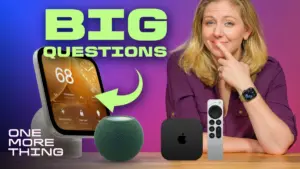
One more thing: Don’t forget about iPads
The breadth of Apple’s tablet ecosystem introduces a distinct alternative for consumers seeking a household display: using an iPad instead.
Equipped with a prop cover or dedicated stand, an iPad can fulfill many of the same monitoring and control functions as a HomeView while offering a substantially larger screen and native compatibility with a vast library of mainstream applications. Furthermore, an iPad provides portability, easily transitioning from a kitchen dashboard to a portable workstation or entertainment device when needed.

This approach carries two primary drawbacks. First, iPads command a significantly higher price tag, starting around $600 for the iPad Mini and approximately $750 for the iPad Air. Second, unless the user relies on connected AirPods or a paired HomePod, standalone audio quality on an iPad generally falls short of the acoustic performance engineered into the HomeView.
As testing continues on the HomeView and Apple’s broader slate of smart home hardware in the coming months, consumers have plenty of factors to weigh when deciding whether to invest in the ecosystem or wait for further developments.