









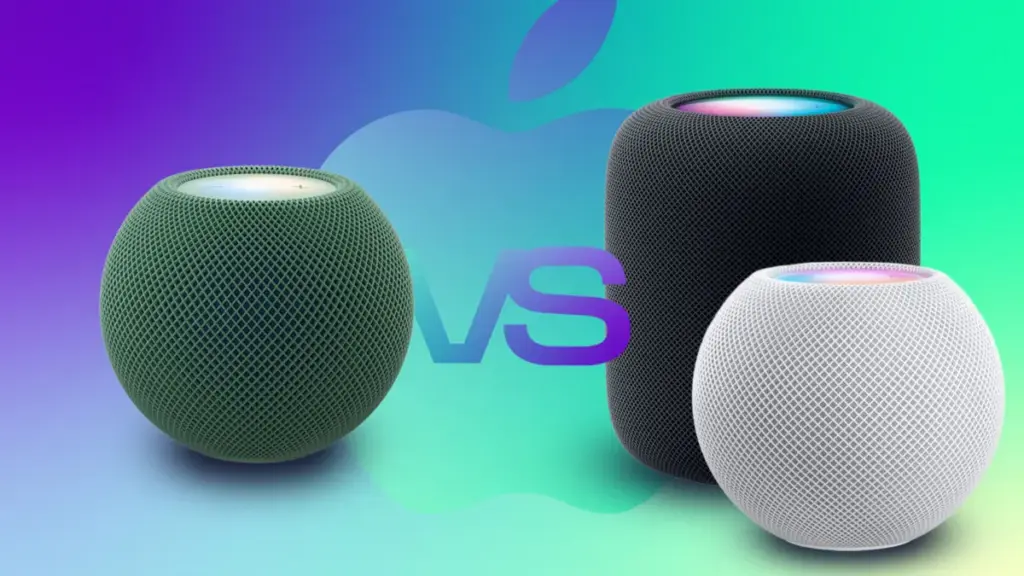
Following its major home tech showcase in October—which also introduced the new HomeView smart display—Apple has officially released the HomePod Mini 2 smart speaker, priced at $150. For diehard Apple fans looking to invest in a home audio upgrade, a central question immediately takes center stage: Is the Mini 2 truly worth the investment, particularly given its slightly higher price tag compared to its predecessor? To find out, industry analysts and reviewers have broken down the new speaker across several categories, comparing design differences, audio streaming quality, future Siri AI capabilities, and overall ecosystem performance to determine whether the device emerges as a winner.
Having access to every HomePod speaker currently available, reviewers have been able to put the Mini 2 through its paces alongside the much larger, second-generation standard HomePod. While that larger sibling currently commands a hefty price tag of around $349, testing across the entire spectrum of Apple’s audio lineup provides a clearer picture of how the hardware stacks up.

When examining design and hardware, observers might be surprised to see just how little Apple’s core philosophy has shifted at a physical level. Right down to the official technical specifications, physical size, and weight, the Apple HomePod Mini 2 is largely identical to the original model, save for a refreshed selection of exterior colors. Even the official hardware descriptions detailing the internal driver and tweeters read almost word-for-word the same as the previous generation.

However, two distinct physical and internal differences stand out upon closer inspection. The most significant under-the-hood upgrade is the integration of Apple’s advanced S10 chip, a massive leap forward from the S5 processor found in the older Mini. Apple notes that this upgraded silicon significantly improves computational audio performance, dynamically adjusting sound profiles based on real-time acoustic data collection. In practice, this new chip also makes Siri responses noticeably snappier, a promising indicator for the advanced Siri AI features slated to arrive later.
A second minor addition is the introduction of a new Sound Glow lighting option, which emits a gentle illumination while music is playing. While this feature can be toggled off entirely and functions essentially as a subtle nightlight, it ultimately does little to shift the balance when evaluating the hardware as a whole. Consequently, the design category results in a tie between generations.

When turning attention to audio performance—often the most critical metric for any speaker—real-world testing reveals clear distinctions despite Apple’s conservative spec sheet descriptions. Side-by-side comparisons using lossless Apple Music tracks streamed across various positions in a room highlight noticeable improvements. Whether driven by the enhanced computational audio, hidden hardware adjustments, or a combination of factors, the HomePod Mini 2 produces audio that is both remarkably louder and cleaner than the original Mini.
By comparison, placing the large, standard HomePod into the same rotation at equivalent volume levels demonstrates the sheer power of the bigger speaker, blowing both Mini models away with deep bass and a much broader acoustic range. For users seeking the absolute pinnacle of audio fidelity within the HomePod ecosystem, the larger model remains unmatched, albeit at a significantly steeper cost. For everyday compatibility, users can stream lossless audio seamlessly via AirPlay from a wide variety of third-party apps like Spotify, or integrate select services such as Pandora directly for dedicated playback. In the audio comparison, the HomePod Mini 2 easily takes the win over its predecessor.
The conversation surrounding smart assistants is similarly nuanced, particularly regarding Siri AI functions. Extensive testing indicates that advanced conversational features have not yet fully rolled out to the HomePod Mini 2, even though many of those same capabilities are already functional on iPhones and iPads. Features such as multi-turn conversational follow-ups and data retrieval from personal emails and texts have yet to appear on the smart speaker, though ongoing software updates are expected to bridge the gap.

For prospective buyers, two important observations stand out regarding artificial intelligence capabilities. First, the HomePod Mini 2 is confirmed to be the only speaker in the HomePod lineup that will receive these upcoming advanced Siri AI features, as older models are excluded from the rollout. This limitation may make the decision to upgrade significantly easier for dedicated Apple enthusiasts. Second, the raw processing power of the new chip ensures that standard voice commands execute with virtually zero delay, maintaining Apple’s reputation for speed among home assistants. While certain advanced AI features may eventually require an iCloud subscription, basic functionalities will remain free. This positions the Mini 2 as the winner in the AI category purely on architectural potential.
Beyond music playback and voice commands, smart speakers must integrate smoothly with broader home automation ecosystems. For users embedded in the Apple ecosystem, device setup via Apple Home remains exceptionally straightforward. Connecting smart lights, door locks, security sensors, smart plugs, and other compatible accessories is quick and seamless. Once added, these devices can be controlled across any HomePod model without compatibility concerns, provided the commands do not rely on the upcoming advanced Siri AI architecture exclusive to the Mini 2.
The primary trade-off for this streamlined integration is that Apple’s platform historically supports a lower volume of third-party smart devices compared to competing ecosystems like Amazon Alexa, Google Home, or Samsung SmartThings. While Apple continues to work toward expanding compatibility, buyers are consistently advised to verify Apple Home, HomeKit, or Siri support before purchasing third-party smart home hardware. Ensuring that Apple Intelligence is enabled is also essential for utilizing advanced features such as security camera activity descriptions.

When evaluating cost, the financial equation is relatively straightforward. The HomePod Mini 2 carries a retail price of $150, making it $20 more expensive than the first-generation HomePod Mini, which currently starts around $130. A $20 price bump is modest in the context of consumer electronics, especially considering the measurable audio improvements and future-proofing provided by the updated processor. For buyers deciding between purchasing an older Mini or a new Mini 2, the extra expense is easily justified by the sound quality and upcoming software support. However, owners of the first-generation Mini will need to weigh whether incremental audio improvements and future AI features justify replacing hardware that is still fully functional.
Market competition during the holiday shopping season extends far beyond Apple, with alternative smart speakers offering compelling packages for consumers willing to look outside the ecosystem. Testing the Google Home Speaker reveals a strong alternative, particularly for users prioritizing music above all else. Priced more affordably at $100 and utilizing Gemini for Home in place of Siri, the Google Home speaker delivers surprisingly robust bass and powerful audio performance that rivals or exceeds the Mini 2 at similar volume levels, representing exceptional value for a lower price point.
Meanwhile, shoppers seeking a substantial acoustic upgrade for larger living spaces without paying the premium price of Apple’s high-end HomePod can look to Amazon’s Echo Studio. Priced around $220, the latest Echo Studio model delivers room-filling sound and incorporates advanced hardware capabilities, though privacy concerns surrounding Alexa continue to influence consumer preference.

Ultimately, for Apple enthusiasts seeking a compact smart speaker who do not yet own a Siri-enabled audio device, the HomePod Mini 2 is well worth its $150 price tag, driven primarily by its superior acoustic performance. For those who already own the original HomePod Mini, upgrading makes sense only if access to future Siri AI capabilities and enhanced audio clarity are high priorities. Users completely unconcerned with artificial intelligence whose older speakers continue to meet their daily audio needs have little immediate reason to upgrade. While the large standard HomePod continues to dominate in raw sound quality, its vastly higher price point places it in an entirely different category of home audio equipment.
Senior Editor Tyler Lacoma has spent over a dozen years working with, living among, and testing every variety of smart home and security technology. Explaining complex privacy features, evaluating cutting-edge hardware, and offering top recommendations, Tyler leverages degrees in business management, literature, and technical writing to push smart devices to their absolute limits. Based in Bend, Oregon, he continuously tests consumer technology across diverse weather conditions, ensuring that recommended products can reliably serve real-world households, families, and everyday living situations.