









The long-standing reputation of consumer data broker Radaris.com—a site notorious for its stubborn refusal to honor requests to remove personal information from its extensive database—has finally hit a legal wall. In a landmark development, a judge has ordered the transfer of Radaris.com and more than a dozen associated data broker domains to the plaintiffs in a lawsuit centered on the violation of a stringent New Jersey privacy statute known as Daniel’s Law.
For years, the operators of Radaris maintained a "people-search" empire that seemed impervious to legal pressure. However, the company’s habitual stonewalling and evasive legal maneuvering ultimately backfired. The lawsuit, brought by Atlas Data Privacy Corp, alleged that Radaris systematically ignored the mandates of Daniel’s Law, which grants state law enforcement officials, government personnel, judges, and their families the right to have their sensitive information scrubbed from commercial databases. The law further imposes significant financial penalties—specifically $1,000 per violation—on data brokers that fail to comply with these removal requests.
A Legacy of Evasion and Shell Games
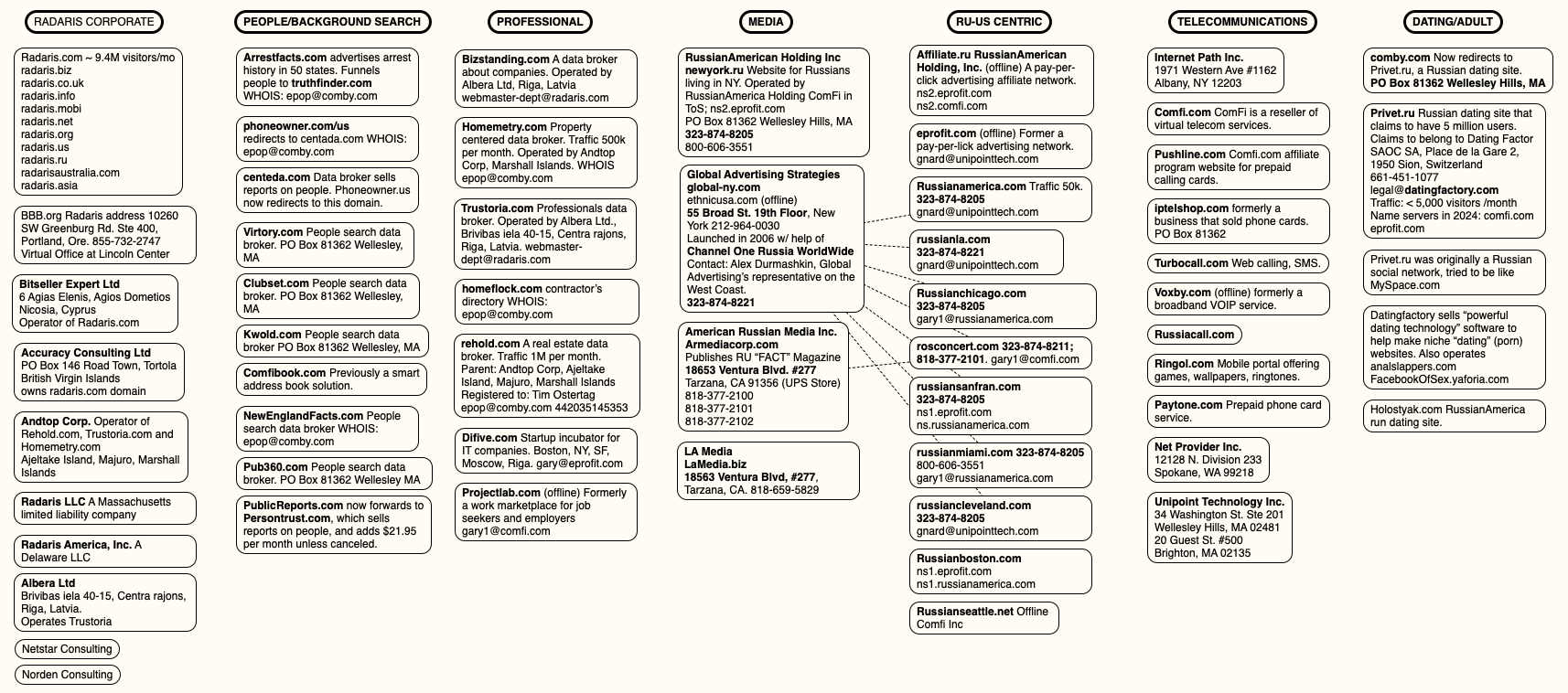
The legal battle began in earnest in February 2024, when Atlas Data Privacy Corp initiated litigation against Radaris. The case quickly evolved into a high-stakes confrontation, exacerbated by the complex, opaque structure of the Radaris organization. Shortly after the lawsuit was filed, reporting by KrebsOnSecurity shed light on the company’s true architects: Igor and Dmitry Lubarsky. The Russian-born brothers, based in Massachusetts, were identified as the masterminds behind a sprawling network of people-search sites, Russian-language dating services, and various affiliate programs.

The response from the Lubarsky brothers’ legal counsel was swift and aggressive. Attorneys threatened defamation lawsuits, labeling the reporting as inaccurate and insisting that the company was, in fact, owned by Ukrainian nationals residing in Ukraine.
Undeterred, investigators continued to peel back the layers of the operation. Subsequent reporting revealed that Radaris had been utilizing a fictitious CEO, "Gary Norden," to provide a veneer of legitimacy to the firm. Radaris’s own attorney, Val Gurvits of the Boston Law Group, eventually admitted that the company had manufactured the persona, using the fake name in press releases to solicit capital from potential investors.
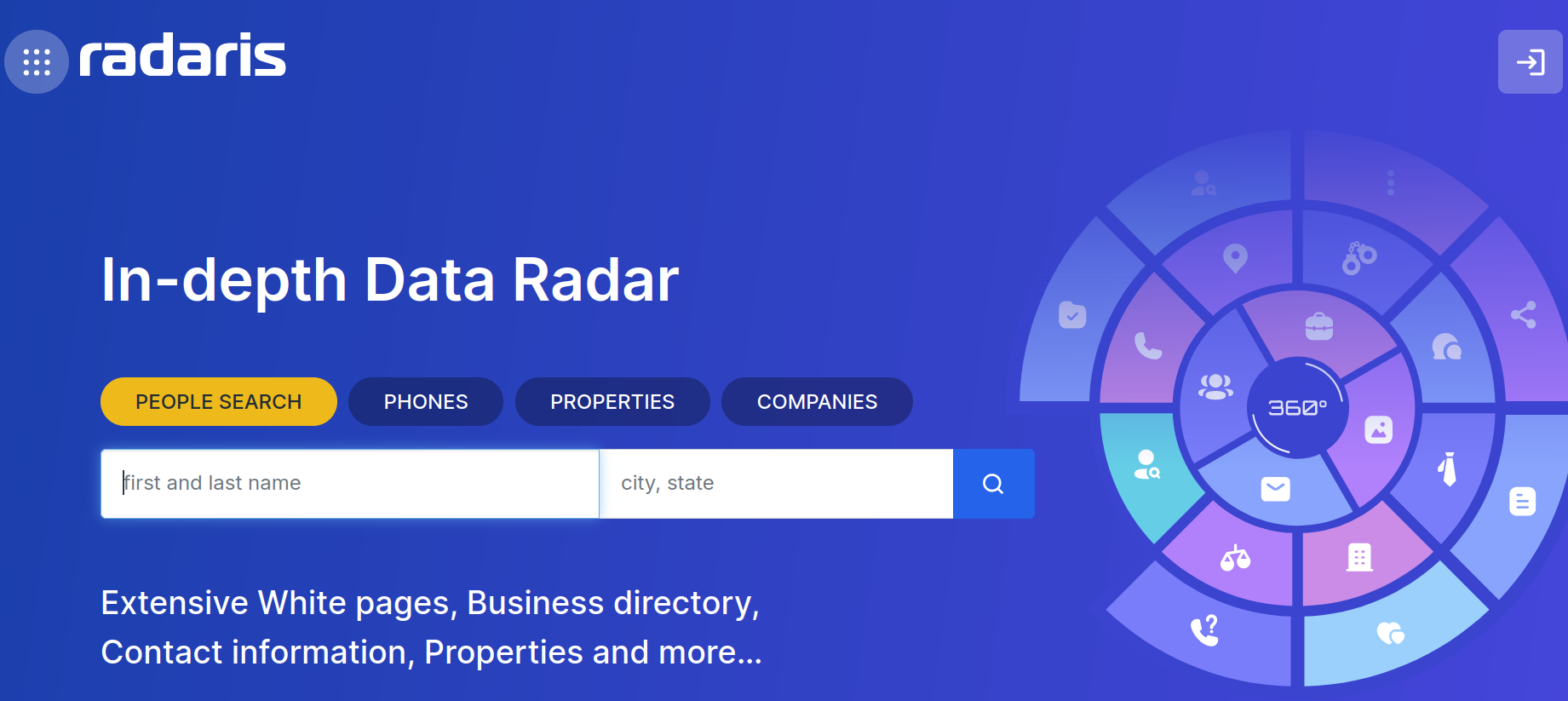
As the litigation progressed, the defendants employed a strategy described by Atlas CEO Matt Adkisson as a "shell game." Whenever a court approached a judgment, the corporate entity listed as the owner of the domain would disappear, only to be replaced by a new, often offshore, entity. Adkisson noted that the company frequently updated its terms of service to reflect management by entities in the Marshall Islands, the British Virgin Islands, or the Seychelles. In one instance, when Radaris claimed a specific Marshall Islands firm was managing its operations, an investigator hired by Atlas discovered that the entity did not even exist at the time of the claim.
The Breakdown of the "Island-Hopping" Strategy
The court records detail a decade-long pattern of procedural obstruction. In a 2017 class-action lawsuit, Radaris failed to appear, resulting in a $7.5 million default judgment. When the plaintiffs attempted to collect, the court ordered the registry Verisign to transfer the Radaris.com domain to them. However, Mr. Gurvits intervened, successfully appealing the decision by arguing that the court had failed to name the true owner—a Cyprus-based company called Bitseller Expert Limited.
The case was stalled, and the plaintiffs did not refile. Shortly thereafter, operations were shifted to a new entity, Andtop Company, formed in the Marshall Islands in 2020. This "modus operandi" of winning by attrition—essentially exhausting the resources and patience of plaintiffs—had served the Lubarsky brothers well for years.
Raj Parikh, a partner at PEM Law who manages the Daniel’s Law litigation for Atlas, noted that the legal team decided early on to commit the necessary resources to see the case through, recognizing the genuine threat the website posed to law enforcement and public officials. On August 26, the presiding judge in New Jersey ruled that the defendants had been granted multiple opportunities to appear and defend the allegations, yet had consistently failed to do so. Consequently, the court ordered the domain transfer to Atlas.
While Victor Worms, the current attorney representing the interests behind the domains, has challenged the default judgment on the grounds that it was issued against "Radaris.com," which is not a legal entity, the transfer has already taken effect. Currently, the Radaris.com homepage displays a formal notice regarding the court-ordered transfer and provides links to the extensive investigative coverage surrounding the site’s history.

Evidence of a Unified Operation
The litigation has unearthed a mountain of evidence that contradicts the defendants’ claims of separate, unrelated operations. Atlas has secured more than 10,000 emails and internal documents proving that companies like Radaris America, Inc., Bitseller Expert Limited, Digital Orbit Corp, and numerous others are, in fact, a single, unified operation.
These documents reveal that the network of approximately 25 people-search sites shares a common financial and technical infrastructure, managed by a small group of individuals in the Boston area. The financial scale of this operation is significant; according to the evidence, Radaris.com generates roughly $42,000 per month, while a sister site, Veripages.com, earns approximately $45,000 monthly. Much of this revenue is linked to partnerships with marketing giants such as the Lifetime Value Company. Furthermore, the emails show that the Radaris network also earns significant monthly income through partnerships with companies like Onerep, which ironically markets itself as a privacy-focused service to help users remove their information from the very sites that the Radaris network operates.
The Uncertain Future of Data Privacy Legislation
While the transfer of the domains is a significant tactical victory, the broader legal war is far from over. Radaris and its affiliates are still facing the potential for massive fines under Daniel’s Law. However, the statute itself is currently the subject of a major constitutional challenge.
Data brokers have organized a collective defense, forcing dozens of Atlas-led lawsuits into federal court and arguing that Daniel’s Law constitutes an overreach that violates First Amendment protections. The U.S. Court of Appeals for the Third Circuit is currently reviewing these challenges, and legal observers anticipate that the issue will likely eventually reach the U.S. Supreme Court.
The landscape is further complicated by the inconsistent application of privacy laws across the country. While 14 states have adopted measures similar to Daniel’s Law, others have faced setbacks; for instance, a federal district court ruled West Virginia’s version of the law unconstitutional in August 2025.
Privacy expert Justin Sherman, author of the upcoming book The Middlemen, emphasizes that the data broker industry continues to benefit from an environment where federal lawmakers have been slow to act. Lobbying efforts from big tech, social media platforms, and AI developers have successfully stalled comprehensive federal privacy legislation by framing data regulation as an economic threat.
Sherman notes that even with state-level protections, the fundamental problem remains that most privacy laws provide broad exemptions for records deemed "public" or "government" documents. This allows brokers to continue scraping everything from property and court records to professional licenses and marriage certificates.
The recent, massive breach at IDScan.net, which exposed the drivers’ license information of 153 million Americans after it was repurposed for identity theft on the dark web, serves as a grim reminder of the risks. Without a comprehensive federal framework to regulate how these companies collect, store, and share data, the systemic vulnerability of personal information remains unchanged. "We don’t need more wake-up calls," Sherman observed. "We’ve had eight million wake-up calls already. The lack of a comprehensive federal privacy law is not for a lack of knowledge; it is a choice."