








In a significant move to streamline cloud governance and operational excellence, Amazon Web Services has announced the public preview of the AWS Well-Architected Agent. This new AI-powered service is designed to transform how organizations monitor and improve their AWS environments by delivering highly targeted, context-aware recommendations for cost optimization, security, performance efficiency, and architectural resilience. By moving beyond the static, manual checklists that have long defined architectural reviews, the Well-Architected Agent provides a dynamic approach to cloud management, allowing businesses to align their infrastructure configurations with specific, declared goals.
For years, the AWS Well-Architected Framework has served as the gold standard for cloud builders, providing a set of best practices and guiding principles for designing and operating reliable, secure, and efficient systems. However, implementing these principles across complex, multi-account environments has often been a resource-intensive endeavor, requiring deep expertise and frequent manual audits. The introduction of the Well-Architected Agent seeks to bridge this gap, acting as a virtual cloud architect that continuously monitors infrastructure, correlates utilization metrics with resource configurations, and analyzes the application topology against established best practices across more than 65 AWS services.
Context-Aware Intelligence in Cloud Architecture
The primary value proposition of the Well-Architected Agent lies in its ability to synthesize data into actionable intelligence. Rather than offering generic advice that might not apply to every workload, the agent assesses the environment with the nuanced understanding of an experienced architect. It evaluates the specific business goals of the user—whether they are prioritizing rapid cost reduction, maximum performance for high-traffic applications, or heightened security posture—and tailors its findings accordingly.

This contextual awareness is further bolstered by the agent’s capacity to identify trade-offs. In cloud architecture, optimization is rarely a one-dimensional problem; increasing performance often carries cost implications, and hardening security can sometimes affect operational agility. The Well-Architected Agent surfaces these cross-pillar trade-offs, providing architects and engineers with a clearer understanding of the potential impacts of their decisions. By delivering ready-to-implement fixes alongside every finding, the service significantly reduces the time and effort required to remediate vulnerabilities or inefficiencies, effectively shifting the burden of analysis from the human operator to the automated service.

Integrating the Agent into Operational Workflows
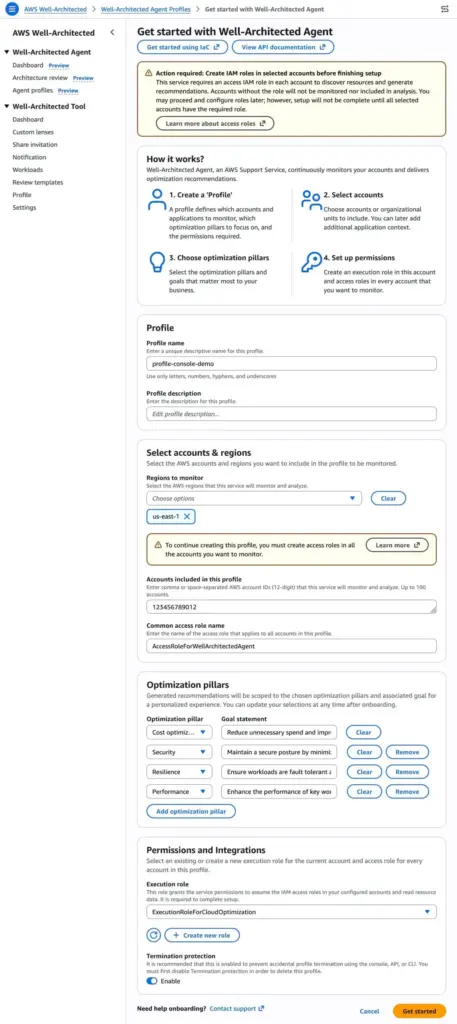
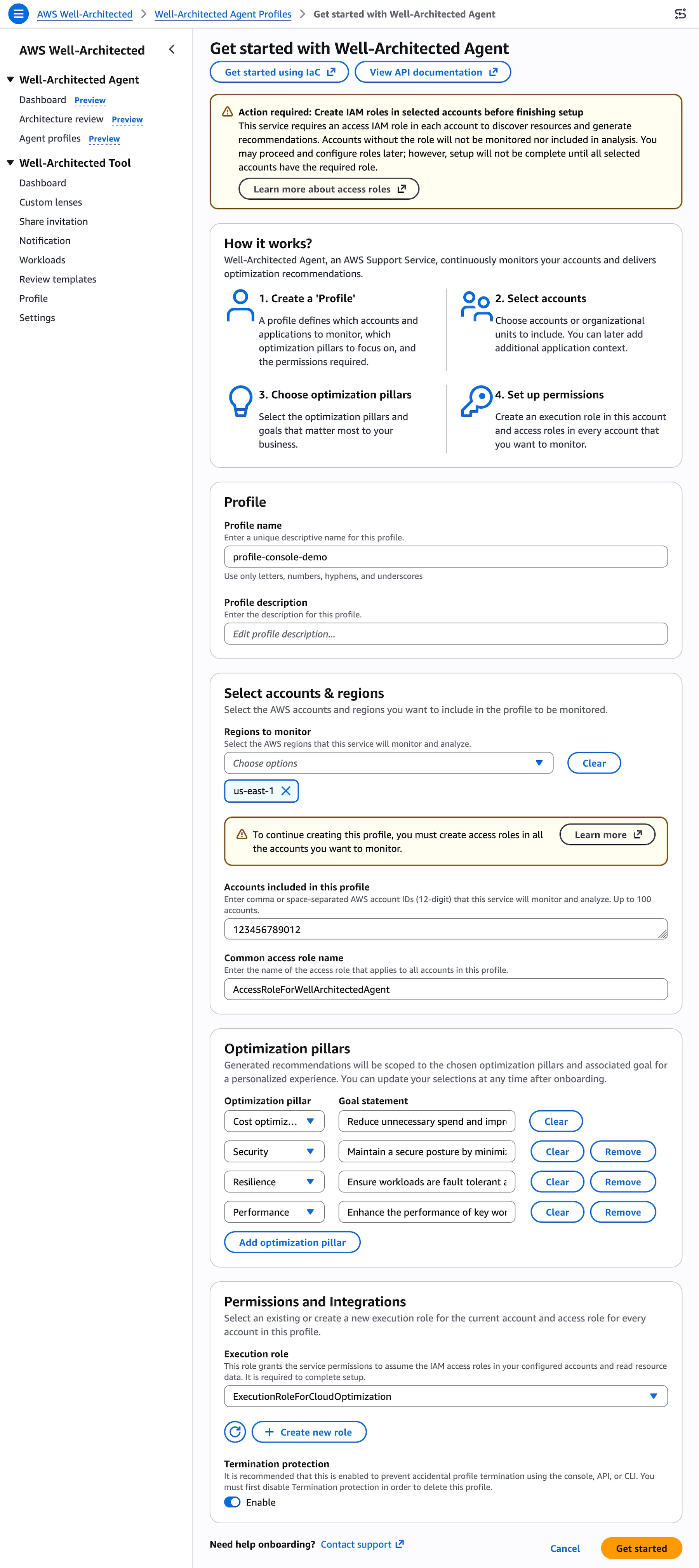
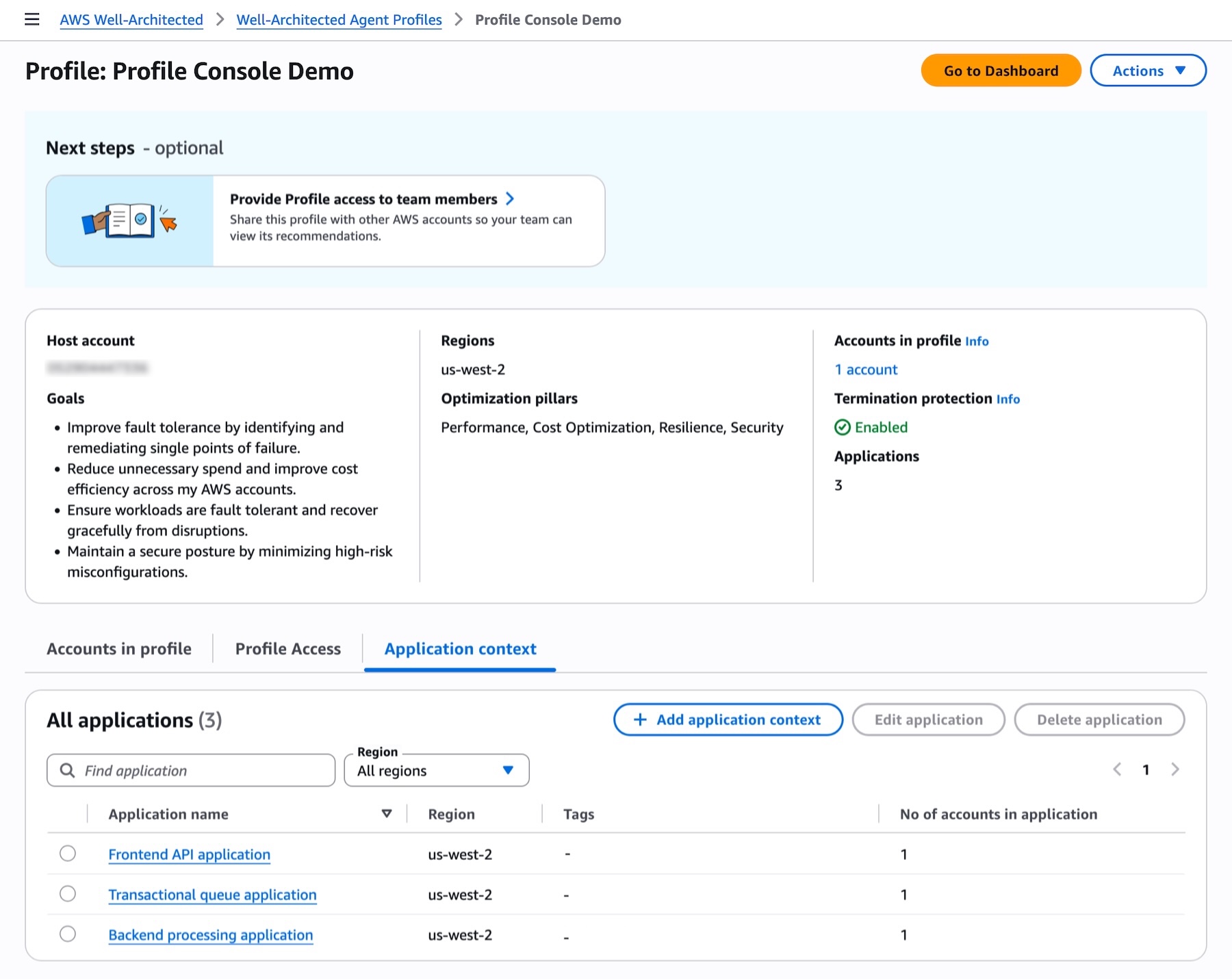
The process of deploying the Well-Architected Agent begins with the creation of an agent profile within the AWS Well-Architected console. This profile acts as the control plane for the service, defining the scope of the agent’s oversight. Users are empowered to select the specific AWS accounts and applications they wish to monitor, as well as the optimization pillars that are most critical to their business operations. This granularity ensures that the agent focuses its computational power on the areas where the organization requires the most oversight.
Once the profile is configured, the agent requires access to the underlying infrastructure, which is facilitated through customer-managed IAM roles. These roles are specifically scoped to allow the agent to read resource configurations, utilization metrics, and application topology, ensuring that the service operates within the secure parameters defined by the customer’s existing identity and access management policies. Following the initial setup, the agent begins its analysis, with the first wave of resource and application recommendations typically generated within 24 hours.
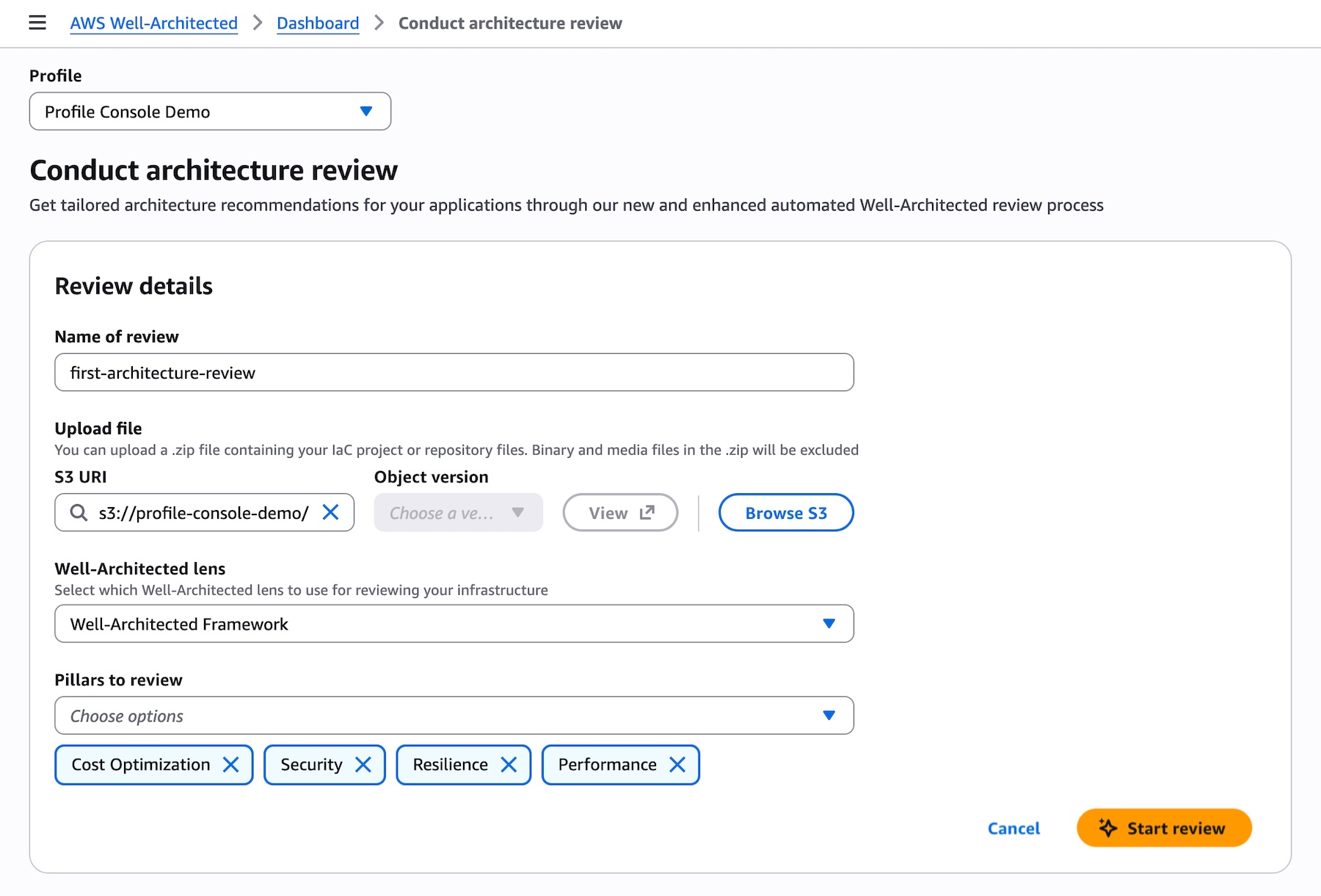
Beyond ongoing monitoring, the agent provides a mechanism for pre-deployment validation. Organizations can conduct architecture reviews on upcoming workloads by uploading Infrastructure-as-Code (IaC) projects in formats such as Terraform, AWS CloudFormation, or the AWS Cloud Development Kit (CDK). By uploading these files directly into the dashboard, developers can receive automated feedback on their infrastructure designs before a single resource is provisioned. This "shift-left" approach allows teams to catch architectural flaws early in the development lifecycle, preventing costly rework and ensuring that new deployments are compliant with Well-Architected best practices from the outset.
Furthermore, the agent allows for the definition of application-level context, which significantly enhances the relevance of the recommendations. By tagging resources and providing details about the specific nature of an application, users help the agent distinguish between critical production systems and lower-priority development environments. This context ensures that the recommendations are not only technically sound but also aligned with the operational realities of the business.
Remediation and Extensibility
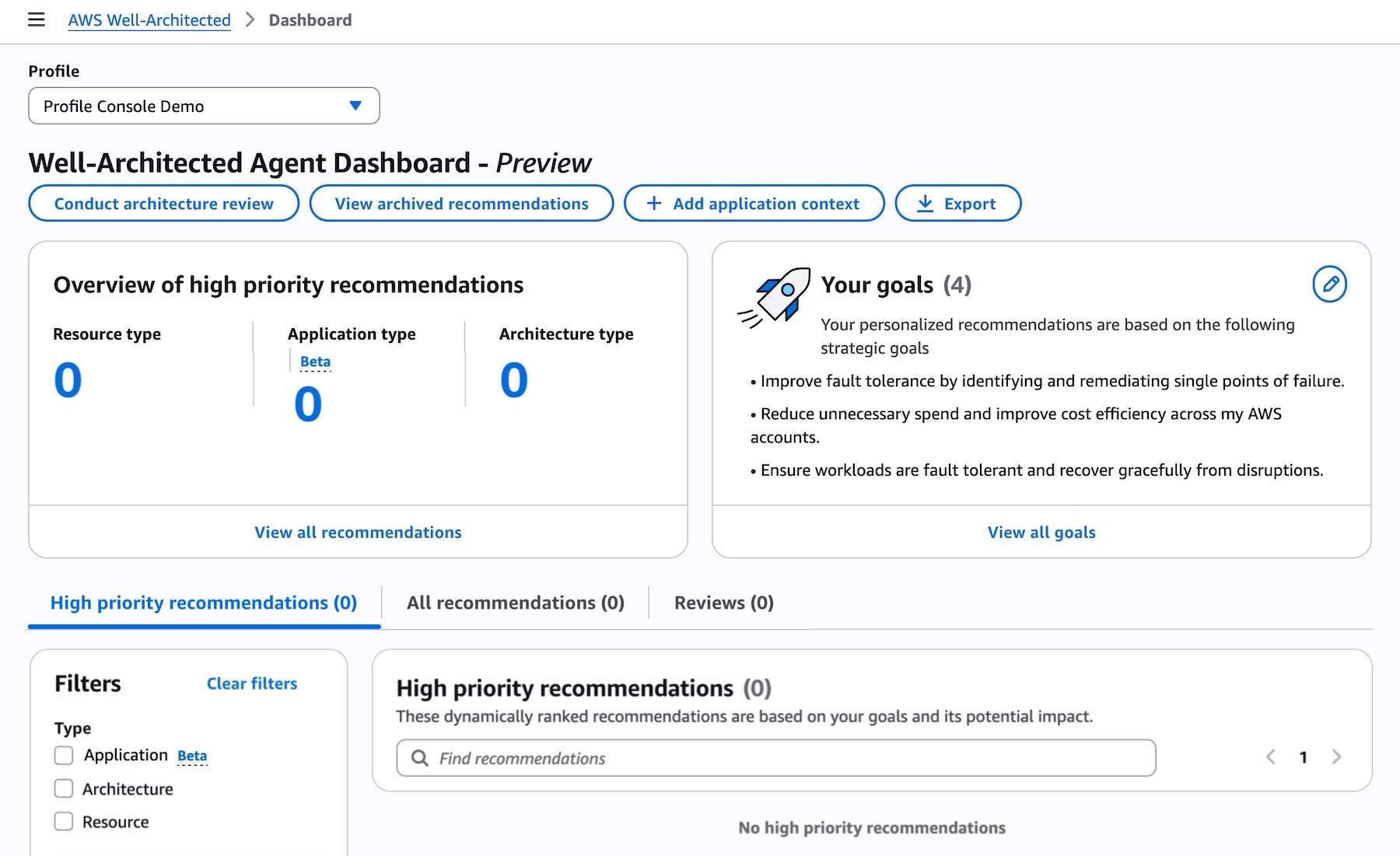
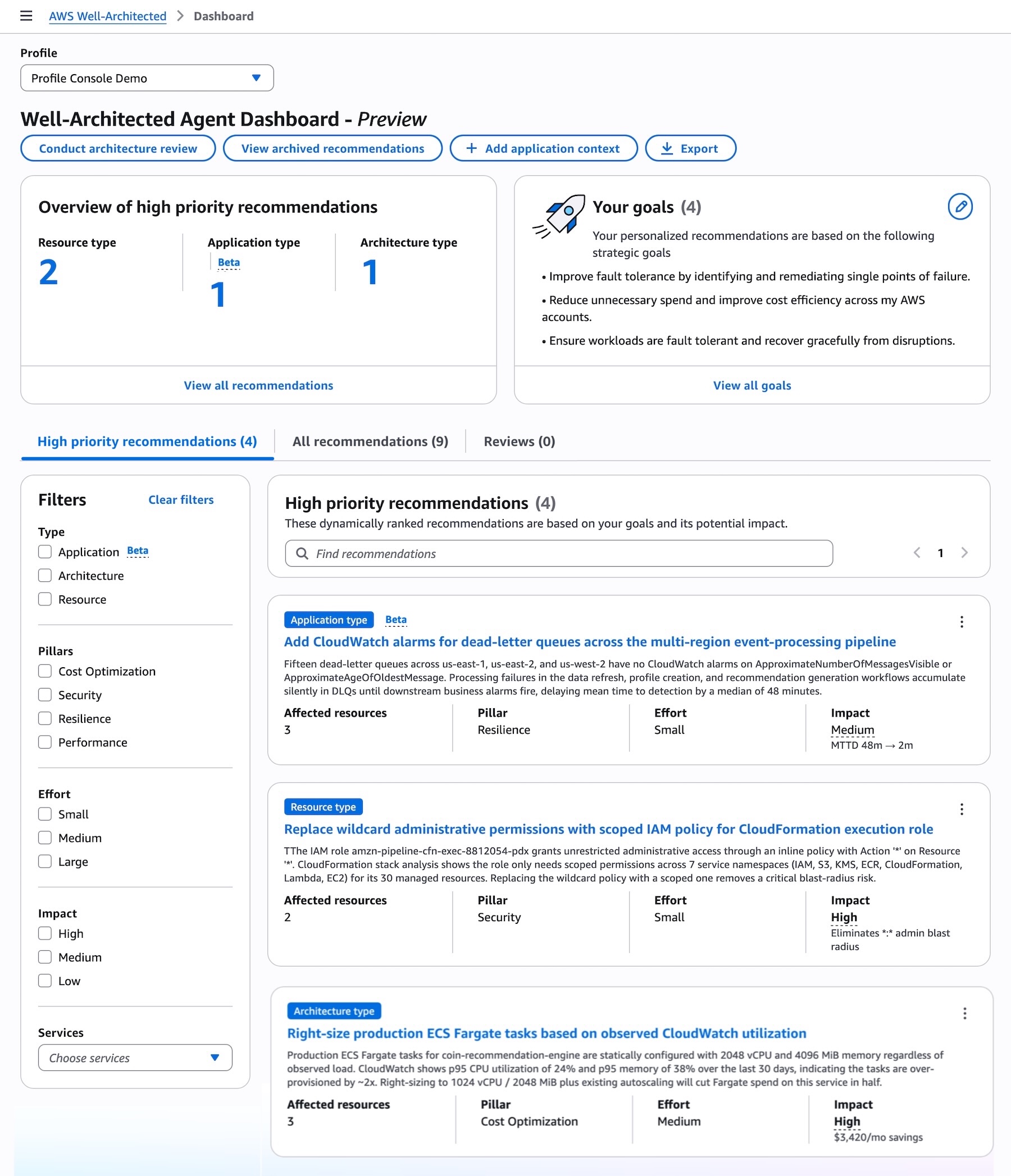
Once the agent has identified areas for improvement, it presents these findings in a prioritized list, ranked against the organization’s declared goals. Each recommendation is accompanied by deep insights into the reasoning behind the suggestion, the potential impact on the infrastructure, and, crucially, a clear pathway to remediation.
The remediation phase is designed for flexibility. Users can choose to execute fixes through the AWS console, leverage updated IaC templates provided by the agent, or utilize CLI commands. For those opting to use updated IaC templates, the agent provides specific code changes—such as updated CDK functions—that can be directly integrated into existing codebases. This capability turns the agent into a direct contributor to the CI/CD pipeline, bridging the gap between automated detection and automated resolution.
For organizations seeking to integrate these insights into broader development and operations workflows, the service offers programmatic access. Through the AWS MCP Server and various plugins, developers can interact with the agent’s intelligence directly within their preferred AI-enabled coding tools. This extensibility allows for a more integrated experience, where recommendations can be surfaced, discussed, and implemented without the need to constantly switch context between the development environment and the AWS console.
While the new agent offers a sophisticated, automated approach, AWS continues to support the existing AWS Well-Architected Tool. This allows customers to maintain a hybrid strategy, utilizing the agent for continuous, automated monitoring while still relying on the manual evaluation of workloads through user-defined lenses for unique or highly specialized compliance and architectural requirements. This dual approach ensures that organizations can benefit from both the speed of automation and the precision of human-led oversight.
Availability and Support
The AWS Well-Architected Agent is currently available in public preview for customers in the US East (N. Virginia), US East (Ohio), and US West (Oregon) regions. While the service itself is hosted in these locations, it is capable of onboarding workloads from any AWS commercial region, making it a viable solution for global enterprises with geographically dispersed infrastructure.
The service is delivered through AWS Support and is available to customers with an active AWS Support plan. By placing this capability within the existing support structure, AWS aims to ensure that customers have the necessary guidance to maximize the value of the agent’s findings. As the preview progresses, AWS is encouraging users to provide feedback through their standard support channels, a critical component in the refinement of the agent’s recommendation engine and its overall functionality.
By automating the most repetitive and complex aspects of architectural review, the Well-Architected Agent represents a shift in the cloud management paradigm. It acknowledges that as cloud environments grow in scale and complexity, manual auditing is no longer sustainable. Through the deployment of specialized, context-aware AI, AWS is providing its customers with the tools to maintain high-performing, secure, and cost-effective infrastructure in an increasingly fast-paced digital landscape.