








For cat owners who have ever navigated a feline health scare requiring a specialized wet-food diet, the logistical hurdles are all too familiar. Managing wet cat food means serving meals fresh, preventing food from sitting out too long, planning daily schedules around precise feeding times, and maintaining a constant stock of cans or pouches. While wet food is often vital for keeping a cat healthy and hydrated, the sheer inconvenience can disrupt a pet owner’s daily routine.
Traditionally, automatic wet food dispensers have offered limited relief. Most models rely on bulky freezer packs to keep meals chilled, while the few refrigerated alternatives typically hold only enough food for a day or two. Enter the Neakasa Riko, an innovative smart cat feeder designed to tackle these exact pain points by rehydrating meals on demand. Storing freeze-dried food and water separately, the device grinds and soaks the food just before serving. Following a month-long test of the Neakasa Riko, reviewers have found plenty to evaluate regarding its performance, convenience, and long-term viability for pet owners.

How the Neakasa Riko Makes Feeding Easier
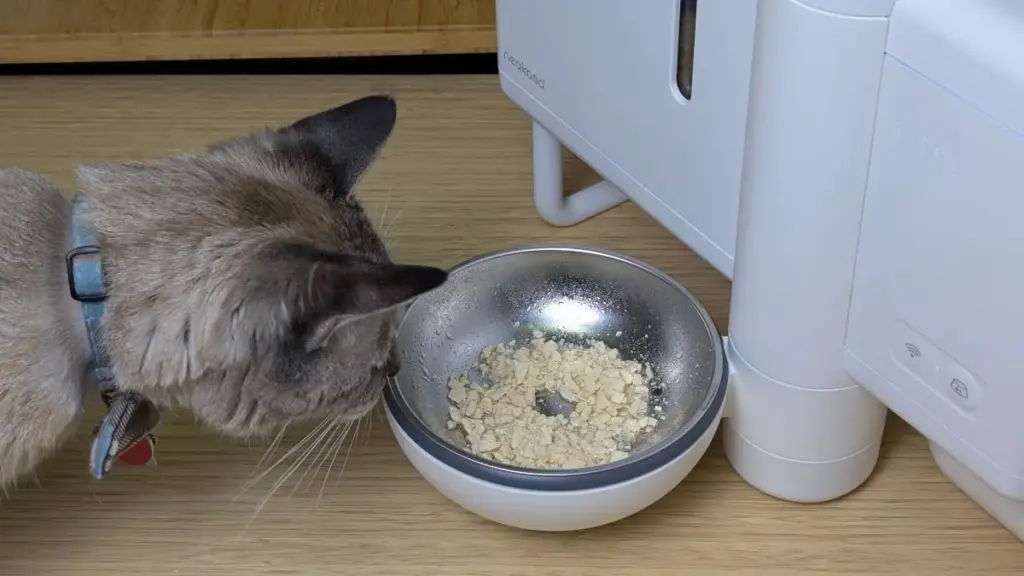
At first glance, the Neakasa Riko stands apart from conventional smart cat feeders. Its most prominent features include an 80-ounce water tank positioned on the right side and a retractable feeding bowl situated directly beneath the food hopper. Positioned just below a built-in grinder and water jets on the underside of the dry storage compartment, the retractable bowl allows food to sit long enough to thoroughly rehydrate before a cat approaches for a meal.
While the Riko is specifically engineered for freeze-dried food, Neakasa indicates it can also accommodate air-dried and baked cat food, though it explicitly advises against using standard extruded kibble. During testing with alternative brands that support water softening, the Riko did not grind the kibble at all. Although initial results showed that cats readily accepted the altered texture, relying on the device for an entire standard kibble routine requires careful observation.

Combining freeze-dried food and kibble within the Neakasa Riko presents a viable strategy, especially as several commercial pet food brands already market similar blends. Owners must determine the optimal water-to-food ratio for their pets. While the unit can technically dispense water separately from food, reviewers note that utilizing it strictly as a water source is secondary to its primary rehydration function.
The hardware design includes easily removable storage tanks for straightforward refilling and cleaning. Safety mechanisms prevent the device from operating unless the food hopper lid is securely in place, deterring clever pets from eating directly out of the top storage area. Like many modern smart feeders, the unit also features a dedicated compartment for desiccant packs to maintain food freshness.

Cleaning is streamlined by two dishwasher-safe stainless steel bowl inserts. Notably, the food dispenser’s scale is calibrated with the bowl removed, allowing owners to swap out bowls quickly without needing to re-zero or recalibrate the weighing mechanism. Starter kits often include wet wipes for internal maintenance, spare desiccant packs, and a limescale cleaner to manage hard water deposits in the tank. An optional rechargeable battery pack, included in select bundles, provides up to seven days of backup power during outages.
The Neakasa App Experience
Setup and daily control are managed through the Neakasa app, which utilizes built-in Bluetooth and Wi-Fi connections. The app interface features a primary dashboard displaying daily feeding histories, manual and scheduled feeding controls, and real-time estimates of remaining food and water levels. Settings are organized logically, covering features like custom feeding controls, maintenance reminders, scale calibration, a child lock, and deep-cleaning protocols.

While many smart pet devices incorporate sounds and displays that pets rarely notice, the Riko includes a practical mealtime chime to alert animals that a newly rehydrated meal is ready. The integrated digital display shows system status and can be customized to display a clock, a simple icon, or scrolling text. Because scrolling text can appear distracting, many users opt for static icons or turn the display and sound off entirely using a scheduled Do Not Disturb mode for nighttime hours.
Unlike some smart home ecosystems that aggregate various appliances into platforms like Home Assistant, the Neakasa Riko operates independently. Because its core functions center on scheduling meals and monitoring dietary intake, complex smart home integrations are largely unnecessary for most users, keeping the focus squarely on reliable pet care.

Putting the Neakasa Riko to the Test
Transitioning a cat to a completely new diet typically requires a gradual introduction over several days to avoid digestive upset. Because testing involved a cat with a stable, established diet, reviewers primarily used the Neakasa Riko to dispense rehydrated freeze-dried chicken as a daily dietary enrichment or treat replacement.
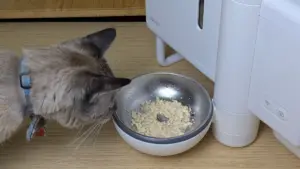
Finding the ideal water-to-food ratio required a brief trial-and-error period. Initial attempts using a 1:1 ratio resulted in a consistency that failed to entice the cat immediately, raising concerns about food sitting out and spoiling. Adjusting the ratio to a 1:4 food-to-water proportion proved to be the ideal sweet spot, resulting in meals being consumed entirely within minutes.

The device incorporates a safety retraction threshold ranging between 10 and 60 grams, designed to pull the bowl back if too much food remains uneaten. Because this threshold starts at 10 grams, it is less effective for very small portion sizes. Owners are advised to monitor consumption patterns closely before leaving pets unattended with the feeder for extended periods to ensure the safety mechanisms do not prematurely retract meals or leave pets hungry.
Scheduling quirks were minor, with scheduled feedings occasionally occurring an hour off despite correct time zone settings—an issue easily resolved by adjusting the schedule within the app. Scheduled rehydration cycles typically take about 20 minutes, allowing sufficient time for water to fully soak into the food. Interestingly, once a bowl is emptied, it remains extended rather than immediately retracting. This design choice allows pets to lick the bowl clean and keeps it easily accessible for owners looking to swap in a clean insert.

Assessing Value and Ongoing Costs
Priced at $240, the Neakasa Riko occupies a distinct niche for pet owners seeking to diversify a cat’s diet with nutritious freeze-dried meals or softened food without the constant manual labor of traditional wet feeding. However, an analysis of ongoing operational costs reveals important economic considerations.
Comparing the daily cost of feeding a 10-pound adult cat highlights a significant price gap. Premium freeze-dried brands such as Weruva, Instinct, and Stella & Chewy’s average roughly $5.18 per daily serving. By comparison, budget canned cat food brands like Friskies and Meow Mix average around $1.05 per serving, while premium canned options like Sheba and Fancy Feast sit near $4.28. Exclusive reliance on freeze-dried food can drive monthly feeding costs past $110, making it substantially more expensive than standard canned alternatives or traditional dry kibble.

Alternative smart feeders address wet food storage differently. The Petlibro PLAF109 uses a refrigeration system to keep up to three canned meals fresh for a few days at a lower initial price point, while the PetSafe FreshFeed manages up to six meals. Meanwhile, standard dry food feeders remain vastly cheaper per serving, though they lack the specialized rehydration capabilities of the Riko.
Ultimately, the Neakasa Riko delivers exceptional convenience for owners committed to incorporating freeze-dried or moistened food into a cat’s routine. While exclusive use of freeze-dried diets may strain tighter budgets, the device succeeds as a versatile, well-designed smart appliance that bridges the gap between dry storage and wet food preparation.