








The past week in the AWS ecosystem has been defined by a clear, strategic shift toward simplifying the developer experience. While much of the recent discourse in cloud computing has focused on complex, infrastructure-heavy orchestration, the most significant updates from Amazon Web Services this week signaled a move in the opposite direction: shortening the distance between a developer’s local code and a live, production-ready environment. By introducing new ways to run standard HTTP applications directly on AWS Lambda and emphasizing a more robust framework for autonomous agent security, AWS is clearly aiming to remove the friction that often plagues modern cloud deployments.
The Evolution of AWS Lambda: Introducing Web Functions
The headline announcement of the week is undoubtedly the introduction of AWS Lambda Web Functions. For years, the serverless paradigm required developers to adapt their code to fit the event-driven nature of Lambda. This often meant refactoring existing web applications to map specific request objects to internal handler functions, a process that could be cumbersome for teams migrating legacy applications or looking to maintain parity between local development and cloud production.
Lambda Web Functions change this dynamic by offering a new form factor that runs standard HTTP web applications without requiring any structural changes. Developers can now take a server built with familiar frameworks—such as Express, Hono, Fastify, or Next.js—and deploy it directly. By using the aws lambda-web deploy command, a developer can transition from a port-listening local server to a live HTTPS URL in under a minute. This approach eliminates the need for cumbersome adapters or complex infrastructure configuration, effectively removing the framework lock-in that has historically been a barrier to serverless adoption.

This update effectively expands the Lambda ecosystem into three distinct, yet compatible, form factors, all running on the same underlying Firecracker isolation technology. Developers can now utilize Event Functions for traditional asynchronous background work, Web Functions for user-facing, high-performance web layers, and MicroVMs for stateful sandboxes when handling untrusted code. Because these form factors are designed to compose within a single application, the transition from a monolithic architecture to a modular, serverless one becomes significantly more fluid.
Beyond the ease of deployment, there are critical performance and economic implications to this new model. Each execution environment is designed to handle up to 128 concurrent requests. This marks a departure from the traditional one-to-one mapping of requests to execution environments. By allowing a burst of traffic to share warm environments, AWS is addressing one of the most common pain points in serverless computing: the cold start latency and the overhead associated with spinning up individual containers for every incoming request.
Furthermore, the billing model has been adjusted to reflect the realities of modern web traffic. Instead of charging based on total wall-clock time, Lambda Web Functions meter the actual CPU time consumed by the code. For common use cases such as server-side rendering, API backends, and inference endpoints—where a significant portion of elapsed time is spent simply waiting for I/O or downstream services—this change in the billing arithmetic represents a substantial efficiency gain. Developers can also take advantage of simplified global scaling by adding a --regions flag to the deployment command, which automatically replicates code and configures latency-based routing behind a single global URL. Additionally, traffic splitting across different revisions allows for safer canary rollouts, ensuring that new features can be tested against a subset of production traffic. Currently available in five AWS Regions and running on Node.js 24 on Arm64, this feature is further bolstered by integration with Amazon CloudFront, which can now treat Web Function endpoints as origins with enhanced security through origin access control.

Trust in Depth: Governing Autonomous Agents
While the introduction of Web Functions makes it easier to deploy code into production, the second major theme of the week addresses the inverse challenge: ensuring that those systems remain secure as they gain autonomy. In a thoughtful exploration titled "Trust in Depth: giving agents more autonomy without losing control," AWS addressed a growing concern among enterprise builders—the limits of human-in-the-loop oversight.
The prevailing wisdom in AI development has been to keep a human in the loop for every decision made by an agent. However, as the scale of these deployments grows, this manual oversight model often fails. When humans are tasked with checking an overwhelming volume of agent actions, they inevitably suffer from fatigue, leading to missed errors and a false sense of security. AWS proposes an alternative framework built on four pillars: scope, know, bound, and observe.
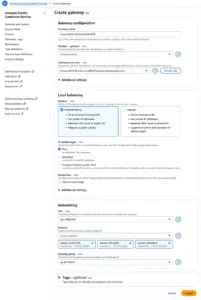
The most critical takeaway from this strategy is that an agent’s limitations must exist outside of its own reasoning engine. By leveraging Amazon Bedrock AgentCore, security policies can be enforced at the gateway layer, effectively placing the guardrails for an agent in a space that the agent cannot modify or bypass. This is an application of the "defense in depth" principle to the world of generative AI. AWS brings over a decade of experience in automated reasoning—a technology it has applied to scale services like AWS Identity and Access Management (IAM), which handles over 2.1 billion requests per second. By pointing these same automated reasoning capabilities at the rules governing AI agents, developers can achieve a higher level of confidence in their autonomous systems. The goal is not to stifle innovation or agent capabilities, but to provide a structural, policy-driven approach to safety that is as scalable as the cloud itself.
A Focus on the Builder Experience
These developments highlight a broader trend in how AWS is approaching the cloud landscape. The focus has shifted toward high-level abstractions that provide developers with the power of sophisticated cloud infrastructure without requiring them to become experts in the underlying plumbing. Whether it is the ability to deploy an HTTP server with a single command or the implementation of robust, policy-based agent governance, the objective is to enable builders to focus on the business logic of their applications rather than the complexities of the environment in which they run.
For those looking to deepen their involvement, the AWS Builder Center remains a central hub for connecting with other developers, sharing architectural solutions, and accessing a wealth of content designed to support modern cloud development. As the tools for building, deploying, and securing applications continue to evolve, the emphasis remains on speed, security, and developer productivity.
As always, the AWS landscape is vast and rapidly moving. While this week’s news focused on the intersection of compute efficiency and AI governance, it serves as a reminder that the most impactful changes are often those that allow developers to spend less time on infrastructure management and more time on creating value. For a comprehensive look at the full spectrum of updates, the "What’s New with AWS" page continues to be the definitive source for granular announcements and service updates. We look forward to seeing how these new patterns—particularly the shift toward Lambda Web Functions—are adopted across the community in the coming months.