








The United Kingdom has launched a major offensive against the digital underpinnings of Russia’s wartime economy, issuing stringent economic sanctions against Cryptomus, a chameleonic cryptocurrency platform identified by security experts as a primary conduit for global cybercrime. The move, announced on October 8, aims to dismantle a complex financial network that has facilitated ransomware payments, narcotics trafficking, darknet market operations, and various fraud schemes—all while helping the Russian state and its associated institutions circumvent international financial restrictions.
The sanctions represent a significant escalation in the battle against illicit crypto-intermediaries. By freezing any assets linked to Cryptomus held within British banks and prohibiting all British entities from engaging in business with the platform, the U.K. government is effectively cutting off a vital artery for illicit capital flows. The sanctions also cast a wider net, targeting other associated virtual payment platforms, including VexPay, TokenSpot, and the Tsunami Payments service, all of which have been flagged for their roles in supporting the Russian financial apparatus.
A History of Evasion and Rebranding
Cryptomus has long operated as a master of disguise, frequently altering its identity to stay one step ahead of global regulators. Formerly known as Certa Payments and Xeltox Enterprises, the entity has displayed a remarkable ability to pivot in the face of legal scrutiny. This pattern of behavior became increasingly apparent following a major investigative report published in December 2024, titled "How Cryptocurrency Turns to Cash in Russian Banks," which exposed how the platform served as a central payment processor for dozens of Russian cryptocurrency exchanges and websites dedicated to peddling cybercrime services.
The platform’s most recent metamorphosis occurred last year when it began operating under the name "Heleket." This rebranding was a calculated response to a record-breaking CAD $176 million fine levied by Canadian authorities for significant anti-money laundering (AML) violations. However, as investigators have noted, the shift to the Heleket brand was more than just a name change; it was a structural maneuver to maintain operations in the face of mounting pressure. Despite the evidence, support agents for the platform have continued to deny any official affiliation with Cryptomus, a claim that stands in stark contrast to the findings of blockchain analysts and law enforcement agencies.
The Scale of Illicit Activity
The scale of the operations supported by Cryptomus and its affiliates is vast. According to data from the blockchain analysis firm Chainalysis, the U.K. sanctions are strategically aimed at the broader infrastructure that fuels Russia’s ongoing conflict. In a blog post published on the day of the sanctions, Chainalysis noted that Cryptomus and Heleket had become "major payment hubs for illicit activity," observing that the volume of illicit funds moving through these services had surpassed that of many traditional mixers. The firm reported that the number of illicit counterparties interacting with these platforms surged to over 900 in a single month in late 2025, highlighting the growing reliance of criminal networks on this specific infrastructure.

The sheer volume of transactions is staggering. Research conducted by TRM Labs in April 2026 revealed that Cryptomus had processed more than $7 billion in transactions since its inception in 2022. This massive flow of capital was not limited to standard commercial trade; it included direct links to vendors of child sexual abuse material, sophisticated terrorist financing networks, and large-scale human trafficking operations.
TRM Labs also identified a notable shift in the platform’s behavior following the Canadian regulatory action. As Cryptomus attempted to deflect scrutiny by implementing new "know your customer" (KYC) requirements, its transaction volume began to decline. In response, the platform launched Heleket as a parallel service. By maintaining Heleket as a "no-KYC" environment, the operators were able to continue processing the high-risk, illicit transactions that were no longer welcome on the more restricted Cryptomus platform.
The "Five Eyes" Precedent
The effectiveness of these U.K. sanctions is viewed by experts as a critical turning point in international regulatory enforcement. Richard Sanders, a blockchain analyst and investigator who spent months meticulously mapping the Cryptomus payment infrastructure, argues that the British intervention is far more potent than the initial Canadian penalties.
"A fine doesn’t stop a cryptocurrency payment processor from processing payments," Sanders noted in a commentary on LinkedIn. "Sanctions kill the operation. The distinction matters."
Sanders, who successfully transacted with the platform’s customers during his investigation, pointed out that the Canadian fine was essentially unenforceable and uncollectible. By targeting the company with sanctions, the U.K. has created a legal environment where the platform can no longer access the global financial system, effectively rendering it toxic for legitimate businesses and banks.

Furthermore, the U.K. action is historically significant for being the first known instance of a "Five Eyes" nation—the intelligence alliance comprising Australia, Canada, New Zealand, the U.K., and the U.S.—sanctioning a cryptocurrency operation incorporated within another Five Eyes jurisdiction. This signals a new level of cooperation and intolerance for entities that exploit regulatory gaps between allied nations to facilitate global crime.
The Mirage of Legitimacy
One of the most persistent questions surrounding Cryptomus and its various iterations is the source of its perceived authority. How could an organization so deeply entrenched in the criminal underworld claim to offer legitimate international financial services? The answer, according to previous investigative findings, lies in a web of deceit involving fake financial institutions and a manufactured regulatory body based in a disputed territory.
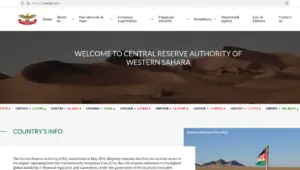
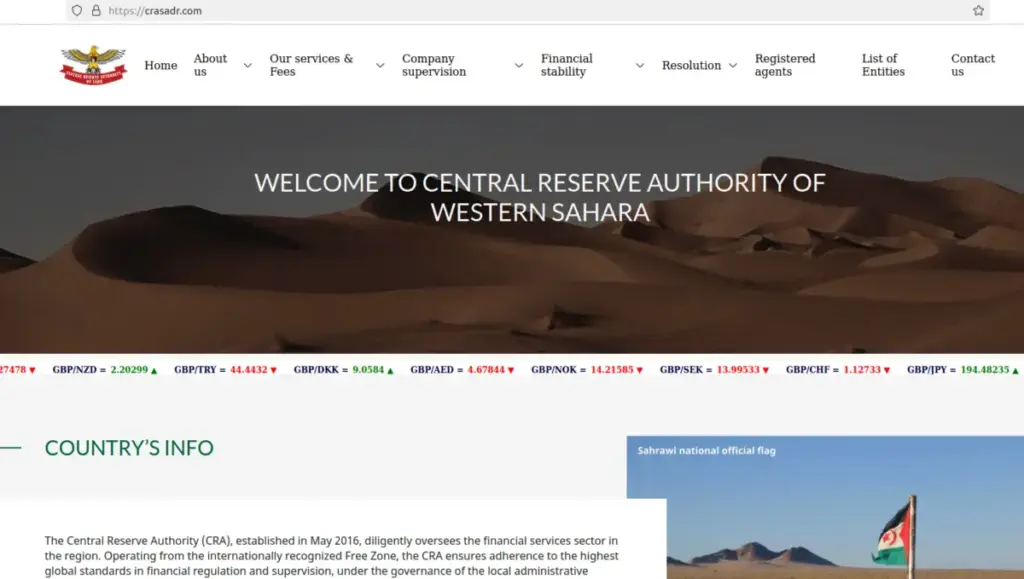
Investigations into the corporate structure of the platform revealed that the sole shareholder of Certa Payments—the parent company of Cryptomus—was a 25-year-old Ukrainian woman. She was also linked to several other firms, most notably the "WS Management and Advisory Corporation." This corporation presented itself as the sole, exclusive regulatory body for cryptocurrency, foreign exchange, and online gaming businesses incorporated in the Western Sahara, a disputed region in northwest Africa.
The entity’s website, crasadr.com, operated as a digital storefront for legitimacy, offering to assist applicants with bank setups, formation services, and the licensing of foreign exchange brokers. Further evidence of this charade was uncovered when investigators discovered that Certa Payments’ former website shared a server with over a dozen other domains, including one registered to the "Central Reserve Authority of the Western Sahara."
By cloaking itself in the language of formal financial regulation and anchoring its operations to a disputed region, the platform attempted to create a veneer of institutional respectability. However, as the U.K. sanctions now demonstrate, this illusion has been thoroughly punctured. Following the October 8 announcement, the Cryptomus support bot on Telegram responded to user inquiries by stating that the platform was suddenly unable to process transactions, a clear sign that the international net finally closing around the organization is having its intended, disruptive effect.