






The United Kingdom has launched a significant economic offensive against Cryptomus, a notoriously chameleonic cryptocurrency payment processor. British authorities have officially sanctioned the platform, which intelligence and blockchain experts identify as a critical conduit for a sprawling ecosystem of illicit financial activity, including ransomware payments, narcotics trafficking, darknet market transactions, and large-scale fraud. Beyond these criminal enterprises, the platform has become a vital component in helping the Russian government and its sanctioned financial institutions circumvent international restrictions.
On October 8, the U.K. government formally issued sanctions against Cryptomus—which has operated under various aliases including Certa Payments and Xeltox Enterprises. These sanctions represent a decisive move to dismantle the platform’s operations. The measures effectively freeze any assets associated with Cryptomus currently held in British banks and impose a strict prohibition on any U.K. company or individual from providing business services to the entity, whether through digital channels or traditional financial arrangements. In a sweeping move to close loopholes, the sanctions also targeted several other associated virtual payment platforms, including VexPay, TokenSpot, and the Tsunami Payments service, signaling a coordinated effort to disrupt the infrastructure supporting Russia’s wartime economy.
The sanctions arrive on the heels of years of scrutiny regarding the platform’s dubious origins and its role in facilitating the laundering of criminal proceeds. Investigations, including those published by Krebs on Security in December 2024, exposed Cryptomus as a preferred payment processor for a wide array of Russian cryptocurrency exchanges and websites dedicated to peddling cybercrime services. Since its emergence in 2022, the company has employed a classic "shell game" strategy, rebranding repeatedly to evade regulatory pressure. Most recently, the platform pivoted to the name "Heleket" following a record-breaking CAD $176 million fine levied by Canadian authorities in 2025 for systemic anti-money laundering (AML) failures.
Industry leaders in blockchain intelligence have underscored the gravity of the U.K.’s intervention. Chainalysis, a firm specializing in tracking illicit blockchain activity, noted that the sanctions strike at the broader financial plumbing that sustains Russia’s economic stability during the ongoing conflict. In an October 8 blog post, Chainalysis highlighted that Cryptomus and its alias, Heleket, had effectively become major hubs for illicit financial flows. The firm’s data suggests that the volume of illicit funds channeled through these services surpassed that of traditional cryptocurrency mixers, with the number of illicit counterparties interacting with the platform surging to more than 900 in a single month in late 2025.
The sheer scale of the operation is staggering. In April 2026, TRM Labs, another leading blockchain analysis firm, reported that Cryptomus had processed more than $7 billion in transactions since its inception in 2022. This volume included payments directly linked to the sale of child sexual abuse material, the financing of terrorist networks, and human trafficking operations. TRM Labs further observed that while the platform’s transaction volume initially dropped following the imposition of stricter "know your customer" (KYC) protocols, the launch of Heleket provided a convenient, no-KYC alternative for criminals looking to continue their activities unimpeded.

Richard Sanders, a blockchain analyst and investigator who spent months meticulously mapping the infrastructure of Cryptomus and interacting with its customer base, argues that the U.K. sanctions are a necessary evolution in regulatory enforcement. According to Sanders, previous attempts to rein in the platform—most notably the massive Canadian fine—were largely toothless, as the penalties were ultimately deemed unenforceable and uncollectible.
"A fine doesn’t stop a cryptocurrency payment processor from processing payments," Sanders noted on LinkedIn following the announcement. "Sanctions kill the operation. The distinction matters."
The history of the platform is marked by geographical obfuscation and institutional deception. Previous reporting identified that Cryptomus shared a business address in Vancouver with dozens of other foreign currency dealers and money transfer businesses—none of which appeared to maintain an actual physical presence at the location. Even as the company faced intense legal pressure and international scrutiny, it continued to process massive volumes of high-risk transactions.
The U.K. sanctions are also being viewed as a historic precedent in international cooperation. Experts point out that this is the first known instance of a "Five Eyes" nation—the intelligence-sharing alliance comprising Australia, Canada, New Zealand, the U.K., and the U.S.—sanctioning a cryptocurrency operation that was incorporated within the jurisdiction of another member of the same alliance. This indicates a tightening of the net and a new level of intolerance for companies that leverage the legal frameworks of democratic nations to facilitate global criminal activity.
The authority under which entities like Cryptomus and Heleket operate remains one of the most bizarre aspects of their business model. The investigation into the platform’s corporate structure reveals a labyrinthine trail leading to a network of fake financial institutions and a manufactured regulatory body.

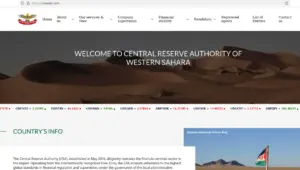
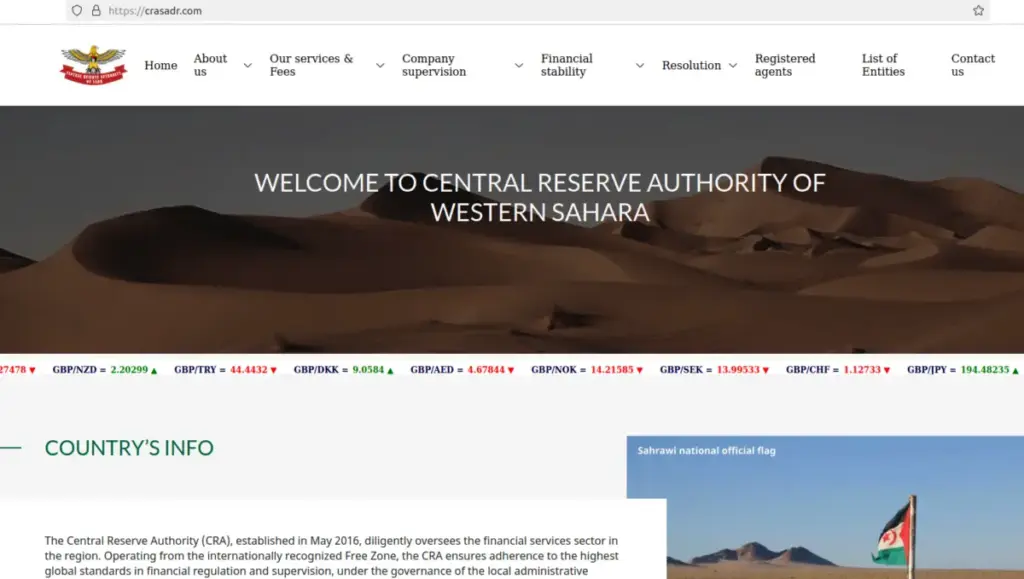
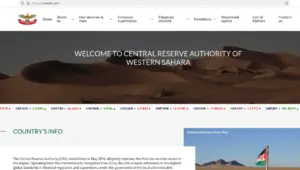
Research found that the sole shareholder of Cryptomus’s parent company, Certa Payments, was a 25-year-old Ukrainian woman. She was also identified as the head of several other firms, including the "WS Management and Advisory Corporation." This organization claimed to be the exclusive regulatory body overseeing licenses for cryptocurrency, foreign exchange, and online gaming businesses incorporated in the Western Sahara, a disputed region in northwest Africa.
The website for this "regulatory body"—crasadr.com—offered a veneer of legitimacy to applicants, providing services for bank setup, formation, and the licensing of foreign exchange brokers. Furthermore, forensic digital analysis of Certa Payments’ former web domain revealed it shared a server with 12 other domains, including one dedicated to the "Central Reserve Authority of the Western Sahara." By positioning themselves under the oversight of a non-sovereign, phony regulatory authority, these platforms created an illusion of compliance that allowed them to operate with impunity while funneling billions of dollars through the global financial system.
As of October 8, the impact of the U.K. sanctions was already being felt by the platform’s users. The Cryptomus support bot on Telegram, which had previously facilitated the flow of illicit funds, was reported to be non-functional, responding to inquiries by stating that the platform was suddenly unable to process transactions. For investigators and regulators, this indicates that the latest round of sanctions may finally be hitting the target where it matters most: the ability to move money. While the saga of Cryptomus has been defined by its ability to dodge consequences through renaming, relocation, and regulatory theater, the coordinated action by the U.K. government suggests that the era of its untethered growth has come to an abrupt end.