











Amazon Prime Day 2026, held from June 23 to June 26, once again served as a masterclass in massive-scale cloud computing. For Prime members worldwide, the four-day event offered millions of deals across more than 35 categories, resulting in a seamless shopping experience. However, beneath the interface of the Amazon storefront, a colossal technological engine—powered by Amazon Web Services (AWS)—was working at an intensity that pushed the boundaries of modern infrastructure.
As part of a long-standing tradition of transparency, AWS has released the performance metrics that underpinned this year’s Prime Day. Since 2016, these annual reports have tracked the evolution of cloud capability, demonstrating how Amazon manages the most significant traffic spikes in the retail calendar. Prime Day 2026 was no exception, marking a new chapter in operational scale and system reliability.
The Foundation of Performance: Compute and Storage
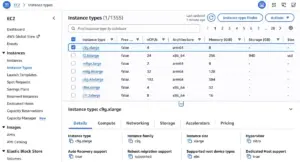
The sheer volume of transactions processed during these four days necessitated a sophisticated approach to compute efficiency. Amazon Elastic Compute Cloud (Amazon EC2) remained the backbone of the operation, with AWS Graviton processors playing a central role. During this year’s event, Graviton-based instances accounted for up to 49% of the Amazon EC2 compute capacity utilized by Amazon.com. This adoption reflects a broader industry trend toward the energy-efficient, high-performance architecture that Graviton provides for large-scale enterprise workloads.
Storage infrastructure faced equally daunting pressures. Amazon Elastic Block Store (Amazon EBS) proved critical in managing the massive throughput required for backend databases and applications. Throughout the event, the service peaked at over 24.8 trillion I/O operations, successfully facilitating the movement of more than an exabyte of data daily. This level of storage performance ensured that despite the global frenzy of activity, the underlying data layers remained responsive and stable.
Serverless Scalability and Global Delivery
The shift toward serverless architectures has been a recurring theme in recent years, and Prime Day 2026 showcased the maturity of these technologies. AWS Lambda, the company’s flagship serverless compute service, processed over 2.3 trillion invocations per day. This capability allowed developers to run code in response to specific events without provisioning or managing servers, enabling the rapid scaling required to handle fluctuating user interest.

Simultaneously, the Amazon Elastic Container Service (ECS) and AWS Fargate provided the container orchestration necessary to support this scale. The system launched an average of 158.3 million tasks per day on Fargate, representing a substantial 47.7% increase compared to the average seen during the 2025 event. This surge highlights how quickly Amazon’s infrastructure is evolving to meet growing consumer demand.
To ensure that customers across the globe experienced minimal latency, Amazon CloudFront played a pivotal role. The content delivery network delivered over 2.1 trillion HTTP requests during the global week of Prime Day, a 5% increase in total volume compared to the previous year. This distributed architecture ensured that shoppers in different regions experienced the same level of performance, regardless of their proximity to the central data centers.
Data Management at Scale: Databases and Caching
The heart of the Prime Day experience lies in its databases, which must remain highly available while processing astronomical request rates. Amazon DynamoDB, the company’s serverless, distributed NoSQL database, remains the engine for mission-critical systems including Alexa, the Amazon.com storefront, and the extensive network of global fulfillment centers. Over the course of the four-day event, DynamoDB processed more than 59 trillion requests. Even at a peak of 192 million requests per second, the database maintained high availability and consistently delivered responses in the single-digit millisecond range.
Relational data management also saw record-breaking activity through Amazon Aurora. Designed for high performance and global scale, Aurora handled hundreds of billions of transactions, managing 5,491 terabytes of data while facilitating the transfer of 1,194 terabytes. Complementing these databases was Amazon ElastiCache, which handled the heavy lifting of frequent data access, peaking at over 2.3 quadrillion daily requests and 2.1 trillion requests in a single minute.
Messaging, Streaming, and Operational Governance
Modern distributed systems rely on sophisticated communication and monitoring to remain functional. Amazon Kinesis Data Streams, which manages real-time data ingestion, processed a peak of 988 million records per second. For application-to-application and application-to-person messaging, Amazon Simple Notification Service (SNS) proved indispensable, delivering 5 trillion messages in a single day. Meanwhile, Amazon Simple Queue Service (SQS) facilitated the communication between microservices, receiving a peak of 213 million messages per second.

Maintaining visibility and security across this vast digital landscape required the constant operation of AWS’s governance and monitoring tools. AWS CloudTrail, which logs API activity for compliance and operational auditing, processed 3.6 trillion events during the four-day period—a 44% increase over 2025. Complementing this, Amazon CloudWatch tracked the health of the entire ecosystem, processing over 2.15 quadrillion metric observations daily.
Security remained a primary concern throughout the event. Amazon GuardDuty, which provides intelligent threat detection, monitored an average of 14.08 trillion log events per hour. This represents a 59% increase in security monitoring activity compared to the previous Prime Day, underscoring the heightened focus on protecting customer data during high-traffic periods.
Proactive Reliability and Future Preparations
Perhaps most revealing about the maturity of Amazon’s infrastructure is the use of the AWS Fault Injection Service (FIS). By intentionally introducing faults to test the system’s resilience, Amazon’s engineers were able to ensure that the site remained highly available under pressure. The company conducted over 44,000 FIS experiments during the lead-up to and duration of Prime Day—more than six times the number of experiments performed in 2025. This rigorous approach to failure testing ensures that the system can recover instantly from potential bottlenecks or component failures.
For organizations preparing for their own business-critical events, product launches, or large-scale migrations, these metrics serve as a benchmark for what is possible in the cloud. AWS encourages enterprises to leverage resources such as AWS Countdown Premium. This service provides expert guidance to help businesses navigate traffic spikes, optimize infrastructure costs, and strengthen security protocols. Whether for major retail events, sporting broadcasts, or large-scale healthcare enrollment periods, the expertise developed through years of managing Prime Day is now a resource available to the broader AWS customer base.
As the retail landscape continues to change, the underlying cloud technology must not only keep pace but anticipate the next wave of global demand. Prime Day 2026 stands as a testament to the scale of modern cloud architecture and the collaborative effort required to maintain a flawless experience for millions of concurrent users. With the records set this year, the focus now shifts toward the innovations that will undoubtedly redefine these thresholds in the years to come.