






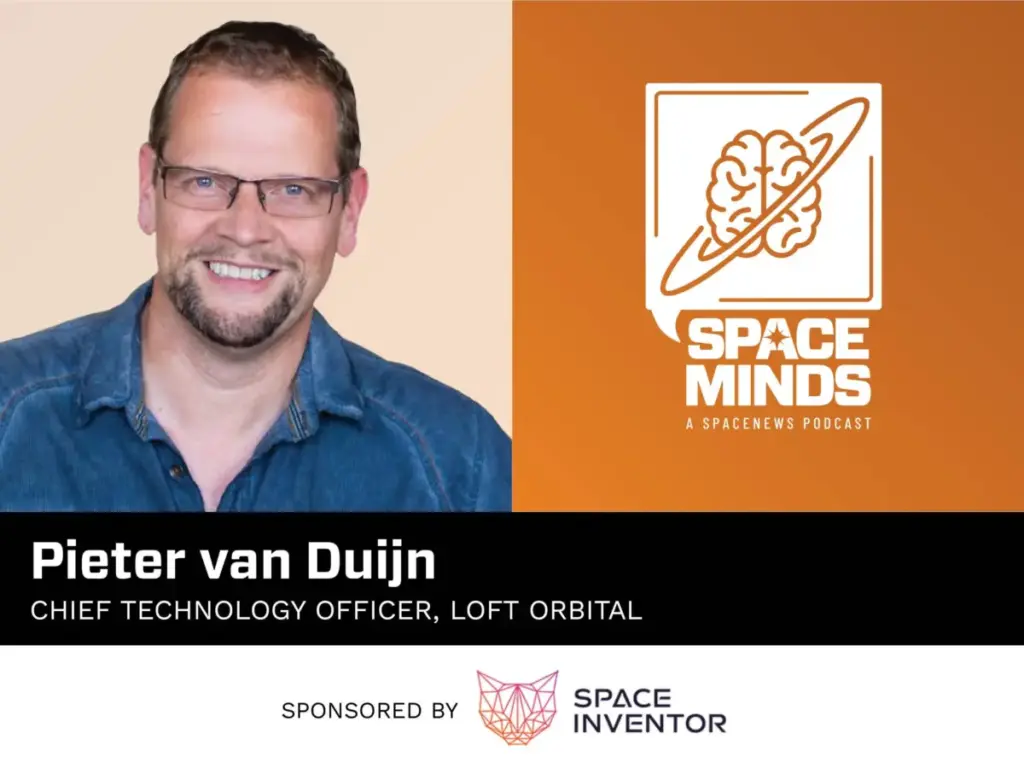
AI and the Commercial Space Race: A Conversation with Loft Orbital CTO Pieter van Duijn
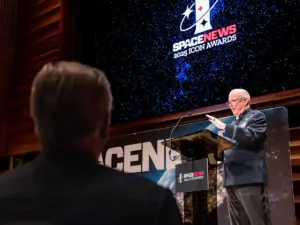
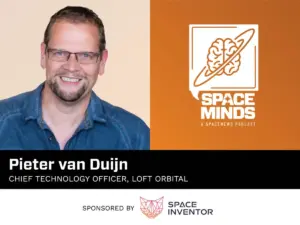
During the opening day of Space Tech Expo Europe, the commercial space sector’s attention turned sharply toward the integration of artificial intelligence and innovative operational models. In a compelling feature interview on Space Minds, SpaceNews Senior Editor and host Mike Gruss sat down with Pieter van Duijn, the chief technology officer of Loft Orbital, to discuss how the industry is undergoing a profound transformation. The discussion explored the steadily growing level of trust that commercial space operators are placing in artificial intelligence, examined the emerging paradigm of utilizing satellites much like renting an automobile, and addressed the lingering hurdles that continue to slow widespread adoption across the market.
The conversation serves as a cornerstone for the ongoing discussions at Space Tech Expo Europe, where industry leaders, engineers, and executives gather to debate the practical applications of cutting-edge software in orbit. As hardware costs decrease and data demands skyrocket, software solutions—particularly autonomous on-board processing—are becoming the primary differentiator for companies seeking to optimize their return on investment in space.
Redefining Satellite Operations: The "Renting a Car" Model
One of the most striking analogies discussed by Gruss and van Duijn during their exchange at Space Tech Expo Europe centers on the changing nature of satellite acquisition and utilization. For decades, deploying a satellite meant embarking on a multi-year, capital-intensive engineering journey tailored to a singular mission. Organizations had to design, build, test, and launch their own dedicated hardware, assuming all financial and technical risks associated with the asset.
However, companies like Loft Orbital are shifting this paradigm entirely by introducing shared infrastructure models. According to van Duijn, operating or utilizing a satellite today is increasingly comparable to renting a car. Instead of manufacturing a vehicle from scratch every time an individual or company needs to travel, modern commercial space users can leverage pre-existing, highly reliable orbital platforms. In this shared-bus framework, multiple payloads from different customers can be hosted on a single satellite. This approach drastically reduces lead times, lowers barriers to entry for emerging space nations and startup enterprises, and democratizes access to Earth observation and telecommunications data.
This car-rental model of space infrastructure relies heavily on standardized interfaces and versatile spacecraft buses. By decoupling the spacecraft’s core housekeeping systems from the specific payload hardware, providers can streamline integration processes. Customers no longer need to worry about the underlying propulsion, power generation, or attitude control systems; they simply plug in their sensors or processing units, much like attaching a specialized trailer or renting a pre-equipped vehicle for a specific journey.
Overcoming the Obstacles to AI Adoption in Orbit
Despite the clear efficiency gains promised by artificial intelligence and shared satellite infrastructure, the commercial space industry has historically been conservative when it comes to adopting unproven software methodologies. Space is an unforgiving environment characterized by intense radiation, extreme thermal fluctuations, and the absolute impossibility of physical maintenance once a satellite has cleared the atmosphere. Consequently, reliability has always taken precedence over cutting-edge capability.

During their discussion, Gruss and van Duijn analyzed the tangible obstacles that still hinder the rapid adoption of artificial intelligence in orbit. Chief among these concerns is the inherent unpredictability of complex machine learning models. Traditional flight software is deterministic; given a specific set of inputs, it will produce a predictable, pre-programmed output. Artificial intelligence and neural networks, by contrast, introduce probabilistic decision-making processes that can be difficult to fully validate in simulated ground environments prior to launch.
Nevertheless, van Duijn noted that the industry’s trust threshold is shifting. As terrestrial AI applications demonstrate unprecedented reliability and as on-board computing power increases exponentially, commercial operators are finding it increasingly difficult to ignore the advantages of autonomous satellite operations. Processing data directly in orbit—rather than downlinking massive, raw datasets to terrestrial ground stations for analysis—drastically reduces latency and minimizes the bandwidth bottlenecks that currently plague Earth observation constellations. Satellites equipped with advanced AI can autonomously detect maritime anomalies, monitor agricultural
health, or track severe weather events in real time, transmitting only actionable insights back to operators on the ground.
About Space Minds and the Broader SpaceNews Media Ecosystem
The interview between Mike Gruss and Pieter van Duijn is part of Space Minds, a premier audio and video podcast series launched by SpaceNews. Designed to spotlight the most inspiring leaders, disruptive technologies, and exciting commercial opportunities across the global space economy, the weekly program delivers in-depth conversations with the scientists, founders, and industry experts who are actively shaping humanity’s presence in orbit.
Hosted by Mike Gruss alongside journalists from the wider SpaceNews editorial team, Space Minds covers the breaking news, visionary concepts, and technical breakthroughs that capture the imagination of space enthusiasts and industry professionals alike. New episodes premiere every Thursday, offering listeners and viewers a front-row seat to the discussions driving the aerospace sector forward.
The podcast is distributed across multiple digital platforms, ensuring accessibility for a global audience. Episodes can be watched directly on SpaceNews.com as well as the official SpaceNews YouTube channel. For those who prefer audio-only formats during their commutes or workdays, Space Minds is readily available on major podcast distribution networks, including Spotify and Apple Podcasts, providing a comprehensive resource for anyone looking to stay informed about the rapid commercialization and technological evolution of the space industry.