










Amazon Web Services (AWS) has fundamentally reshaped the way developers interact with its platform, introducing a streamlined, project-centric onboarding experience designed to eliminate the friction that often accompanies cloud infrastructure setup. Since its inception, AWS has been synonymous with the foundational building blocks of the modern internet—Amazon S3, Amazon EC2, and Amazon SQS—services that empowered a generation of entrepreneurs to move from concept to deployment. However, as the platform matured to meet the rigorous demands of global enterprises and governments, the depth and complexity of its configuration options grew in tandem. For a new builder with a fresh idea, this vast array of choices, security requirements, and operational settings could sometimes feel like an obstacle rather than an enabler.
In a significant shift toward prioritizing speed and accessibility, AWS is now rolling out a new experience tailored for the age of AI, where developers demand the ability to move at the velocity of their coding agents. This new paradigm shifts the focus from manual configuration to immediate productivity, allowing users to start with sensible, pre-configured defaults that adhere to industry best practices from the very first interaction.

A Frictionless Path to Innovation
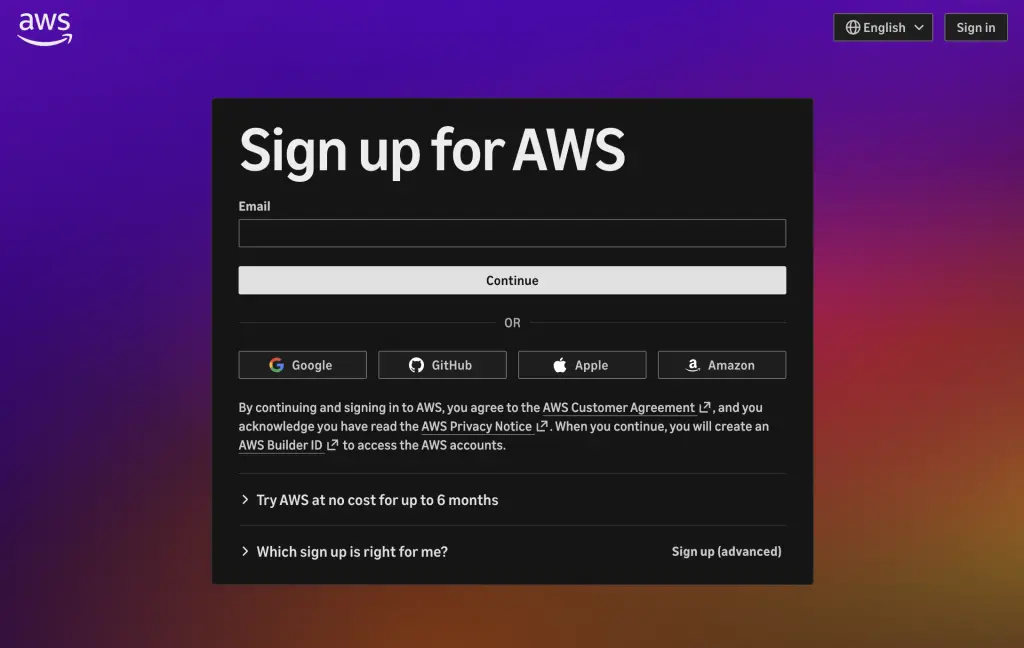
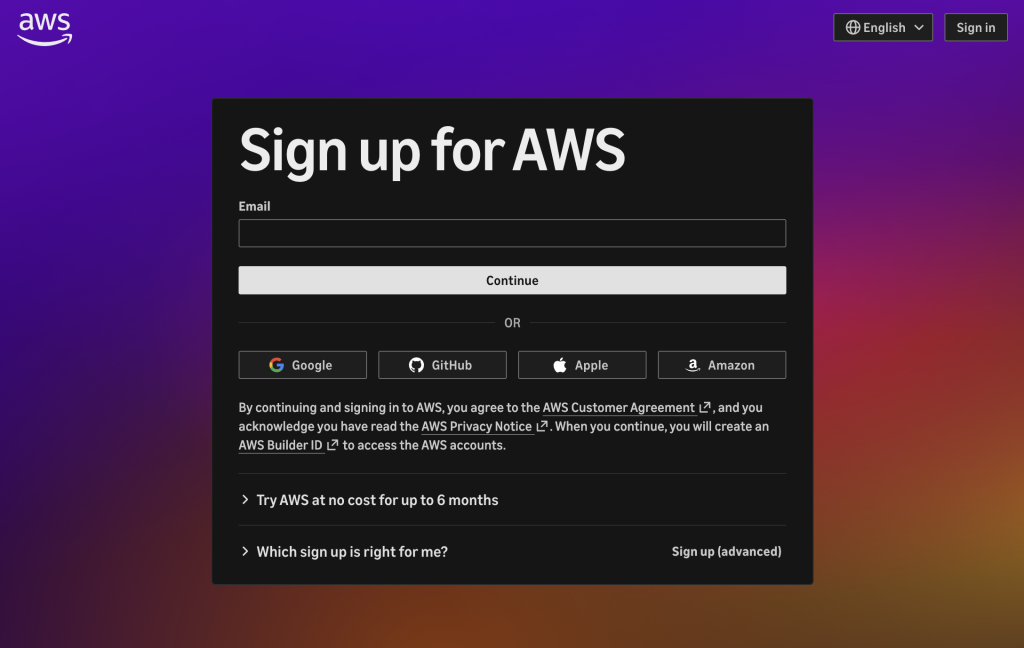
The new AWS onboarding journey begins with a simplified identity management process. Developers can now sign up using existing credentials from familiar providers such as Google, GitHub, and Apple, significantly reducing the administrative overhead associated with account creation. In a move designed to lower the barrier to entry, most new customers will no longer be required to provide a credit card during the initial signup phase. Instead, users are immediately granted $100 in free credits through the AWS Free Tier, providing a sandbox environment where they can begin building, testing, and deploying their projects without the immediate worry of billing cycles or complex financial setup.
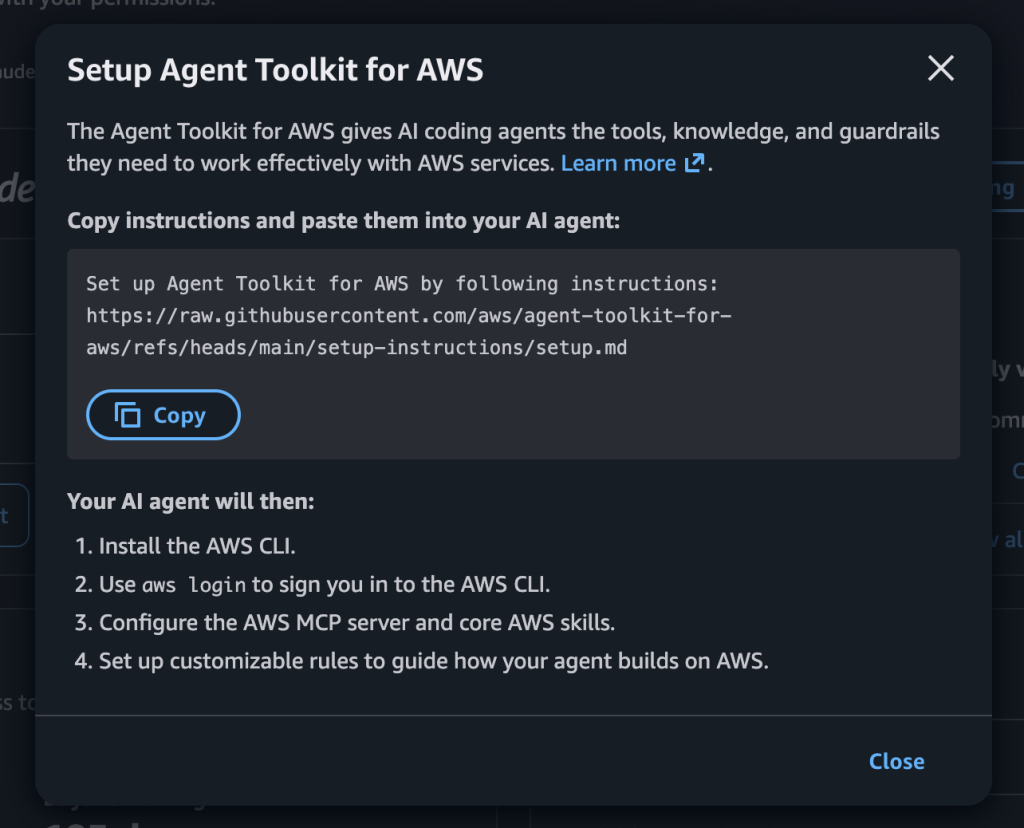
The architectural foundation of this new experience is the concept of a "project." When a user creates a new account, AWS automatically organizes their work into these containers. A project effectively bundles an AWS account with the necessary settings for team collaboration, and, crucially, it applies comprehensive security controls automatically. This ensures that even in the early stages of development, the environment is secure by design. Once the user is logged in, they are provided with a specific prompt designed to be copied into their preferred coding agent. This integration enables the agent to configure itself for the AWS environment, effectively allowing the machine to handle the heavy lifting of deploying resources and running workloads.

Removing the Complexity of Permissions
Perhaps the most significant advancement in this simplified experience is the elimination of manual Identity and Access Management (IAM) configuration for standard workflows. Historically, managing fine-grained permissions for individual developers could be a complex and time-consuming process. Under the new model, inviting collaborators is as simple as sending an email. When a team member accepts an invitation, they are granted access specifically to the project for which they were invited, and the underlying permissions between supported services are handled automatically by the platform.
This automation extends to the interaction between coding agents and the AWS infrastructure. Because the system is designed to manage the connections between resources automatically, developers no longer need to manually troubleshoot or configure resource permissions. Whether it is connecting an API Gateway to a Lambda function or ensuring a database has the correct access rights, the system manages these underlying security policies, allowing the developer to remain focused on the application logic rather than the infrastructure plumbing.
Budgetary Control and Financial Guardrails
As projects transition from experimental phases to functional applications, the new AWS experience provides robust financial management tools that are built into the project interface. When a developer is ready to move beyond their initial free credits, they can upgrade to a paid plan by providing a payment method. To prevent unexpected costs, AWS has introduced a flexible, project-specific spend limit.
This mechanism serves as a hard ceiling for costs; for instance, if a user sets a $50 limit, they will only be billed for what they use up to that amount, plus taxes. AWS assists in this process by recommending a spend limit based on usage patterns, though developers retain the flexibility to set their own thresholds. The system is designed with transparency in mind: if a project approaches its defined limit, the developer receives timely notifications. In the event that the limit is reached, AWS pauses the project to prevent further accumulation of charges, rather than allowing the account to accrue surprise fees. This feature is particularly valuable for developers managing multiple projects, as it allows them to allocate larger budgets to successful, growing workloads while maintaining strict, low-cost guardrails for experimental side projects.
Real-World Application and Scalability
Early adopters of the new experience have reported significant time savings. By leveraging coding agents, developers can translate natural language prompts into fully functional cloud architectures in a matter of minutes. In practical tests, a user was able to request an API that generated unique sequential IDs, prompting the coding agent to automatically provision an Amazon Lambda function, an Amazon DynamoDB table, and an Amazon API Gateway endpoint. This entire stack was deployed without the user ever needing to manually interact with the AWS Management Console to set up permissions or resource linkages.
The platform is built to grow alongside the user’s ambition. While the initial experience is designed for simplicity, it does not lock the user into a restricted environment. If a project expands to the point where it requires multiple regions, complex networking, or sophisticated governance features—such as custom policies within AWS Organizations—developers can "activate" these advanced features at any time. This transition occurs without the need for migration or downtime, as the project is already running on the same underlying AWS infrastructure that powers the world’s largest companies. The previously configured resources remain intact, and the transition essentially "unlocks" the full, granular control that has always defined the AWS ecosystem.

A Commitment to the Builder Community
This initiative represents a core strategic pivot for AWS, acknowledging that the next generation of builders—often utilizing AI agents to write and deploy code—requires an infrastructure partner that can keep pace with their speed of iteration. By combining the ease of use of a modern startup tool with the enterprise-grade reliability and global scale of AWS, the company is aiming to ensure that the initial setup process is no longer a deterrent to innovation.
As AWS continues to roll out this simplified experience to new customers, the focus remains on feedback and iterative improvement. By lowering the barrier to entry and removing the manual friction of infrastructure management, AWS is reaffirming its mission to be a platform where any individual with an idea can start building immediately, with the confidence that the platform is robust enough to handle the scale of their future success. For those looking to get started, the new sign-up flow is now accessible through the AWS website, marking a new chapter in how developers interact with the world’s most comprehensive cloud platform.