









Workers at Forged Fiber 37, a critical infrastructure subsidiary of telecommunications giant AT&T, have voted overwhelmingly to authorize a strike if necessary, sending an unmistakable message to corporate leadership that they are united, resolute, and fully prepared to fight for the fair first contract they deserve. Represented by the Communications Workers of America (CWA), the workforce’s decisive vote marks a major escalation in a labor dispute that has steadily intensified over months of contentious bargaining and mounting frustration over the company’s negotiating tactics.
The strike authorization vote comes directly on the heels of months of painstaking negotiations that have been severely strained by AT&T’s approach to the bargaining table. Tensions reached a boiling point following an alarming display of bad faith bargaining by the corporation, which took the drastic step of withdrawing a tentative agreement that had previously been reached with the union representatives. In response to this abrupt reversal and what labor advocates describe as an undermining of the collective bargaining process, the CWA took formal legal action, filing an unfair labor practice charge with the National Labor Relations Board (NLRB) to address the company’s contentious actions and seek accountability.
Since formal bargaining for the workers’ inaugural contract began in May 2026, employees at Forged Fiber 37 have been steadfastly fighting for basic workplace protections and standards that should naturally accompany a fair contract. Among their primary demands are fundamental elements of modern employment security, including robust job security provisions, reasonable and predictable time off, and wages and benefits that accurately reflect the true economic value and technical skill of their daily work. However, rather than addressing these core concerns in a constructive manner, AT&T has continued to push aggressively for broad, unrestricted flexibility. The company seeks the unilateral right to lay off union employees and increasingly rely on outside contractors and temporary workers, even in scenarios where fully trained, highly qualified, and readily available union members are on hand to perform the work.

AT&T’s stubborn approach to these localized labor negotiations also raises profound and serious questions regarding the corporation’s broader, long-term business strategy and its foundational commitment to the communities that rely heavily on the stability and expansion of its fiber-optic network. This corporate trajectory became even more apparent in October 2026, when AT&T formally announced a significant new joint venture with Global Infrastructure Partners (GIP)—an investment firm that is part of BlackRock—alongside the Canada Pension Plan Investment Board (CPP Investments). This strategic alignment combines Forged Fiber 37 and Gigapower under a single, unified wholesale fiber business entity. Under the terms of the publicly disclosed agreement, AT&T will retain a 50 percent ownership stake in the newly formed venture, while the coalition of investment partners will collectively hold the remaining 50 percent. AT&T corporate executives have publicly described this complex financial arrangement as a "capital-light" strategic maneuver explicitly designed to accelerate the widespread deployment and expansion of fiber infrastructure.
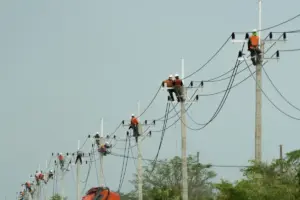
Yet, while corporate leadership focuses on high-level financial structuring and capital-light expansion strategies, the day-to-day reality of building and maintaining that infrastructure rests squarely on the shoulders of the frontline workforce. Forged Fiber 37 workers play an indispensable role in the telecommunications ecosystem, physically installing, maintaining, and providing technical support for the advanced fiber network that connects residential homes, vital institutions, and commercial businesses across the nation. Their meticulous labor and technical expertise are fundamentally essential not only to AT&T’s continued financial growth and market competitiveness, but also to the millions of everyday consumers and communities that rely entirely on dependable, high-speed internet service for work, education, healthcare, and daily communication.
Despite the high stakes and the overwhelming mandate delivered by the strike authorization vote, operations remain active as negotiations proceed. Workers will continue to report to their regular shifts and perform their duties under the current terms and conditions of employment while ongoing talks continue between union and management representatives. The newly approved strike authorization grants CWA President Claude Cummings Jr. the formal authority to call a strike at a time and place of his choosing if it is deemed necessary, providing the union with critical leverage as it continues to pressure AT&T to return to serious negotiations and ultimately reach a fair, equitable agreement that respects the contributions of its workforce.