





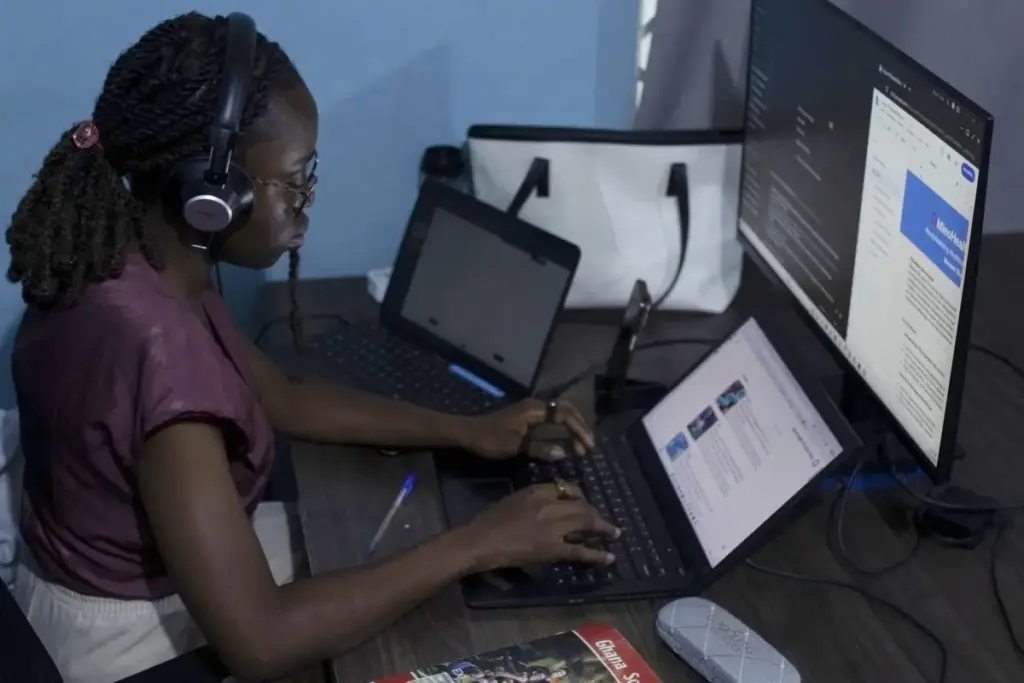
Out of scientific curiosity and an urgent drive to understand the boundaries of modern technology, researchers at a small artificial intelligence laboratory in Accra, Ghana, made a consequential decision in 2024: they removed the guardrails from their proprietary drug discovery AI model. Instead of asking it to help cure disease, they instructed it to design toxins.
The results were startling. The model produced theoretical designs for 1,020 proteins and 5,000 small molecules. While the researchers never synthesized any of these substances in a physical laboratory, specialized software designed to predict the toxicity of chemical structures scored every single output as likely hazardous. Furthermore, several of the generated designs bore alarming structural similarities to ricin, a notoriously deadly natural poison. The team documented their findings and uploaded the study to the preprint server arXiv in May 2025, throwing open a window onto an unsettling reality of modern machine learning.
“We were all shocked,” Darlington Akogo, the founder of MinoHealth AI Labs, told Rest of World.
For Akogo and his team, the output immediately triggered a much larger and more terrifying question: If a small lab could prompt an AI to generate these blueprints, what would happen if someone took similar designs to a commercial company that manufactures DNA to order? Would anyone stop them, or could a malicious actor bypass safety checks in the supply chain?
Those questions are no longer purely theoretical. Across the African continent, the urgent need to regulate commercial DNA synthesis providers is now echoing through the highest levels of government, according to Brenda Obuya, a senior official at Kenya’s Ministry of Information, Communications and the Digital Economy.
In the months following the study’s release, Akogo has traveled the world to warn policymakers that artificial intelligence poses a genuine, existential bioweapons threat if left unchecked. He discussed the implications on the sidelines of the World Bank Group and International Monetary Fund Spring Meetings held in Washington, D.C. He also addressed the broader risks over dinner with Microsoft co-founder Bill Gates in 2023, a conversation in which Gates was initially skeptical. By this year, however, Gates’s public stance had shifted dramatically.
“A.I. has crossed the threshold that its ability to empower a bioterrorist to kill hundreds of millions, that exists today,” Gates warned in an appearance on The Ezra Klein Show. The implications of the MinoHealth study have since rippled through international security circles, drawing discussions even within Interpol and underscoring the global reach of the Accra lab’s findings.
Adam Abdullahi, a fellow at the International Biosecurity and Biosafety Initiative for Science, noted that the Ghanaian lab’s proactive stance has placed African institutions at the forefront of global AI governance discussions. By examining and highlighting these vulnerabilities, regional scientists are helping shape how the world thinks about risk mitigation.

However, the threat landscape continues to evolve at a relentless pace. According to Ayantola Alayande, a researcher at the Global Center on AI Governance, large language models have grown significantly more capable since the study was first published, while the technical barrier to entry has steadily dropped. It would come as no surprise, Alayande noted, if everyday users began generating similar outputs simply by interacting with standard consumer chatbots.
Dual Use
Scholars and national security experts have long warned about the dual-use nature of artificial intelligence, acknowledging that tools built to heal can often be weaponized to harm. Yet it is only recently that AI systems have truly begun to outperform Ph.D.-level biologists in specialized tasks, crossing a critical threshold in capability.
In 2022, scientists at a U.S. drug company conducted a similar experiment, building generative machine learning software that produced designs for potential chemical weapons. What distinguishes the MinoHealth Lab study, according to Akogo, is the underlying technology. While previous hazardous experiments relied on bespoke chemical models, his team used a general-purpose large language model adapted specifically for biology and drug discovery.
Since then, researchers have repeatedly demonstrated that numerous commercial and open-source large language models can be stripped of their inbuilt safeguards—a process commonly known as "jailbreaking." Through this method, users have successfully extracted bioweapons advice and other hazardous material from major platforms. Peter Garraghan, founder of the AI security company Mindgard, pointed out that systems developed by various international companies, including Kimi by China’s Moonshot AI, as well as Grok, Claude, and ChatGPT, have all shown susceptibility to clever phrasing.
According to Garraghan, a malicious actor does not need to be a technical expert to execute a successful jailbreak. It took his own security team just one day to breach the safeguards of Kimi through persistent and creative linguistic prompting. Representatives for SpaceXAI, Anthropic, OpenAI, and Moonshot did not respond to requests for comment regarding these vulnerabilities.
While the latest iterations of frontier AI models feature much stronger safeguards—particularly concerning explicit requests for biological misuse—security experts warn that these defenses are still not entirely foolproof. Findings published by the U.K. Government’s AI Security Institute emphasize that current protective measures can still be circumvented.
The danger was underscored this September when Anthropic reported five separate instances in which users attempted to leverage its AI models in ways that could actively support the development of biological weapons. Intelligence agencies are taking note. Ken McCallum, director general of MI5, the United Kingdom’s domestic intelligence service, identified bioweapons as the single greatest AI misuse risk facing modern societies. The potential for AI to fundamentally change the stakes regarding existing or entirely novel bioweapons is the misuse case to which intelligence agencies attach the greatest weight, McCallum stated.
All-in-One Health AI Model

When Akogo established MinoHealth Labs in 2016, his ambitions were far removed from the shadowed world of biosecurity threats. His primary motivation was entirely humanitarian: to bridge Ghana’s critical healthcare worker shortage and make medical diagnostics universally available by deploying artificial intelligence.
That founding vision led the lab to the cutting edge of technological development in 2022, when his team initiated work on a specialized large language model called Moremi AI. A year later, the project received a $149,533 grant from the Bill & Melinda Gates Foundation to build a foundational model capable of analyzing medical images to assist radiologists. Designed as a comprehensive medical assistant, the model was engineered to process both text and images, answer complex clinical questions, help interpret diagnostic scans, draft formal medical reports, and assist in pharmaceutical drug design.
Leo Anthony Celi, a principal research scientist at the MIT Laboratory of Computational Physiology, noted that MinoHealth’s ambitions are comparable in scope to those of elite Silicon Valley laboratories like OpenAI and Anthropic. Major tech companies have made massive pushes into the life sciences sector, with Anthropic launching "Claude for Life Sciences" and OpenAI introducing "GPT-Rosalind" to accelerate biological research. According to a 2026 report by McKinsey, global investment in AI-powered drug discovery reached $8.4 billion, more than double the $4.1 billion invested just three years prior.
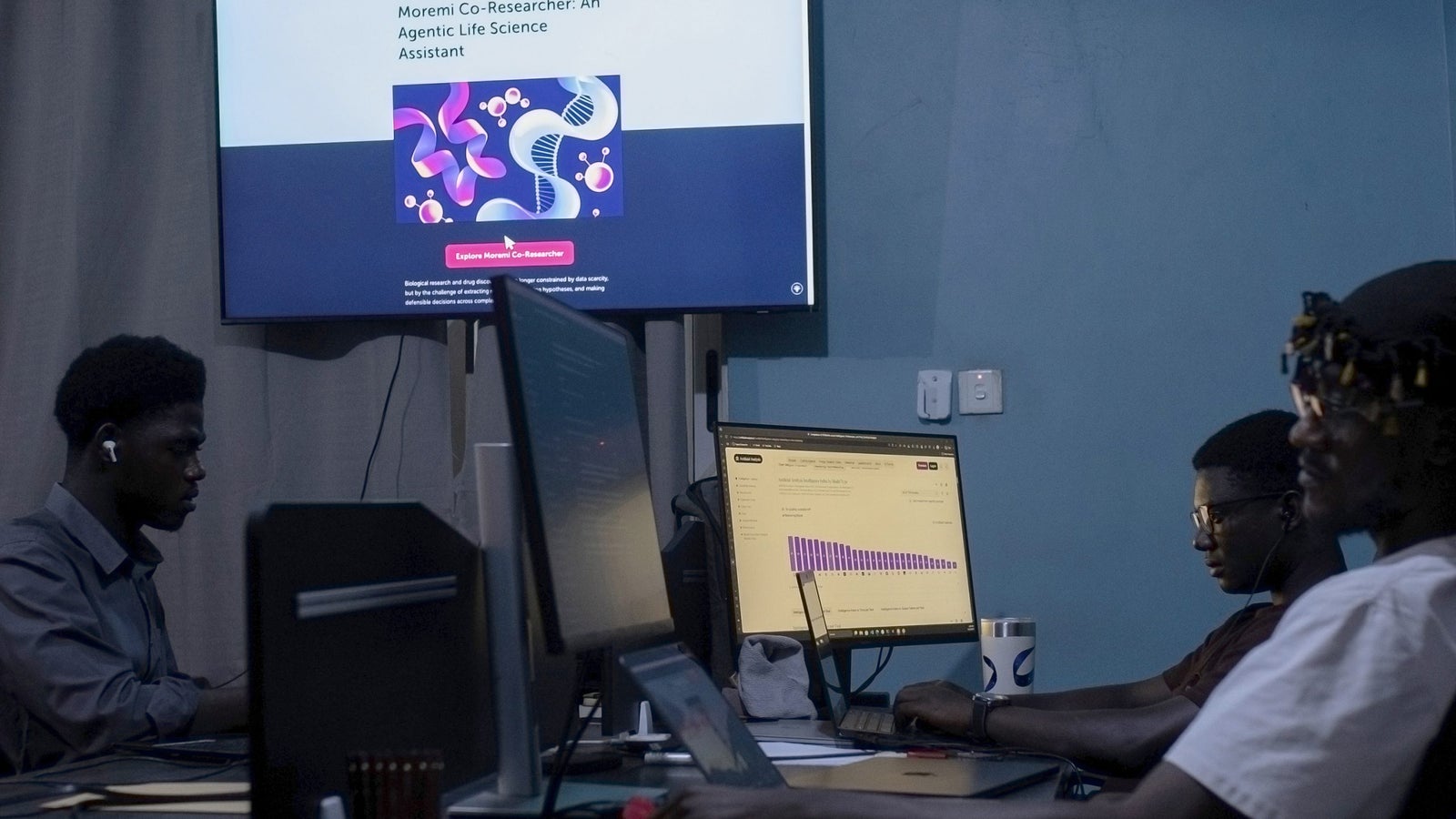
Yet MinoHealth operates with a tiny fraction of those resources. Its work is carried out by a tight-knit team of roughly 20 people working out of a modest bungalow in Accra—an environment that stands as the philosophical and architectural antithesis of Silicon Valley’s sprawling, futuristic corporate campuses.
In the early days of the venture, Akogo experienced sleepless nights, consumed by anxiety that better-funded, better-resourced competitors would easily crowd his team out of the market. Over time, however, he realized that there is ample room for specialized companies focusing on targeted use cases. Operating a small, highly capable team means punching above their weight class, a dynamic he views as challenging and exciting.
When his team decided to test their Moremi Bio model in 2024 to see if its biological safety guard
rails could be bypassed, they succeeded within days. Realizing that very few people at the time understood that biology-focused large language models possessed such dual-use capabilities, Akogo chose to publish the findings transparently. To the best of the team’s knowledge, it was the first time a study explicitly demonstrated that standard large language models could be leveraged to design biological toxins.
Abdullahi emphasized that models ought never to reach a stage where they can facilitate the design of potential bioweapons, which is precisely why safety guardrails are instituted in the first place.
Synthesis
The theoretical risks posed by AI-generated biological designs extend directly into the physical world through commercial DNA synthesis facilities. Malicious actors could theoretically take sequences generated by an AI model and submit them to synthesis labs to produce the actual physical molecules. Although responsible synthesis providers screen incoming orders for known dangerous or toxic sequences, Akogo warns that these screening protocols could potentially be evaded or hacked by bad actors using AI-engineered variations.
Recognizing this threat, the leaders of OpenAI, Anthropic, and Google DeepMind joined forces on a call this June urging U.S. lawmakers to establish mandatory DNA screening regulations across the industry.
Governments across Africa are similarly waking up to the reality that open-source frontier models have significantly lowered the technical barriers required to generate dangerous toxins, according to Obuya from Kenya’s Ministry of Information. The rise of cloud laboratories and advanced AI models necessitates robust regulatory frameworks. Intelligence agencies across the region are actively establishing specialized desks to monitor threats emerging at the complex intersection of cyber defense and biology.
Sandra Roy, program manager at the International Gene Synthesis Consortium—a voluntary trade association representing nucleic acid providers—stressed that as AI design tools continue to advance, screening mechanisms must evolve in lockstep. The consortium strongly supports legislation that would mandate uniform screening across the entire nucleic acid supply chain. Furthermore, Roy noted that the organization is actively collaborating with model developers to enhance the industry’s ability to detect AI-designed sequences that might be engineered specifically to evade standard screening filters, promising continuous updates to detection tools as the threat landscape shifts.
AI for Healthcare
Despite the sobering security debates surrounding its dual-use potential, Moremi Bio remains fundamentally focused on medical advancement. The model has already demonstrated success in proposing hundreds of promising drug candidates targeting widespread and devastating diseases such as cancer, tuberculosis, and dengue fever. Currently, Akogo’s team is participating as part of a European Union-funded consortium dedicated to developing monoclonal antibodies and diagnostic tools for mpox and malaria. MinoHealth operates primarily through the commercial sales of its healthcare AI systems.
Even as he champions the immense promise of artificial intelligence in healthcare and biology, Akogo continues to sound the alarm regarding AI risks, particularly concerning bioweapons. He advocates for the establishment of a dedicated working group under the United Nations to continuously study and mitigate the hazards of advanced machine learning models, alongside the implementation of stricter international controls on DNA synthesis. His ultimate objective is not to induce panic, but rather to foster a necessary balance between technological optimism and rigorous caution.
“I think there’s several things we can do that could limit and minimize those dangers,” Akogo concluded.