









In a significant escalation against the digital infrastructure supporting Russia’s wartime economy, the United Kingdom has officially imposed stringent economic sanctions on Cryptomus, a notorious and highly adaptive cryptocurrency platform. Long scrutinized by cybersecurity experts and financial regulators, Cryptomus has served as a critical conduit for a vast array of illicit activities, including ransomware payments, narcotics trafficking, darknet market transactions, and large-scale fraud. By targeting this platform, the U.K. government aims to dismantle a key pathway that has allowed Russian actors to circumvent international financial restrictions.
The sanctions, formally issued by the U.K. government on October 8, 2026, represent a direct strike against the platform’s ability to operate within the British financial system. The order mandates the immediate freezing of any Cryptomus-related assets held within U.K. banks and strictly prohibits British companies from engaging in any business dealings with the firm, whether in virtual or traditional formats. The reach of these sanctions extends beyond the primary brand, also encompassing several associated virtual payment platforms, including VexPay, TokenSpot, and the Tsunami Payments service.
A History of Evasion and Rebranding
Cryptomus has gained a reputation as a "chameleonic" entity, frequently altering its corporate identity to evade regulatory scrutiny. Originally known as Certa Payments and Xeltox Enterprises, the platform has cycled through various names since its inception in 2022. This pattern of obfuscation became particularly evident following a record-breaking CAD $176 million fine levied by Canadian authorities in 2025 for systemic anti-money laundering (AML) violations.

Rather than ceasing operations in response to the Canadian enforcement action, the platform pivoted. In a move that underscored its resilience and intent to continue illicit operations, the organization launched a parallel service dubbed "Heleket." Despite overwhelming evidence linking the two services—including shared infrastructure and operational similarities—Heleket’s support agents have consistently and publicly denied any affiliation with Cryptomus, a claim that contradicts the findings of blockchain investigators.
The U.K. government’s decision to sanction the entity is seen as a strategic recognition that financial penalties alone are insufficient to curb the activities of such organizations. Blockchain analyst and investigator Richard Sanders, who spent months mapping the platform’s intricate payment infrastructure, noted that the U.K. action carries a weight that the Canadian fine lacked. According to Sanders, because the Canadian fine was ultimately deemed unenforceable and uncollectible, it failed to stop the flow of illicit capital. "A fine doesn’t stop a cryptocurrency payment processor from processing payments," Sanders stated on LinkedIn. "Sanctions kill the operation. The distinction matters."

The Infrastructure of Illicit Finance
The impact of Cryptomus and its successor, Heleket, on the global financial ecosystem has been profound. According to analysis from the blockchain data-crunching firm Chainalysis, these services have emerged as primary hubs for illicit financial activity, supporting the broader infrastructure that sustains Russia’s military and economic interests. In a blog post published shortly after the sanctions were announced, Chainalysis revealed that the volume of illicit funds processed by these services reached staggering levels, noting that the number of illicit counterparties surged to more than 900 in a single month during late 2025.
The scale of the operation is further corroborated by findings from the blockchain analysis firm TRM Labs. In April 2026, TRM Labs reported that Cryptomus had processed more than $7 billion in transactions since its 2022 launch. This volume included transactions linked to severe criminal enterprises, including the sale of child sexual abuse material, the financing of international terrorist networks, and human trafficking operations.
TRM Labs also observed a distinct shift in the platform’s operations following the imposition of the Canadian fines. As Cryptomus implemented mandatory "know your customer" (KYC) protocols on its primary platform, its transaction volume began to decline. In response, the operators utilized Heleket as a "no-KYC" alternative, ensuring that the flow of funds from high-risk and criminal sources remained uninterrupted. This dual-track strategy allowed the entity to continue its business model largely unabated while projecting an image of regulatory compliance on its main domain.
A Precedent-Setting Regulatory Move
The U.K. sanctions are particularly notable for their geopolitical implications. According to investigators like Sanders, this is the first documented instance of a "Five Eyes" nation—the intelligence alliance comprising Australia, Canada, New Zealand, the U.K., and the U.S.—imposing sanctions on a cryptocurrency operation incorporated in another Five Eyes jurisdiction. This cross-border coordination marks a hardening of the international stance against entities that weaponize cryptocurrency to undermine global security and sanctions regimes.
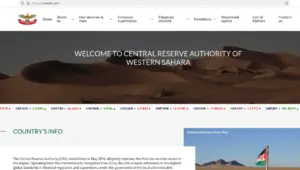
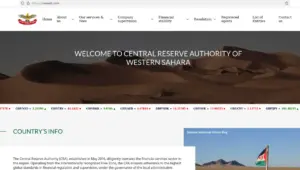
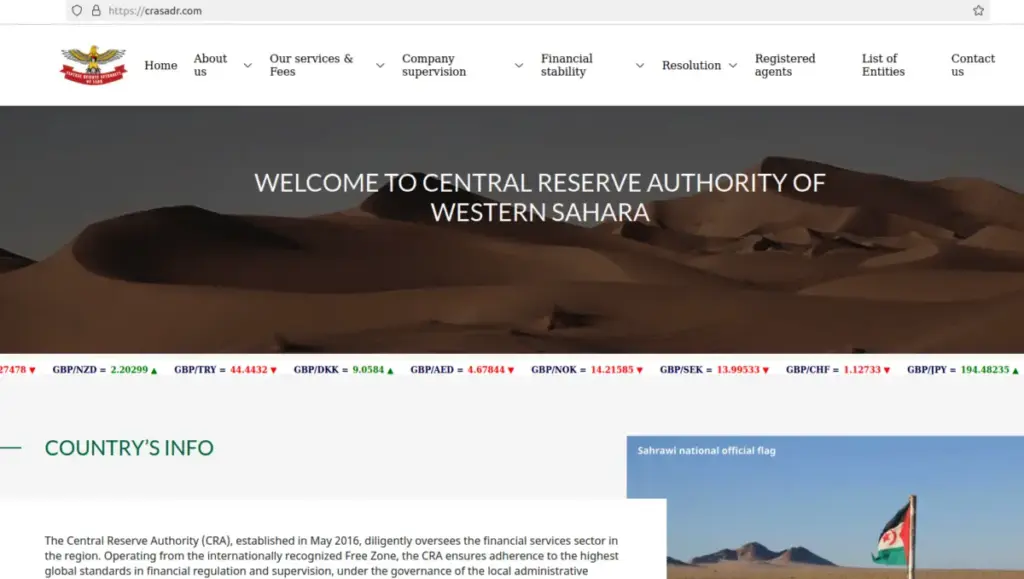
The administrative trail left by Cryptomus and its parent company, Certa Payments, reveals a complex web of deception that stretches into the disputed region of Western Sahara. In a 2024 investigation, it was discovered that the sole shareholder of Certa Payments was a 25-year-old Ukrainian woman who also held leadership positions at several other firms. Among these was the "WS Management and Advisory Corporation," an entity that purports to be a regulatory body for cryptocurrency, foreign exchange, and online gaming businesses operating within the Western Sahara.

This supposed regulator operated through a website, crasadr.com, which provided "licenses" to various entities, effectively creating a veneer of legitimacy for businesses that lacked actual legal standing in recognized sovereign nations. The links were overt; a former website associated with Certa Payments shared a server with 12 other domains, including one dedicated to the "Central Reserve Authority of the Western Sahara." By positioning themselves under the oversight of a phony regulatory body in a disputed territory, these operators sought to create a "jurisdictional shield" against the reach of Western regulators.
The Immediate Aftermath
The real-world impact of the U.K. sanctions was nearly instantaneous. On October 8, users of the Cryptomus Telegram support bot were met with messages indicating that the platform was experiencing sudden, catastrophic failures in its ability to process transactions. For a system that had built its business on the rapid movement of funds, the loss of access to the British banking system and the associated freezing of assets represented a significant disruption to its operational continuity.
As the international community continues to grapple with the role of decentralized finance in state-sponsored cybercrime, the case of Cryptomus serves as a stark example of how criminal actors utilize jurisdictional arbitrage and shell corporations to sustain their operations. The U.K. government’s intervention highlights an evolving approach to digital assets, moving beyond mere monitoring to the active, targeted disruption of the platforms that provide the financial oxygen for illicit networks. For now, the sanctions represent a major blow to the infrastructure that has, for years, enabled the circumvention of global financial standards in the shadow of the Russian conflict.