











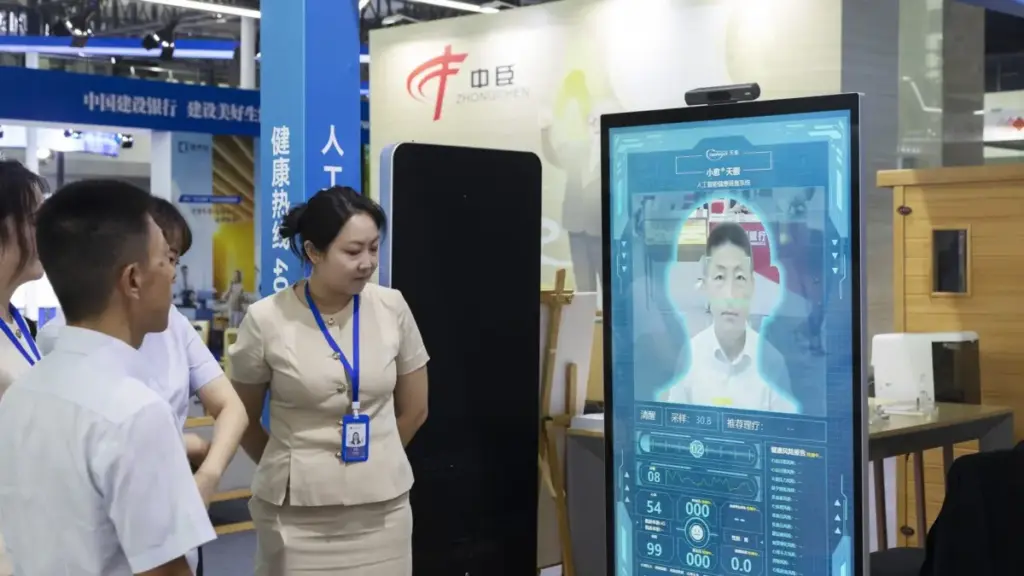
If you want to see a doctor in China, your journey likely begins not in a waiting room, but on your mobile phone. Patients can seamlessly book appointments at major hospitals using ubiquitous messaging applications like WeChat or financial platforms like Alipay. For immediate, routine consultations, they can speak with professionals on digital telemedicine platforms or chat directly with AI-driven avatars capable of offering medical insights on everything from chronic insomnia to diabetes management.
This hyper-digitized medical landscape is not an accident of the private market. The Chinese government has actively encouraged and funded the rapid expansion of digital healthcare services to extend adequate care to the country’s 1.4 billion citizens. For years, policymakers have sought to address deep-seated systemic challenges, most notably the urban-rural gap in healthcare access and a lagging primary care network that often leaves rural communities underserved.
At the same time, buoyed by a robust biotech talent pool and an increasingly streamlined and efficient clinical testing apparatus, China’s drug manufacturing and research industry is experiencing a massive breakthrough moment. Today, a greater number of clinical trials are conducted within China than in the United States. Furthermore, China now accounts for roughly half of all global drug licensing deals, as legacy Western pharmaceutical companies increasingly purchase the rights to innovative medicines developed in Chinese laboratories.

Globally, the explosive rise of China’s prowess in health tech has been met with a complex mixture of awe, admiration, and deep geopolitical suspicion. Dr. Ruby Wang, a physician and health-tech consultant who has worked extensively in China and across various international healthcare systems, explores these tensions in her upcoming book, China Cure: The Rise of a Biotech, AI Medicine, and Global Health Superpower. In a recent interview, Wang sat down to discuss the driving forces behind China’s health innovation wave and what this shifting paradigm ultimately means for the rest of the world.
The Cultural and Structural Acceptance of AI in Healthcare
When examining how Chinese society views artificial intelligence in medicine compared to Western nations, the differences are striking. In the United Kingdom and the United States, advanced technology is frequently treated as an optional add-on to an existing, often bureaucratic health system. Healthcare providers in the West often feel as though they are trying to screw an extra piece of software onto a rusty machine.
In contrast, because China’s modern infrastructure and digital rails are already deeply technologically enabled, society accepts digital integration as entirely normal. When dealing with a massive population, a healthcare system has little choice but to prioritize convenience and access because there is simply no other viable way to meet the overwhelming demand.
This phenomenon is not entirely unique to China. Similar dynamics can be observed in rapidly developing nations such as Brazil, Kenya, and Ethiopia. When a country is actively and frantically developing its economy and infrastructure, it does not have the luxury of sitting back to wait and watch; it simply has to act and adapt in real time.
In the U.K., where Wang also consults on health technology, the prevailing philosophy is always about evaluating risks before taking any action. China’s specific brand of digital health infrastructure is not directly exportable—Western medical establishments would likely never accept an AI doctor avatar on their front lines. Even so, it remains critically important for international observers to be aware of these developments and learn from their underlying structural efficiencies.
The "DeepSeek Moment" in Biotech and the Rise of Chinese Drug Discovery
The transformation of China’s pharmaceutical sector has captured global headlines. Recently, the Chinese firm Akeso developed a novel cancer drug that clinical indicators suggest could work better than established Western equivalents. Meanwhile, leading global pharmaceutical giants like Pfizer have committed billions of dollars to license promising cancer drug candidates from Chinese innovators such as 3SBio and Innovent Biologics.
Industry analysts have increasingly described this acceleration as a "DeepSeek moment" for the biotech industry. Achieving this level of capability so quickly was not the result of an overnight miracle. Instead, it was the product of decades of trial, error, state-supported capacity building, and the gradual return of overseas scientific talent. This foundation was systematically strengthened through targeted tax incentives, subsidized office spaces, and substantial capital investments.
Today, China boasts highly skilled scientists capable of developing sophisticated drugs at an incredible scale. This momentum is further boosted by the country’s massive patient population, where virtually no disease is considered rare. Additional advantages include lower running costs, cheaper labor, and a deeply dedicated workforce.
Experts project that China’s share of global drug out-licensing deals could climb as high as 60%. Within the next few years, the proportion of global pharmaceuticals originating from Chinese laboratories and talent is expected to grow significantly. However, this trajectory faces potential hurdles from protectionist policies, tariffs, and regulatory measures in the West, such as the Biosecure Act, which restricts federal contracts with specific Chinese biotech firms, alongside the COINS Act and the BINSA bill, which aim to restrict outbound investments into sensitive technology sectors, including biotechnology.
Despite these rapid advancements, certain structural caveats remain. China’s strongest sector is overwhelmingly oncology, while it remains comparatively less mature in more complex immunological research. Furthermore, Chinese biotech firms have historically struggled with commercialization. While they excel at discovering and building drugs, they often lack the experience required to market them effectively or integrate them into complex foreign health ecosystems. This commercial gap explains the high volume of out-licensing deals: a Chinese firm partners with an established multinational like Pfizer, which then handles the commercial distribution in the United States.
The Geopolitics of Medicine and International Scientific Collaboration
The rapid rise of Chinese-developed drugs has forced Western policymakers and pharmaceutical executives to debate whether they should fully embrace or restrict medical innovations originating from the country. This hesitation mirrors the initial pushback and regulatory friction that greeted Chinese electric vehicles, consumer drones, and advanced AI models.
According to established World Trade Organization agreements, medicines should ethically and legally remain exempt from tariffs because universal access to healthcare is fundamentally a human right. Yet, in recent years, pharmaceuticals have increasingly become entangled in trade disputes. The normalization of security-focused rhetoric and protectionist perspectives within global trade has created a dangerous precedent for public health.
Historically, medical science has relied on cross-border collaboration, with scientists working together across international laboratories and publishing joint findings to accelerate human progress. Unfortunately, that collaborative spirit is currently under strain. In discussions with hesitant stakeholders, the most effective argument often boils down to a pragmatic financial incentive: American and Western companies stand to make substantial profits through partnership.
Brain-Computer Interfaces and the Future of Hardware Integration
Beyond pharmaceuticals, the Chinese government has officially identified brain-computer interfaces (BCIs) as a crucial strategic industry. The nation’s current Five-Year National Health Plan explicitly calls for breakthrough advancements in BCIs alongside vaccines, advanced therapeutics, and medical devices. Furthermore, the broader National Five-Year Plan categorizes BCI as a critical "future industry" intended to serve as a fresh engine for long-term economic growth.
China enjoys sweeping competitive advantages across the entire technology ecosystem, including robust electronics and hardware supply chains, massive engineering and manufacturing capacity, major clinical research centers, deep artificial intelligence expertise, and formidable state support designed to transition technologies rapidly from academic research into clinical applications.
While the United States maintains an advantage in certain frontier invasive neurotechnologies, China has demonstrated a unique talent for compressing the distance separating hardware development, software engineering, clinical deployment, regulatory approval, and mass manufacturing. A primary indicator of this capability arrived with the commercial approval of Neuracle’s NEO system, marking a major milestone in invasive BCI medical devices.
Beyond neural interfaces, the broader hardware ecosystem in Chinese health technology remains exceptionally strong. Many products are specifically designed for wellness and social care applications. Furthermore, Chinese manufacturers are producing specialized diagnostic equipment, such as advanced ultrasound imaging machines, for export to the West, Africa, and Latin America, alongside sophisticated surgical robots.
Ultimately, these Chinese health products offer a combination of affordability and scalability that remains vital for developing nations across the globe. While the dominant narrative in Western political circles often frames China’s growing influence in global health as a strategic threat, the practical reality is that health technologies optimized for rural China can be deployed with equal effectiveness in regions like Africa. That pragmatic relevance and recent history of domestic health development offer important lessons for the global community as the future of medicine continues to evolve.