









The landscape of artificial intelligence is shifting rapidly, moving away from a singular focus on model capability toward the practical challenge of reach and integration. As we survey the latest developments from Amazon Web Services this week, the primary narrative isn’t just about how "smart" a model is—it is about how easily existing infrastructure can be harnessed to perform meaningful, agentic work without requiring a total architectural overhaul.
Last week’s announcements underscored this shift. AWS Step Functions, already a powerhouse for orchestrating over 220 AWS services, has now been opened up as a native tool for AI agents. This means that teams can leverage trusted, battle-tested workflows without rewriting their code. In a similar vein, the AI blog highlighted how an engagement platform successfully exposed roughly 400 internal API operations to an agentic system. In both instances, the underlying principle is the same: rather than rebuilding systems from the ground up, engineers are now describing what already exists, allowing agents to discover and utilize those capabilities autonomously.
Beyond the reach of agents, cost efficiency remains a top-tier priority. OpenAI’s newest "Terra" model has officially landed on Amazon Bedrock, arriving with a price point significantly lower than its predecessors. Additionally, a series of post-quantum security updates has arrived—a forward-looking move for a deadline that, while not yet marked on any calendar, is becoming an increasingly urgent consideration for enterprise architects.
Headlines: OpenAI’s GPT-6.1 Terra and Agentic Integration
The most significant headline this week is the general availability of OpenAI GPT-6.1 Terra on Amazon Bedrock. For those evaluating the model, the conversation should focus on its positioning rather than just its peak performance benchmarks. Terra is designed as the workhorse of the GPT-6 family, intended for everyday production workloads. According to OpenAI’s internal "Agents’ Last Exam" evaluation, the model scored 15 percentage points higher than the previous GPT-5.6 Terra and performed on par with the higher-end GPT-6 Astra. Most impressively, it completed designated tasks more than three times faster than both. While these are internal metrics, the economic argument for Terra is clear: input and output token costs are at least 50% lower than those of GPT-6.1 Sol or GPT-5.6 Terra. With support for up to 1 million input tokens—covering both text and image modalities—and accessibility via Bedrock APIs, ChatGPT Work, and Codex, Terra is positioned to become a staple for high-volume, cost-sensitive AI applications.
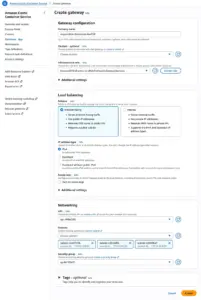
Parallel to this model launch is the evolution of agentic tooling. AWS Step Functions workflows are now available as AI agent tools via the Amazon Bedrock AgentCore Gateway. By utilizing the Model Context Protocol (MCP), this gateway creates a clean division of labor. The AI agent acts as the decision-maker, determining when a workflow should be triggered and what inputs are required, while Step Functions ensures the execution remains rigid and reliable. For instance, a support agent tasked with processing a refund can trigger the workflow, but the sequence—eligibility check, manager approval, and final credit—remains locked in the pre-defined Step Functions logic. This ensures that the agent cannot improvise on critical business processes. Existing Standard and Express workflows are fully compatible, and the service is now available in all regions supported by the AgentCore Gateway.
Progress in Post-Quantum Security and Infrastructure Efficiency
Security remains a cornerstone of the AWS ecosystem, and this week saw the introduction of support for ML-KEM (Module-Lattice-Based Key-Encapsulation Mechanism) within the AWS Key Management Service (KMS). This allows organizations to establish shared secrets using post-quantum algorithms, with the underlying private keys residing in FIPS 140-3 Level 3 validated Hardware Security Modules (HSMs). This is a critical development in the fight against "harvest now, decrypt later" threats, where adversaries capture encrypted traffic today with the intent of breaking it once quantum computing reaches maturity. By supporting all three NIST FIPS 203 parameter sets, AWS is enabling developers to future-proof their data. This support is already available across most AWS regions, with the exception of the Middle East and China. Simultaneously, Amazon Aurora PostgreSQL has added support for post-quantum TLS key exchange for version 18 and higher, further hardening database communications.
In the realm of identity management, AWS IAM Identity Center has introduced cross-Region trusted identity propagation. Previously, architectural constraints required services accessing a user’s identity to reside within the same region, forcing engineers to choose between broad, less-secure IAM roles or the difficult task of regional consolidation. Now, user identity information travels automatically with the request, allowing for granular, user-based access control and simplified auditing across global deployments.
For those running large-scale containerized workloads, Amazon ECS has launched GPU sharing via NVIDIA Multi-Process Service (MPS). This addresses the common issue of underutilized GPU resources, allowing multiple ECS tasks to run concurrently on a single NVIDIA GPU. Developers can now declare specific memory requirements for each container, effectively capping compute usage and maximizing density. On Managed Instances, ECS provides an added layer of reliability by monitoring the MPS control daemon and automatically replacing instances if they become unhealthy.
Efficiency gains were also noted in AWS Lambda, which now supports Seekable OCI (SOCI) lazy loading. By fetching only the files necessary for each stage of container startup—rather than downloading the entire image—startup times can be reduced by up to 70%. This same technology has expanded to Amazon SageMaker AI, where benchmarks show that image loading times remained consistent at 3 to 11 seconds, even for massive 13.2 GB images that would normally take nearly four minutes to pull. Furthermore, Amazon EKS Auto Mode now supports the Kubernetes Gateway API, allowing developers to manage traffic routing and load balancing without the need for complex, manual controller installations.
Real-World Applications and Industry Insights
The impact of these tools is best illustrated by how companies are putting them into production. Nubank, serving over 140 million customers in Brazil, Mexico, and Colombia, has successfully automated disaster recovery using the AWS DevOps Agent. By offloading the labor-intensive tasks of evidence collection and report generation for its 300+ business flows, Nubank reduced its test cycle from 4.3 hours to just 40 minutes.
Similarly, the fintech company MoEngage shared how it utilized the AgentCore Gateway to expose over 400 internal REST API operations to its agentic systems. By opting for a managed gateway approach rather than manual tool integration, MoEngage estimated a saving of approximately six months of platform engineering work. Crucially, they found that rather than providing a massive, token-heavy catalog of tools to the agent, it was more effective to have the agent search for tools based on task descriptions, keeping the interaction efficient and scalable.
Storage optimization also saw a significant win this week. By using S3 Storage Lens groups and Storage Class Analysis, one organization was able to identify that 5.8 PB of logs—costing roughly $241,000 per month—had an access ratio of less than 0.1% after 90 days. By migrating this data to Glacier Instant Retrieval, they achieved a 70% reduction in costs, proving the value of evidence-based lifecycle management.
As the industry looks toward the future, anticipation is building for AWS re:Invent, which returns to Las Vegas from November 30 to December 4. With over 2,200 sessions planned and the event catalog now live, the focus remains on equipping builders with the tools necessary to navigate the next phase of cloud-native development. Whether through advanced agentic orchestration, post-quantum security, or massive-scale storage efficiency, the developments this week serve as a reminder that the most powerful innovations are those that simplify the complex, allowing engineers to focus on building the future rather than managing the friction of the past.