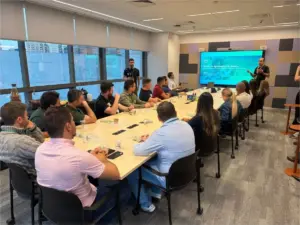









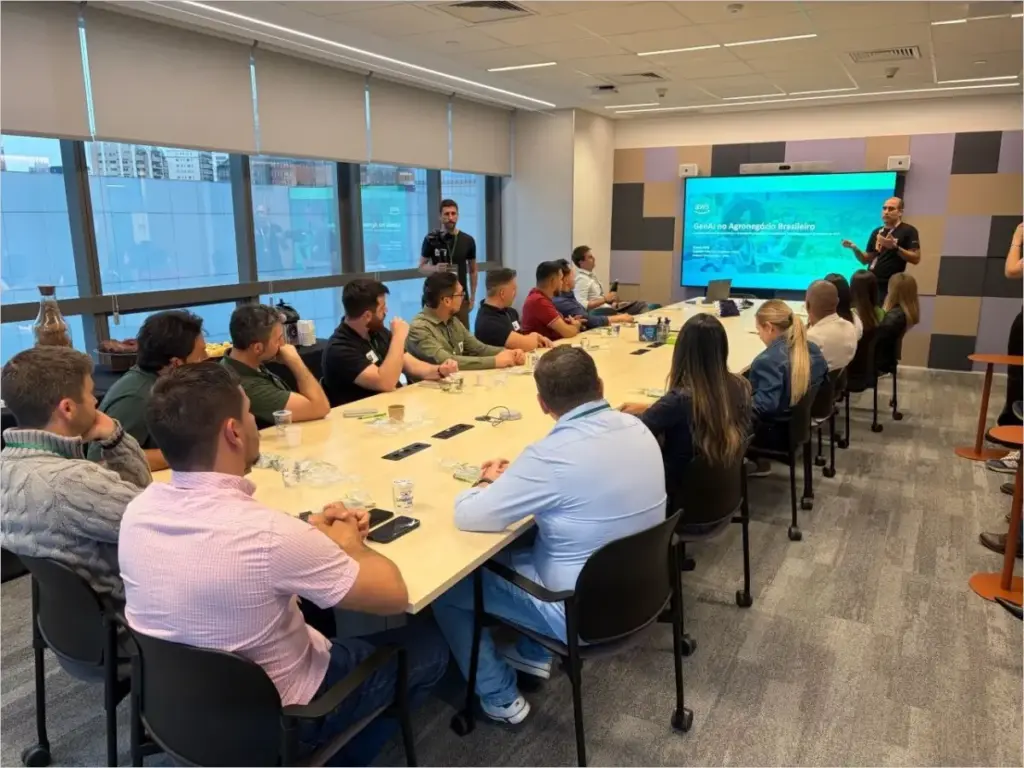
In a recent session at the AWS offices in São Paulo, I had the privilege of speaking with a group of commercial and technology leaders from the Brazilian agribusiness sector. Our discussion centered on a pivotal question: where does generative AI fit within the complex, high-stakes stages of modern agricultural operations? Throughout the presentation, one theme remained constant—the industries we often label as "traditional" are frequently the very environments where the rapid adoption of new technology determines which organizations stay ahead of the curve.
There was no debate in that room regarding whether AI belongs in agriculture. Instead, the focus was entirely on practical delivery: how to ensure the output reaches the right person, in the right language, on the correct device, often while that individual is navigating between remote farm sites. This reality is precisely why a recent development at AWS—one that might otherwise be categorized as a routine service update—stands out as a critical advancement.
The Amazon Polly Generative engine has received a significant upgrade, adding 14 new voices to its catalog, including two specifically tailored for Brazilian Portuguese. In sectors where users must keep their hands on a steering wheel or manage physical equipment, the voice interface is not just a luxury; it is the primary bridge to the digital world. By making these interactions more natural and linguistically accurate, we are removing barriers to entry for users who operate in the field rather than behind a desk.
While the agricultural applications highlight the human side of this technology, the rest of the week’s news took a sharper, more urgent turn toward cybersecurity. The most significant launch of the period is a security service built on a sobering premise: the window of time between the disclosure of a software vulnerability and its active exploitation has effectively vanished. AWS provided concrete evidence of this trend in the same week, reinforcing why the industry’s approach to security must evolve.
Strengthening the Security Perimeter: AWS Continuum
AWS has officially introduced AWS Continuum, a service that redefines vulnerability management. For too long, companies have relied on scanners that simply provide long, often overwhelming lists of potential issues. Continuum changes this by reframing the entire process as an end-to-end operational responsibility.
The service functions by building a sophisticated context graph from a user’s repositories and their existing AWS environment. Rather than just flagging a vulnerability with a generic severity label, Continuum assigns each finding an evidence level and, crucially, reproduces exploitable findings within an isolated sandbox. This allows security teams to view proof-of-concept code and understand the actual risk, rather than guessing based on a score. The system then ranks these issues based on their proximity to business-critical systems and automatically generates a fix in the form of a pull request. Currently, every remediation requires human approval, ensuring that developers maintain control, though the architecture is designed to support more autonomous fixes gated by confidence thresholds in the future.

The necessity of this tool was underscored by Amazon’s own threat intelligence findings. This week, the company reported that a PHP2Shell exploitation attempt was identified in MadPot telemetry on October 17—four days before the official public disclosure of the underlying vulnerabilities (CVE-2026-109618 and CVE-2026-109619). By the time disclosure occurred, proof-of-concept exploits were already circulating hours before the embargo was set to lift. This confirms that the traditional assumption of having a "patch window" measured in days is a dangerous relic of the past. Organizations must now begin their investigations from the moment of earliest exploitation, not the moment of public disclosure. To support this, AWS has also released specific WAF mitigations for these vulnerabilities, with the new Continuum service now available in the US East (N. Virginia) and US West (Oregon) regions.
Simplifying Infrastructure with Amazon ECS Gateway
In the realm of cloud architecture, AWS is also addressing the friction that often exists between network teams and application developers. The introduction of Amazon ECS Gateway is designed to streamline the process of exposing services by clearly dividing responsibilities.
Under this model, platform teams define a single gateway that encompasses the organization’s subnets, security groups, TLS certificates, listener settings, and WAF web ACLs. From there, application teams can opt into this infrastructure by adding a gateway connector to their service definition. ECS then automatically provisions the necessary components—including an ACM certificate, a unique DNS hostname, listener rules, and target groups—while configuring security groups to restrict traffic exclusively to the Application Load Balancer.
The economic and operational benefits are significant. Up to 25 services can share a single ALB, and the system is dynamic enough to provision resources upon connection and remove them when they are no longer required. A single gateway can associate with up to 10,000 clusters, with the ability to deploy five gateways per cluster. This allows for incremental adoption, meaning teams can integrate the gateway while keeping existing load balancers in place, effectively modernizing their infrastructure without the need for a total system overhaul.
Broadening the Generative AI and Machine Learning Landscape
Beyond security and infrastructure, several other notable updates occurred this week that further solidify the pace of innovation across the AWS ecosystem. The Amazon Polly upgrade mentioned earlier is substantial, expanding the generative engine to a catalog of 57 voices across 11 languages and 25 locales. By adding Hindi and Finnish to the roster, alongside the new Brazilian Portuguese voices, AWS is making its voice technology more accessible to global markets. Importantly, this is a drop-in upgrade that preserves existing API calls and pricing models, making it seamless for developers to implement.
For those working with deep learning, AWS has announced the public beta of TorchNeuron, an open-source PyTorch backend that enables native support for AWS Trainium hardware. By simply changing a configuration to point to "neuron," developers can run models on Trainium without the need for a complete rewrite of their code. This maintains compatibility with eager execution and torch.compile, allowing for greater hardware flexibility without sacrificing software productivity.

SageMaker AI has also received a boost with the general availability of training sessions. This feature allows developers to maintain control over the post-training loop, including reward signals and custom loss functions, while offloading the heavy lifting—such as GPU allocation, fault recovery, and distributed execution—to the SageMaker service itself. This shift allows teams to focus on model performance rather than the nuances of infrastructure management.
Furthermore, Anthropic’s Claude models on Amazon Bedrock now support structured outputs. By enabling schema-compliant JSON, developers can bypass the need for custom parsing and complex retry logic, making automation tasks like financial report extraction and clinical note processing significantly more reliable. Finally, for those managing high-performance databases, Amazon ElastiCache Serverless for Valkey now supports zero-downtime online migration, allowing users to move self-managed Valkey or Redis OSS databases into the cloud without disrupting client operations.
Looking Ahead
As we look toward the horizon, the conversation around these technologies will undoubtedly continue to evolve. The AWS Agent Registry is another interesting development, providing a managed catalog for MCP servers and agent skills. This allows orchestrators to discover capabilities at runtime, moving away from the static, build-time compilation of tools. Similarly, new resources are emerging to help organizations manage the "tokenomics" of coding agents, providing the open-source tools necessary to benchmark the cost and quality of various models against specific, internal codebases.
Real-world success stories continue to provide a blueprint for these transitions, such as the recent migration by U.S. Bank, which successfully moved 119 TB of data from Oracle Exadata to Amazon RDS for Oracle. By utilizing a configuration-driven pipeline, the bank managed the transition with zero data loss and minimal downtime, proving that even the most massive and complex legacy systems can be modernized effectively.
With AWS re:Invent approaching from November 30 to December 4 in Las Vegas, the industry is preparing for a new wave of announcements. With over 2,200 sessions already planned, the event promises to be a focal point for how these security and AI innovations will be applied in the coming year. As we close out the 2026 calendar, it is clear that the integration of secure, scalable, and intelligent systems remains the primary objective for organizations worldwide. For those involved in the community, local AWS events, such as the upcoming Community Day in Belém, continue to provide vital forums for sharing these insights and preparing for the challenges ahead.