







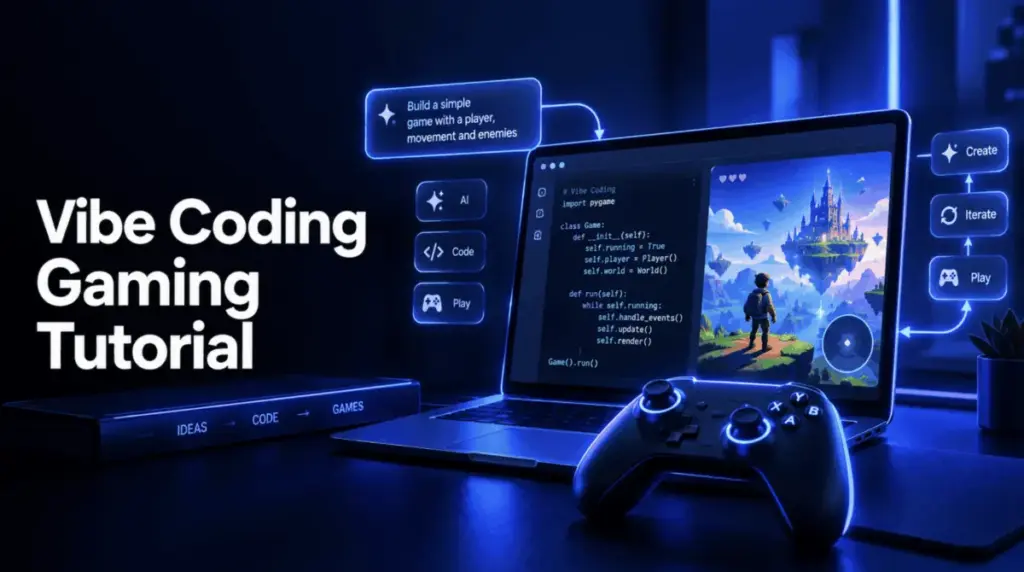
The software development landscape has undergone a fundamental shift with the rise of vibe coding, a methodology that has transitioned from a novel concept into an industry-standard workflow. Coined by Andrej Karpathy in early 2025, vibe coding describes a development process where engineers communicate their intentions in natural language, leaving AI agents to handle code generation, execution, and iteration. The approach gained widespread recognition so rapidly that the Collins English Dictionary named it the Word of the Year for 2025. By 2026, this workflow has become a mainstream mechanism for real-world software engineering, with major enterprises reporting that AI-generated scripts now comprise a significant portion of their daily codebases.
To understand the practical implications of this workflow beyond enterprise environments, developers and technical writers have increasingly turned to end-to-end building projects. A recent demonstration of this methodology involved constructing the classic arcade game Breakout entirely through natural-language prompts given to an AI coding assistant. Rather than relying on simplified toy examples or assuming functionality, every line of the resulting application—including collision physics, win conditions, and loss states—was subjected to rigorous automated verification before publication.
The mechanical description of vibe coding involves a straightforward loop: a developer outlines a goal, an AI agent generates the corresponding code, and the developer reviews and iterates until the desired outcome is achieved. However, the sophistication of current AI agents has transformed what these tools can accomplish. Modern coding assistants are no longer limited to simple autocompletion; they can read entire project repositories, edit multiple files simultaneously, execute the code within a local environment, and autonomously resolve runtime errors entirely from conversational instructions. Major technology firms have embraced this shift, with companies like Airbnb publicly reporting that AI tools now write approximately sixty percent of their newly generated code.
The project chosen for this practical exploration, the arcade game Breakout, holds a notable place in computing history. Released by Atari on May 13, 1976, the game was conceptualized by Nolan Bushnell and Steve Bristow as a single-player evolution of the earlier hit Pong. The physical hardware was engineered by a young Steve Wozniak, who worked alongside his friend Steve Jobs. Wozniak implemented the design with such an aggressively minimized chip count that Atari’s manufacturing division initially struggled to replicate the logic and had to ship an alternative version containing more components. The two Steves utilized the proceeds to co-found Apple later that same year, and Breakout’s internal hardware logic directly influenced aspects of the original Apple II computer architecture.
Recreating Breakout offers an ideal testing ground for vibe-coding workflows because the rules are simple enough to comprehend entirely while remaining complex enough to demand real programming logic. The core mechanics involve a wall of bricks lining the upper portion of the screen, a ball bouncing dynamically across the play area, and a player-controlled paddle at the bottom designed to keep the ball in play. Destroying bricks accumulates points, allowing the player to win by clearing the entire grid, while letting the ball slip past the paddle results in lost lives until the game concludes.
Setting up the development environment for a vibe-coding project requires minimal friction, typically involving only a modern web browser, a basic text editor, and an AI coding assistant. Modern implementations of this workflow often dispense with complex build tools, external frameworks, and cumbersome package dependencies, allowing the entire application to exist within a single HTML file that executes directly inside a browser window. Developers utilizing terminal-based assistants like Claude Code can initialize a session within an empty project folder, while others might opt for browser-based integrated development environments or desktop applications like Cursor and Replit.
Rather than attempting to generate an entire application in a single monolithic prompt—a practice that often produces opaque code that is difficult to debug—effective vibe coding proceeds through incremental stages. The initial phase establishes the foundational canvas and game skeleton, setting up an HTML5 canvas element centered on the page with a dark background alongside placeholder text elements for score and tracking player lives. This foundational step ensures the document structure renders correctly before any active logic is introduced, allowing developers to isolate potential rendering bugs immediately.
Subsequent prompting introduces the interactive paddle, a rectangular element near the bottom of the canvas designed to track keyboard input smoothly. By implementing event listeners that monitor continuous key presses rather than single keystrokes, the paddle achieves fluid movement across the screen. Boundary logic utilizing basic mathematical constraints ensures the paddle cannot slide off the edges of the canvas, preventing a common oversight in automated code generation.
The introduction of the ball and its movement mechanics relies on simple directional velocity variables added to the position on each animation frame. Wall-bounce logic reverses these velocities the moment the outer edge of the ball crosses the canvas boundary, utilizing the object’s radius in the calculation to prevent visual clipping where the ball appears to sink halfway into the wall before reacting. Similarly, generating the grid of bricks involves nested loops that multiply row and column positions by standardized dimensions and padding, producing an evenly spaced array without requiring manual placement for every individual block.
Collision detection represents a critical juncture where automated workflows demand careful oversight. Without precise instructions, rushed prompts can generate code that appears functional at first glance but behaves incorrectly under specific runtime conditions. The paddle collision logic calculates the exact impact point to determine the rebound angle, allowing players to direct the ball based on whether it hits the center or the edges of the paddle. Concurrently, brick collision checks must include strict conditional guards to ensure destroyed bricks are immediately ignored by subsequent calculations; omitting this safeguard causes the application to register invisible collisions where blocks used to exist.
Integrating scoring and life-tracking mechanisms completes the core interactive loop. When the ball intersects an active brick, the block is flagged as destroyed, its vertical velocity is inverted, and the score increments accordingly. A protective break statement ensures only one collision is resolved per animation frame, preventing multiple overlapping bricks from triggering conflicting directional changes simultaneously. If the ball drops past the lower boundary of the canvas, the player loses a life, triggering a reset of the ball and paddle positions unless the remaining life counter reaches zero, which transitions the application into a game-over state.
The final operational states involve evaluating win conditions by verifying whether every brick in the array has been flagged as destroyed. Utilizing native array methods allows the program to confirm the status of the entire grid cleanly. Once a win or loss condition is met, the main update loop halts its positional calculations while continuing to render the final frame, freezing the interface on screen rather than leaving the page unresponsive.
Deploying the completed application to a public audience requires minimal overhead, as static hosting services enable developers to publish their work within minutes. Platforms like GitHub Pages allow users to push their completed HTML file to a repository and activate hosting directly through the settings interface, establishing a public URL without requiring server management. Alternative static hosting providers offer similar drag-and-drop deployment options for those bypassing version control systems, while dedicated indie game distribution platforms cater specifically to projects designed for interactive entertainment, connecting creators directly with audiences seeking web-based games.
Ultimately, the practice of vibe coding shifts the intellectual labor of software development rather than eliminating it entirely. While the workflow relieves developers from typing out repetitive syntax or manual mathematical calculations, it places a premium on critical reading, architectural oversight, and rigorous verification. Recognizing that visual functionality is not equivalent to verified logic remains the core competency required to ensure AI-assisted projects operate reliably under all expected conditions.
Shittu Olumide is a software engineer and technical writer passionate about leveraging cutting-edge technologies to craft compelling narratives, with a keen eye for detail and a knack for simplifying complex concepts. Shittu can also be found on Twitter.