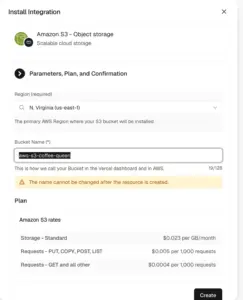










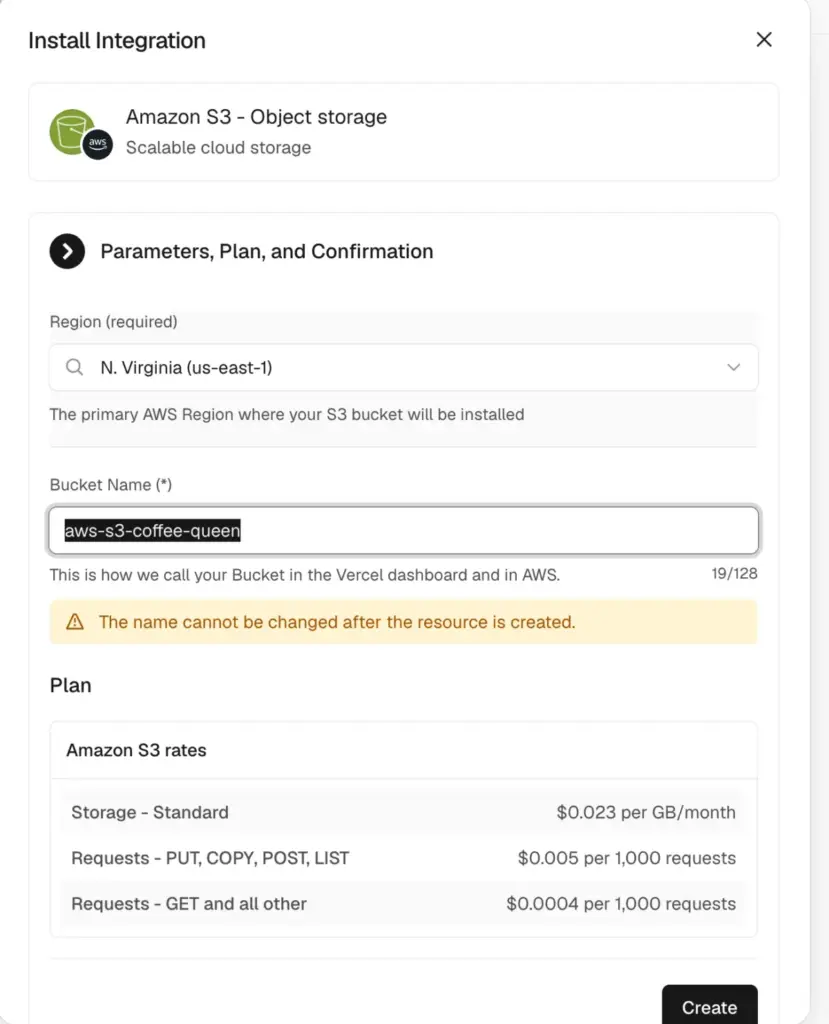
In a significant move to simplify the development lifecycle for web and AI applications, Vercel has announced a new native integration with Amazon Simple Storage Service (Amazon S3). Starting today, developers utilizing the Vercel ecosystem can provision and manage Amazon S3 storage resources—including specialized S3 Tables and S3 Vectors—directly from the Vercel Marketplace and the company’s AI-powered interface, v0. This integration bridges the gap between Vercel’s agile deployment workflow and the robust, scalable infrastructure of AWS, effectively allowing developers to build sophisticated, data-driven applications without leaving their familiar dashboard environment.
The integration arrives at a time when the complexity of managing cloud infrastructure has become a growing pain point for front-end and full-stack developers. While Vercel has long been a go-to platform for deploying web applications, the underlying need for durable, scalable storage often required developers to context-switch into the AWS Management Console. This shift often involved manual configuration of complex identity policies, security credentials, and networking settings. By bringing Amazon S3 directly into the Vercel platform, the company is removing those friction points, enabling automated provisioning and connection configuration. This means developers can now manage their object storage, analytics tables, and vector indexes alongside their application code, all while maintaining the security standards required by enterprise-grade infrastructure.
This latest update complements Vercel’s existing suite of AWS integrations, which already includes support for Amazon Aurora, Amazon DynamoDB, and Amazon OpenSearch Serverless. By unifying these services, Vercel is effectively providing a comprehensive, end-to-end application stack within a single developer experience. For teams, this consolidation offers a major operational advantage: the entire infrastructure—from the database layer to object storage and AI-ready vector indexes—can now be managed through a single AWS account with a consolidated billing structure, eliminating the fragmented management overhead that typically accompanies modern cloud deployments.

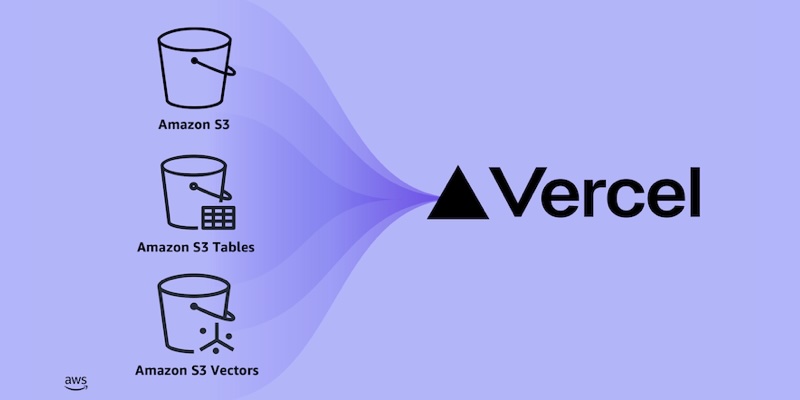
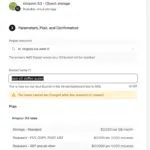
The versatility of this integration is highlighted by its support for three primary workloads: everyday object storage, analytics, and artificial intelligence. For standard web applications, the general-purpose Amazon S3 bucket functionality allows for seamless file uploads and retrieval. By using Vercel’s dashboard, developers can provision a bucket in a matter of seconds, after which the platform automatically handles the injection of necessary environment variables, such as region and resource identifiers. The system utilizes OIDC (OpenID Connect) via the @vercel/functions/oidc library, which exchanges short-lived tokens with AWS Security Token Service (AWS STS). This approach is a significant security upgrade over traditional methods, as it eliminates the need to store static, long-lived access keys, thereby reducing the risk of credential leakage.
Beyond simple storage, the integration highlights the growing importance of data analytics and AI-native infrastructure. Amazon S3 Tables, which are designed to support fully managed Apache Iceberg tables, are now accessible through this workflow. This is particularly valuable for developers who need to perform complex queries on large datasets without the overhead of managing a traditional data warehouse. By integrating with engines like DuckDB, developers can run aggregate queries directly from Vercel functions, using the managed table maintenance and compaction features inherent to S3 Tables to ensure performance remains consistent as data volumes scale.
The inclusion of Amazon S3 Vectors is perhaps the most timely aspect of this announcement. As the industry shifts toward RAG (Retrieval-Augmented Generation) architectures and AI-driven features, the ability to store and query embeddings has become essential. S3 Vectors provides a purpose-built, cost-optimized solution for storing vector data alongside content in S3. By allowing developers to create these resources via the Vercel interface, the platform empowers them to build AI agents and semantic search capabilities more rapidly. Developers can create embeddings using their preferred models and then utilize the S3 Vectors client to perform similarity searches, with the integration handling the underlying AWS connectivity and security.

The role of v0 by Vercel, the company’s generative AI tool, is central to this new development. The platform now supports natural language prompts for infrastructure provisioning. For instance, a developer can simply ask v0 to build a "photo gallery where users upload images," and the system will automatically provision the required S3 bucket and generate the corresponding connection code. Similarly, requests for a "support bot that answers questions from PDFs" will trigger the setup of S3 Vectors, while an "analytics dashboard for clickstream data" will result in the provisioning of S3 Tables. This capability dramatically lowers the barrier to entry for developers who may not be experts in AWS infrastructure, allowing them to focus on application logic rather than resource configuration.
The integration is designed to be highly flexible, catering to both new and experienced AWS users. Developers can either create a fresh AWS account directly through the Vercel platform—which includes $100 in AWS credits for new accounts—or link an existing AWS account to leverage their current setup. When linking an existing account, Vercel maintains a strict boundary, managing only the new buckets and resources created through the Vercel dashboard. This design choice ensures that existing AWS-native tooling, monitoring, and governance practices remain intact, providing teams with the best of both worlds: the ease of Vercel’s developer-first interface and the power of AWS’s mature infrastructure ecosystem.
From a practical implementation standpoint, the integration maintains a high degree of transparency. When a bucket is connected to a project, the Vercel CLI allows developers to pull environment variables locally, mirroring the production environment. Whether a developer is using the S3Client to manage objects, executing SQL queries against S3 Tables via DuckDB, or performing semantic search with the S3VectorsClient, the underlying code remains idiomatic and utilizes standard AWS SDK patterns. This adherence to existing standards means that developers are not locked into proprietary abstractions; they are simply using a more efficient way to connect their Vercel applications to their AWS infrastructure.
The impact of this development extends to how teams handle data lifecycle management. By sharing the same authentication and account model across all AWS services on Vercel, developers can easily build complex architectures, such as storing metadata in Aurora while keeping the associated binary files in S3, or maintaining document text in DynamoDB while keeping vector embeddings in S3 Vectors for retrieval. This coherence simplifies the development of distributed systems and makes it easier for teams to maintain clean, logical separation between their data storage and their compute layers.
As the industry continues to move toward more integrated, serverless-first architectures, the convergence of Vercel’s deployment model with AWS’s storage primitives marks a notable milestone. By removing the administrative friction of cloud infrastructure, Vercel is not only accelerating the development cycle but also democratizing access to high-performance storage and AI-ready data tools. For the millions of developers who rely on Vercel to ship their web and AI applications, this update represents a shift toward a more unified, productive, and secure way of managing the cloud.
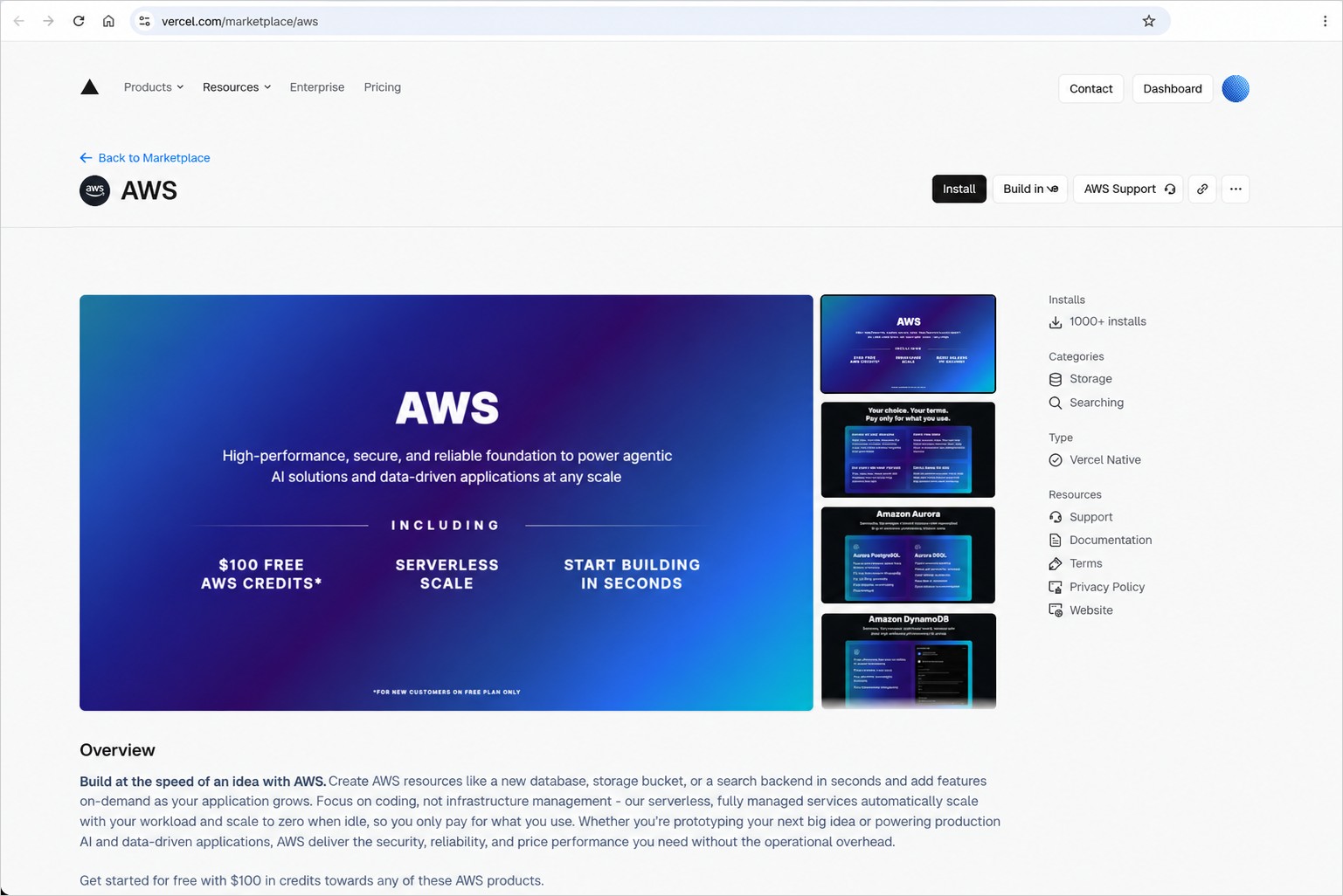
Developers looking to explore these new capabilities can access the Amazon S3 integration through the AWS page on the Vercel Marketplace. For those seeking further technical details, API documentation, or regional availability, the AWS MCP Server and accompanying plugins offer additional resources for AI-assisted development and troubleshooting. As the ecosystem continues to evolve, the ability to bridge the gap between frontend agility and backend robustness will remain a key competitive advantage for teams building the next generation of digital experiences. Whether creating simple web apps or complex, RAG-enabled AI agents, the goal remains consistent: to provide a developer experience that is as powerful as it is intuitive, ensuring that infrastructure acts as a foundation for innovation rather than a hurdle to be cleared.