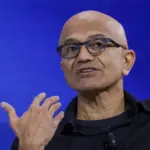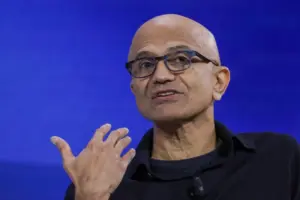







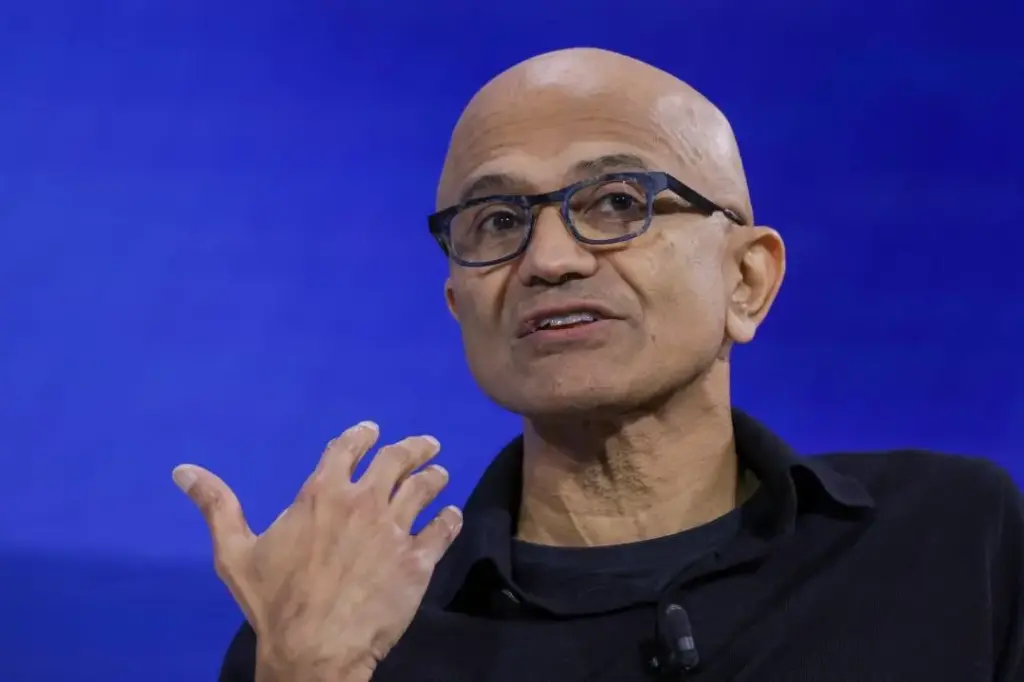
In a significant move that has rippled through the technology sector, Microsoft CEO Satya Nadella has provided clarity regarding his decision in October to offer voluntary buyouts to approximately 60,000 employees. The decision, which effectively encouraged a substantial portion of the company’s workforce to consider leaving the organization rather than facing traditional, involuntary layoffs, has sparked widespread debate about the future of employment in the age of artificial intelligence. Speaking at the DealBook Summit and in subsequent discussions, Nadella framed the move not as a retreat from labor, but as a proactive, and perhaps unavoidable, organizational pivot toward an AI-first operating model.
For Nadella, the core motivation behind the buyouts is to facilitate a radical reorganization of how work is performed at Microsoft. He insists that the goal is not to replace human talent with silicon—a fear that has permeated the tech industry since the rapid rise of generative AI—but to fundamentally alter the nature of professional roles. Under this new paradigm, every employee is expected to transition from being a direct creator of "work artifacts" to becoming a manager of intelligent agents.
"Let’s take software engineering," Nadella told Andrew Ross Sorkin during the DealBook Summit. "We went from, ‘Well, we don’t buy that AI can ever do software,’ to suddenly, ‘Wow, it can do all software, and why do we need software engineers?’ to now rediscovering that software engineering is very much alive and, in fact, is going to thrive, except the way the team is organized and the work that a software engineer does has now got a new operating point."
This "new operating point" is the crux of Nadella’s vision. He envisions a future where the traditional, granular tasks associated with software development—and, by extension, other white-collar roles—are automated or augmented by AI agents. The human role, therefore, shifts toward architecture, orchestration, and oversight. For some, he acknowledged, this structural shift is difficult to reconcile with their existing professional identity. "That reorganization and change is sort of hard, right?" he noted. "But it has to be done."
To illustrate this shift, Nadella pointed to the team currently responsible for building "Cowork," the AI agent integrated into Microsoft 365 applications. This team, which consists of just 11 developers, has moved beyond the traditional model of writing line-by-line code. Instead, they function as a "software factory." They are not building the product directly in the conventional sense; they are building the systems and agents that build the product. Nadella views this as a blueprint for the future of every job at Microsoft, and perhaps across the global economy. "That level of direction is what, by the way, is going to happen in all jobs," he asserted.
However, implementing this transition at a company with a 51-year history is a monumental task. Unlike "AI-native" startups, Microsoft is an incumbent with deeply entrenched workflows, legacy infrastructure, and a massive workforce that did not grow up in an era where AI-agent management was a core competency. Nadella is acutely aware of the friction this creates.
"The question is, how quickly can an incumbent transform the work, the workflow, and the work artifact, and with all the wage support that goes with it?" Nadella remarked. "It’s going to take a bit more time than anyone expects. And there is going to be in all of this, you know, people who may say, ‘Hey, I have some other choices I want to make.’"
The offer of voluntary buyouts, therefore, was designed to provide employees with the agency to decide whether they wanted to embark on this difficult transformation or exit the company on their own terms. Nadella emphasized that the intent was to provide a degree of control to a workforce that has been understandably unsettled by the rapid and often aggressive rhetoric surrounding AI’s potential to disrupt the labor market.
In a recent appearance on "The Pragmatic Engineer" podcast, hosted by Gergely Orosz, Nadella expanded on the emotional and psychological toll this shift has had on his staff. He acknowledged that the company has inadvertently contributed to a sense of instability among its employees.
"We have created enormous anxiety in people sort of feeling that they don’t have control of their own destiny because the way we have talked about this AI revolution," Nadella explained. He pointed to the pervasive, often hyperbolic discourse surrounding the "singularity"—the theoretical point at which artificial intelligence surpasses human intelligence—and the accompanying, often alarmist predictions that AI will render human labor obsolete.
Nadella believes this narrative has been counterproductive, creating a climate of fear that hampers the necessary, incremental work of business transformation. "All of that leads anyone who even wants to change to be sort of anxious," he said. By offering the buyouts, Microsoft aimed to mitigate this anxiety by replacing the threat of forced layoffs with an active choice. The message, in practice, was twofold: for those who wish to adapt, the company offers a path to evolve their skills and roles; for those who find the new direction untenable or undesirable, the buyout provides a clean, supported exit.
"You have to sort of walk the hard walk of really making the structural changes, getting people slotted, giving them opportunity," Nadella added.
The decision to offer 60,000 buyouts is an unprecedented maneuver for a company of Microsoft’s scale and stature. It underscores the severity of the shift Nadella believes is necessary. By acknowledging that the transition will be "hard," and that not every current employee will—or should—be part of this new, agent-driven future, Nadella is attempting to navigate a delicate balance between aggressive innovation and corporate responsibility.
The "walk the hard walk" sentiment highlights the difficulty of managing a transformation that is as much about corporate culture as it is about technological capability. The company is effectively asking its employees to unlearn decades of ingrained professional habits. The software engineer who spent years mastering a specific language or framework is now being asked to become a systems architect who manages autonomous AI agents. The administrative professional is being asked to transition from a task-doer to a workflow orchestrator.
As Microsoft continues to roll out its AI-first agenda, the success of this strategy will likely be measured by how effectively the company can retain and upskill the talent necessary to build these new systems, while managing the transition for those who choose to depart. For the industry at large, Nadella’s approach provides a window into how one of the world’s largest and most successful technology companies is attempting to manage the existential challenge posed by AI.
The buyout offer, in the final analysis, serves as a mechanism for alignment. It acknowledges that the transformation of the workplace is not merely a technical upgrade, but a human one that requires the consent and participation of the workforce. By framing the move as an act of providing agency, Nadella is positioning Microsoft not just as a leader in AI technology, but as a leader in navigating the complex, often fraught, human transition into an AI-augmented future. Whether this "hard walk" will lead to a more efficient, empowered organization or simply a smaller one remains to be seen, but it is clear that for Microsoft, the era of traditional software development—and the traditional workplace—is undergoing a rapid and irreversible metamorphosis.