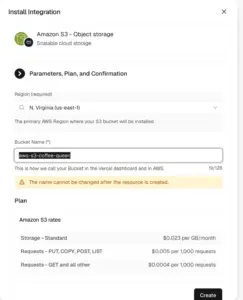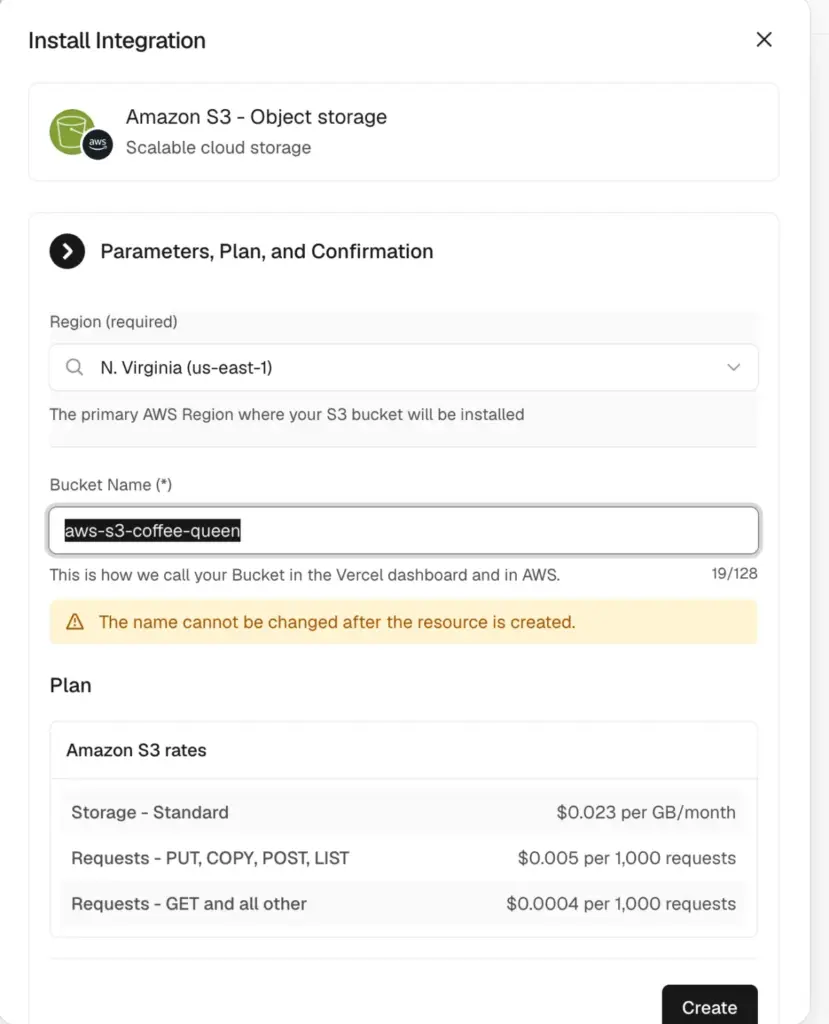
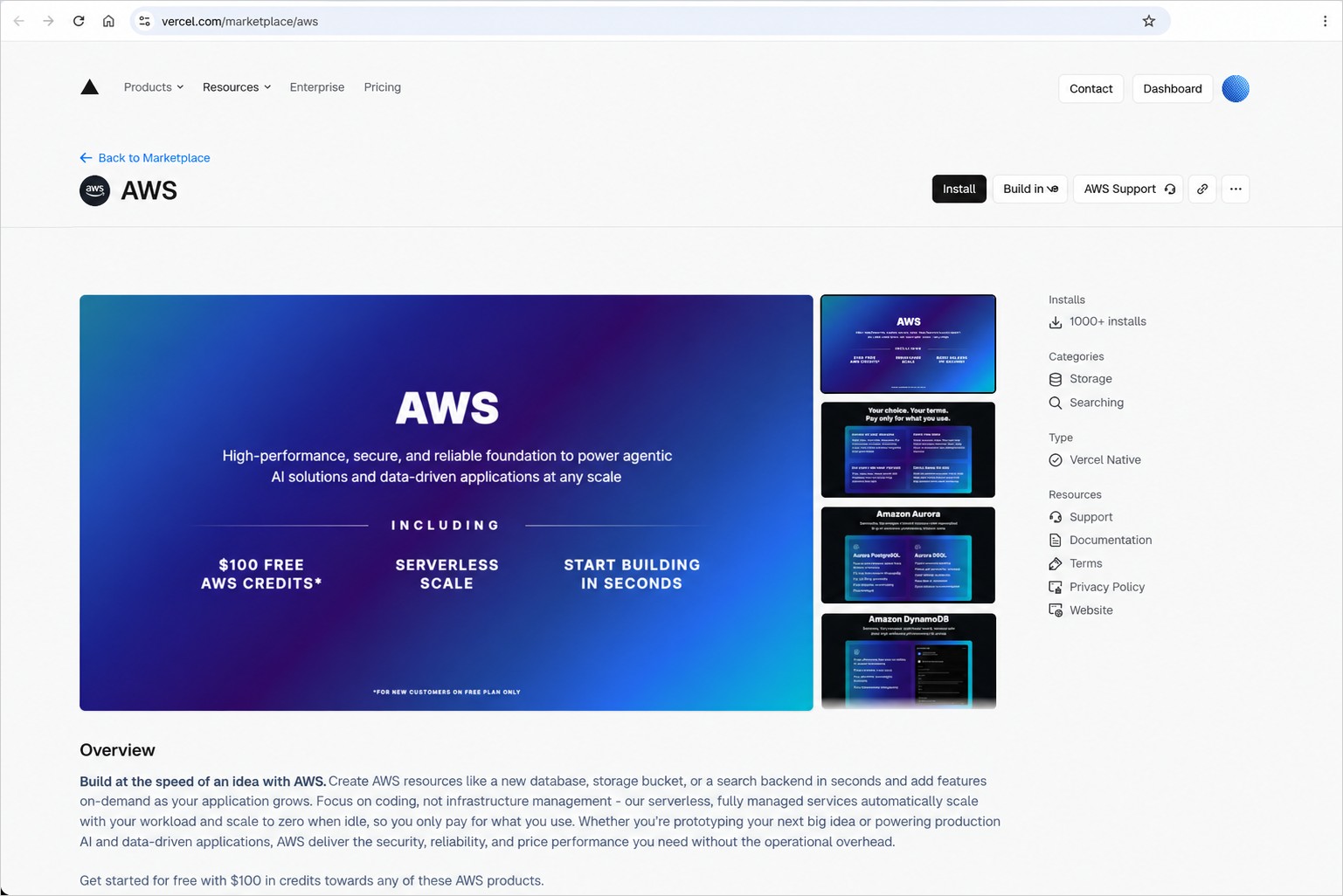
Developers leveraging Vercel to build, deploy, and scale web and AI applications now have a more streamlined path to enterprise-grade storage. In a significant expansion of the Vercel Marketplace and its AI-driven interface, v0, the platform has introduced native support for Amazon Simple Storage Service (Amazon S3). This integration allows developers to provision S3 storage resources directly within the Vercel environment, bridging the gap between Vercel’s agile deployment workflow and the robust, scalable infrastructure of AWS.
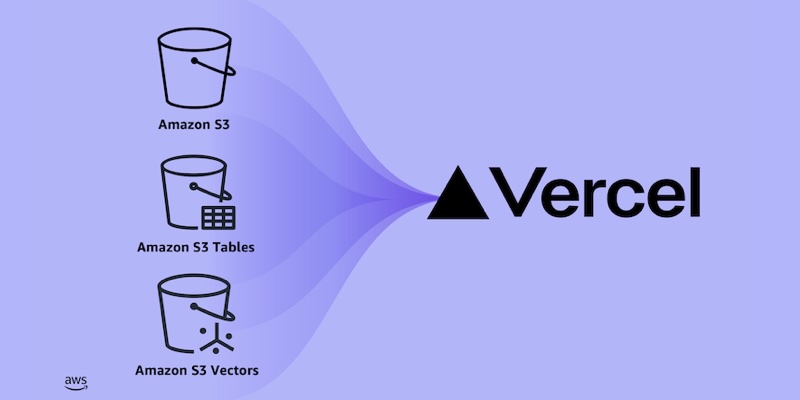
This new capability, which includes support for specialized storage tiers like Amazon S3 Tables and Amazon S3 Vectors, is designed to simplify the developer experience by removing the traditional friction associated with cross-platform configuration. Previously, developers building on Vercel who required the durability and performance of AWS storage had to manually navigate the AWS Management Console to set up buckets, manage complex IAM policies, and handle credential injection. With this update, the provisioning and connection management are handled automatically, allowing teams to focus on application logic rather than infrastructure overhead.
A Unified Stack for Modern Applications
The integration marks a shift toward a more cohesive "full-stack" developer experience within the Vercel ecosystem. By bringing S3 into the dashboard, Vercel is effectively completing a suite of AWS-native services that already includes Amazon Aurora for relational database needs, Amazon DynamoDB for NoSQL requirements, and Amazon OpenSearch Serverless for search capabilities.

For many development teams, this consolidation is a major operational win. Because all these services now exist under a unified authentication model, developers can manage their application stack from a single interface, maintaining their existing AWS account and billing structure while benefiting from Vercel’s automated resource management. This setup allows for seamless data architecture patterns, such as storing file metadata in Aurora while keeping the binary assets in S3, or pairing document text in DynamoDB with high-performance vector embeddings in S3 for sophisticated RAG (Retrieval-Augmented Generation) workflows.
Versatile Storage Options for Evolving Workloads
The integration is categorized into three primary workloads, catering to the diverse needs of modern web and AI applications. First, standard object storage is available for everyday application requirements, such as user-generated content, image hosting, and static asset management. Second, the inclusion of Amazon S3 Tables provides a purpose-built solution for analytics. These tables are designed to optimize query performance automatically as data volumes scale, providing managed Apache Iceberg tables that require minimal maintenance. Developers can use tools like DuckDB within a Vercel Function to perform lightweight, high-speed analytical queries directly against these datasets.
Finally, the support for Amazon S3 Vectors addresses the growing demand for AI-centric infrastructure. S3 Vectors offers a cost-optimized, purpose-built storage solution for AI agents and inference engines. By allowing developers to store and query vectors natively within their S3 storage layer, this integration simplifies the implementation of semantic search and recommendation systems. While the storage layer does not generate embeddings—developers must still utilize their preferred AI models for that process—it provides the high-performance retrieval infrastructure necessary to power advanced AI features.

Streamlined Provisioning and Security
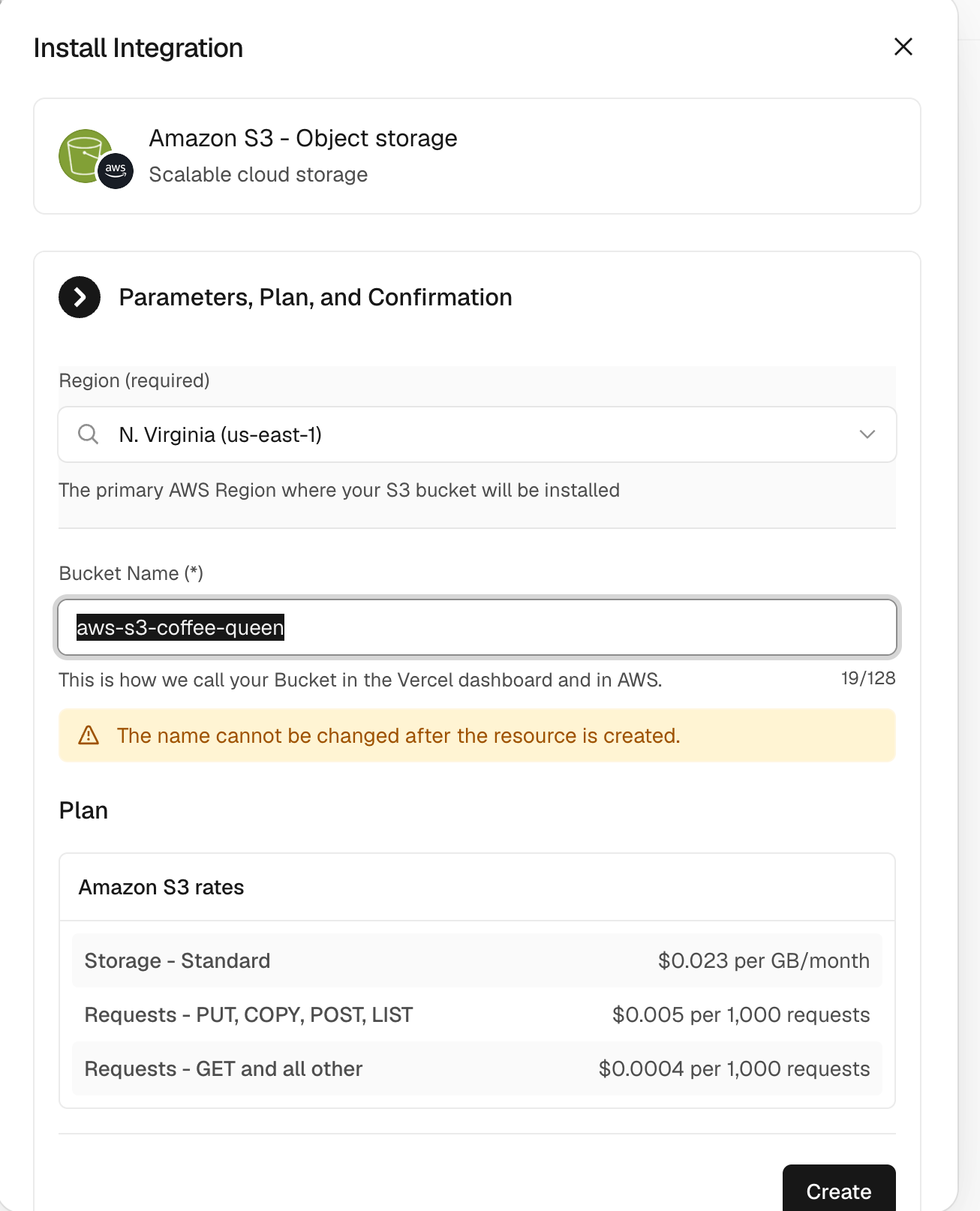
Getting started with the new integration is designed to be intuitive. From the Vercel dashboard, developers can navigate to the Storage tab and initiate the creation of a new bucket. After selecting a region and defining the resource type, the platform handles the infrastructure provisioning in seconds. Once the bucket is created, the Vercel CLI allows developers to link their projects, pulling the necessary environment variables—such as AWS_REGION, AWS_ROLE_ARN, and the specific bucket names—directly into their local development environment.
Security remains a primary focus of this implementation. The integration employs the awsCredentialsProvider from @vercel/functions/oidc, which facilitates the exchange of short-lived OIDC tokens with the AWS Security Token Service. This process ensures that temporary, scoped credentials are used for application runtime, eliminating the risky practice of storing long-lived static keys or hardcoding credentials in application files. This approach adheres to modern security best practices, providing robust protection while maintaining ease of use for developers.
AI-Assisted Development via v0
One of the most innovative aspects of this rollout is its integration with v0 by Vercel, the platform’s generative AI interface. By describing an application goal in natural language, developers can trigger the automatic provisioning and configuration of the necessary AWS resources. For example, a developer might prompt v0 to build "a photo gallery where users can upload images," and the system will automatically provision a general-purpose S3 bucket and configure the necessary connection code.
For more complex AI tasks, such as creating a support bot that answers questions based on a collection of PDF documents, v0 can provision an S3 Vectors bucket, set up the index, and generate the corresponding code snippets required to interface with the storage. This capability significantly reduces the time-to-market for prototypes and allows developers to experiment with sophisticated architectures without needing to manually configure the underlying infrastructure.
Strategic Implications and Availability
By allowing users to link their existing AWS accounts, Vercel ensures that developers do not lose the benefits of AWS-native tooling. Any S3 resource created through the Vercel platform still resides within the user’s own AWS account, providing a single, consistent place to manage and monitor storage. For teams just starting their journey, the integration also supports the creation of new AWS accounts, which come with $100 in credits valid for six months to assist with initial development and testing.
This feature is available in all commercial AWS Regions supported by Vercel. There are no additional charges for the integration itself; users simply pay the standard, transparent pricing for the AWS resources they consume. As the ecosystem continues to evolve, developers are encouraged to utilize resources such as the AWS MCP Server and various plugins to interact with APIs and documentation. Feedback regarding the integration can be directed to the AWS re:Post community, ensuring that the service continues to adapt to the specific needs of the developer community.
With this announcement, Vercel has significantly lowered the barrier to entry for utilizing Amazon S3 in cloud-native applications. By abstracting away the complexities of cloud configuration while retaining the full power of AWS, the platform is enabling a new generation of developers to build high-performance, AI-driven applications with greater speed and architectural integrity. Whether managing static assets, analyzing large datasets with Apache Iceberg, or performing vector searches for AI models, developers now have a unified, efficient, and secure pathway to storage within the Vercel ecosystem.