









Smart speakers have long since evolved past simple novelty items capable of playing a single track or reading off a basic weather report. Today, these versatile voice-controlled hubs perform a dozen essential roles in modern homes. From scheduling calendar events and setting critical reminders to controlling smart lighting arrays, brainstorming culinary recipes, and streaming high-fidelity audio, they act as central nervous systems for the connected household. However, choosing the right device involves navigating a crowded market where consumers must weigh major voice assistant ecosystems—such as Amazon Alexa, Google Gemini for Home, and Apple’s Siri AI—alongside critical factors like raw audio performance, physical design, and everyday ease of use.
To help consumers make sense of the latest hardware releases, industry experts have conducted extensive in-home testing and side-by-side comparisons of the newest smart speakers on the market. Whether shoppers are looking for early Black Friday deals to upgrade their living spaces or searching for practical holiday gifts, evaluating these devices requires looking closely at what each manufacturer brings to the table.

What Are the Top Smart Speaker Picks Overall?
Amazon’s primary smart speaker offering is the updated Echo Studio, which is engineered specifically for Dolby Atmos playback and optimized for Amazon’s conversational Alexa Plus artificial intelligence platform. While users need a high-quality music streaming subscription to fully appreciate the acoustic depth of the Echo Studio, it remains one of the best-sounding smart speakers available. Reviewers frequently highlight the benefits of the Alexa Plus integration, alongside Amazon’s industry-leading smart home device compatibility. Though it carries a higher price tag above $200, frequent promotional discounts during shopping holidays make it more accessible.

For audiophiles who prioritize musical performance above all else, alternative high-end options like the Wiim Sound offer compelling value. Meanwhile, users embedded deeply in the Google Home ecosystem have fresh hardware options tailored specifically around Google’s Gemini for Home assistant.

Amazon Echo Studio
Amazon’s redesigned Echo Studio stands out with a distinctive, slightly futuristic geometry that houses significant internal speaker upgrades. Engineered for immersive Dolby Atmos support, it easily fills a medium-to-large room with rich music and delivers a healthy amount of low-end bass. The accompanying Alexa app remains largely intuitive, connecting rapidly with popular music streaming services and smart home appliances.
Optional ecosystem additions include Alexa Emergency Assist, a subscription service that listens for household alarms or breaking glass and connects users with a live emergency dispatcher on demand. Meanwhile, Amazon’s major AI upgrade, Alexa Plus, is rolling out as a complimentary feature for Prime subscribers, bringing a more conversational and intelligent assistant experience, though occasional response delays can occur. Buyers should also note recent shifts in Amazon’s data processing policies regarding voice information. The speaker targets users who want an all-purpose hub capable of anchoring a large room with robust sound and advanced assistant capabilities.

Wiim Sound
Higher-end smart speakers must deliver exceptional audio performance to justify steeper prices, and the Wiim Sound impresses on this front. Designed to integrate seamlessly with major streaming services like Spotify, it utilizes high-quality silk-dome dual tweeters and a paper-cone woofer to deliver superb acoustic clarity.
Beyond app-based controls, the Wiim Sound features a small front-facing touchscreen that displays album artwork, acts as a clock, and allows users to manually swap streaming presets or adjust settings. The accompanying mobile application offers advanced custom equalizer profile adjustments rarely found in competing smart speakers. Equipped with an auxiliary audio input and a comprehensive remote control, the Wiim Sound is ideal for listeners willing to invest in standalone audio excellence with immaculate streaming compatibility.

Amazon Echo Dot
For budget-conscious buyers seeking powerful sound in a smaller footprint, Amazon’s updated Echo Dot remains a top contender. Refined for compatibility with Alexa Plus, this compact speaker delivers surprisingly loud audio for its modest size.
Like previous iterations, it can sync with matching units to create stereo pairs or connect with compatible Amazon Fire TV devices. While it lacks the built-in LED clock display of specialized variants, it retains dependable smart home automation controls. It is best suited for users who want affordable voice control and respectable sound without spending over $100.

Google Home Speaker
Google’s latest Home Speaker marks the company’s first standalone smart speaker release in years, officially dropping the legacy Nest branding and introducing a heavy emphasis on the Gemini for Home assistant. It represents a substantial generational leap in audio quality, offering improved bass and vocal clarity that outperforms similarly priced rivals like the HomePod Mini.
Physical controls remain hidden until a user taps the chassis, illuminating subtle light dots to manage playback and volume. Everything is managed through the streamlined Google Home app, which ensures effortless setup and links easily with external music providers and video streaming platforms. Although Gemini for Home represents a notable upgrade over legacy Google Assistant software, it continues to face stiff competition from rival conversational platforms.

Apple HomePod Mini 2
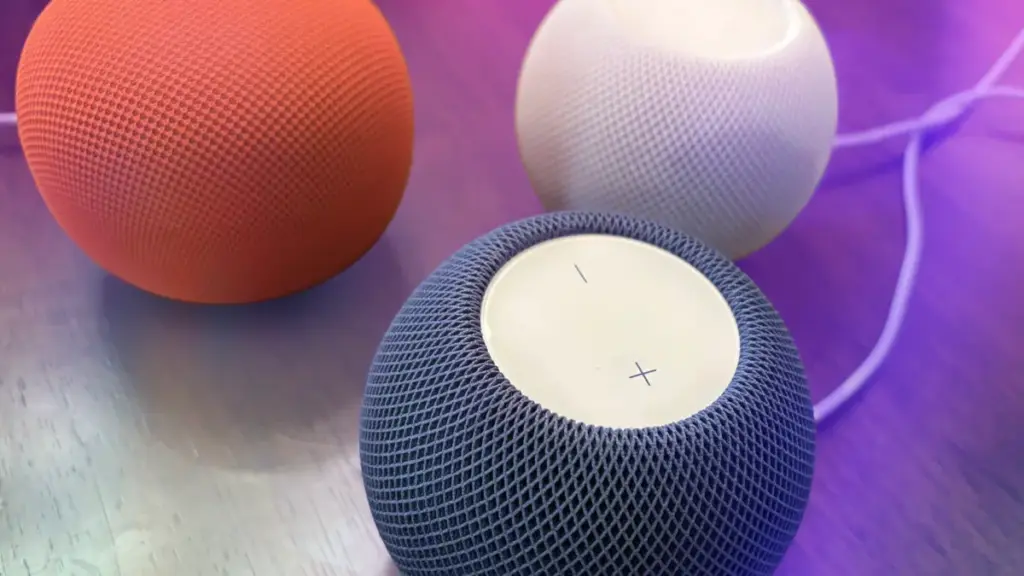
Apple’s latest iteration of the HomePod line delivers a powerful audio punch, sounding audibly superior to its predecessor in direct side-by-side listening tests. Crucially, it serves as an accessible entry point for users wanting full support for Apple’s Siri AI features, including casual conversation modes.
Priced moderately above the original model, the HomePod Mini 2 is a straightforward choice for Apple enthusiasts seeking rich, close-up listening audio in a compact package. However, users who rely heavily on non-Apple smart home ecosystems or prefer alternative voice assistants may find its platform limitations restrictive.

Sonos Era 300
As a premier room-filling audio powerhouse, the 300-watt Sonos Era 300 utilizes a complex six-driver acoustic architecture consisting of four tweeters and two woofers. It delivers exceptional spatial audio performance with native Dolby Atmos support.
Connectivity options include Wi-Fi, Bluetooth, AirPlay, and a USB-C line-in port for wired sources. While it carries a premium price tag, it offers some of the finest standalone audio quality available in the smart speaker market. It supports Amazon Alexa and Sonos Voice Control, though Sonos has phased out Google Assistant integration in favor of its proprietary ecosystem.

Bose Portable Smart Speaker
Bridging the gap between smart home hubs and outdoor audio gear, the Bose Portable Smart Speaker integrates Wi-Fi connectivity and onboard microphones for voice assistant support with traditional Bluetooth streaming. Weighing just over two pounds and featuring an estimated 12-hour battery life, it includes basic splash resistance, making it equally at home on a kitchen counter or a backyard patio.
Factors to Consider When Buying a Smart Speaker
Selecting the ideal smart speaker depends heavily on individual household requirements, budget constraints, and existing technology ecosystems.

Price often correlates directly with acoustic performance. While basic voice control and reminder management can be achieved with budget models costing under $50, filling large rooms or achieving audiophile-grade sound requires investing in premium hardware.
The choice of voice assistant is another critical consideration. Households deeply invested in specific platforms should ensure seamless compatibility with their existing smart home automation gear, such as smart plugs, connected lighting, and automated thermostats.

Room dimensions also dictate hardware selection. Compact office desks and small bedrooms require minimal acoustic output, whereas open-floor-plan kitchens and expansive living rooms benefit from larger speakers engineered to project 360-degree sound. Furthermore, buyers should evaluate whether they need portable battery-powered designs or permanent wired installations, as well as the ability to link multiple identical speakers together for multi-room audio or stereo pairing.
How Experts Test Smart Speakers
Evaluating smart speakers involves rigorous, multi-faceted testing protocols conducted over hundreds of hours in real-world environments. Testing procedures focus on several core performance metrics:

Setup and physical controls are evaluated to ensure unboxing, Wi-Fi pairing, and initial app configuration remain straightforward. Reviewers examine the physical build quality, button responsiveness, and tactile feedback of volume, power, and microphone-mute controls.
Audio quality and microphone pickup accuracy are tested by streaming music over Bluetooth and Wi-Fi at varying distances—ranging from close proximity up to thirty feet away—to simulate real-world voice recognition across large rooms. Call-making functionality, reminder reliability, and voice assistant comprehension are measured concurrently.

App interfaces are scrutinized for intuitive menu layouts, ease of device grouping, management of streaming accounts, and the accessibility of privacy settings. Finally, third-party smart home integration is tested by connecting speakers to various smart lights, plugs, and entertainment systems to identify potential latency issues, connection drops, or ecosystem compatibility hurdles.
Ultimately, choosing a smart speaker comes down to identifying where it will live in the home and how it will be used most frequently—whether that means managing kitchen timers, anchoring a living room home theater system, or streaming background music throughout the house.