










In the annals of tech industry history, there is a legendary anecdote involving Steve Jobs and the founders of Dropbox. As the story goes, when the Apple co-founder attempted to acquire the file-sharing startup in 2009, he dismissed their innovation as a "feature, not a product," suggesting that it lacked the necessary substance to survive as a standalone business. It is a sentiment that has haunted hardware developers for decades, serving as the ultimate litmus test for any new gadget: Is this truly an essential device, or is it merely a software component masquerading as hardware?
That exact skepticism was front-of-mind when Eric Migicovsky, the CEO of the revived Pebble brand, first introduced the Index 01 back in January. At first glance, the concept seems inherently limited: a $75 non-smart ring that serves almost exclusively as a physical microphone tethered to an AI agent. It is tempting to argue that such a function belongs as a quick-access shortcut on a smartwatch or a standard feature within a more robust smart ring. However, after spending significant time with the device, it is clear that such a cynical dismissal misses the mark. The Index 01 is a case study in how stripping away complexity can sometimes result in a product that is more usable than its feature-laden competitors.
Hardware and Design Philosophy
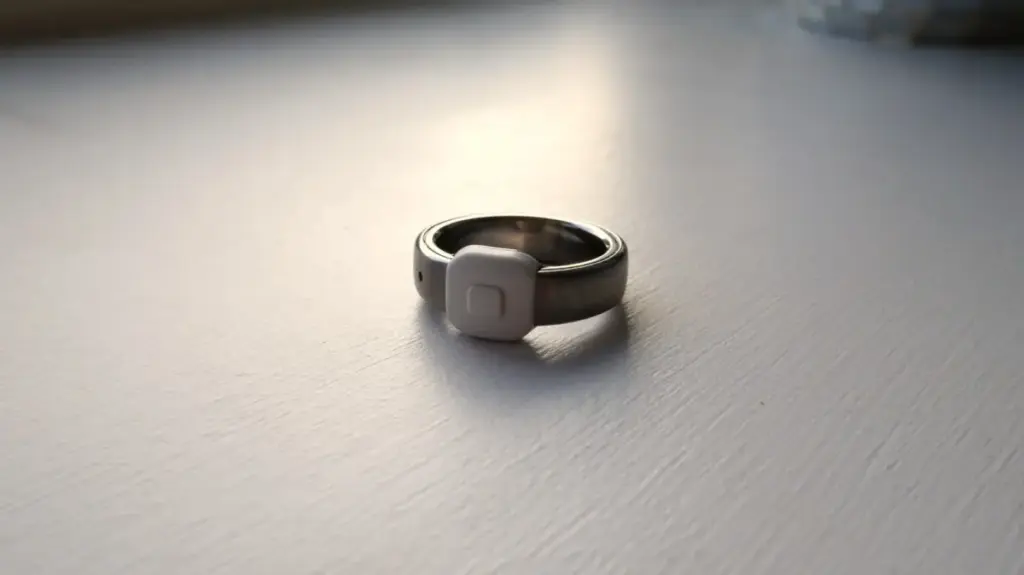
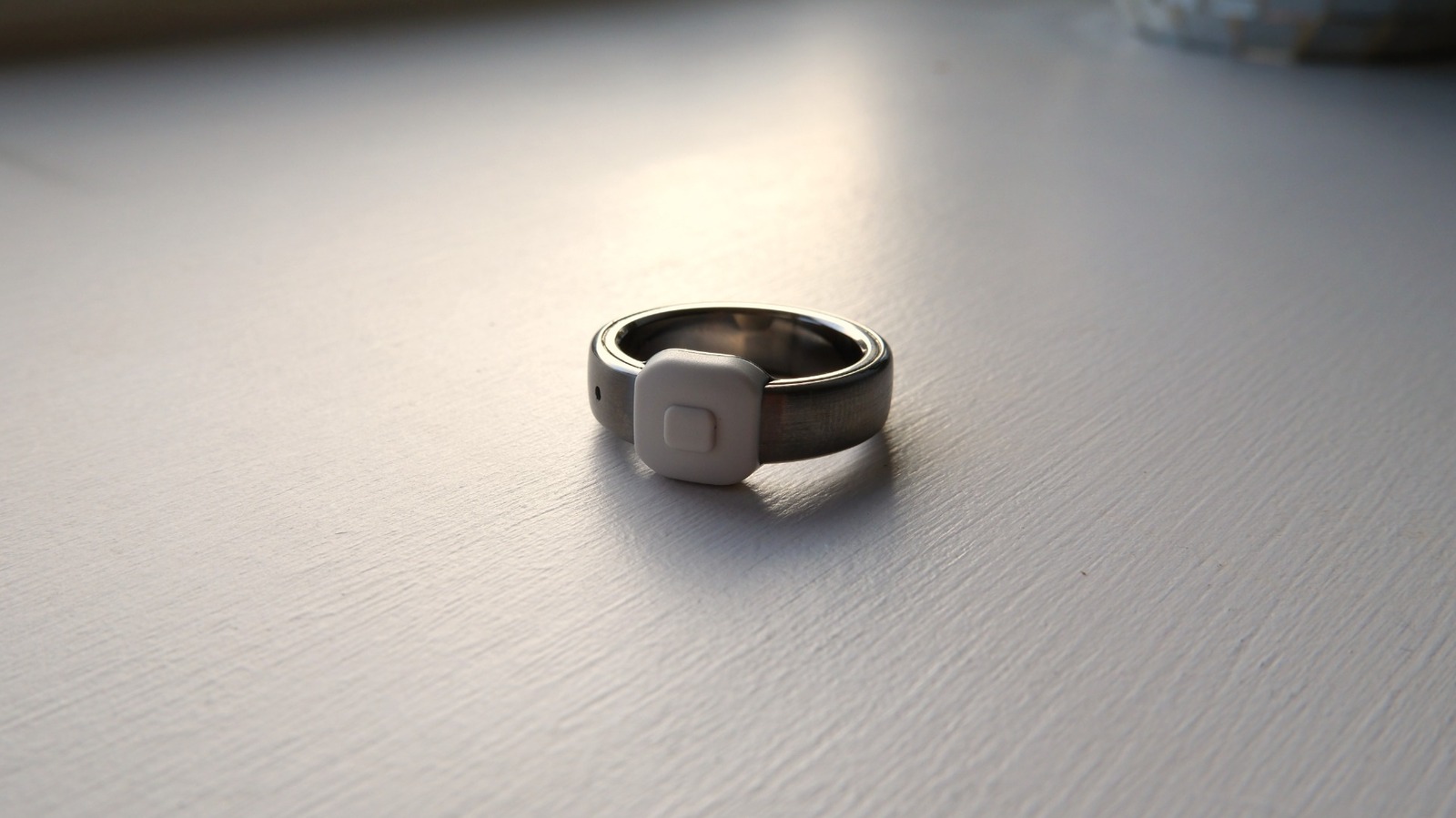
The Index 01 represents the first of what Migicovsky hopes will be a series of whimsical, experimental side projects from the reborn Pebble team. It is a purposefully minimalist piece of hardware—a non-smart, stainless steel band designed to be worn on the index finger. It lacks a screen, a complex biometric sensor array, or a charging port. Instead, it features a single rubber-clad physical button and an integrated RGB LED that provides minimal visual feedback.

The internal engineering is equally specialized. The ring houses a short-range microphone, Bluetooth connectivity, and a non-rechargeable silver oxide battery. Because the device is intended for short, burst-style interactions rather than continuous streaming, the battery is engineered for longevity, with an expected lifespan of two to three years. This design choice highlights a unique lifecycle strategy for the company: when the power cell eventually depletes, Pebble intends to reach out to the user with a replacement offer. Crucially, the company encourages users to return their old rings for recycling, aiming to minimize the environmental impact of its niche hardware. While the prospect of a device with a fixed lifespan may strike some as a contradiction in terms of sustainability, it is an honest admission of the hardware’s specific purpose.
The Index 01 is available in US sizes 6 through 13, with a waitlist currently in place for those requiring sizes 14 or 15. The ring boasts water resistance up to one meter, making it durable enough for daily activities like handwashing, showering, or washing dishes, though the company advises against submersion in a pool. For those uncertain about their fit, Pebble offers an optional sizing kit. The kit includes an injection-molded set of test rings that users can wear for a day or two to ensure comfort, though potential buyers should note that a pair of snips or a craft knife may be necessary to remove the test rings once the sizing process is complete.
The In-Use Experience: Ambient Computing Simplified
The core value proposition of the Index 01 is the democratization of "ambient computing." By placing a physical "talk" button on the finger, the device removes the friction associated with unlocking a phone, navigating to an app, and triggering a voice assistant. It is a tool for dumping thoughts out of one’s "mental cache" the moment they arise.
By default, holding the button and speaking routes the audio to Pebble’s proprietary AI, known as Index Agent. However, for privacy-conscious users, the system allows for local processing, ensuring that sensitive thoughts never leave the device’s orbit. The physical button provides a tactile, satisfying click—a deliberate design choice that adds a level of intentionality to every interaction. The resistance of the switch is high enough that accidental activations are virtually non-existent. In practice, the user simply holds the ring within a few inches of their mouth, speaks the command, and receives a processed result on their smartphone within about ten seconds.
The system handles standard tasks with impressive reliability. It is designed to act as a catch-all for notes, reminders, and shopping lists, automatically categorizing the input into the corresponding panes within the Pebble app. During testing, the system demonstrated a high success rate even with ambiguous or conversational requests. However, when it comes to pulling live data from the internet, the results can be more variable.
In one test, when asked about the management of a specific sports team, the Index Agent struggled to keep pace with real-time events. It mistakenly attributed a coaching position to a manager who had already moved on, and failed to identify the current staff of a different club. While these lapses are somewhat expected given the volatility of sports news, they serve as a reminder that the Index 01 is, at its heart, an interface rather than an omniscient oracle.
For many, the hesitation toward ambient computing stems from two factors: privacy concerns and the speed of traditional input. Many users find it faster to type a quick note than to speak it aloud. Yet, the Index 01 changes this dynamic. Because the ring is physically on the finger and only listens when the button is actively depressed, it bypasses the "always-on" privacy anxiety that plagues smart speakers and smartphones. For specific, quick-hit tasks, it is surprisingly efficient.

For power users, the Pebble app offers significant customization. The destination for the voice input can be changed to third-party AI agents, and the button’s behavior can be mapped to different triggers, such as web searches, webhooks, or integration with an MCP server. While the app itself lacks the high-gloss interface of mainstream tech giants, it prioritizes functionality, clearly targeting a demographic that is comfortable with technical configuration. Furthermore, the device offers enhanced utility for Android users, including the ability to control music playback with double or triple clicks and the option to send messages through the Beeper platform.
Competitive Positioning and Market Reality
Pebble is remarkably transparent about its position in the market. The company acknowledges that the Index 01 is a niche product and points users toward established alternatives if their needs are broader. For those seeking comprehensive health tracking, a $399 Oura ring remains the industry standard. For those who require long-term, high-fidelity audio recording, a device like the $159 Plaud NotePin, which offers up to 20 hours of continuous recording, is a more appropriate choice.
The direct competition for the Index 01 lies in the emerging category of AI-first voice rings. The Wizpr Ring, which gained attention at CES 2024, is currently fulfilling orders and serves as the most direct parallel. Other entrants, such as the Vocci Ring, offer higher-end features like long-form conversation recording but often lock the most useful capabilities behind steep monthly subscription tiers. At $75, the Index 01 occupies a unique "low-barrier" segment of the market, eschewing subscriptions and advanced recording capabilities in favor of simplicity and immediate utility.
Final Thoughts
The Pebble Index 01 is a fascinating experiment in hardware minimalism. It is, quite literally, a physical manifestation of a software feature that has been unbundled from the smartphone. While it is easy to argue that no one truly needs a dedicated button on their finger to interact with an AI, that is not the same as saying it isn’t useful.
The device succeeds because it does not try to do everything. It does not attempt to track your heart rate, monitor your sleep, or provide a high-fidelity display. It exists solely to provide a tactile, private, and rapid interface for voice-based interaction. For those who are already integrated into an AI-driven workflow, the Index 01 is an inexpensive, low-commitment, and surprisingly effective tool that may find itself becoming an integral, albeit quiet, part of the daily routine. Whether it marks the beginning of a shift toward single-function wearable hardware or remains a charming outlier in the tech landscape, the Index 01 proves that even "features" can make for compelling products when they are executed with enough focus.