









Developers who rely on Vercel to build, deploy, and scale their web and AI applications now have a more seamless way to manage their infrastructure. In a significant expansion of its cloud ecosystem, Vercel has announced the native integration of Amazon Simple Storage Service (Amazon S3) directly into the Vercel Marketplace and its AI-powered development tool, v0. This update marks a major shift in how developers handle storage, moving away from fragmented workflows toward a more unified, integrated experience. By bringing S3’s durability, scalability, and performance into the Vercel provisioning workflow, the company aims to simplify the way teams manage object storage, analytics, and AI-driven data workloads.
A Unified Developer Experience
For years, the process of provisioning cloud storage for web applications often felt disjointed. Developers would build their front-end and back-end logic within Vercel, only to be forced to jump over to the AWS Management Console to configure S3 buckets, set up IAM policies, manage credentials, and establish secure connections. This context-switching not only slowed down development velocity but also increased the likelihood of configuration errors.
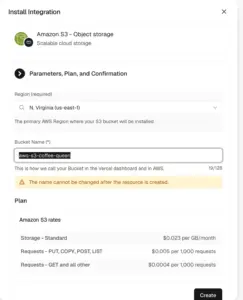
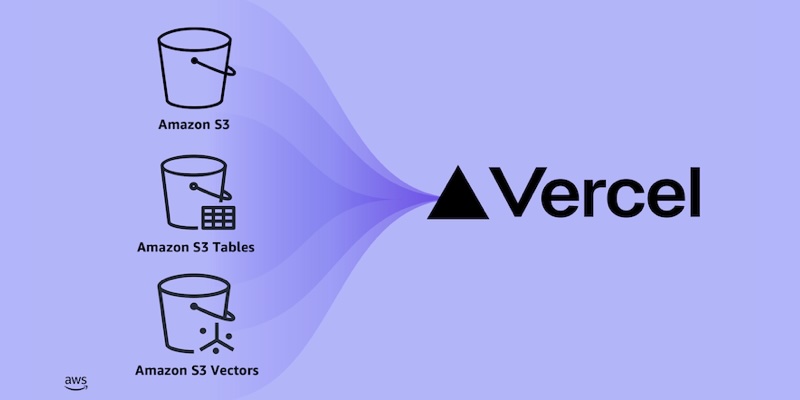
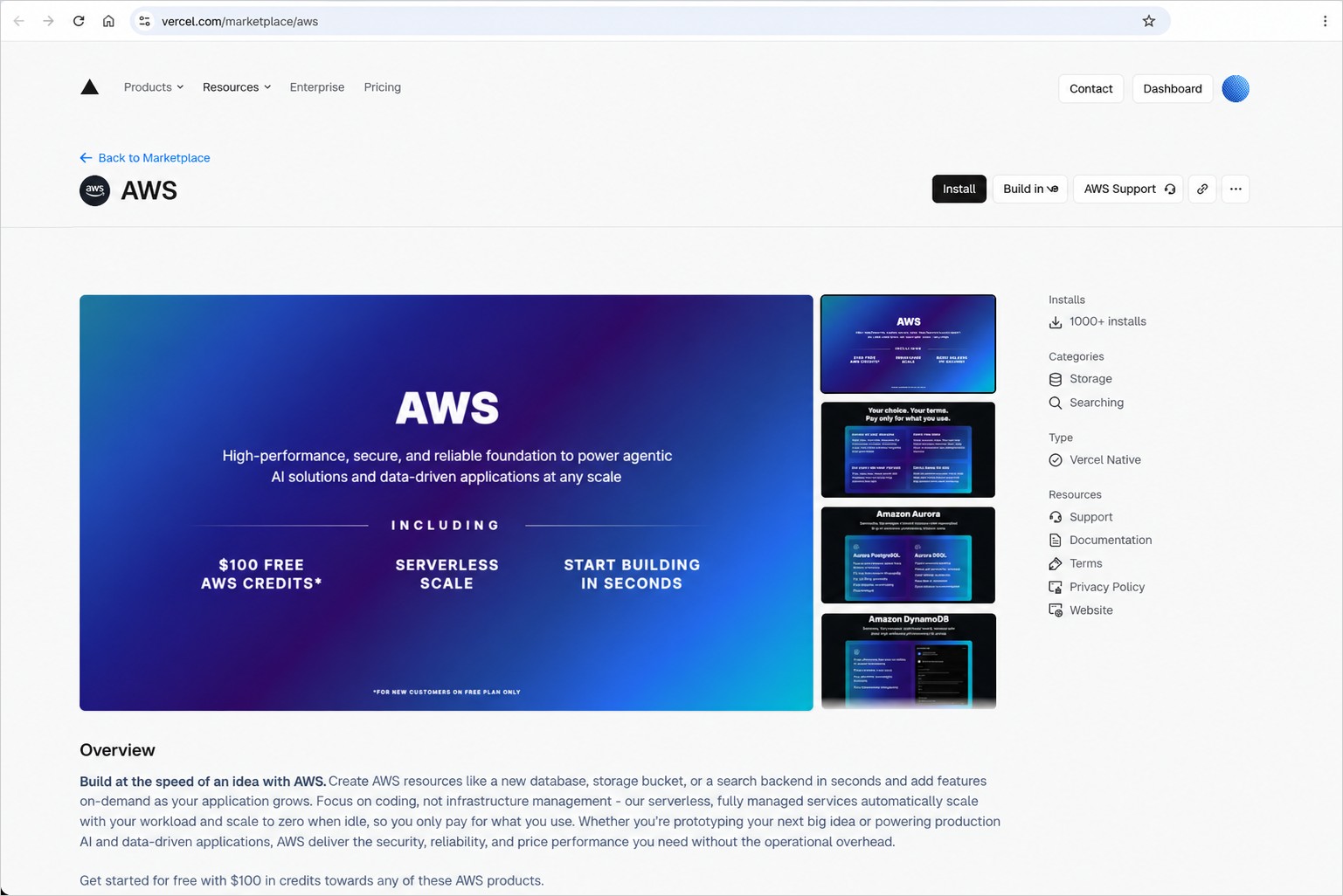
By natively embedding Amazon S3, including specialized features like Amazon S3 Tables and Amazon S3 Vectors, directly into the Vercel dashboard, that friction is effectively removed. Developers can now provision resources and handle connection configurations without ever leaving their primary development environment. This integration complements Vercel’s existing support for Amazon Aurora, Amazon DynamoDB, and Amazon OpenSearch Serverless, essentially providing a comprehensive, end-to-end application stack. The result is a more cohesive architecture where the database layer, object storage, and vector indexing live under one account with a unified billing structure, significantly lowering the operational burden for engineering teams.
Tailored Storage for Modern Workloads
The integration is designed to support three distinct categories of workloads that define modern application development: everyday general-purpose storage, data analytics, and AI-driven semantic search.
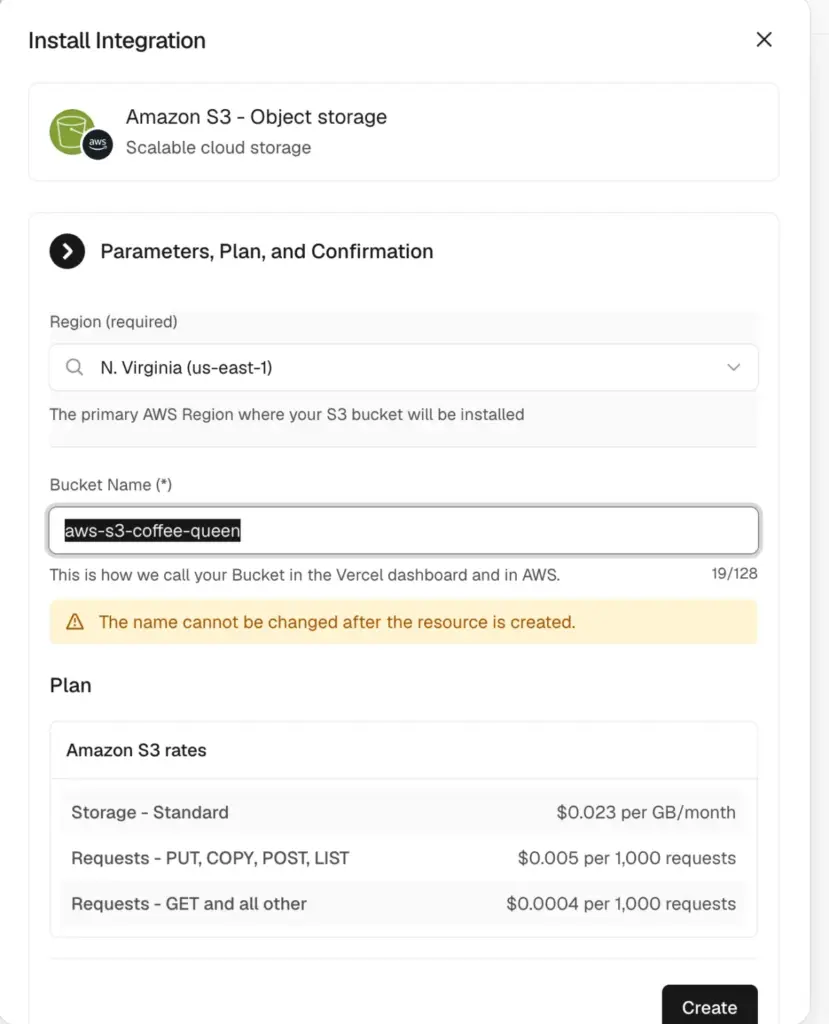
For general-purpose object storage, the integration allows for a simplified upload and retrieval process. Through Vercel’s interface, developers can provision an S3 bucket in seconds, which then automatically injects the necessary environment variables—such as the bucket name, AWS region, and role ARN—into the project. By utilizing the awsCredentialsProvider from the @vercel/functions/oidc package, the system exchanges short-lived OpenID Connect (OIDC) tokens with the AWS Security Token Service. This security-first approach eliminates the need to store static, long-lived access keys, adhering to modern best practices for cloud security and identity management.
For teams handling large-scale data, the inclusion of Amazon S3 Tables is a game-changer. These tables are purpose-built for analytics, offering fully managed Apache Iceberg support. By automating table maintenance and compaction, S3 Tables ensure that query performance remains optimized as data volumes grow. When combined with tools like DuckDB within a Vercel Function, developers can execute complex aggregate queries on large datasets with minimal overhead. This provides a lightweight yet powerful way to build analytics dashboards or internal reporting tools directly on top of raw S3 data, without needing to manage a traditional data warehouse.

Perhaps most timely is the support for Amazon S3 Vectors. As AI agents and large language model (LLM) applications become central to the modern web, the ability to perform semantic search is essential. S3 Vectors provide a cost-optimized way to store and query vector embeddings, allowing developers to perform RAG (Retrieval-Augmented Generation) and semantic search directly on their stored documents. By indexing and querying these vectors without the immediate need for a separate, dedicated vector database, developers can keep their architecture lean and efficient while still providing the sophisticated functionality expected of modern AI assistants.
Leveraging AI for Infrastructure Provisioning
The integration is further enhanced by the capabilities of v0, Vercel’s generative AI tool. Rather than manually clicking through menus, developers can now describe their infrastructure needs in plain language. A developer might prompt v0 to build "a photo gallery where users can upload images," and the system will automatically provision a general-purpose S3 bucket and generate the necessary code to handle file uploads.
Similarly, a request for a "support bot that answers questions from my PDFs" will trigger the provisioning of S3 Vectors, while a prompt for an "analytics dashboard for clickstream data" will set up S3 Tables. This natural language approach to cloud infrastructure allows developers to focus on the application logic rather than the plumbing. v0 not only provisions the resources but also generates the working code, including the necessary API routes and configuration, essentially providing a head start on complex implementations.
Flexibility and Operational Continuity
Vercel has ensured that this integration remains flexible for teams of all sizes. Developers can choose to create a brand-new AWS account through the Vercel integration, which is ideal for rapid prototyping and testing, or they can link an existing AWS account. When an existing account is linked, the platform respects the user’s current billing and account structure. Vercel operates exclusively with the buckets created through its interface, ensuring that the integration does not interfere with the rest of the user’s AWS environment. This maintains the integrity of existing AWS-native tooling and management practices, giving teams the best of both worlds: the ease of Vercel’s developer experience and the power and visibility of the AWS ecosystem.
The financial model is equally straightforward. There is no additional premium charged for using the integration; users simply pay the standard, transparent Amazon S3 pricing for the resources they consume. To encourage adoption and help new users get started, Vercel is offering $100 in AWS credits to those who create a new AWS account through the platform, valid for six months. This support covers all commercial AWS regions where Vercel operates, ensuring that performance and latency remain optimized for global audiences.
As the industry moves toward more integrated development environments, this collaboration between Vercel and AWS signals a broader trend of abstracting away infrastructure complexity. By providing a secure, automated, and performant bridge between a web application framework and object storage, Vercel is enabling developers to spend less time managing cloud configurations and more time delivering features. For those looking to dive deeper into the technical specifications, regional availability, or troubleshooting, the AWS MCP Server and the broader AWS documentation provide extensive resources to support these new integrations, ensuring that teams can troubleshoot and optimize their stacks as they scale. Through this update, Vercel continues to solidify its role as a central hub for the modern, cloud-native application stack.