










Since its inception in 2011, AWS Elastic Beanstalk has served as a foundational service for developers looking to deploy full-stack applications without the overhead of managing complex infrastructure. Over the past fifteen years, the service has evolved to support a diverse ecosystem of programming languages, including Java, .NET, Python, Node.js, PHP, Ruby, and Go. Today, AWS has taken a significant leap forward in this evolution, announcing a new, fully managed "Cluster Mode" for Elastic Beanstalk. This latest iteration is designed to provide deeper operational support, effectively taking full responsibility for the lifecycle of production environments, from deployment and scaling to patching and maintenance.
The philosophy behind the modern Elastic Beanstalk is clear: developers should focus on writing their business logic, while AWS handles the heavy lifting of infrastructure. Whether an application is provided as source code, a Dockerfile, or a container image, Elastic Beanstalk now acts as a comprehensive management layer that ensures these applications remain performant and secure throughout their entire lifecycle. This shift toward a more hands-off operational model for the user represents a culmination of years of engineering effort aimed at rebuilding the platform’s underlying engine to meet the increasing demands of modern, high-scale production workloads.
A New Era of Operational Efficiency
This latest update is not merely an incremental improvement; it is the result of a concerted effort to modernize the infrastructure foundation of the service. Recent enhancements have already begun to signal this shift, including the introduction of AI-powered environment analysis, which allows the service to automatically diagnose health issues and suggest corrective actions. Furthermore, the integration of official GitHub Actions has streamlined the developer experience, enabling teams to trigger deployments directly from their CI/CD pipelines using simple YAML configurations. These features, combined with native OpenTelemetry-based observability, traffic-splitting deployments with automatic rollbacks, and seamless secrets management via AWS Secrets Manager, have set the stage for the launch of Cluster Mode.
The core value proposition of the new Cluster Mode lies in its architectural approach to managing a portfolio of applications. Previously, teams operating multiple applications often had to manage them in isolation, which could lead to fragmented infrastructure and increased operational overhead. Cluster Mode changes this dynamic by allowing multiple applications to share a unified infrastructure backbone powered by Amazon Elastic Kubernetes Service (Amazon EKS). By consolidating these workloads under a single operational baseline, organizations can achieve significant economies of scale. As a portfolio grows, the cost per application decreases, and the complexity remains manageable, as administrators can oversee ten or even a hundred applications through a single, consistent interface with standardized operational guarantees.

Streamlining the Deployment Experience
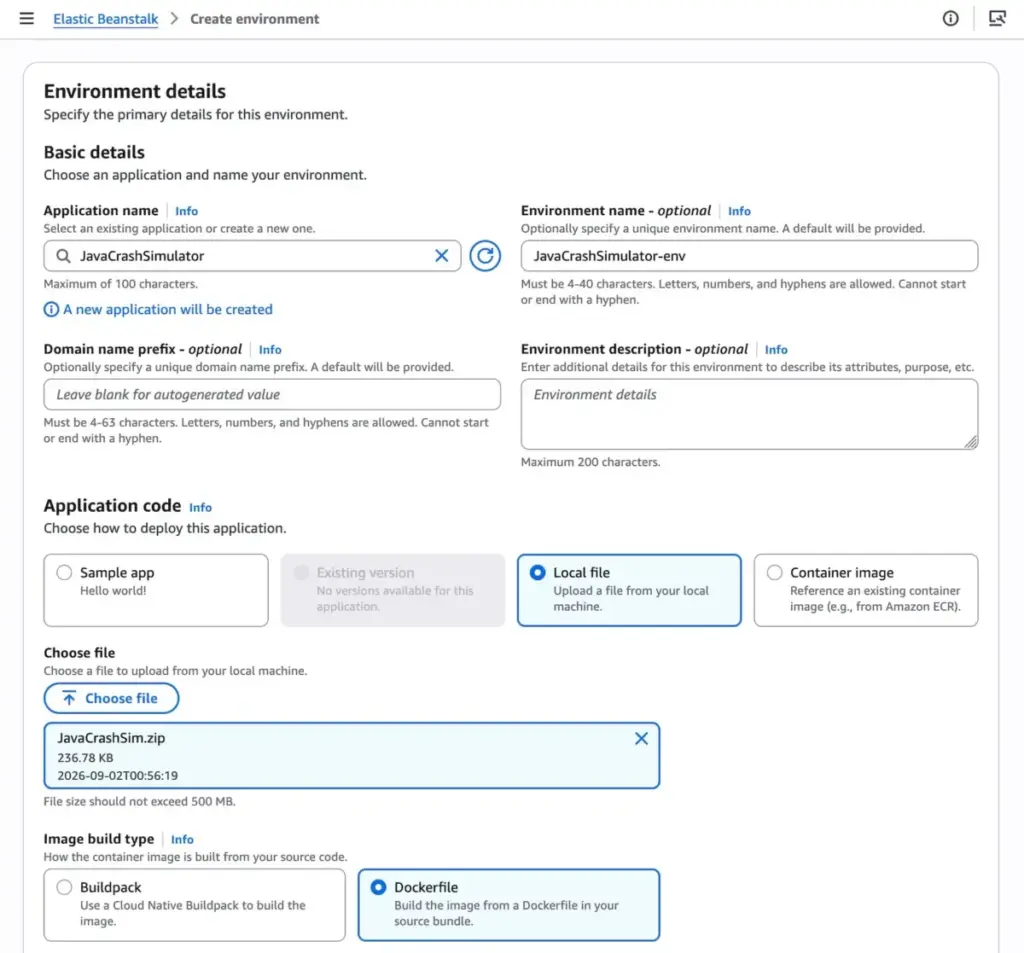
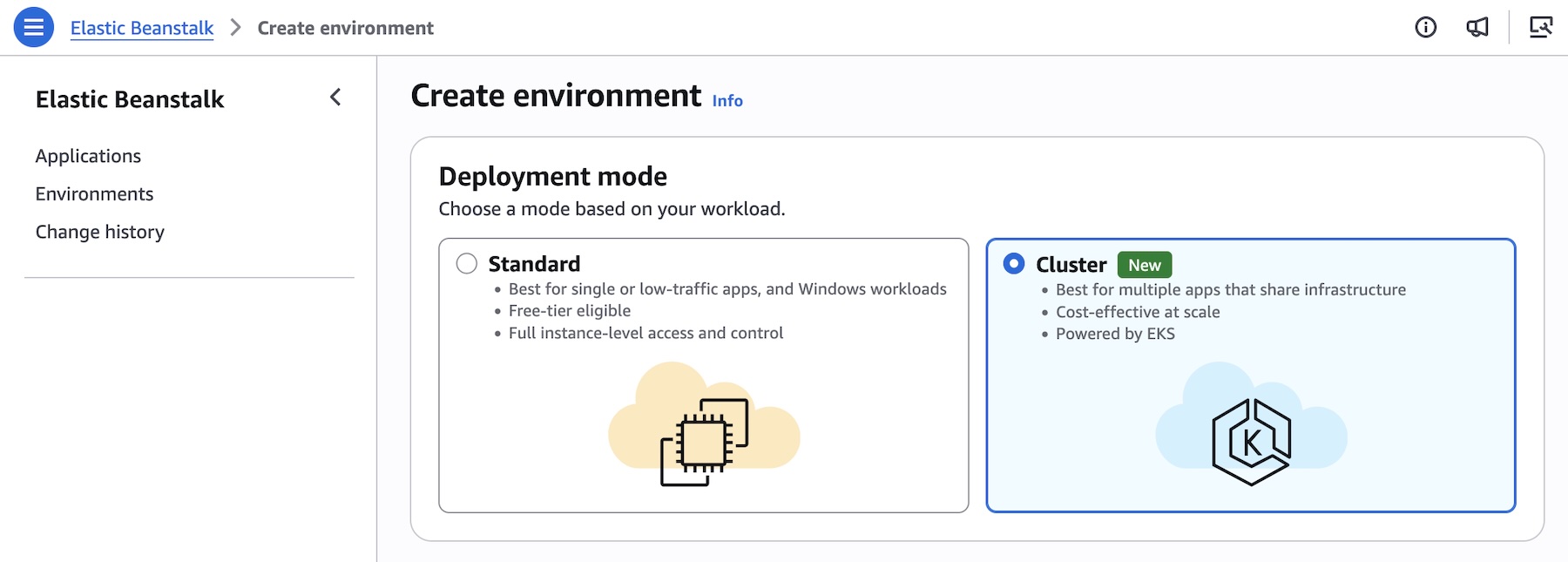
For teams ready to adopt this new capability, the transition is designed to be intuitive. Within the Elastic Beanstalk console, users can now select "Cluster" as the deployment type when creating a new environment. The service remains highly flexible regarding how applications are packaged, accepting source code, Dockerfiles, or direct container image references. When a user provides a local file or container build options, Elastic Beanstalk automates the underlying provisioning.
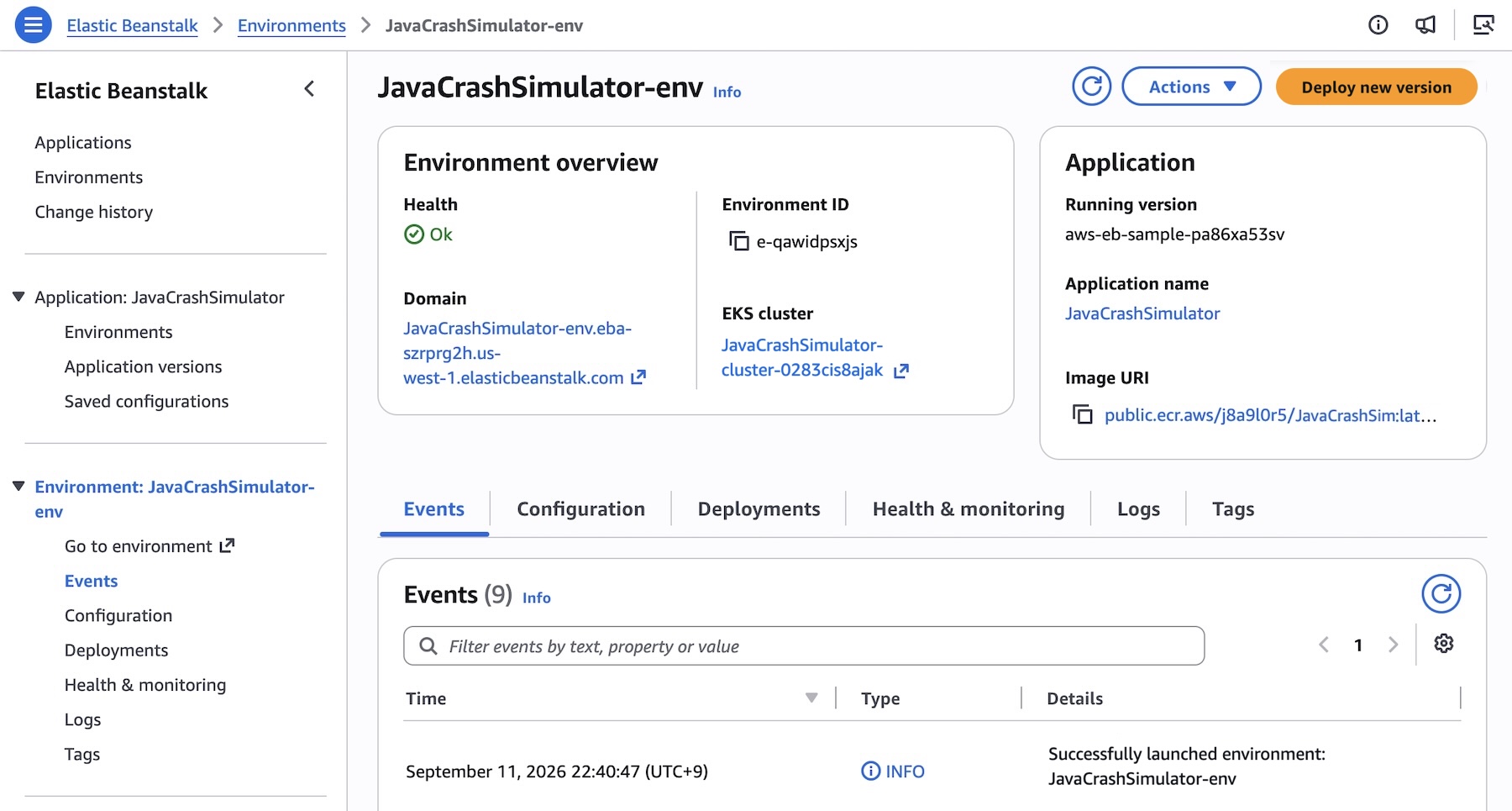
The initial deployment process is particularly notable for its efficiency. When a user triggers a deployment for a specific set of subnets, the system automatically handles the creation of the necessary EKS cluster. While this initial setup phase takes approximately ten minutes to ensure all infrastructure components are correctly configured and secured, subsequent deployments are markedly faster because the system intelligently reuses the existing EKS cluster resources. This design choice minimizes latency for ongoing development cycles and continuous integration processes.
For organizations that prefer automation via the command line or infrastructure-as-code, Elastic Beanstalk supports the AWS Command Line Interface (CLI), the dedicated EB CLI, and various AWS SDKs. This allows for sophisticated, programmatic management of complex microservices architectures. For instance, a developer can define an application, register multiple container images from the Amazon Elastic Container Registry (ECR) as specific application versions, and then apply granular configuration settings—such as CPU allocation, memory limits, and load balancer schemes—through JSON configuration files. This level of control ensures that even in a managed environment, teams retain the ability to tune their services for specific performance requirements.
Compatibility and Future-Proofing
A critical concern for existing users of Elastic Beanstalk is the continuity of their current workflows. AWS has confirmed that the traditional Elastic Beanstalk "Standard" mode, which is powered by Amazon Elastic Compute Cloud (EC2), remains fully supported. This is a strategic decision intended to allow teams to migrate their existing environments to Cluster Mode at their own pace. Because Standard and Cluster Mode environments can coexist within the same Elastic Beanstalk application, organizations can perform a gradual, environment-by-environment migration. To protect against configuration errors, the service includes built-in validation checks that ensure compatibility before any changes are finalized, preventing forced migrations or service disruptions.
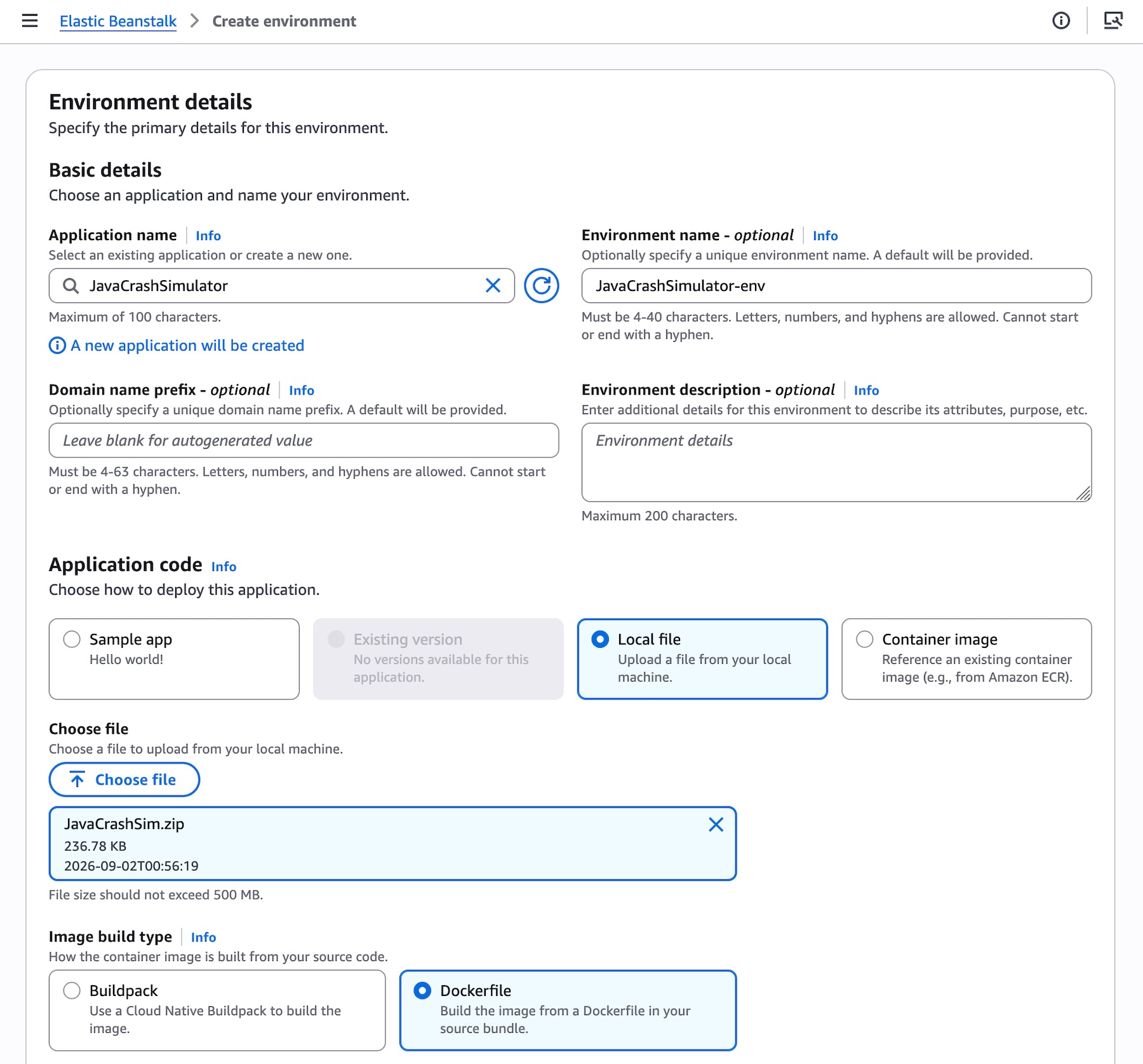
While Cluster Mode offers a robust solution for modern, container-based architectures, Elastic Beanstalk Standard Mode remains the optimal choice for specific use cases that rely on traditional EC2-based deployments or environments that do not require the orchestration capabilities of Kubernetes. This dual-track approach ensures that AWS is providing the right tools for the right jobs, whether the customer is running legacy monoliths or cloud-native microservices.
Availability and Economic Considerations
AWS Elastic Beanstalk Cluster Mode is generally available today across all AWS Regions where Elastic Beanstalk is supported. For organizations interested in tracking regional availability or specific capabilities, the AWS Capabilities by Region resource provides updated information. Additionally, the integration with the AWS MCP Server and various plugins offers a modern way for developers to interact with the service, including searching documentation and troubleshooting through AI-assisted tools.
From a pricing perspective, the move to Cluster Mode is designed to be transparent. There is no additional premium charged for using the Cluster Mode functionality itself. Instead, customers continue to pay only for the underlying AWS resources consumed by their applications. This includes the EKS control plane fee, EKS Auto Mode compute resources, Amazon ECR storage, and Amazon CloudWatch monitoring metrics. It is important to note that, unlike some other services, Elastic Beanstalk Cluster Mode is not eligible for the AWS Free Tier, and users should review the updated AWS Elastic Beanstalk pricing page to model their expected costs as they scale their infrastructure.
As teams begin to integrate Cluster Mode into their workflows, AWS encourages feedback through the official AWS re:Post community forums or via standard AWS Support channels. By centralizing operations and leveraging the robust foundation of Amazon EKS, the new Cluster Mode represents a significant milestone in the evolution of managed application services, offering a path for organizations to simplify their infrastructure management while maintaining the flexibility and power required for enterprise-grade production workloads.