









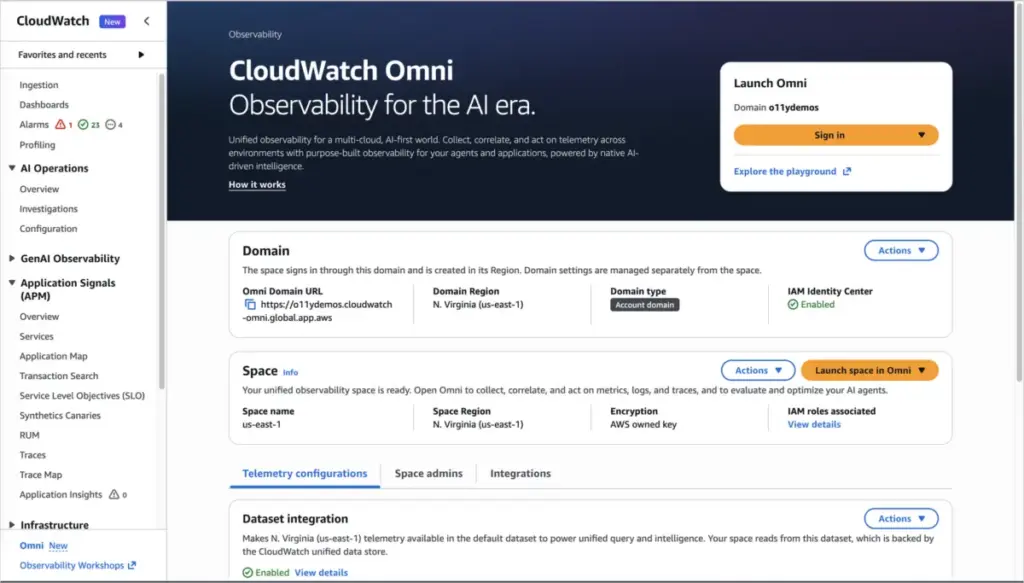
In a significant move to reshape how engineering teams monitor, troubleshoot, and optimize their complex digital environments, Amazon has officially introduced Amazon CloudWatch Omni. This new observability experience represents a departure from traditional, siloed monitoring practices, offering an AI-powered, unified workspace designed specifically to handle the demands of modern applications and generative AI workloads. By consolidating telemetry and providing intelligent automation, CloudWatch Omni aims to reduce the time engineers spend manually configuring dashboards and piecing together disparate data points during critical incidents.
The introduction of CloudWatch Omni arrives at a time when the complexity of cloud-native architectures has made traditional observability tools increasingly cumbersome. Engineering teams today often find themselves trapped in a cycle of constant maintenance—manually updating dashboards, tuning alert thresholds, and jumping between various tools to correlate data when a system fails. This operational overhead is exacerbated when incidents cross team boundaries, leading to fragmented communication across platforms like Slack, where critical context is often lost in long, disorganized threads.
A Unified Workspace for Collaborative Engineering
At the heart of CloudWatch Omni is the goal of breaking down these operational silos. Unlike the standard AWS Management Console, which is often segmented by service and permission structures, Omni provides a dedicated, purpose-built interface accessible through a unique URL for an organization. By integrating directly with enterprise identity providers via AWS IAM Identity Center—supporting industry-standard services like Okta and Microsoft Entra ID—the platform ensures that SREs, developers, database engineers, and managers can operate within a single, shared environment.
This collaborative approach is designed to transform how teams respond to outages. When an issue arises, the system provides a shared investigation session where all participants can view the same real-time data, topology maps, and historical context. This eliminates the "information gap" that frequently occurs when new engineers are brought into an incident response, as they can join a session and immediately see the full history of the investigation, including previous actions taken and findings discovered by their colleagues.
Adapting to Dynamic Application Environments
A major pain point for modern DevOps teams is the sheer pace at which applications evolve. As microservices are deployed, updated, or retired, traditional monitoring setups often become outdated, leading to "dashboard rot" or alert fatigue. CloudWatch Omni addresses this by treating observability as a dynamic, rather than static, process.
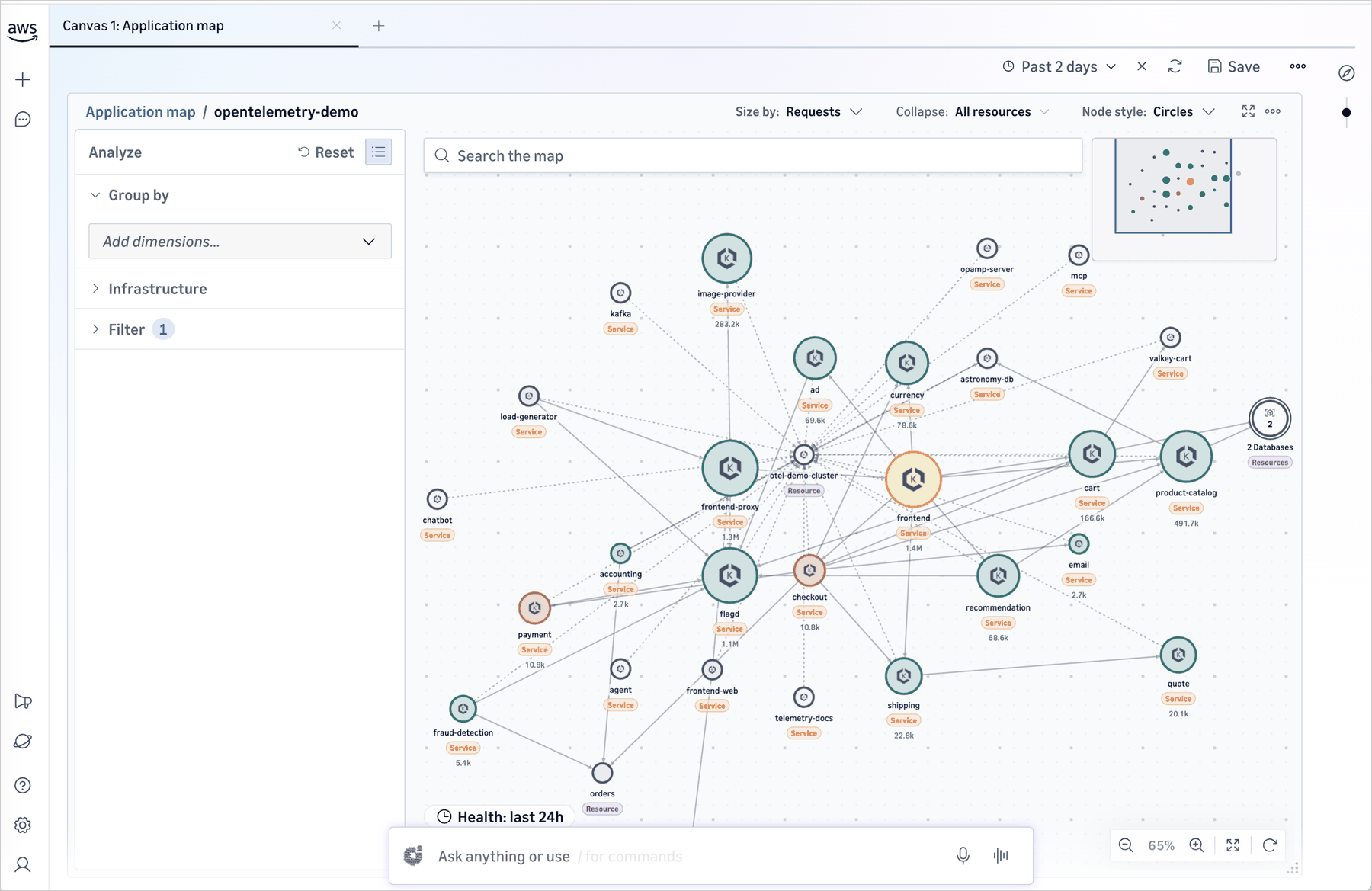
The platform automatically discovers services and maps their dependencies without requiring manual intervention. It shifts the burden of maintenance away from the engineer by allowing them to define high-level objectives—such as availability targets, latency budgets, or error rate thresholds—rather than constantly micro-managing individual metrics. As the underlying system changes, the application topology and alarm configurations within Omni adjust automatically. This ensures that the observability layer always reflects the current state of the architecture, regardless of how frequently code is deployed or how infrastructure is scaled.

AI-Powered Investigation with Amazon DevOps Agent
Perhaps the most transformative component of the new platform is the integration of the Amazon DevOps Agent. Designed to act as an active participant in the incident response process, the agent works alongside engineers to accelerate root cause analysis. Because the agent has access to the same telemetry and investigation history as the human team, its suggestions are grounded in the actual state of the application.
During an incident, the DevOps Agent can correlate signals across different services, trace the path of a failure through a complex dependency graph, and highlight significant events that occurred in the lead-up to an error. For example, if a checkout service experiences an spike in error rates, the agent can instantly correlate this with a recent deployment or an uptick in latency from a downstream payment API. By maintaining a continuous history of the investigation, the agent not only helps resolve the immediate issue but also preserves the context for post-incident reviews, effectively removing the need for teams to manually compile incident reports after the fact.
Streamlined Incident Workflows
The utility of CloudWatch Omni is best illustrated through its typical incident workflow. In a scenario involving a degraded payment process, the system triggers an alarm and automatically opens an investigation session. This session is pre-loaded with the relevant context: the service topology, the correlated signals—such as a deployment that occurred ten minutes prior—and the agent’s initial analysis of the latency increase.
The on-call SRE can then immediately verify these correlations, examine specific trace views to identify failing endpoints, and investigate whether the latency issues are tied to capacity constraints. When the SRE realizes the problem requires expertise from the payments team, they can seamlessly invite a payments engineer into the same session. Because the environment is shared, the incoming engineer sees the entire investigation history, including the agent’s discovery of a configuration change in the payment provider’s API gateway. This rapid information flow allows for immediate remediation, often resulting in a faster rollback or fix than would be possible in a traditional, manual environment.
Getting Started and Integration
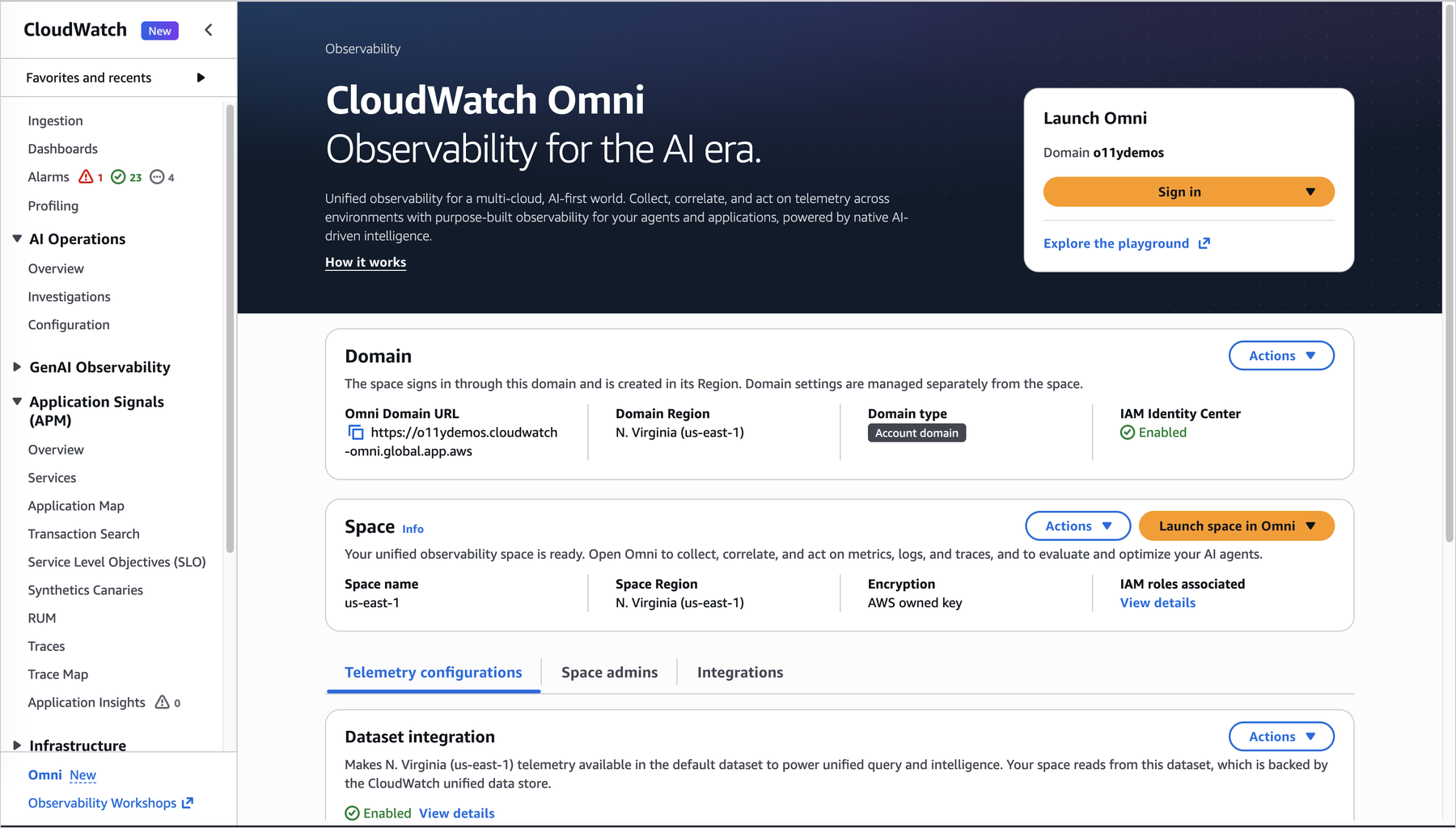
For existing Amazon CloudWatch customers, transitioning to the new experience is designed to be seamless. Users can initiate the setup directly from the CloudWatch console by selecting the option to "Try CloudWatch Omni." Because the platform is built on OpenTelemetry, any existing telemetry—including logs, metrics, traces, and alarms—is immediately available within the new workspace. There is no need for complex data migrations or reconfigurations.
For organizations looking to deploy the platform company-wide, the process involves configuring a domain through IAM Identity Center and defining "Spaces" for different teams and environments. Each Space acts as a container for the applications owned by a specific team, pointing directly to existing CloudWatch data. Furthermore, for organizations running hybrid or multi-cloud environments, CloudWatch Omni offers connectors that allow external telemetry to be ingested and visualized alongside native AWS data, providing a truly holistic view of the technology stack.
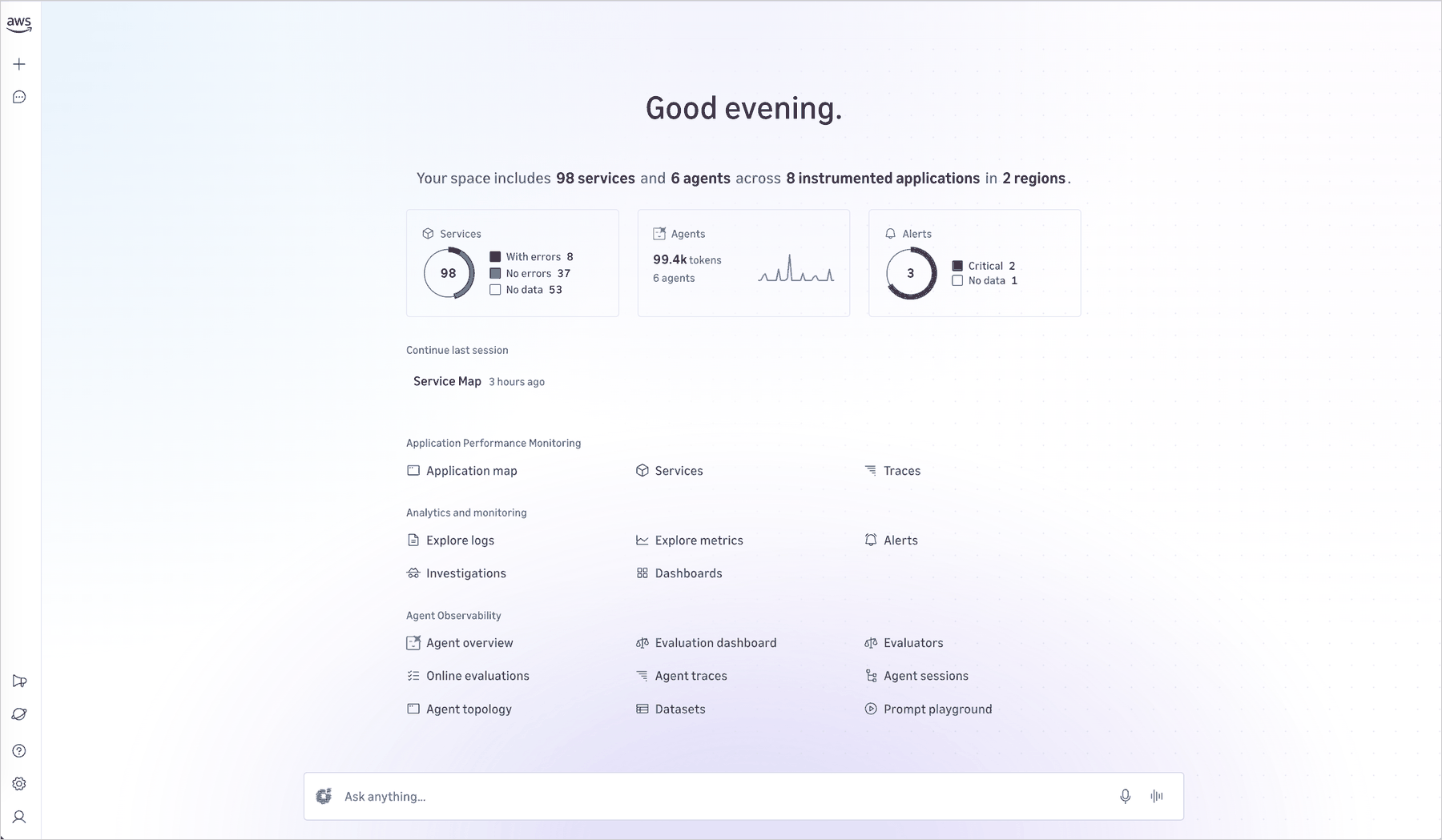
The platform also serves as a specialized tool for the growing segment of generative AI and agentic workloads. Recognizing the unique observability challenges posed by these systems—such as tracking complex chains of thought or evaluating the performance of LLM-based agents—CloudWatch Omni provides specific capabilities for trace exploration and real-time monitoring of AI workflows. This is a continuation of the observability strategy introduced in the companion announcement regarding agent observability.
A Forward-Looking Approach to Observability
Amazon CloudWatch Omni represents a strategic shift toward "application-centric" observability. By focusing on the health and performance of the application as a whole, rather than the isolated health of infrastructure components, Amazon is attempting to solve the fundamental problem of cognitive load on engineering teams. The platform relies on existing telemetry, ensuring that the transition to this new way of working does not require a complete overhaul of current logging or monitoring practices.
Pricing and availability details for CloudWatch Omni are available through the official Amazon CloudWatch pricing page. Existing customers are encouraged to explore the feature directly within their console to experience the automated discovery and investigation capabilities. For those who wish to integrate Omni with other AI-driven tools or automate their documentation and API interactions, Amazon has provided access to the AWS MCP Server and various plugins, facilitating a broader, more integrated ecosystem.
As the industry moves toward increasingly automated and intelligent operations, tools like CloudWatch Omni are likely to become standard. By combining the power of OpenTelemetry with AI-driven analysis and a collaborative workspace, Amazon is setting a new benchmark for how organizations can maintain system reliability in an era of rapid, continuous deployment. Whether for standard microservices or complex generative AI agents, the focus remains on enabling engineers to spend less time managing the tools of their trade and more time building and improving the applications that drive their business.