










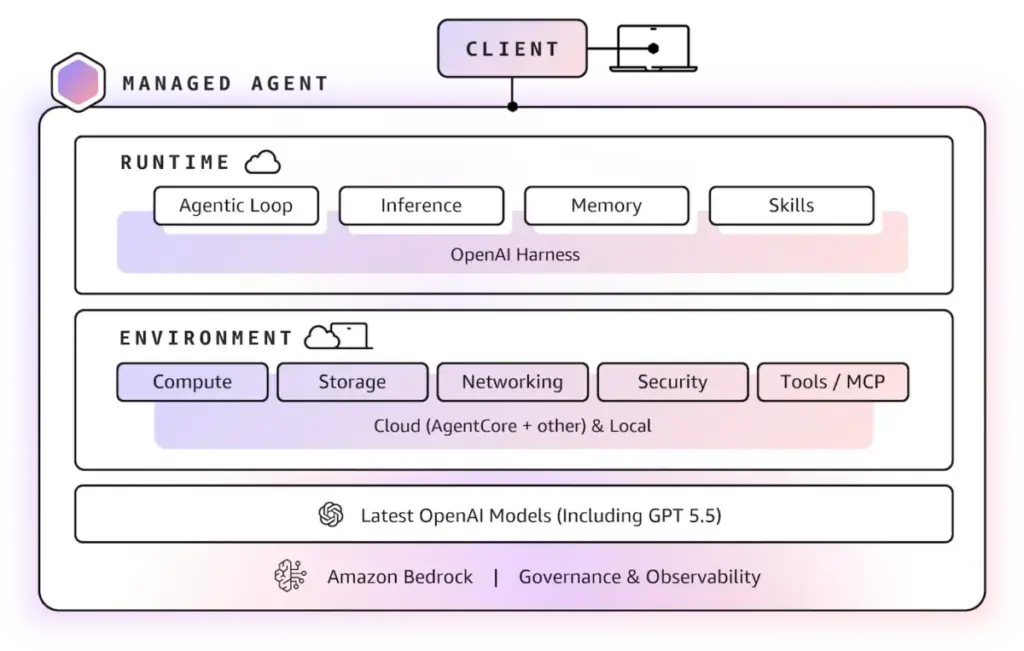
In a significant expansion of its generative artificial intelligence portfolio, Amazon Web Services (AWS) has announced the public preview of Amazon Bedrock Managed Agents powered by OpenAI. This strategic integration represents a bridge between OpenAI’s sophisticated agentic capabilities and the robust, secure infrastructure of the AWS cloud. By utilizing a customized version of OpenAI’s Agents API that has been specifically engineered to be AWS-native, the offering allows developers to deploy powerful AI agents that operate seamlessly within the existing AWS ecosystem.
The primary value proposition for this new integration lies in its adherence to the enterprise-grade governance and security standards that AWS customers demand. By hosting these agents within the AWS environment, organizations can leverage their existing identity management, granular permissions structures, and compliance frameworks. This ensures that when an AI agent interacts with sensitive data or triggers actions across AWS resources, it does so within a controlled and audited framework. This development is designed to lower the barrier for companies looking to incorporate advanced agentic workflows without sacrificing the operational consistency of their current cloud architecture.
Flexible Execution Environments for Enterprise AI
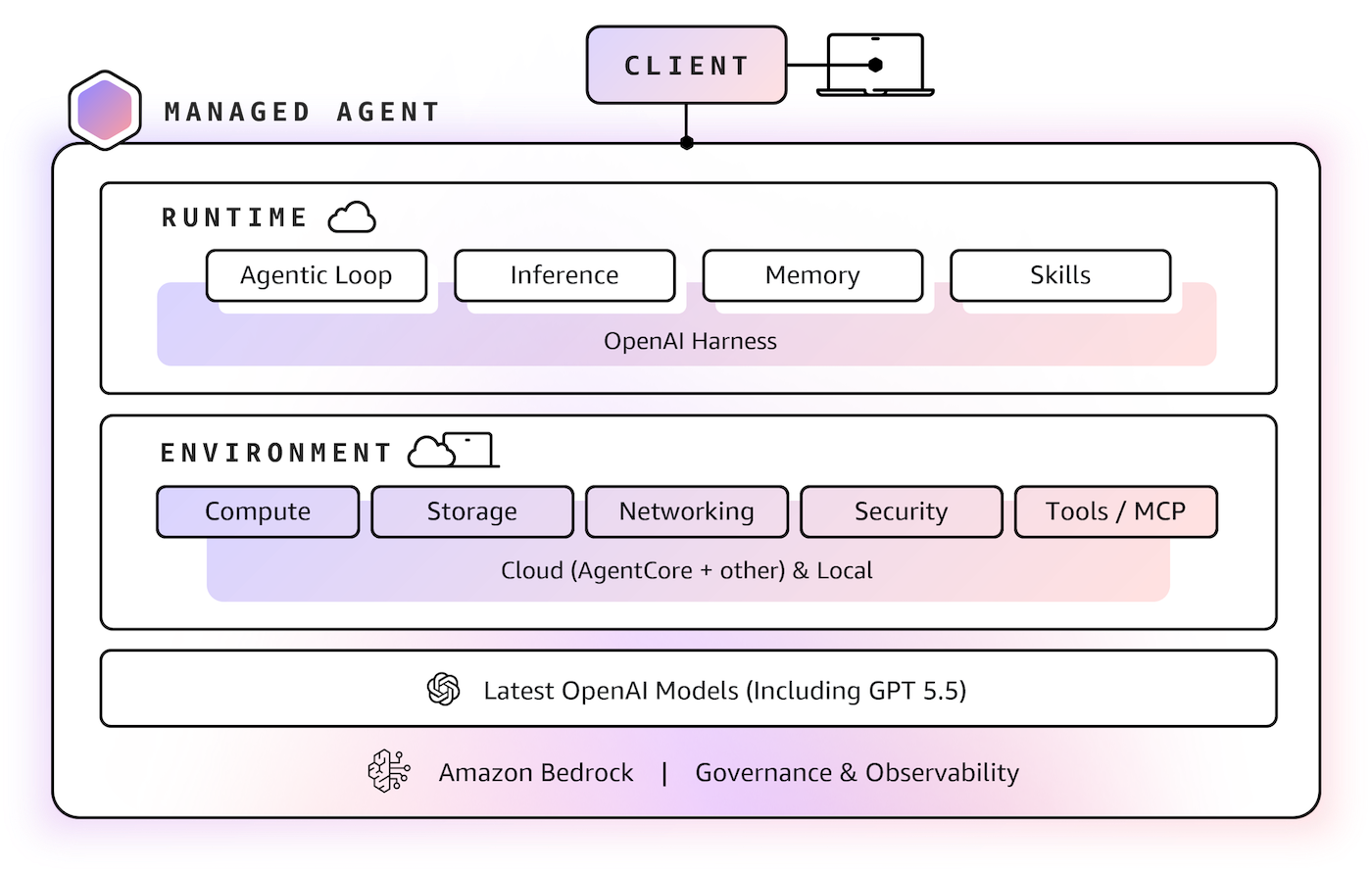
To accommodate a wide array of technical requirements and operational preferences, AWS has provided two distinct execution environment options for the new Bedrock Managed Agents. The first is a self-hosted compute model, which is ideal for developers who prefer to maintain tight control over their runtime environment. This option allows teams to utilize their existing development machines, containerized environments, or other compute clusters, providing maximum flexibility for custom configurations and local testing.
The second, more streamlined option is the Amazon Bedrock AgentCore Runtime. This is a fully managed environment designed to simplify the operational overhead associated with running complex agents. By opting for this path, users benefit from managed runtime sessions and highly configurable storage options integrated directly into their AWS account. This managed approach is intended to accelerate the time-to-market for production-grade applications, as it offloads the underlying infrastructure management to AWS, allowing engineering teams to focus exclusively on the logic and efficacy of their agents. Comprehensive documentation has been made available to assist developers in navigating the setup, configuration, and security considerations of these environments.
Strategic Updates to the AWS Ecosystem
Beyond the headline introduction of OpenAI-powered agents, the recent period has been marked by a broader push by AWS to expand its model selection and service lifecycle management. The ongoing addition of new "frontier models" to Amazon Bedrock is a clear indicator of the company’s commitment to providing a diverse, competitive, and state-of-the-art catalog of large language models (LLMs). By maintaining an open ecosystem, AWS aims to ensure that its customers are not locked into a single model provider, but can instead choose the best architecture for their specific use cases—whether that involves balancing performance, latency, cost, or specific model capabilities.
As part of its commitment to transparency and operational stability, AWS has also provided critical updates regarding its service availability and product lifecycle. Navigating the lifecycle of cloud services is a fundamental aspect of large-scale infrastructure management, and the recent updates—finalized on September 29, 2026—provide essential guidance for organizations managing technical debt or planning migrations. When AWS updates the status of a service or feature, it is accompanied by recommended alternatives and support pathways to ensure that any potential disruption to business operations is kept to an absolute minimum.

These updates often categorize services into different stages of maturity or retirement, such as moving to "Maintenance," entering a "Sunset" phase, or reaching "End of Support." For instance, the transition of certain services into a maintenance state often implies that they will no longer be accessible to new customers, necessitating a strategic shift for organizations currently relying on those specific features. By providing these timelines well in advance, AWS enables engineering teams to plan their migration strategies, re-architect their systems where necessary, and continue to leverage modern alternatives that offer improved performance or security. The company emphasizes that for customers concerned about the impact of these lifecycle changes on their specific production workloads, the best course of action is to consult the official service documentation or engage directly with the AWS Support team, which remains available to provide architectural guidance and migration support.
Community Engagement and the Path Forward
The rapid pace of innovation at AWS, exemplified by the introduction of new agentic frameworks and the continuous evolution of the Bedrock model repository, highlights the importance of staying connected with the wider builder community. AWS maintains a comprehensive suite of resources to keep developers, architects, and technical leaders informed about the latest releases and best practices. These include the "What’s New with AWS" page, which serves as a central hub for all product announcements, and the official AWS Blogs, where technical deep dives and strategic insights are regularly shared.
Engagement extends beyond digital content, as AWS continues to foster a vibrant community through a mix of in-person and virtual events. Upcoming gatherings, such as the flagship AWS re:Invent, provide a platform for networking, learning, and collaborating on the next generation of cloud-native solutions. Similarly, local AWS Community Days and various startup-focused events offer targeted opportunities for builders to share their unique solutions and connect with peers facing similar challenges. For those looking to deepen their expertise, the AWS Builder Center provides access to a wealth of content and collaborative tools that support the entire development lifecycle, from initial concept to final deployment.
As the industry moves further into an era defined by agentic AI and increasingly sophisticated cloud automation, the ability to integrate these technologies into existing, governed environments will remain a critical differentiator. The introduction of Bedrock Managed Agents is a clear step in that direction, bridging the gap between cutting-edge AI research and the pragmatic, security-first requirements of the modern enterprise. As teams begin to experiment with these new capabilities, the focus will undoubtedly shift toward optimizing performance, managing costs, and ensuring that the agents provide reliable, measurable value to their organizations.
The landscape of cloud computing is characterized by its constant state of flux and advancement. With each passing week, new tools emerge that redefine what is possible within the infrastructure of the web. Whether it is through the deployment of new AI agents, the adoption of updated models, or the careful management of service lifecycles, the primary goal remains consistent: to provide developers and enterprises with the tools they need to build, scale, and secure their most ambitious projects. As the week draws to a close, the focus shifts to the next cycle of innovation, with the developer community poised to integrate these latest advancements into the next wave of transformative digital applications.