








In a significant move to streamline cloud management, Amazon Web Services (AWS) has announced the public preview of the AWS Well-Architected Agent. This new AI-powered service is designed to fundamentally change how organizations monitor, evaluate, and optimize their cloud environments. By moving beyond traditional, static checklists and manual audits, the agent provides continuous, context-aware insights that help users improve their applications across four critical dimensions: cost, security, performance, and resilience.
The AWS Well-Architected Framework has long been the gold standard for cloud architects seeking to build secure, high-performing, and cost-effective systems. However, as cloud environments grow in complexity, maintaining alignment with these best practices can become a daunting task for engineering teams. The new Well-Architected Agent addresses this challenge by acting as an automated, intelligent companion that functions much like an experienced cloud architect. It works by analyzing infrastructure, understanding the unique business goals of a specific organization, and delivering highly targeted, actionable recommendations.
Moving Beyond Manual Audits
One of the most persistent hurdles in cloud governance is the reliance on periodic, manual reviews. These traditional audits often become outdated the moment they are completed, failing to account for the rapid pace of change in modern CI/CD pipelines and infrastructure deployments. The AWS Well-Architected Agent eliminates this friction by automatically correlating utilization metrics, resource configurations, and complex application topologies. By evaluating these data points against the established best practices across more than 65 AWS services, the agent provides a dynamic, real-time assessment of the environment.
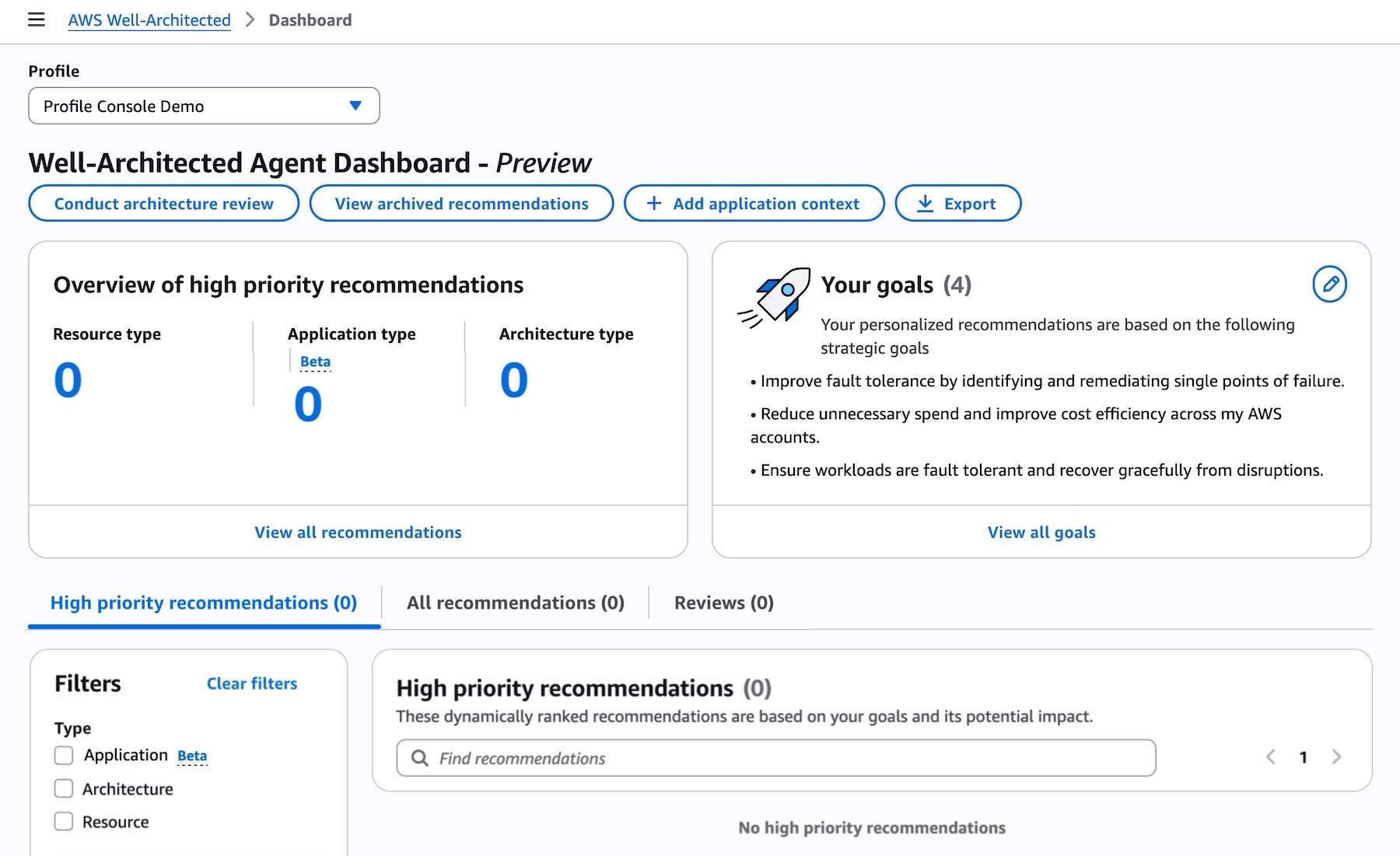
Rather than offering generic advice, the service tailors its findings to the specific business goals defined by the user. Whether an organization is prioritizing aggressive cost reduction or focusing on hardening its security posture, the agent ensures that the recommendations it provides are aligned with those strategic objectives. Furthermore, the agent identifies cross-pillar trade-offs—acknowledging, for instance, that a change made to improve performance might impact costs—which allows engineers to make informed decisions that balance competing priorities effectively.

Implementation and Profiling
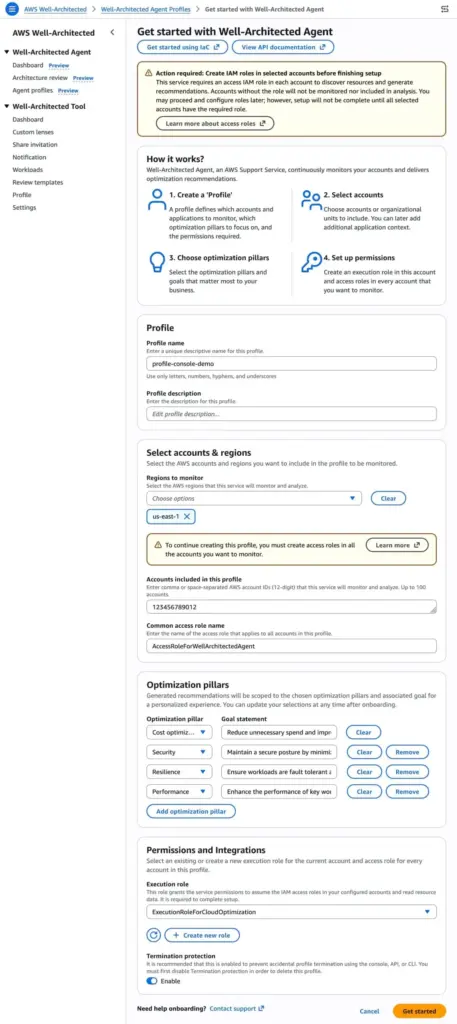
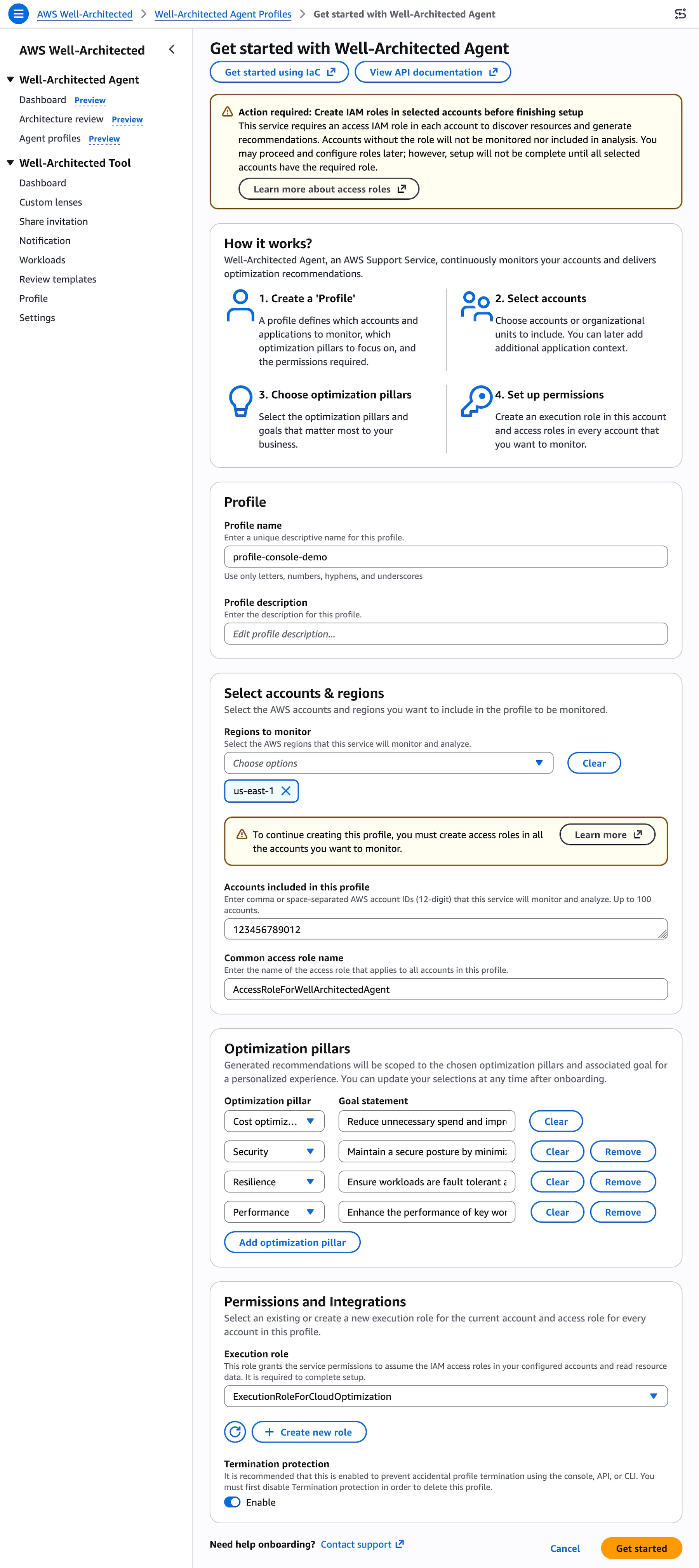
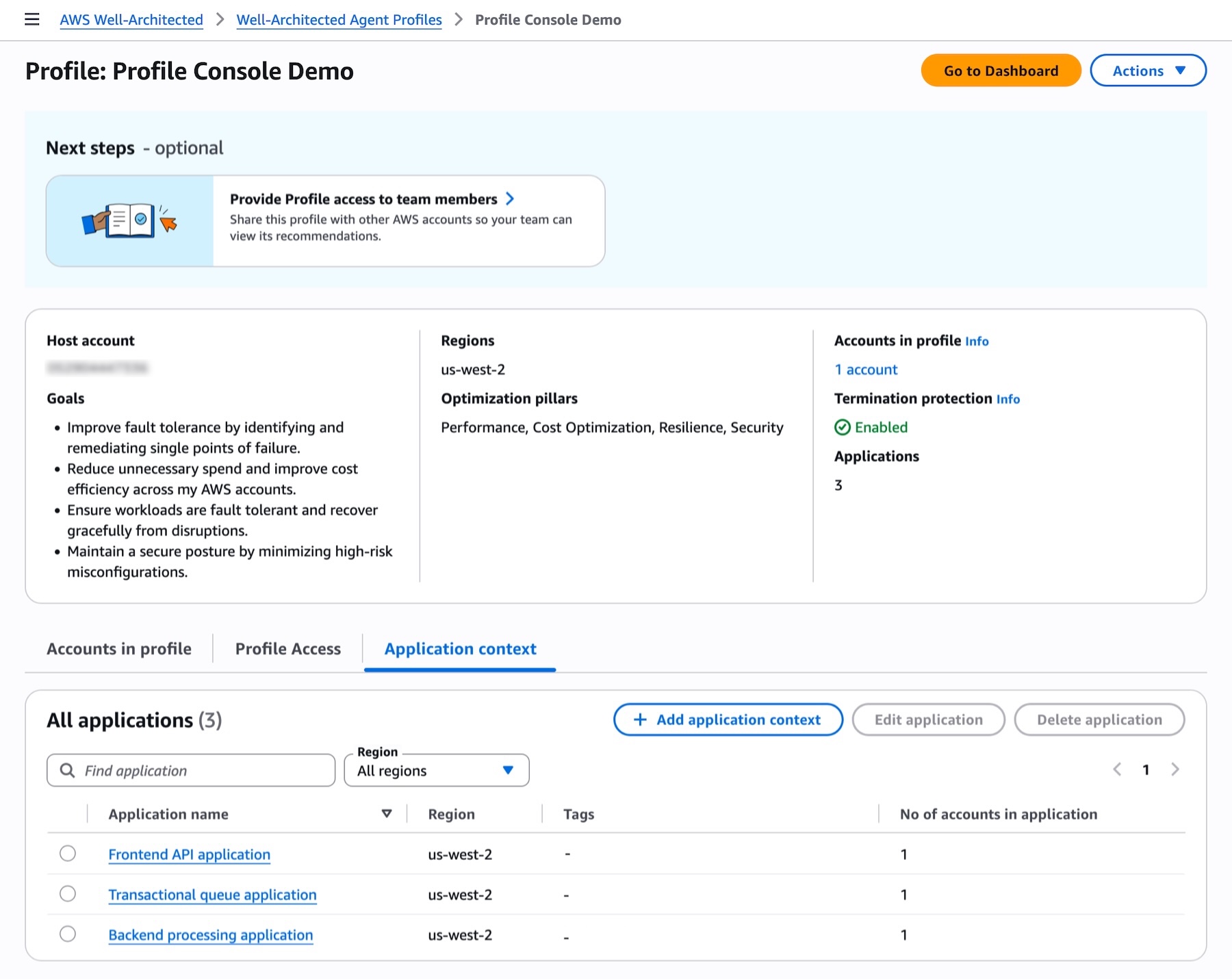
Getting started with the Well-Architected Agent involves defining an agent profile within the AWS Well-Architected console. This profile acts as the configuration hub where users specify which AWS accounts and applications fall under the agent’s scope. During this setup phase, users also select the optimization pillars that are most critical to their specific business operations. This granularity is intentional; it allows teams to focus their efforts on what matters most while ensuring the agent does not surface irrelevant information.
Once the profile is established and the necessary IAM roles are provisioned—providing the agent with the required permissions to read resource configurations and utilization data—the system begins its analysis. The agent is designed to provide comprehensive recommendations within 24 hours of profile creation. This rapid turnaround allows organizations to quickly identify and address architectural gaps that might have otherwise gone unnoticed.
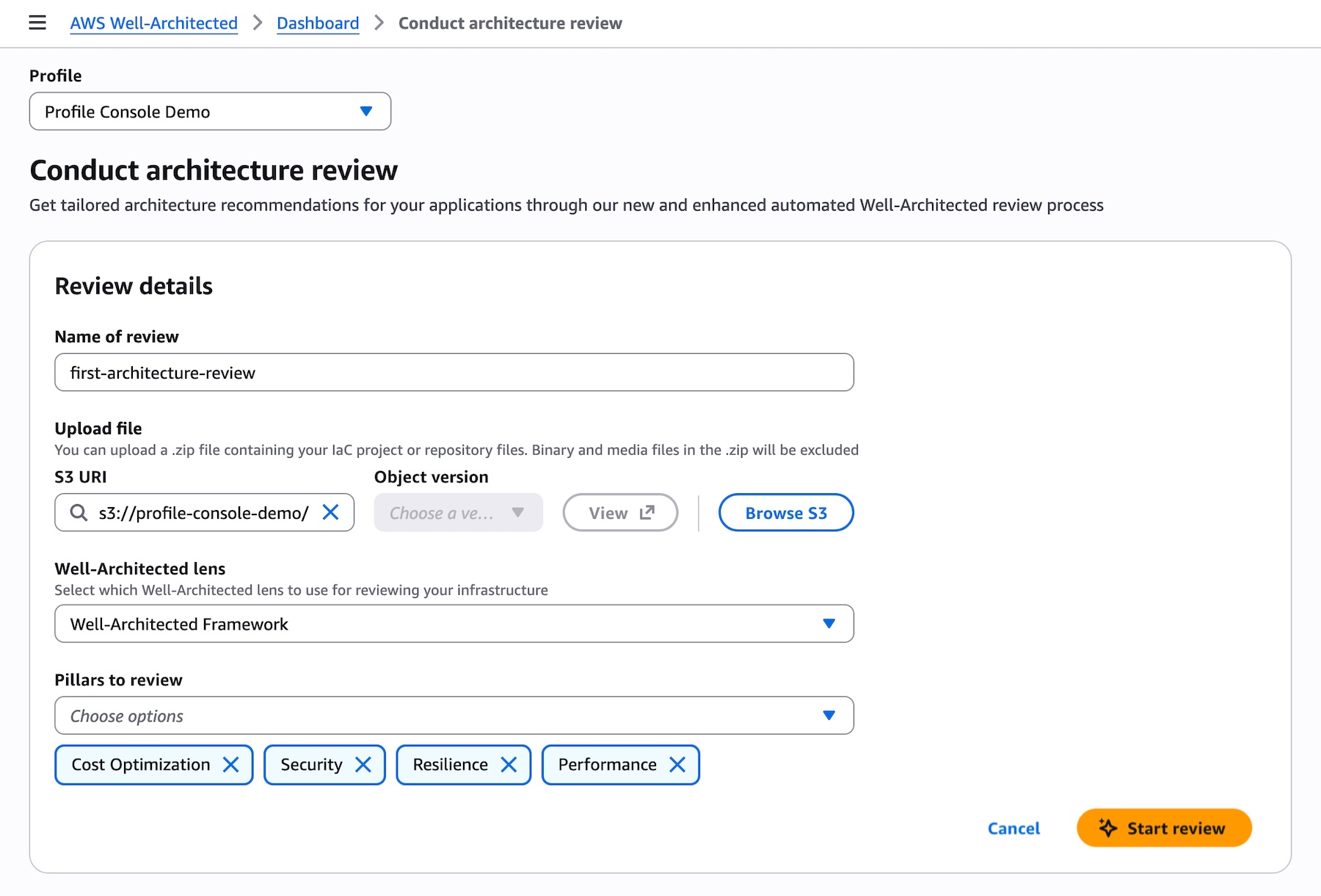
For teams looking to shift their optimization efforts further left in the development lifecycle, the agent also supports architecture reviews for pre-deployment workloads. Users can upload their Infrastructure as Code (IaC) projects—including configurations written in Terraform, AWS CloudFormation, or the AWS Cloud Development Kit (CDK)—directly to the dashboard. The agent analyzes these templates against chosen Well-Architected lenses, providing a "pre-flight check" that helps developers identify potential issues before a single resource is even provisioned in the cloud.
Context-Aware Remediation
The true power of the Well-Architected Agent lies in its approach to remediation. Rather than simply pointing out configuration errors or architectural weaknesses, the agent provides complete, ready-to-implement fix packages. When a user reviews a finding, they are presented with a detailed breakdown of why the recommendation was made, what the potential impacts of the change are, and the trade-offs involved in implementing the fix.
When a team decides to proceed with a recommendation, they have several options for remediation. The agent can provide updated IaC templates, CLI commands, or specific console instructions, depending on the nature of the issue. By providing the exact code changes needed—such as updated snippets for a CDK function—the agent significantly reduces the time and effort required to bridge the gap between identifying a problem and deploying a solution. This ability to integrate directly into the developer workflow is a major step forward in making architectural excellence a repeatable and automated process.
For advanced users and teams operating at scale, the agent also exposes its capabilities through an API. This allows organizations to integrate recommendations directly into their existing development and operations workflows. By utilizing the AWS MCP Server and various plugins, engineering teams can interact with the agent programmatically, searching documentation and pulling insights into their preferred AI coding tools. This extensibility ensures that the agent can function as a core component of a modern, automated DevOps ecosystem.
Ongoing Evolution of Cloud Management
While the AWS Well-Architected Agent represents a major leap forward in automation, it does not replace existing tools. Users can continue to leverage the traditional AWS Well-Architected Tool to manually evaluate their workloads, particularly when applying custom, organization-specific lenses that measure best practices unique to their own internal standards. The agent serves as a powerful supplement, handling the heavy lifting of continuous, automated analysis, while the traditional tool remains available for deep-dive, manual governance.
The public preview of the service is currently available in the US East (N. Virginia), US East (Ohio), and US West (Oregon) regions, with the ability to onboard workloads from any AWS commercial region. As part of the AWS Support offering, the agent is accessible to customers with an active AWS Support plan, underscoring AWS’s commitment to providing robust tooling that helps customers operate more efficiently and securely.
By shifting the burden of architectural analysis to an intelligent, automated system, AWS is enabling organizations to focus less on the "how" of cloud maintenance and more on the "what" of business innovation. The Well-Architected Agent does not just provide a report; it offers a roadmap for improvement that is constantly updated, deeply contextual, and remarkably easy to execute. As the service moves through its preview phase, it is expected to become an essential tool for architects and engineers who aim to maintain the highest standards of cloud excellence in an increasingly complex digital landscape. Users interested in exploring these capabilities are encouraged to visit the AWS Well-Architected console to begin profiling their environments and to provide feedback through their standard AWS Support channels.