









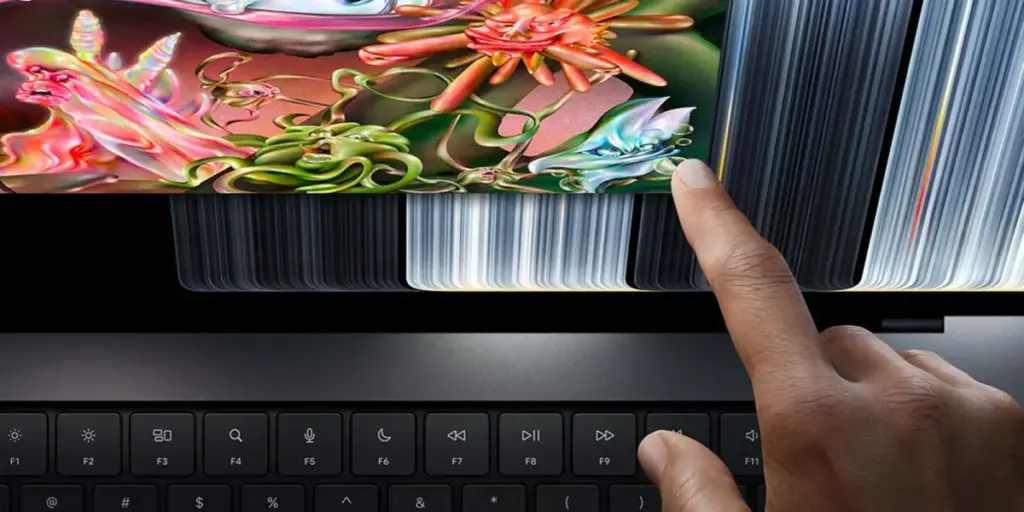
Apple’s latest hardware launch has officially introduced the long-rumored, highly anticipated touchscreen MacBook Pro, bringing a significant shift to the company’s professional laptop lineup. The new machine, arriving in stores on November 6, represents a milestone for a company that once famously resisted the integration of touch interfaces into its desktop and laptop ecosystem. While the new hardware features a suite of high-end enhancements, perhaps the most surprising and welcome aspect of the launch is Apple’s strategic decision to keep the previous, non-touchscreen M5-series MacBook Pros in its active lineup.
For many professional users, this dual-track strategy provides a rare sense of relief. It acknowledges that while innovation is necessary to push the market forward, not every user is ready—or even interested—in a touchscreen interface. By maintaining the availability of the traditional non-touch models, Apple is effectively providing a "glitch in the system" that benefits those who prioritize raw performance and traditional ergonomics over the latest display innovations.
A New Era for the MacBook Pro
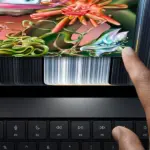
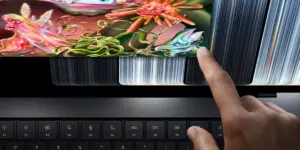
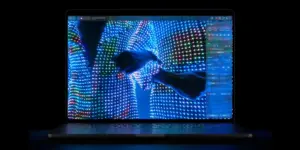
The arrival of the new MacBook Pro with the PROLED XDR display marks the culmination of years of industry speculation. For a long time, the prospect of a touchscreen Mac felt like an inevitability that Apple was hesitant to embrace. Now that the technology has officially arrived, it is clear that Apple has aimed for a premium execution. The machine boasts a stunning tandem OLED display, a thinner and lighter chassis, slimmer display bezels, and a redesigned audio system. Perhaps most nostalgically, it sees the return of the glowing Apple logo on the lid—a feature that has been absent from the professional lineup for years and is already generating significant interest among the Apple faithful.
Beyond the aesthetics, the device includes a redesigned thermal architecture and the integration of the Dynamic Island, a design language imported from the iPhone and iPad Pro lines. This integration brings a new way of interacting with system alerts and background activities, though its implementation on a laptop remains a subject of ongoing debate among power users who value screen real estate above all else. When you add the primary headline feature—the touchscreen—the $400 price premium for these models becomes a defensible, if significant, investment for those who truly need or desire these specific features.
The Performance Paradox
Despite the excitement surrounding the new form factor, the core performance of the machine presents a complex reality. For those who were holding out for a major leap in processing power, the new models may feel slightly familiar. Performance-wise, the new touchscreen MacBook Pro is effectively identical to the existing non-touchscreen models, as both rely on the same M5 Pro and M5 Max chip architecture.

While there has been some speculation regarding whether the redesigned thermal system might allow for higher sustained performance, initial indications suggest that the cooling upgrades were implemented primarily to manage the heat generated by the advanced tandem OLED display rather than to push the silicon to higher clock speeds. For the average user, this means the choice between the new model and the existing one is purely a matter of display technology, design preference, and the utility of touch input, rather than a gap in raw computational throughput.
This realization is particularly poignant for users who have been waiting to upgrade their aging hardware. Many, like those currently running 2023 M2 Pro machines with 16GB of RAM, have been feeling the pressure of modern workflows. With memory requirements for professional software steadily increasing, the need for an upgrade is becoming urgent. For these users, the promise of a "new" Mac usually implies a performance boost. When that boost is absent, the value proposition shifts entirely.
A Welcome Choice for the Professional Market
Apple’s decision to keep the non-touchscreen M5 Pro and M5 Max MacBook Pros for sale alongside the new arrivals is a rare nod to customer preference. Historically, Apple has been known for its "my way or the highway" approach to hardware refreshes. When the Touch Bar was introduced in 2016, for instance, users who wanted a 15-inch model or higher performance were forced to adopt the new interface. There was no "classic" alternative for those who preferred a row of physical function keys.
By contrast, the current strategy feels like a departure from that rigid past. It creates a market where users can choose the device that best fits their workflow without being forced into a new hardware paradigm. If a user values the traditional keyboard experience and the proven reliability of the existing thermal design, they can continue to purchase those models. If a user wants to experiment with touch and the latest in display technology, the new model is waiting for them.
Crucially, for those prioritizing performance over novelty, this creates an opportunity for value. If the performance ceiling is the same across both the touchscreen and non-touchscreen lines, the $400 price difference between the two becomes a significant factor. That $400 could be reallocated toward increasing RAM or storage capacity—upgrades that arguably provide a much more tangible benefit to professional workflows than a touchscreen interface would. For the power user, getting the same processing speed for $400 less is, by any objective measure, a superior deal.

Looking Toward the Future
The debate over when to upgrade is one that every professional eventually faces. There is always a newer, faster, and more capable model on the horizon—the M7 generation, for instance, is already a topic of conversation among analysts and enthusiasts. However, the trap of waiting for the "perfect" moment is one that has caught many professionals in the past, especially as recent price hikes have made the cost of entry for new hardware higher than ever.
By providing a clear choice today, Apple has simplified the decision-making process. The new touchscreen MacBook Pro is a bold step forward for those who want the latest and greatest, but it is not a mandatory upgrade. The existence of the non-touchscreen models ensures that the professional Mac remains a tool for work first and foremost, rather than a showcase for experimental technology that might not fit everyone’s needs.
As reviews begin to roll in and the first wave of customers receives their devices on November 6, the true utility of the touch interface will be put to the test. Whether it becomes an essential part of the Mac experience or remains a niche feature, the fact remains that Apple has finally listened to the diversity of its user base. For the time being, the coexistence of these two distinct philosophies—the traditional high-performance Mac and the innovative touchscreen evolution—is a winning situation for consumers, giving them the agency to decide what a "pro" machine should look like in their own specific line of work. Whether you choose to embrace the touch future or stick to the tried-and-true, the current MacBook Pro landscape is, if nothing else, more accommodating than it has been in a very long time.