










In a significant move to streamline data infrastructure management, Amazon Web Services (AWS) has announced a new, highly anticipated path for organizations looking to modernize their data lakes. Amazon S3 Tables now officially support managed migration for Apache Hive tables, enabling a seamless transition to the Apache Iceberg open table format. This development addresses one of the most persistent operational hurdles in big data engineering: the time-intensive and error-prone process of moving legacy data structures into modern, high-performance formats without disrupting active production environments.
For years, the industry has gravitated toward Apache Iceberg as the de facto open standard for large-scale analytics. Its ability to handle petabyte-scale datasets—coupled with advanced capabilities like schema evolution, hidden partitioning, and time-travel queries—has made it an essential component of the modern data stack. However, the migration process from traditional Hive-based tables has historically been a barrier to adoption. Engineering teams previously faced weeks of manual labor, requiring them to build bespoke infrastructure, manage complex file conversions, and develop robust rollback strategies. By introducing a managed, API-driven migration service, AWS is effectively removing these technical roadblocks, allowing businesses to upgrade their data architecture with minimal operational friction.
A Streamlined Path to Modernization
The new functionality built into Amazon S3 Tables is designed to handle the entire lifecycle of a migration. Rather than requiring users to provision compute resources or write custom pipelines, the S3 Tables service automates the heavy lifting. The platform manages data validation, compatibility checks, data type conversions, file recompression, and compaction, ensuring that the destination Iceberg tables meet the rigorous performance standards expected in modern production workloads.


Perhaps most importantly, this system is designed for continuous operation. Organizations can initiate migrations without taking their source tables offline. S3 Tables identifies all source objects, generates a comprehensive compatibility report, and begins the synchronization process. Because the migration supports iterative syncing, teams can perform multiple updates as the source data evolves, ensuring the destination table remains current. The only required interruption is a brief cutover window, which is designed to be completed in a matter of minutes, significantly reducing the downtime traditionally associated with large-scale data migrations.
Beyond the operational efficiency, the service is engineered to be cost-effective. AWS has structured the pricing model so that users pay only for the volume of data actually copied, with no additional surcharges for the conversion process itself. Furthermore, the migration preserves the existing storage tiers of the source objects—such as those residing in Amazon S3 Intelligent-Tiering—ensuring that cost-optimization strategies remain intact throughout the transition.
The Technical Advantages of S3 Tables
The shift to S3 Tables is more than just a format change; it represents a move toward a more intelligent, managed storage layer. S3 Tables provides a purpose-built environment that keeps Iceberg tables performant as they scale. Features such as automatic maintenance, data optimization, and built-in replication are included as native components of the service.

By offloading these maintenance tasks to the AWS infrastructure, data engineers can shift their focus from routine housekeeping—like compaction or snapshot management—to higher-value analytical work. When a table is migrated, it is automatically tuned for storage efficiency and query performance, leveraging the best practices developed by AWS for the Iceberg ecosystem. Once the migration is complete, the resulting table is fully compatible with any engine that supports the Apache Iceberg REST API, ensuring that customers maintain their architectural flexibility and avoid vendor lock-in.
Implementation and Developer Experience
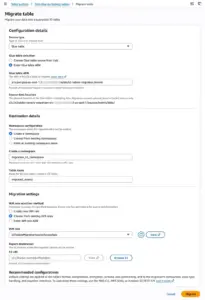
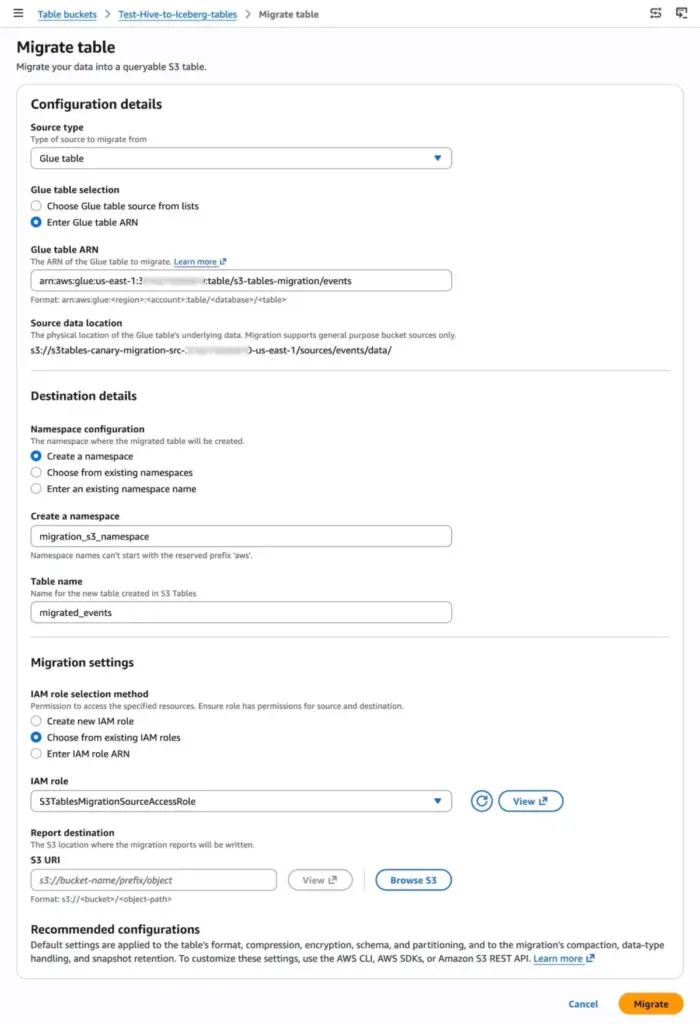
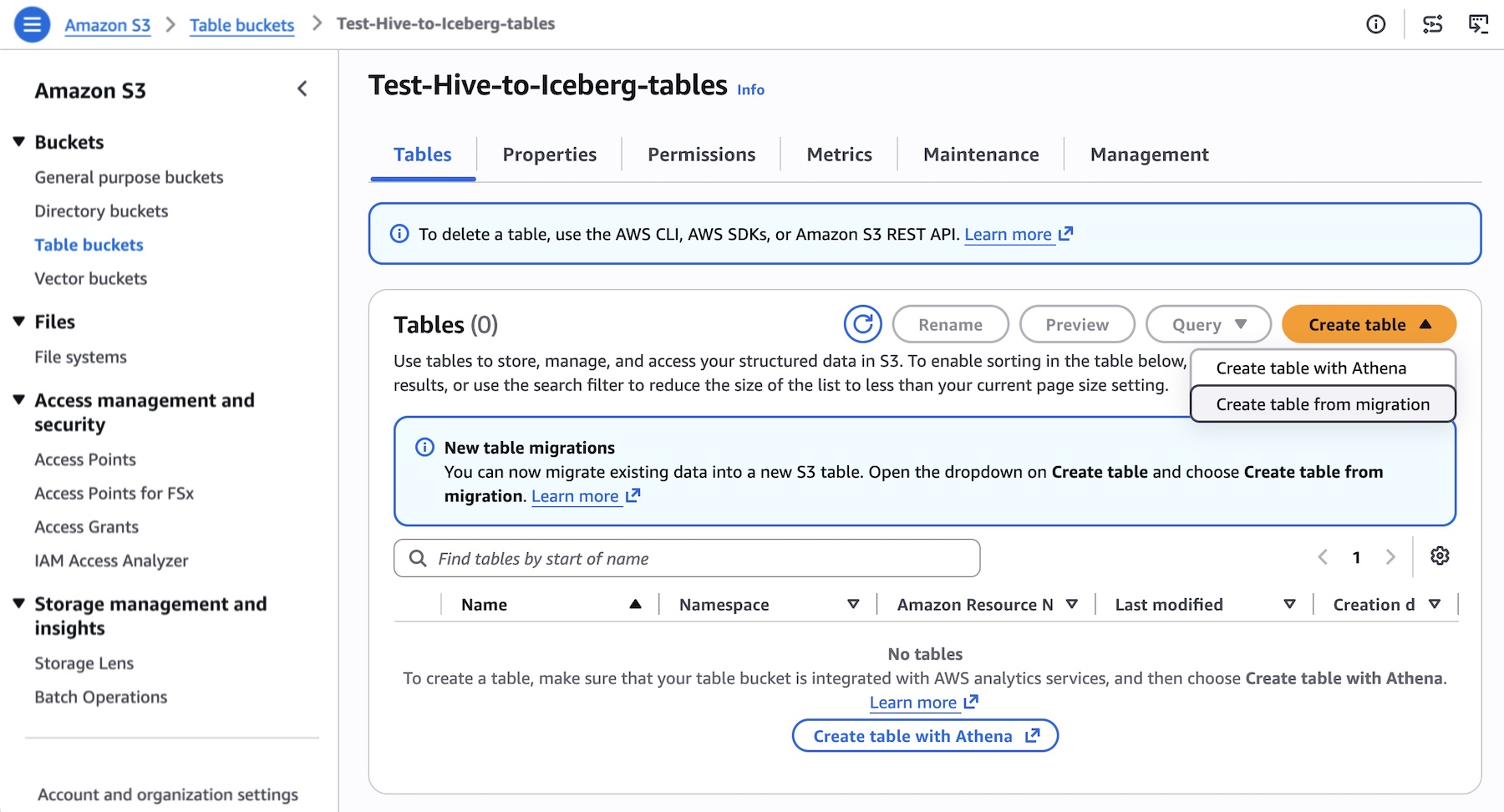
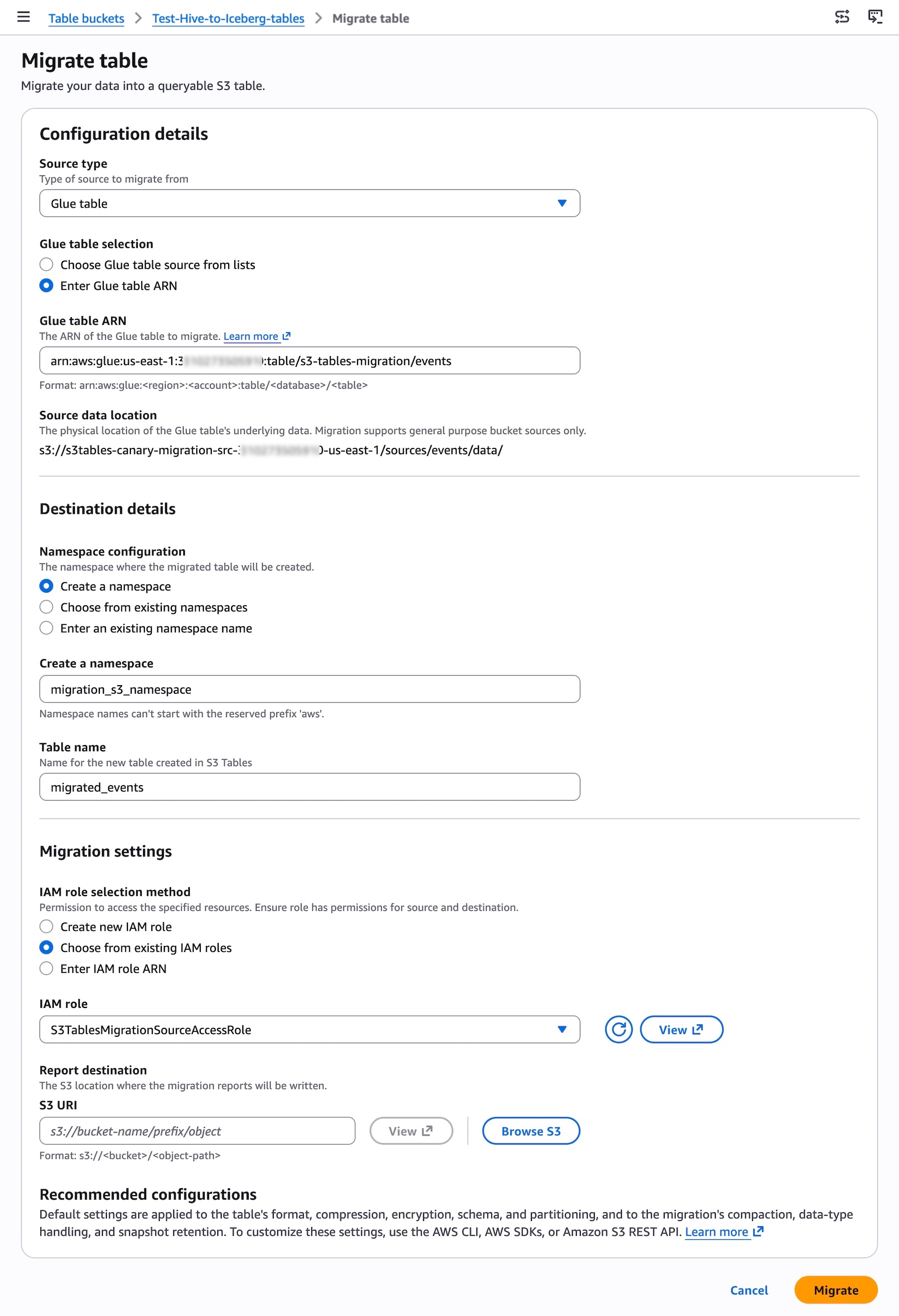
For those looking to adopt this new capability, the entry point is the Amazon S3 console. The process begins by selecting the target bucket and choosing the option to "Create table from migration." From there, users define a namespace and table name, at which point the system applies recommended default settings optimized for query performance.
The integration extends across the broader AWS ecosystem. Once the migration is complete, the destination table is immediately available for querying through Amazon Athena and Amazon SageMaker Unified Studio. For developers who prefer an infrastructure-as-code approach, the functionality is fully exposed via the AWS Command Line Interface (CLI), AWS SDKs, and the Agent Toolkit for AWS. The start-table-migration command allows for granular control over the process, including the ability to specify encryption configurations, storage classes, and complex schema definitions.
For organizations utilizing AI-driven development workflows, the introduction of the migrating-hive-tables-to-s3-tables skill in the Agent Toolkit for AWS offers an added layer of support. This skill provides step-by-step guidance and safety guardrails, allowing coding agents to assist in the migration process with a high degree of confidence. The inclusion of such tooling underscores AWS’s commitment to reducing the cognitive load on developers, even when dealing with complex, legacy-dependent migrations.
Availability and Future-Proofing
The managed migration service is available starting today across a wide range of AWS Regions, including US East (N. Virginia, Ohio), US West (Oregon), Asia Pacific (Mumbai, Singapore, Sydney, Tokyo), and Europe (Frankfurt, Ireland, Stockholm). At this launch phase, the feature supports AWS Glue-registered Hive tables that are stored in Parquet format, provided the source and destination are within the same AWS account and region.
As companies continue to grapple with the demands of AI and machine learning, the need for clean, performant, and flexible data lakes has never been greater. Apache Iceberg has become a cornerstone of this requirement, and by simplifying the transition to this format, AWS is enabling a broader segment of the market to benefit from the advanced analytics capabilities of the modern cloud.
For teams currently managing large, legacy Hive datasets, this update provides a clear and reliable roadmap for the future. By combining the power of the Iceberg format with the managed, automated, and cost-effective nature of Amazon S3 Tables, AWS is providing a solution that balances the need for rapid modernization with the necessity of operational stability. Users are encouraged to explore the documentation, leverage the available AI-driven migration tools, and provide feedback through the AWS re:Post community or standard support channels to help guide the future evolution of this service.