








In the fast-paced world of cloud computing, the mandate for developers has shifted. It is no longer just about the raw power of the underlying compute; it is about the friction—or lack thereof—between a developer’s local code and a production-ready application. Over the past week, Amazon Web Services (AWS) has underscored this transition by focusing on the removal of architectural barriers, allowing existing codebases to move to the cloud with minimal refactoring, while simultaneously addressing the complex challenge of maintaining control over increasingly autonomous AI agents.
The Evolution of Lambda: Introducing Web Functions
The most significant headline from the past week is the introduction of AWS Lambda Web Functions. For years, the serverless paradigm required developers to adapt their code to fit the event-driven model of AWS Lambda. This often meant wrapping standard HTTP servers—like those built with Express, Hono, Fastify, or Next.js—into specialized event handlers to translate incoming requests. While effective, this process introduced a layer of architectural overhead that could complicate migrations and maintenance.
AWS Lambda Web Functions fundamentally changes this equation by providing a new form factor that allows developers to run a standard HTTP web application on Lambda without the need for adapters. The workflow is designed for velocity: a developer takes their existing port-listening server, executes a simple aws lambda-web deploy command, and receives a live, production-ready HTTPS URL in under a minute. By removing the need for preliminary infrastructure setup or framework-specific lock-in, AWS is aiming to make the transition from local development to global deployment nearly seamless.
This update effectively expands the Lambda ecosystem to three distinct form factors, all powered by the same Firecracker microVM isolation technology. Developers can now utilize Event Functions for traditional asynchronous processing, Web Functions for user-facing layers, and MicroVMs for stateful sandboxes that require the execution of untrusted code. These models can be composed within a single application, providing a level of architectural flexibility that was previously more difficult to achieve in a serverless environment.
Beyond the ease of deployment, the underlying mechanics of Web Functions offer notable efficiency improvements. Each execution environment is capable of handling up to 128 concurrent requests. This design shift is significant because it allows a burst of traffic to share warm environments, moving away from the traditional model that mapped a single request to a single execution environment. Furthermore, billing for these functions is based on the actual CPU time consumed by the code rather than the total wall-clock time. For developers building API backends, server-side rendering, or inference endpoints that stream tokens—processes where a significant portion of time is spent waiting for I/O—this change in billing logic could lead to meaningful cost optimizations.
To support global scale, the aws lambda-web deploy command now includes a --regions flag, allowing for the replication of code and configuration across multiple geographic regions with latency-based routing, all managed behind a single global URL. Developers also gain the ability to split traffic across different revisions using weighted routing, which is a critical feature for safe canary rollouts. Currently available in five regions and supporting Node.js 24 on Arm64 with VPC connectivity, this launch represents a major step forward in making serverless platforms feel more like traditional web server environments. Furthermore, Amazon CloudFront now supports Web Function endpoints as origins, complete with origin access control, ensuring that security and performance remain at the forefront of this new development model.
Trust in Depth: Governance for Autonomous Agents
While the debut of Web Functions simplifies the deployment of code, the industry is simultaneously grappling with the increasing autonomy of artificial intelligence. As agents are given the capability to perform more complex, multi-step tasks, the traditional approach of having a human "in the loop" for every decision has become a bottleneck. At small scales, human oversight is manageable; however, as the volume and speed of agent interactions grow, human reviewers often become overwhelmed, leading to the "rubber-stamping" effect where errors are missed.
In a compelling exploration of this challenge, AWS has outlined a framework titled "Trust in Depth," which advocates for moving away from constant human oversight toward a more robust, policy-driven approach. The core of this strategy involves four fundamental questions that must be answered at four distinct moments: scope, know, bound, and observe. This methodology seeks to define exactly what an agent is permitted to do, how it understands its environment, the boundaries within which it operates, and how its actions are monitored.
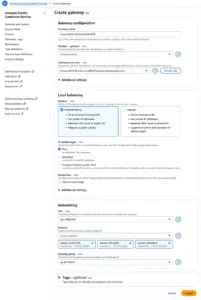
The most critical takeaway from this approach is the physical separation of the agent from the controls that govern it. AWS argues that the limits placed on an agent must exist outside of the agent’s own reasoning process. By utilizing Amazon Bedrock AgentCore, organizations can enforce policies at the gateway level. Because an agent cannot override or "turn off" a control that it does not possess the authority to run, this architecture ensures that guardrails remain intact even if the agent encounters an unexpected scenario or an adversarial prompt.
This emphasis on automated reasoning is not new to AWS, which has utilized these principles to secure services like AWS Identity and Access Management (IAM) for over a decade, processing more than 2.1 billion requests per second. The current evolution of this strategy involves applying that same rigorous logic to the rules that govern AI agents. By pointing automated reasoning tools at the policies defined for agents, organizations can achieve a higher level of confidence in their AI deployments, allowing them to scale autonomy without sacrificing control or security.
Connecting and Building in the Cloud
As the AWS ecosystem continues to evolve, the importance of community and shared knowledge remains a constant. For builders looking to deepen their expertise, the AWS Builder Center provides a hub for connecting with other developers, sharing solutions, and accessing content that is specifically designed to support modern development workflows.
The landscape of cloud development is changing rapidly, driven by the dual pressures of simplifying deployment and enhancing security in the era of autonomous agents. Whether through the streamlined delivery of web applications via Lambda Web Functions or the implementation of "Trust in Depth" policies for AI, the focus remains on enabling developers to focus on the value they provide rather than the underlying complexity of the infrastructure. As these services mature and the community continues to share best practices, the distance between an idea and a live, secure application will likely continue to shrink. For those following the latest developments, the "What’s New with AWS" page remains the primary source for full technical documentation on these and other ongoing updates as they roll out across the global infrastructure.