








For the better part of three decades, the professional life of a software engineer has been defined by a familiar, tactile ritual: the setup of a high-performance workstation, a complex arrangement of monitors, and a sprawling, browser-tab-heavy environment. We have spent our careers learning to "speak computer"—mastering obscure command-line flags, memorizing intricate IDE shortcuts, and adapting our cognitive processes to the rigid limitations of the machine. The tools have evolved from simple text editors to sophisticated integrated development environments (IDEs), but the fundamental relationship between the human and the machine has remained largely transactional. Developers issue commands, and the machine executes them.
Today, that relationship is undergoing a profound transformation. The rise of artificial intelligence is not merely a new layer of tooling; it is a fundamental shift in how software is conceptualized and built. We are moving away from an era of manual, tool-based operation toward an era of intent-based expression. In this new paradigm, the developer acts less as a manual operator of software tools and more as a director of an intelligent, agentic system.
The Shift from Command to Intent
The core of this evolution lies in the capabilities of modern AI systems, particularly those integrated into platforms like GitHub Copilot. Previously, AI assistance was limited to autocomplete functions or small snippets of code generation. Today, however, the system possesses a deeper, more systemic awareness. It can analyze an entire repository, understand complex dependencies, plan multi-stage development tasks, execute shell commands, inspect failures, and iterate on solutions—all while operating within the safety boundaries defined by the human developer.

This advancement allows for a different kind of workflow. A developer can now describe a high-level outcome, and the coding agent will handle the heavy lifting: gathering necessary context from the repository, inspecting relevant symbols, drafting code, running local tests, and revising the implementation until it meets the desired specifications. In IDE "agent mode," this loop becomes interactive and dynamic. For instance, a GitHub Copilot coding agent can take a specific issue, work within an isolated, GitHub Actions-powered environment, and return a completed pull request ready for human review.
This is not simply about writing code faster; it is about making human intent executable. The developer remains firmly in control of the outcome, but the nature of the labor has shifted. We are spending significantly less time navigating the mechanics of our tools—opening files, searching through documentation, or wrestling with environment configurations—and more time setting the strategic direction, defining constraints, and reviewing the evidence of success.
The Rising Value of Human Judgment
As the mechanics of coding are increasingly delegated to intelligent agents, the role of the developer is becoming more, not less, vital. When an AI can generate three different architectural implementations before a developer finishes their morning coffee, the value of the human contribution changes. It is no longer just about the ability to write syntax; it is about the ability to exercise judgment.
In this new environment, taste, architectural vision, and critical thinking are at a premium. An agent might propose a solution, but a human must decide if that specific abstraction is appropriate for the long-term maintainability of the codebase. A developer must evaluate whether a migration is truly safe, whether the generated tests provide actual coverage, and whether the proposed result genuinely solves the underlying customer problem.
This is perhaps the most significant change in the craft of software engineering: the developer remains the final arbiter of accountability. We are delegating the mechanics of building, but we are retaining the responsibility for the product. This shift places a higher value on the developer’s ability to understand the structure of complex systems, the needs of the user, and the nuance of what a "good" solution should feel like.
Ambient Intelligence and the Future of the Workflow
To maximize the potential of these tools, the industry is moving toward embedding AI directly into the development workflow, rather than treating it as an external plugin or a separate assistant. The goal is to create an "ambient intelligence"—a system that is context-aware, persistent, and seamlessly integrated into the developer’s environment.
Achieving this requires a high degree of "portable context." Technologies like the Model Context Protocol (MCP) are essential here, as they allow agents to securely connect to a wide array of tools and services. Furthermore, by encoding organizational conventions into repository instructions and using automated hooks to enforce policies and validate outputs, we can ensure that agentic work remains consistent with team standards.
This new workflow can be broken down into three functional layers. The first is modality, which captures the developer’s intent, whether through text, voice, or other inputs. The second is the harness, which provides the planning and acting capabilities needed to execute that intent. The third is the control plane, which allows the developer to inspect, redirect, and ultimately approve the work. The most successful products of the future will connect these three layers without forcing the developer to surrender their oversight.
The Resurgence of Physical Controls
As we move toward these more agentic workflows, the reliance on the keyboard and terminal alone is being challenged. The maker community has long been experimenting with ambient, physical control devices—from repurposed picture frames to custom-built ESP32-based hardware. These experiments suggest that we are ready for interfaces that move beyond the screen.
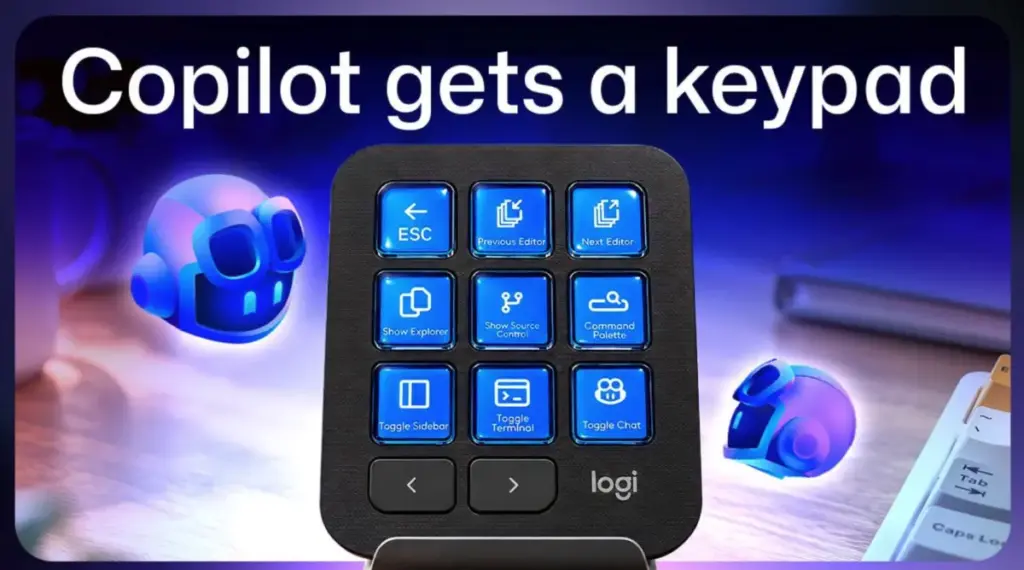
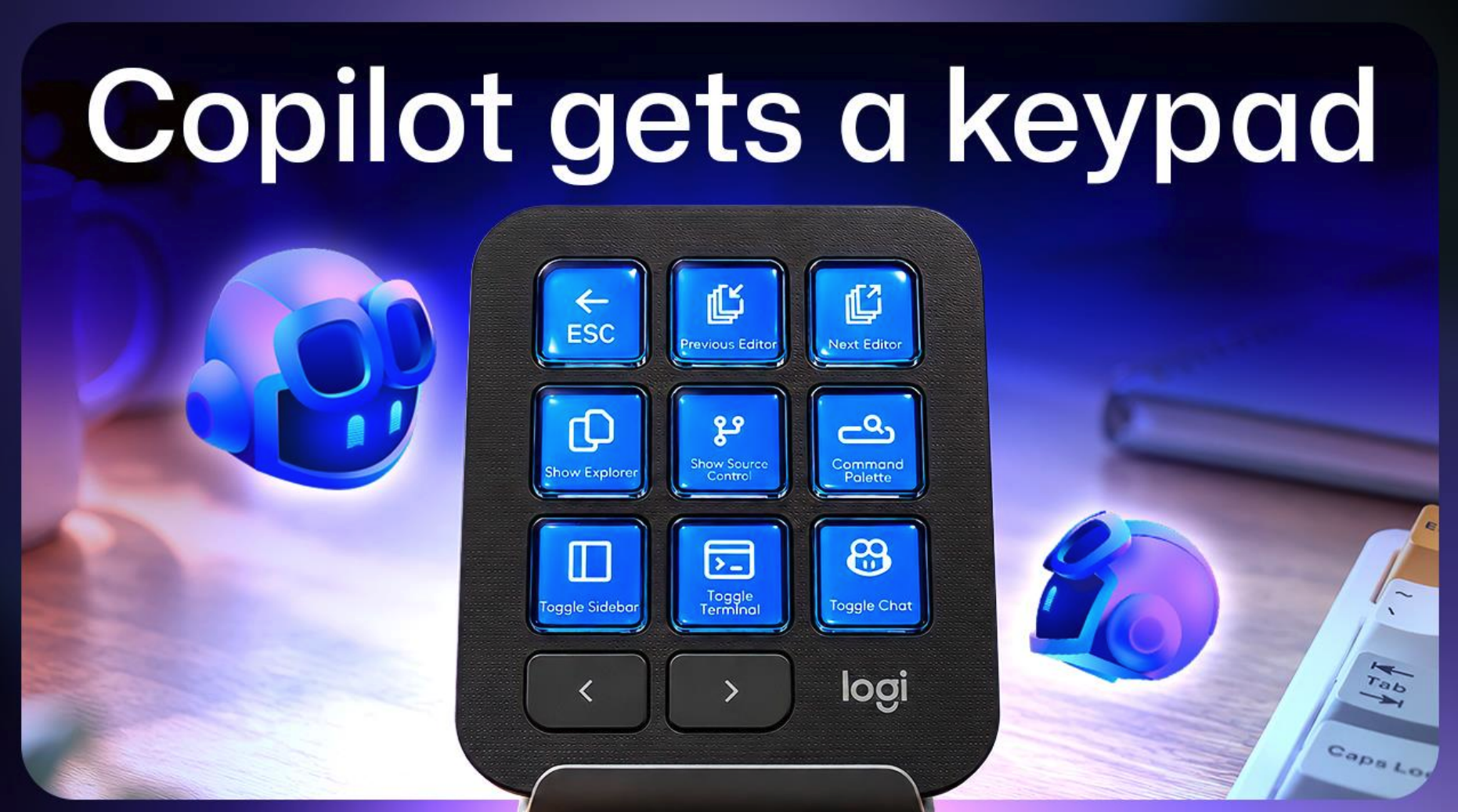
To this end, there has been a concerted effort to explore how physical hardware can bridge the gap between human intent and machine execution. Working with Logitech on their MX Keypad has provided a practical, tangible way to investigate this. The device turns familiar, repetitive developer actions into programmable, contextual inputs. A single key can trigger a complex, multi-step sequence: opening a Copilot session, submitting a parameterized prompt, or invoking an IDE command.
This hardware earns its place on the desk only when it reduces friction enough to keep the developer in a state of "flow." Not every action requires a physical shortcut, and not every interruption justifies a dedicated key. However, for those tasks that repeat frequently—such as starting a new agentic session or triggering a specific testing routine—physical controls provide a way to interact with the system without breaking focus. The developer ultimately decides which actions are worth the real estate of a physical key.
Looking Ahead: The Interface in the Background
The collaboration with Logitech, which integrates the GitHub Copilot app directly into the MX Keypad experience, serves as a practical experiment in this evolving interface. It allows developers to test in real-time how they prefer to invoke, steer, and resume agentic work.
This field is still in its infancy, and the industry is currently grappling with critical engineering questions. How much context should an agent retain across sessions? Which tool calls should be permitted to run automatically, and which require explicit confirmation? How do we safely manage secrets, credentials, and network access in an agentic environment? And, as we begin to deploy multiple agents, how do we ensure they coordinate effectively rather than creating conflicting pull requests or redundant work?
For decades, developers were forced to adapt their cognitive processes to the limitations of computer interfaces. We learned the syntax, the APIs, and the "incantations" necessary to make software work. Now, the trajectory is reversing: computers are finally getting better at meeting us halfway. The most effective interfaces of the future will not be those with the most buttons or the most complex dashboards; they will be the ones that understand enough context to preserve meaningful human control, while quietly getting out of the way to let us focus on building the software that truly matters.
The ultimate objective is not to remove the developer from the equation, but to remove the friction that surrounds the work. By pairing physical controls with sophisticated AI agents, we can begin to see a future where the interface moves into the background, allowing the craft of software development to return to what it has always been: the expression of human intent through technology. For those interested in exploring this shift, the integration of the MX Keypad with GitHub Copilot Pro+ provides a starting point to identify those repetitive, focus-draining interruptions and reclaim the time needed for higher-level problem solving.