











The landscape of software security is undergoing a fundamental transformation as artificial intelligence shifts from a theoretical asset to a practical, frontline tool for vulnerability research. The GitHub Security Lab has recently taken a significant step forward in this domain with the release and implementation of the GitHub Security Lab Taskflow Agent. This open-source framework is designed to empower security researchers to automate, package, and distribute the specific AI prompts and research workflows that prove effective in identifying security flaws. By guiding large language models (LLMs) through incremental, logical steps, researchers are now uncovering complex vulnerabilities that might otherwise evade traditional automated scanning tools.
The core philosophy behind this initiative is to move beyond the limitations of standard static analysis. While modern AI models have become increasingly adept at understanding source code, they are most effective when they are guided by structured taskflows. These taskflows break down the daunting process of code auditing into manageable, logical segments. This granular approach allows the model to maintain focus on specific attack surfaces, enabling it to detect sophisticated logic flaws that are often missed by broader, non-specific scans.
To date, this methodology has proven remarkably effective, with security researchers using these specialized taskflows to identify and report more than 24 unique vulnerabilities across various Android applications. These findings are not merely minor glitches; they include high-impact issues that could have serious implications for user privacy and data security.

Refining Audit Taskflows for the Android Ecosystem
While the framework’s underlying taskflows are versatile, the unique architecture of Android applications requires a more tailored approach. Recognizing this, the research team implemented specific enhancements to the taskflows to better account for the nuances of mobile development. One of the primary additions was the introduction of a dedicated taskflow for gathering mobile entry point information. In any application, an entry point is a potential gateway for malicious activity—a location where data from an external, potentially untrusted source can enter the system. By distinguishing between mobile-specific entry points and general-purpose code, the AI can better understand the unique attack surface of a mobile application, whether the repository contains a standalone mobile app, a web server, or a desktop client.
Furthermore, the team significantly updated the classification logic used by the AI agents. By explicitly defining a list of popular vulnerability classes relevant to the Android environment, researchers can ensure that the LLM maintains a constant focus on critical areas like intent-based vulnerabilities, confused deputy attacks, and insecure broadcast handling. This structured guidance is crucial because LLMs are inherently non-deterministic. By combining a strict, predefined check-list with the model’s inherent creative reasoning, the framework achieves a balanced audit: the strict prompt ensures that obvious, common vulnerabilities are not overlooked, while the broader, creative phase allows the AI to explore more complex, interconnected flaws.

Real-World Impacts: Tracking and Takeovers
The effectiveness of these AI-powered taskflows is best illustrated by the vulnerabilities they have already helped identify. One notable discovery involved OsmAnd, a widely used open-source navigation application with over 10 million downloads on the Google Play Store. The security audit revealed a vulnerability that could allow a malicious third-party application to track the real-time location of the user.
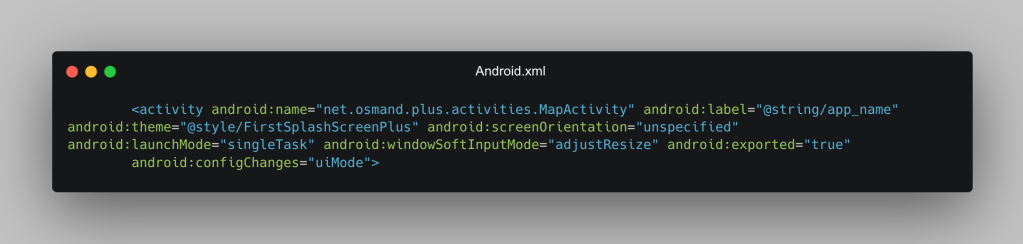
The issue stemmed from an exported "MapActivity" within the application. In Android development, an exported activity is a UI component that can be launched by other applications installed on the same device. The investigation found that the application improperly handled intent extras—key-value pairs of data attached to messaging objects. Because Android does not provide a native mechanism to restrict which extras an external caller can attach to an intent, any malicious app could send specifically crafted data to the OsmAnd activity. By exploiting this, researchers found they could silently import malicious settings, including the ability to overwrite the application’s map tile URLs. By redirecting these requests to an attacker-controlled server, a malicious actor could capture the x and y coordinates of every tile the user loaded, effectively mapping their movements and routes without the user ever realizing their settings had been altered.
A second critical finding involved the Wikipedia Android app. Researchers discovered a logic bug within the application’s hostname parser that handled deep links. The application was designed to register a hook for "wikipedia://" links to facilitate internal browsing, but the flawed parser allowed for the loading of non-Wikipedia URLs. By exploiting this, an attacker could redirect users to a malicious website that mimicked the appearance of a legitimate Wikipedia page. Furthermore, the researchers discovered that by chaining this with a second vulnerability—a flaw in how the app managed cookies for specific domains—they could effectively execute an account takeover. This highlighted that even in robust, well-maintained applications, AI agents are capable of uncovering complex, multi-stage vulnerabilities that require a deep understanding of application logic.
The Challenges of AI-Driven Security Research
Despite these successes, the research team is quick to note that AI-assisted security is not a "set it and forget it" solution. A recurring challenge is the discrepancy between a model’s ability to identify a vulnerability and its ability to accurately estimate the severity of that vulnerability. AI agents frequently flag issues that, while technically vulnerabilities, may require extremely specific, unlikely environmental conditions to be exploited in the real world.
Moreover, the assessment of severity is often complicated by mitigating factors. For instance, an AI might flag a path traversal vulnerability in an app that uses external storage, failing to recognize that internal security measures might render the finding effectively harmless. These false positives necessitate the continued involvement of human security researchers. The team suggests that the most effective way to mitigate these errors is to task the AI with generating a proof-of-concept (PoC) alongside its discovery. Forcing the model to attempt an exploit provides a more realistic view of the risk, though it does consume significant computational resources and time.
The researchers also observed that the AI’s deep knowledge of API behavior is a significant asset. Much like a human expert who understands the nuances between safe and unsafe functions, the LLM demonstrated an impressive ability to identify dangerous code patterns across various programming languages. This deep-seated knowledge often allowed for the creation of PoCs that required minimal intervention from the researchers, showcasing the potential for AI to act as a force multiplier for security teams.
The Future of AI in Open Source Security
As of now, the project has successfully identified 24 vulnerabilities, ranging from simple path traversals to complex account takeovers. These findings reinforce the belief that AI-powered security research is one of the most promising avenues for securing the vast ecosystem of open-source projects. Whether applied to web, mobile, or desktop applications, these automated agents are providing maintainers with a way to proactively identify risks that might otherwise remain hidden.
For developers and maintainers interested in leveraging this technology, the seclab-taskflow-agent is available as an open-source tool. While it does require a GitHub Copilot license and can be resource-intensive, it offers a pathway to integrating advanced security auditing directly into the development lifecycle. The team behind the project emphasizes that security should remain a top priority for all open-source contributors, and they view AI as an essential component of the future security toolkit. By running these taskflows against their own projects, developers can take the first, proactive step toward a more secure digital future, transforming how we approach the defense of open-source software in an increasingly complex threat landscape.