








In a decisive move to disrupt the financial infrastructure supporting Russia’s wartime economy, the United Kingdom has formally issued economic sanctions against Cryptomus, a notorious cryptocurrency platform long suspected of acting as a critical conduit for illicit financial activities. The sanctions, announced on October 8, represent a significant escalation in international efforts to combat the use of virtual assets for ransomware, narcotics trafficking, darknet market operations, and various forms of high-stakes fraud. By targeting Cryptomus and its associated entities, the U.K. government aims to sever a primary financial artery that has helped Russia circumvent global economic restrictions.
The U.K. sanctions package imposes an immediate freeze on any assets held by Cryptomus within British financial institutions. Furthermore, the directive strictly prohibits any U.K.-based company or individual from engaging in business with the platform, whether through virtual asset services or traditional financial transactions. Beyond the primary target, the government also extended its punitive measures to include several other virtual payment platforms, specifically naming VexPay, TokenSpot, and the Tsunami Payments service, signaling a broader crackdown on the ecosystem that facilitates illicit cross-border money flows.
Cryptomus has established a reputation as a "chameleonic" operator, frequently rebranding to evade regulatory scrutiny and law enforcement actions. Historically known as Certa Payments and Xeltox Enterprises, the platform has consistently demonstrated an ability to adapt its corporate identity while maintaining its core functionality as a payment processor for Russian cryptocurrency exchanges and websites hawking cybercrime services. Its most recent transformation, according to investigators, involved the launch of a parallel service dubbed "Heleket" following a record-setting CAD $176 million fine levied by Canadian authorities in 2025 for severe anti-money laundering violations.
The blockchain analytics firm Chainalysis has emphasized that the U.K. sanctions are not merely a strike against a single company, but a targeted intervention against the broader infrastructure propping up Russia’s economic stability amid ongoing international pressure. In a post-sanction analysis published on October 8, Chainalysis noted that Cryptomus and Heleket had morphed into major hubs for illicit activity. The firm’s data suggests that the volume of illicit funds processed through these services surpassed that of traditional mixers, with the number of identified illicit counterparties surging to more than 900 in a single month during late 2025.
The scale of the platform’s operations has been staggering. In April 2026, the blockchain intelligence firm TRM Labs released findings indicating that Cryptomus had processed more than $7 billion in transactions since its inception in 2022. This enormous financial throughput included funds linked to high-risk categories such as human trafficking operations, terrorist financing networks, and the distribution of child sexual abuse material. TRM Labs’ investigation further revealed that while Cryptomus’s transaction volume experienced a decline after the platform implemented "know your customer" (KYC) requirements, the launch of Heleket provided a convenient, no-KYC alternative that allowed illicit actors to continue their operations with minimal friction.

For investigators who have spent years mapping the dark corners of the digital economy, the U.K. intervention is a welcome shift in strategy. Richard Sanders, a blockchain analyst and investigator who has spent months analyzing the payment infrastructure and transacting with the platform’s users, noted that while the Canadian fine was historically significant, it lacked the teeth required to actually halt operations.
"A fine doesn’t stop a cryptocurrency payment processor from processing payments," Sanders remarked in a recent LinkedIn post. "Sanctions kill the operation. The distinction matters."
The persistent nature of these platforms has been underscored by their reliance on opaque corporate structures. Previous investigations into Cryptomus revealed that it shared a Vancouver address with a multitude of other foreign currency dealers and money transfer businesses, many of which appeared to be little more than shell entities with no physical presence at the registered location. Even after the massive Canadian fine, the platform remained operational, actively appealing the penalty while simultaneously spinning up the Heleket service to maintain its illicit revenue streams.
The U.K. sanctions are particularly notable for their geopolitical implications. According to analysts, this marks the first time a "Five Eyes" nation—comprising the United Kingdom, the United States, Canada, Australia, and New Zealand—has sanctioned a cryptocurrency operation that was incorporated within another Five Eyes jurisdiction. This suggests a heightened level of intelligence sharing and regulatory coordination aimed at closing the loopholes that platforms like Cryptomus have exploited to operate with a degree of impunity.
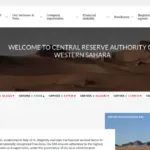
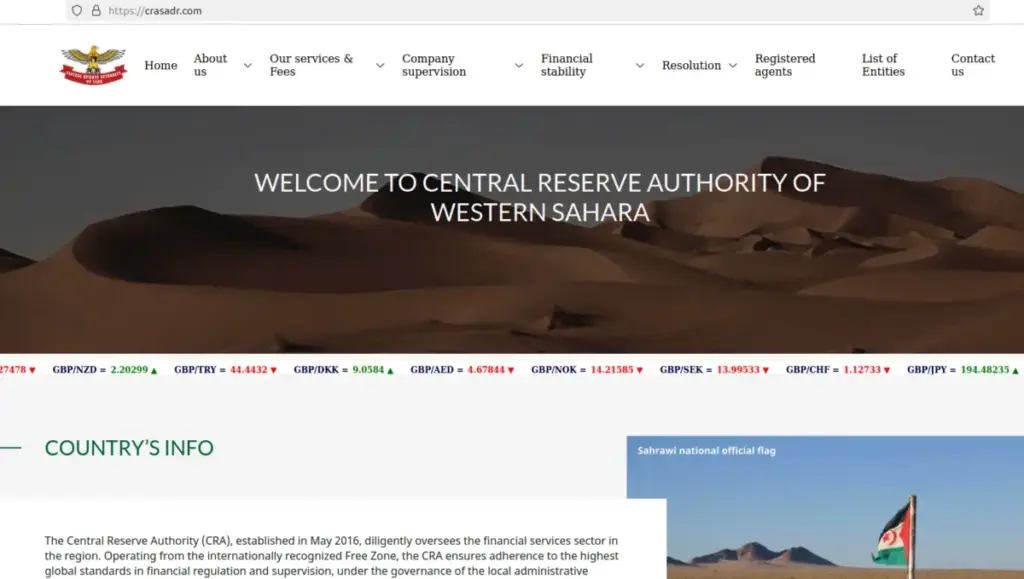
The source of authority for these platforms has long been a subject of intense scrutiny, leading investigators to uncover a bizarre web of fake regulatory bodies and phantom financial institutions. The parent company of Cryptomus, Certa Payments, was found to have as its sole shareholder a 25-year-old Ukrainian woman who also directed several other firms, including the WS Management and Advisory Corporation. This organization presented itself as the primary regulatory body for cryptocurrency, foreign exchange, and online gaming businesses operating in the Western Sahara, a disputed region in northwest Africa.

The legitimacy of this regulatory oversight is, by all accounts, entirely fabricated. The website for this body, crasadr.com, marketed services ranging from bank setup and formation to the licensing of online gaming and foreign exchange brokers. Further technical investigation revealed that one of Certa Payments’ former web domains shared a server with over a dozen other sites, including rasd-state.ws—a domain masquerading as the official site for the "Central Reserve Authority of the Western Sahara."
The fallout from the U.K. sanctions was immediate. On the day the announcement was made, users of the Cryptomus platform reported widespread disruptions, with the company’s automated support bot on Telegram informing inquiries that the platform was suddenly unable to process transactions. This breakdown in service reflects the effectiveness of the sanctions in cutting off the platform’s access to the essential financial rails required for global liquidity.
As the international community continues to tighten the noose around entities that provide critical support to sanctioned regimes, the case of Cryptomus serves as a stark reminder of the challenges posed by the intersection of digital finance and state-sponsored illicit activity. While the platform has proven adept at reinventing itself in the past, the combination of asset freezes, prohibitions on business, and enhanced cooperation between major global powers suggests that the era of operating with relative anonymity and impunity may be coming to a definitive close. Whether the operators behind Cryptomus and its successor, Heleket, will attempt yet another pivot remains to be seen, but the walls are closing in on the infrastructure that has long facilitated the movement of illicit wealth across international borders.