






As the global space industry moves rapidly beyond traditional exploration and communication payloads, a new frontier is taking shape in the vacuum of low Earth orbit and beyond. Spacecraft are no longer confined to solitary missions lasting from launch to de-orbit; instead, they are actively demonstrating cutting-edge capabilities such as autonomous rendezvous, complex on-orbit servicing, precise orbital transfer, proactive debris removal, and intricate robotic operations.
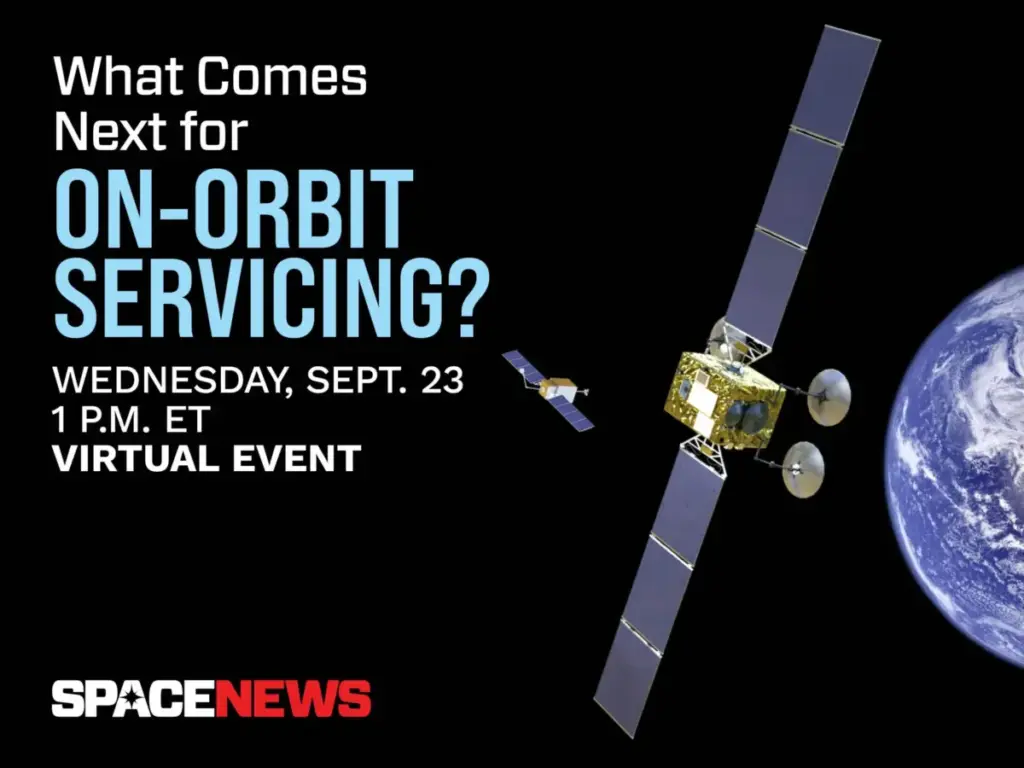
Yet, as these technological milestones transition from theoretical concepts to operational realities, the burgeoning in-space economy faces a critical series of operational, economic, and regulatory questions. To address these evolving challenges, industry leaders, policymakers, and commercial pioneers will gather for a dedicated virtual discussion hosted by SpaceNews on Wednesday, September 23, 2026, from 1:00 p.m. to 1:45 p.m. Eastern Time.
The upcoming virtual event, titled "What Comes Next for On-Orbit Servicing?", aims to cut through the industry hype to examine the practical milestones required to establish a fully functioning in-orbit logistics ecosystem. While early demonstrations have proven that spacecraft can successfully dock, refuel, and manipulate hardware in microgravity, stakeholders across the aerospace sector are increasingly focused on the commercial viability and operational framework of these services.
A central theme of the upcoming discussion will center on market maturity. As private ventures and defense contractors alike invest heavily in servicing infrastructure, industry analysts and corporate strategists are asking which specific markets will mature first. Will life-extension services for aging geostationary communication satellites drive early commercial revenue, or will active debris remediation capture the immediate attention of institutional and government customers? Understanding the commercial sequencing of these capabilities is vital for private investors looking to allocate capital effectively in a capital-intensive sector.

Compounding the economic equation is the pressing need for technical standardization. For an in-space servicing market to scale efficiently, vehicles built by different companies must be able to work together seamlessly. This requires universally accepted interface standards, docking mechanisms, refueling nozzles, and communication protocols. Without cross-industry interoperability, individual companies risk finding themselves siloed into proprietary ecosystems, potentially stunting the broader growth and resilience of the orbital economy.
Governments, particularly space-faring nations like the United States, also face a pivotal role in shaping this emerging domain. The event will explore how public policy and procurement strategies should evolve to encourage robust commercial investment. By acting as anchor tenants for early servicing missions, government agencies can de-risk innovative technologies and provide a stable baseline of demand that allows private companies to transition from experimental phases to self-sustaining commercial operations.
Beyond commercial applications, the conversation will expand to examine broader infrastructure needs across the space domain. This includes supporting the next generation of commercial space stations slated to replace the International Space Station, facilitating complex logistics for upcoming lunar exploration initiatives, and enabling significantly more resilient military operations in orbit. As space becomes an increasingly congested and contested environment, the ability to service, repair, relocate, and protect space assets on demand is rapidly transitioning from a commercial luxury to a strategic necessity.
Registration for the virtual event is currently open. Attendees who register through the official SpaceNews platform gain access to the live discussion as well as a recorded version, which will be made available shortly after the event concludes for participants who are unable to tune in during the live broadcast.