










The community surrounding Opensource.com is hard at work on something new. Visitors to the platform may have noticed that things have been uncharacteristically quiet lately, but that silence is a precursor to a major transition. Behind the scenes, a new project is actively in the works. While specific details regarding the initiative are still sparse and there are not many announcements to make at this exact moment, there is already plenty to talk about regarding the future of the platform and the broader movement it represents. To understand where the community is heading, organizers suggest starting with the foundational architecture of the entire internet itself.
The Internet, and Top-Level Domains
To appreciate the scope of the upcoming changes, it helps to look back at how modern digital infrastructure came to be. As most technology professionals know, the internet is fundamentally a network. By definition, a network is simply a group of interconnected connections. In fact, the word "internet" is a portmanteau derived from "interconnected" and "network."
In its earliest conceptual and operational stages, the internet consisted of just two primary networks: a military network and an academic network. These closed environments served specialized needs, but as the technology matured and gained popularity outside of those initial, highly controlled groups, it quickly became apparent that different designations were desperately needed. A mechanism had to be established to easily differentiate a commercial business entity from a charitable organization, a university, or a governmental department.


These critical designations eventually came to be known as top-level domains, or TLDs. Today, internet users can choose from a vast and diverse ecosystem of available TLD extensions. However, for a long time, the digital landscape was defined by only a handful of original options. Those original TLDs remain remarkably popular and culturally embedded in daily web usage. Most internet users instinctively understand that visiting a website ending in a .com address means they are navigating a commercial site, whereas landing on a .org address generally signals that they are visiting a non-profit organization. These suffixes serve as structural shorthand for the underlying intent and governance of the entities behind the screens.
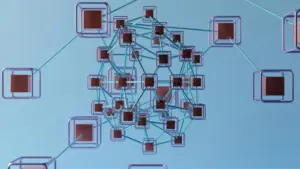
Open Source Is a Network
This structural division of the internet brings to light a deeper truth about the open source movement itself. Open source can manifest in many different forms and serve a multitude of functions. It can be commercial, it can be non-profit, it can be academic, or it can be entirely cultural. No matter what specific form it ultimately takes, however, open source is always, at its core, a network.
Sometimes that network is composed of physical computers and servers, but most importantly, it is a network of people. Whether individuals are gathering in person at a large international conference, meeting informally at a local pub, or collaborating asynchronously in an online chat room, open source is essentially a vibrant community of human beings working toward shared goals.

The website Opensource.com has spent the last 12 years being supported by a commercial entity. Yet, the people—referring directly to the readers, contributors, and participants who form the beating heart of the Opensource.com community—are not commercial entities. They are individual human beings with shared values regarding collaboration, transparency, and shared knowledge.
Organizers have indicated that in one month, Opensource.com is going to resolve that fundamental misalignment. The community and the platform are preparing for a shift, and readers are encouraged to stay tuned for further developments as the timeline unfolds.