










WASHINGTON — A key Senate panel is preparing to advance nominations for two critical leadership positions at the National Aeronautics and Space Administration, moving
the agency closer to filling long-vacant posts that oversee its financial stewardship and internal accountability.
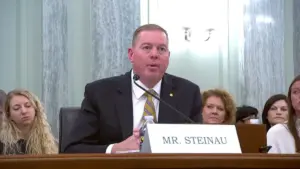
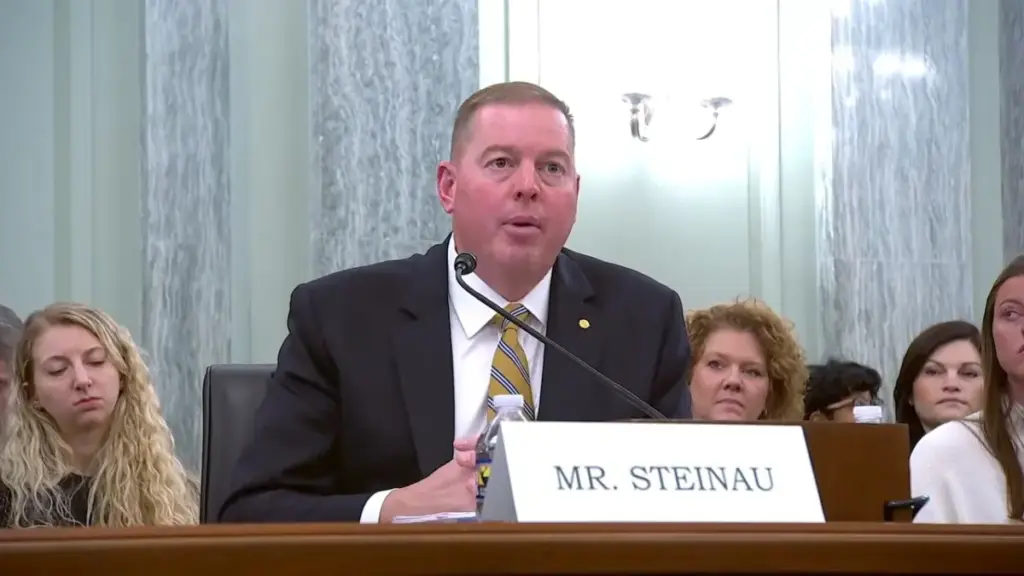
The Senate Commerce Committee held a hearing on November 10 to consider several high-profile administration nominations. Among them were Joshua Shoemaker, tapped to serve as NASA’s chief financial officer, and Robert Steinau, nominated to be the agency’s inspector general. These two positions represent half of the four leadership roles within the civilian space agency that require formal Senate confirmation, with the remaining two being the administrator and the deputy administrator.

Despite the critical nature of both offices, neither nominee faced intensive questioning during the hearing, which lasted just over an hour. Senators on the panel directed the bulk of their inquiries and attention toward a separate nomination: that of Danielle Thumann to serve as a member of the Federal Communications Commission.
Nevertheless, the proceedings provided a public platform for both Shoemaker and Steinau to outline their professional backgrounds and strategic visions for NASA at a time when the agency is managing ambitious exploration goals, massive budgetary allocations, and complex structural transitions.
Backgrounds of the Nominees

Shoemaker brings a mix of private sector accounting experience and government service to the table. A trained accountant, he has spent more than two decades working across corporate environments and within the Mississippi state government. More recently, his career has intersected with federal and political administration; since August, he has served as a senior adviser within NASA’s Mission Support Directorate. Prior to taking on that advisory role, Shoemaker worked as the controller for the Republican National Committee.
Steinau, meanwhile, brings deep institutional knowledge of NASA’s internal watchdog operations. His career with the federal government’s oversight bodies spans well over a decade, beginning in 2009 when he joined NASA’s Office of Inspector General. Since December 2024, he has served as the office’s senior official, guiding its operations in the absence of a Senate-confirmed inspector general. Before his long tenure at NASA, Steinau built his auditing and investigative resume working for the Department of Energy’s Office of Inspector General as well as the U.S. Secret Service.
Focus on Financial Accountability and Transparency
During his opening statement at the nomination hearing, Shoemaker emphasized that his core priorities if confirmed would revolve around strict financial accountability, enhanced visibility into the fiscal performance of individual NASA programs, clear and consistent transparency with Congress regarding budgetary execution, and the modernization of NASA’s aging financial systems.
"I believe the CFO has an important responsibility to give the administrator, NASA leadership, and Congress an honest and timely picture of the agency’s financial position," Shoemaker told the committee members.
He elaborated that this responsibility entails closely monitoring how specific programs are performing relative to their baseline budgets and established schedules, while simultaneously ensuring the most effective and efficient management of taxpayer resources.
When pressed by lawmakers during the question-and-answer period, Shoemaker maintained a cautious approach. He deferred questions regarding specific space programs, as well as inquiries concerning the proposed U.S. Space Academy—an initiative currently being studied by a presidential commission led by NASA. Shoemaker noted that final decisions regarding the physical location and implementation of the academy would ultimately rest with the president.

Addressing Critical Oversight Challenges
Steinau used his time before the Senate Commerce Committee to outline the primary operational and security hurdles currently facing the space agency. He identified three critical challenges that will demand rigorous oversight from the Office of Inspector General: the ongoing efforts to return human explorers to the moon under the Artemis architecture, the delicate transition from operating the International Space Station to utilizing commercial low Earth orbit destinations, and the ever-growing imperative of robust cybersecurity.
"NASA is moving with urgency, and it is imperative that accountability keep pace with ambition," Steinau stated, highlighting the delicate balance the agency must strike as it accelerates its human spaceflight and scientific exploration timelines.
Path Forward and Historical Vacancies
Following the conclusion of the initial hearing, the Senate Commerce Committee moved quickly. On November 11, the committee formally announced that it would convene on November 18 to hold a markup session and vote on the nominees considered on November 10. Should the committee approve Shoemaker and Steinau, their nominations will be cleared to advance to the full Senate for final confirmation votes.
The potential arrival of confirmed leadership comes at a notable juncture for the agency, which has faced extended periods without Senate-confirmed officials in these specific roles. NASA has operated without a confirmed chief financial officer since the beginning of the Trump administration in January 2025. Although the White House previously nominated Greg Autry for the position in the spring of 2025, that nomination was ultimately returned by the Senate without final action at the conclusion of the year.
Similarly, the inspector general’s office has lacked a Senate-confirmed leader since the departure of longtime Inspector General Paul Martin in late 2023, leaving career personnel to steer the independent oversight body through a period of intense activity and transformation across the aerospace sector.