






In the high-stakes theater of artificial intelligence, where multi-billion-dollar rivalries are fought over product launches, intellectual property, and market dominance, a new, peculiar development has emerged. On Tuesday, September 29, 2026, OpenAI officially unveiled its latest innovation: "Dots," an always-on AI agent characterized by its playful, bubbly, and blobby interface. While the tech giant positioned the release as a significant step forward in the evolution of personal AI assistants, the industry’s attention quickly pivoted from the product’s capabilities to a bizarre coincidence involving a domain name, a billionaire’s digital real estate, and the long-standing, often acrimonious rivalry between OpenAI and Elon Musk.
The intrigue centers on the domain name "dot.com." As observers began to digest the news of OpenAI’s new "Dots" platform, it was discovered that the specific domain "dot.com" is currently owned by xAI, the artificial intelligence company founded by Elon Musk. Far from being an inactive landing page, the domain currently serves as a direct redirect to the download page for Grok, the chatbot app developed by xAI. According to records from the Whois domain owner registry, the domain was transferred to its current owner as recently as July of this year, just months before OpenAI’s product reveal.
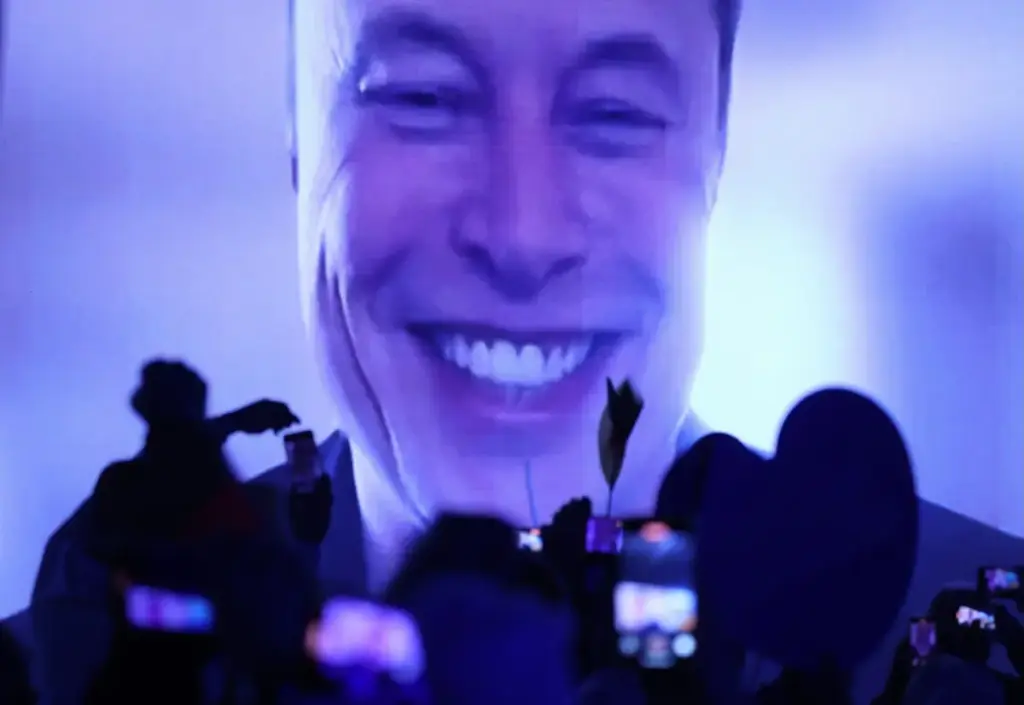
This development has set the tech community ablaze with speculation. Elon Musk, a co-founder of OpenAI who famously parted ways with the organization, has since become its most vocal critic. Having launched Grok as a direct competitor and engaged in unsuccessful, high-profile legal battles against his former venture, Musk is no stranger to public confrontations with OpenAI leadership. For many industry watchers, the ownership of "dot.com" by xAI feels less like a coincidence and more like a calculated, albeit humorous, maneuver in the ongoing "AI wars."

The Mechanics of the Speculation
While it is entirely possible that the acquisition of "dot.com" by xAI was driven by standard business logic, that explanation has gained little traction among tech enthusiasts. Domain acquisition is a common practice for major corporations; companies often buy short, memorable, or phonetically similar domains to capture traffic from typos or to secure branding real estate. It is theoretically plausible that xAI purchased "dot.com" because the term "dot" could be a common typo for "bot," allowing the company to siphon errant traffic toward its Grok product.
However, a closer look at the domain landscape suggests a more intentional motive. If xAI were truly interested in acquiring domains to capture common typos, they would logically have secured others—such as "bot.com"—which remains outside their portfolio. Furthermore, other domains like "vot.com" are currently listed for sale, indicating that a strategic "typo-squatting" campaign is not necessarily the primary objective.
The prevailing theory, which has gone viral across social media platforms, is that Musk and his team, privy to the internal product roadmap or the naming conventions of his former company, preemptively secured the domain to complicate OpenAI’s branding efforts. In the digital age, where a product’s success is often tied to its accessibility and online presence, owning a domain that closely matches a rival’s product name is a classic, if petty, power move.
The speculation reached a fever pitch following a post by the anonymous X user and prominent xAI observer @birdabo, who identifies as the "chief shitposting officer" for @SpaceXAI. The user was among the first to highlight the redirect to the Grok download page, triggering a wave of engagement from followers who found the irony of the situation impossible to ignore. Whether the timing was a stroke of genius or merely a fortuitous accident remains unknown, but the circumstance has added a layer of spectacle to what would otherwise be a routine product launch.

The Broader Context of the Rivalry
To understand why a domain name has become a focal point of industry discourse, one must look at the fractured relationship between Elon Musk and OpenAI. Since his departure from the organization in 2018, citing conflicts of interest and disagreements over the company’s transition toward a for-profit model, Musk has remained an adversarial figure. His subsequent launch of xAI and the development of Grok were, in his own words, aimed at providing an alternative to what he characterized as the "woke" and "closed" nature of OpenAI’s models.
The tension has manifested in various ways: public criticisms on X, legal filings alleging that OpenAI abandoned its mission to benefit humanity for the sake of profit, and a constant, competitive push to iterate faster than his former colleagues. In this context, the "Dots" domain situation serves as a microcosm of their relationship. OpenAI, currently the market leader in consumer-facing AI, is attempting to move toward more autonomous, "agentic" products, while Musk’s xAI is betting on a personality-driven, unrestricted model.
The fact that OpenAI chose the name "Dots" for its bubbly, always-on agent suggests a desire to lean into a friendly, approachable aesthetic. However, the lack of control over the "dot.com" domain creates an immediate branding hurdle. If a user tries to type in the most obvious URL associated with the new product, they are redirected to the doorstep of the competition.
What Lies Ahead for the ‘Dots’ Branding
Interestingly, the domain "dots.com," which would be a more precise match for the product name, is currently held by a long-defunct company. This leaves the door open for further maneuvering. Should OpenAI seek to acquire it, they would likely face the standard hurdles of domain acquisition—negotiating with current holders, navigating the secondary market, and dealing with potential premium pricing.
If this were indeed a "revenge prank" orchestrated by the xAI team, the acquisition of "dot.com" would likely be viewed by Musk’s supporters as a brilliant tactical strike. In the world of tech, where attention is the ultimate currency, the ability to pivot the conversation from OpenAI’s new features to a funny, embarrassing anecdote about domain ownership is a significant victory for xAI’s brand awareness. It keeps Grok in the conversation, links the two companies in the minds of the public, and portrays Musk as the disruptive, unpredictable force he has always sought to be.
For now, OpenAI has not publicly commented on the domain situation, likely preferring to focus on the technical merits and user reception of the "Dots" platform. The product itself, described as an "always-on" agent, is meant to represent a shift toward AI that exists alongside the user throughout their day, rather than merely responding to episodic prompts. It is a bold vision for the future of human-computer interaction, one that the company hopes will redefine how users interact with their digital environments.
As the industry continues to monitor the rollout of "Dots," the domain drama serves as a reminder of the personal stakes involved in the development of artificial intelligence. It is a space where professional ambitions are inextricably linked with personal histories, and where a simple domain redirect can become a symbol of a much larger, more complex, and deeply personal battle for the future of technology. Whether this leads to a resolution or simply more digital skirmishes, one thing is certain: the rivalry between OpenAI and Elon Musk is far from over, and it will likely continue to be played out in the headlines, the courtrooms, and, evidently, the domain registries of the internet.