The global iron and steel industry is responsible for a significant share of the world’s industrial carbon footprint, presenting one of the most stubborn challenges in the global transition toward net-zero emissions. While a wave of startups has emerged over the last decade, each attempting to revolutionize the sector by inventing entirely new, "green" ways to produce these essential metals, Helix Carbon is taking a starkly different approach. The company argues that the industry’s path to decarbonization should not involve abandoning legacy infrastructure, but rather upgrading it.
"Any attempt to decarbonize the steel industry without dealing with the blast furnace is not going to work," says David Brown, co-founder and CEO of Helix Carbon. His perspective is rooted in the reality of the global steel supply chain, where the blast furnace remains the primary workhorse for converting raw iron ore into metallic iron. Rather than attempting to replace these massive, multi-generational assets with unproven technologies, Helix Carbon’s mission is to clean them up from the inside out. By doing so, the startup aims to provide a pathway for the industry to slash its carbon emissions while simultaneously boosting profit margins—a combination that represents a rare, sought-after win-win for one of the world’s most emission-intensive industrial processes.
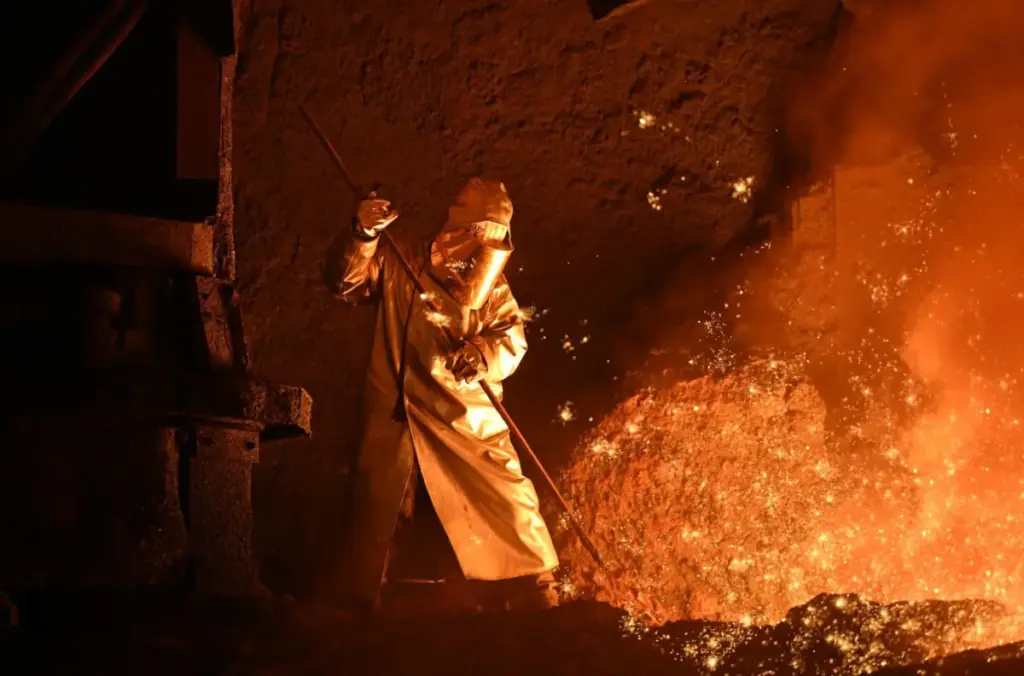
To understand the scale of the challenge—and the elegance of the Helix Carbon solution—it is necessary to look at how iron has been produced for centuries. Blast furnaces function by using coke, a processed form of coal, to facilitate the chemical transformation of raw iron ore, which is essentially iron locked within oxygen atoms. The burning coke serves two critical roles: it provides the intense heat required to drive the reaction, and it acts as a chemical agent. Specifically, the combustion produces carbon monoxide, which strips the oxygen away from the iron ore in a process known as reduction.
The byproduct of this chemical dance is a massive volume of carbon dioxide. In traditional blast furnace operations, this CO2 is viewed as waste and is vented directly into the atmosphere, contributing heavily to global warming. Helix Carbon has developed a proprietary system designed to intercept this waste stream. Instead of allowing the CO2 to escape, the startup’s technology captures the gas and converts it back into carbon monoxide, which is then recycled directly into the furnace.
The technical heart of this innovation is an advanced electrolyzer. While the concept of electrolysis—using electricity to drive chemical reactions—is well-established in scientific circles, Helix Carbon claims its specific design offers a distinct advantage over existing market solutions. Most industrial electrolyzers are notoriously delicate; they require highly purified and concentrated streams of carbon dioxide to function without sustaining damage. This necessitates an expensive and energy-intensive pre-processing stage for raw exhaust gases. Brown explains that the Helix Carbon design is robust enough to handle the entire raw exhaust stream coming directly from a blast furnace. By bypassing the need for extensive gas purification, the startup lowers the barrier to adoption for steel mills.
The implications for the production process are profound. By injecting recycled carbon monoxide back into the blast furnace, iron producers can significantly reduce their reliance on coke. While the precise magnitude of this reduction is a subject of ongoing industry debate, the potential is clear. Some academic studies suggest that up to 90% of the required coke could theoretically be eliminated by integrating such a system, while more conservative estimates place the figure between 30% and 40%.
Helix Carbon is positioning its commercial offering around a more conservative, achievable target: replacing 33% of the coke used in standard operations. According to the company, adopting this technology at that level would save producers approximately $14 per ton of iron produced. While that figure might appear modest at first glance, it is highly significant in the context of the global iron and steel trade, where profit margins are famously thin and operating costs are scrutinized with extreme precision.
The economic argument is central to the company’s pitch, especially given the inertia of the steel industry. The global iron and steel market is estimated at $2 trillion, a massive sector that nonetheless moves with glacial speed. This slow pace is driven by the longevity of the equipment; blast furnaces are enormous capital investments that are designed to remain in service for decades. "There are blast furnaces that have lived for over 100 years," Brown notes. This extreme longevity means that even if a "greener" alternative were invented tomorrow, the transition would take generations to fully permeate the market. By offering a bolt-on solution that improves the efficiency of existing furnaces, Helix Carbon hopes to sidestep the long replacement cycles that have hampered other climate-tech startups.
To build momentum and generate revenue before attempting to penetrate the massive, slow-moving steel sector, Helix Carbon is pursuing a secondary strategy: the specialty chemicals market. Because the company’s technology essentially creates a value-added product—carbon monoxide—from a waste stream, it can be repurposed to produce chemicals on-site. "We don’t need to capture the CO2 first," Brown says. "We just utilize it, and that opens up the door of making chemicals on-site right out of waste streams." This allows the startup to demonstrate the efficacy and profitability of its technology in more flexible industrial environments, building the track record necessary to eventually persuade traditional steel manufacturers to commit to a major retrofit.
The company’s vision was put to the test on Tuesday, when Helix Carbon appeared onstage at the Startup Battlefield pitch competition during TechCrunch Disrupt in San Francisco. The event serves as a high-stakes arena for emerging companies to showcase their technology to investors, industry experts, and potential partners. As the global debate over how to achieve industrial decarbonization intensifies, Helix Carbon’s pragmatic approach—optimizing the old rather than insisting on the new—stands out as a distinctive strategy.
For an industry as fundamental to the global economy as steel, the transition to net-zero will require a portfolio of solutions. Whether through radical new furnace designs or retrofitting existing, century-old infrastructure, the pressure to reduce emissions is mounting. Helix Carbon’s entry into the space suggests that the most effective way to change a multi-trillion-dollar industry may not be to build something entirely new, but to give the existing, carbon-heavy giants a better way to operate. As the company continues to refine its electrolyzer technology and court early adopters in the chemical sector, its progress will be watched closely by those who recognize that the path to a greener future runs directly through the industrial furnaces of the present.