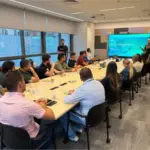










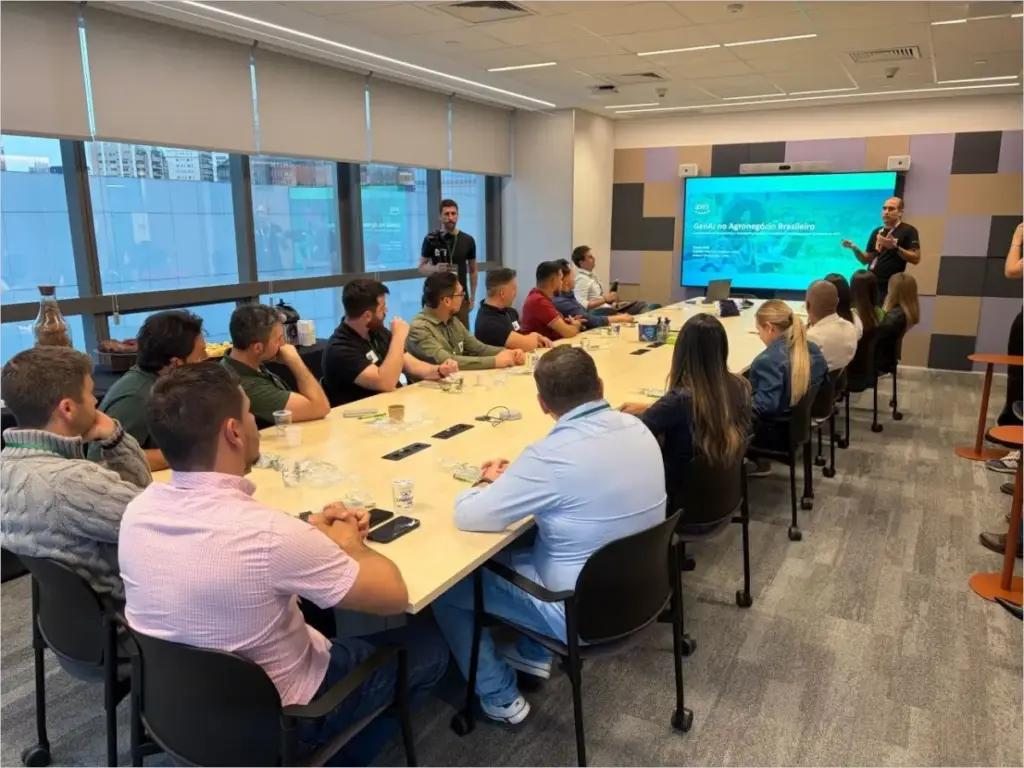
The rapid pace of technological integration in traditional industries has become a defining theme of the current enterprise landscape. During a recent engagement with a group of commercial and technology leaders from the Brazilian agribusiness sector at the AWS office in São Paulo, the discussion centered not on whether artificial intelligence belongs in the field, but rather on the pragmatism of its deployment. For professionals operating in rural environments—often managing complex logistics while literally behind the steering wheel—the interface of the future is not a screen, but a voice.
This necessity for seamless, hands-free interaction highlights why seemingly routine updates can have profound real-world consequences. A prime example is the recent enhancement to the Amazon Polly Generative engine, which introduced 14 new voices, including two dedicated to Brazilian Portuguese. By enabling more natural, expressive communication, these updates allow agribusiness professionals to receive critical operational data and AI-generated insights without compromising their focus on safety and productivity.
While the transformative potential of generative AI continues to command attention, the past week at AWS also underscored a sharper, more urgent reality: the narrowing gap between the discovery of a software vulnerability and its active exploitation. Security is no longer a reactive game of patches and checklists; it is a race against an adversary that is increasingly automated and opportunistic.

Advancing Security with AWS Continuum
In a move to address the realities of modern threat vectors, AWS has announced the general availability of AWS Continuum, a service designed to redefine vulnerability management. Moving away from traditional scanning methods that often overwhelm security teams with unprioritized lists of findings, Continuum operates as an end-to-end management solution. By constructing a comprehensive context graph that bridges the gap between an organization’s code repositories and its specific AWS environment, the service assigns evidence-based levels to each vulnerability.
Rather than relying on static severity labels, Continuum validates findings by reproducing them in an isolated sandbox, providing proof-of-concept code that allows developers to see the risk in action. The service then prioritizes issues based on their proximity to business-critical systems, effectively mapping the attack path. While the platform automates the creation of fix pull requests, it maintains a critical control boundary: all remediations currently require human verification and approval before merging. This ensures that while the process is accelerated and informed, the final decision remains with the engineering teams, with a roadmap for autonomous, confidence-threshold-gated fixes planned for the future.
The necessity for such a tool was starkly illustrated by AWS’s own security research this week. Data from Amazon Threat Intelligence, derived from MadPot telemetry, identified a PHP2Shell exploitation attempt on October 17—a full four days before the public disclosure of CVE-2026-109618 and CVE-2026-109619. Alarmingly, proof-of-concept exploits were circulating as early as 02:00 UTC on the day of the disclosure, twelve hours before the official embargo was lifted. This trend confirms a sobering reality: the traditional "patch window" measured in days is a legacy concept. Modern security strategies must prioritize the earliest known exploitation over the date of public disclosure. In parallel with the launch of Continuum, AWS has provided specific WAF mitigations for these vulnerabilities, and the new service is now available in US East (N. Virginia) and US West (Oregon).

Streamlining Connectivity with Amazon ECS Gateway
Infrastructure management often suffers from friction between networking teams and application developers. To alleviate this, AWS introduced the Amazon ECS Gateway, a service that simplifies the process of exposing services by delegating responsibilities according to expertise. Under this new model, platform teams define a central gateway that encapsulates organizational requirements—such as subnets, security groups, TLS certificates, and AWS WAF web ACLs.
Application teams can then opt into this infrastructure by adding a gateway connector to their service definition. ECS handles the heavy lifting, automatically provisioning ACM certificates, unique DNS hostnames, listener rules, and target groups. The economics of this design are notable; a single Application Load Balancer can support up to 25 services, and the system is designed to dynamically provision and remove ALBs based on demand. With the ability for a gateway to associate with up to 10,000 clusters, this release offers a scalable, incremental path for organizations to modernize their service networking without disrupting existing load balancer configurations.
Expanding the Generative AI and ML Ecosystem
Beyond security and networking, AWS has continued to iterate on its machine learning and generative AI toolkits. The Amazon Polly upgrade mentioned earlier is a significant leap in expressivity, with 57 generative voices now available across 11 languages and 25 locales. By adding Hindi and Finnish to the roster, alongside the new Brazilian Portuguese voices, AWS is broadening the accessibility of its text-to-speech capabilities. The upgrade is seamless, requiring no changes to existing SynthesizeSpeech calls, ensuring that developers can benefit from more natural audio output immediately.
Hardware-software synergy also received a boost with the public beta of TorchNeuron, which provides native PyTorch support for AWS Trainium. This development allows developers to transition models to Trainium instances by changing a simple configuration rather than performing a complete code rewrite. By maintaining compatibility with eager execution and torch.compile, and supporting Trainium2 and Trainium3, AWS is signaling a commitment to flexibility, ensuring that users can leverage specialized silicon without being locked into proprietary frameworks.
Customization of models has similarly become more accessible through new training session capabilities in Amazon SageMaker AI. Developers can now manage the post-training loop—including custom loss functions and reward signals—while SageMaker handles the complexities of GPU allocation, fault recovery, and distributed execution. This "pay-as-you-go" model for training sessions, which now supports models like Muse Glimmer, Qwen 3.8, and Ministral 3, allows for precise control over the training lifecycle without the overhead of managing underlying hardware clusters.
For developers building on Anthropic’s Claude models via Amazon Bedrock, the introduction of structured outputs marks a significant improvement in workflow reliability. By enabling schema-compliant JSON returns, AWS has removed the need for brittle custom parsing and complex retry logic, making it far easier to automate tasks such as parsing financial documents or routing clinical notes.

Optimizing Operations and Migrations
Data management continues to evolve, as evidenced by the new zero-downtime online migration capabilities for Amazon ElastiCache Serverless for Valkey. Organizations can now move self-managed Valkey or Redis OSS instances from Amazon EC2 into the serverless environment without service interruptions or errors. This removes the need for third-party replication tools and provides a simplified path to managed service benefits, now available across all commercial, China, and GovCloud regions.
Operational efficiency was further highlighted by the release of the AWS Agent Registry, a managed catalog that allows orchestrators to discover tools and agent skills at runtime. By centralizing the discovery loop, this registry improves the flexibility of agentic workflows. Meanwhile, for those focused on the economics of AI development, new open-source tooling for benchmarking coding agents provides a framework to evaluate cost and quality tradeoffs on private repositories. This data-driven approach is essential as organizations seek to balance the cost of inference with the performance requirements of their specific codebases.
Large-scale migration remains a cornerstone of the AWS ecosystem, as demonstrated by U.S. Bank’s successful transition of 119 TB of data from Oracle Exadata to Amazon RDS for Oracle. Utilizing a pipeline based on Oracle XTTS, AWS DataSync, and Amazon EFS, the bank completed the baseline copy in roughly one week, achieving significant consolidation with minimal downtime per database, even across bandwidth-constrained links.
Looking Ahead
As the industry prepares for the upcoming AWS re:Invent in Las Vegas, scheduled for November 30 to December 4, the focus remains on the rapid evolution of these platforms. With over 2,200 sessions planned, the event promises to dive deeper into these recent launches and the broader trends shaping the cloud. Locally, the momentum continues with community-led events, such as the AWS Community Day Brasil Norte in Belém on October 31, which marks the conclusion of a busy season for the Brazilian developer community.
In this cycle of continuous delivery, the challenge for leaders remains unchanged: identifying which of these tools will best serve their specific operational goals, whether that means securing infrastructure against zero-day exploits, scaling service networking, or leveraging generative voice to bridge the gap between technology and the physical world.